Samsung Chip Division Profit Surges 48x Amid AI Infrastructure Boom
Samsung's semiconductor unit posted record operating profit in Q1, surging 48-fold and far exceeding analyst estimates as AI infrastructure spending drives unprecedented demand for memory chips.
Samsung's semiconductor division delivered a staggering 48-fold increase in operating profit during the first quarter, reaching a record 53.7 trillion won ($36 billion). The result handily beat analyst expectations of 35.3 trillion won, according to Bloomberg.
Why This Matters
The blowout quarter underscores a fundamental shift in the semiconductor industry driven by artificial intelligence. Hyperscalers — the largest data center operators — are ramping up infrastructure spending at an unprecedented pace. Both Meta and Alphabet have announced plans to increase capital expenditure. The high margins on AI infrastructure and data center equipment propelled Samsung's earnings, putting it in direct competition with SK Hynix and Micron Technology for dominance in the memory market.
Some investors believe that high-bandwidth memory (HBM) has broken free from the traditional boom-and-bust cycles of the chip industry and can sustain steady growth. Roundhill Investments CEO Dave Mazza highlighted the key concern: how long HBM4 pricing power will persist and whether infrastructure spending will remain sustainable over time.
Samsung Bets Big on HBM4e and Ramps Up Investment
The South Korean tech giant plans to "significantly" increase capital expenditure this year. A core priority is preparing for the launch of HBM4e — next-generation memory chips designed specifically for AI workloads. A Samsung executive stated that the company has limited inventory that falls short of customer demand.
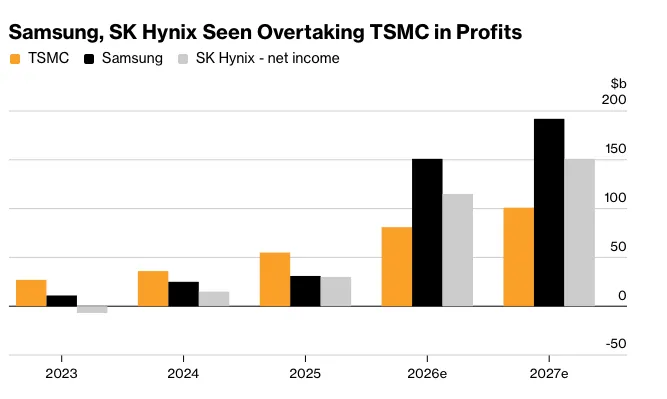
The performance of Nvidia's accelerators is directly constrained by the speed and capacity of the memory feeding data to them. This makes DRAM a critical bottleneck for AI service quality. Cloud providers are paying a premium for increasingly expensive memory — and it shows in Samsung's stock price, which has climbed 88% year-to-date after doubling last year.
Memory Prices Set to Keep Climbing
Analysts expect Samsung's chip division to continue breaking profit records over the coming quarters as contract prices rise amid constrained supply. Supporting this outlook, semiconductor exports from South Korea surged more than 180% during the first 20 days of April.
Tom Kang, an analyst at Counterpoint Research, forecasts DRAM prices to jump 60% in the current quarter compared to the previous one. Between February and March alone, prices already rose 42%. Samsung is also exploring a shift to multi-year memory chip supply contracts, a move that could lock in elevated pricing for an extended period.
Frequently Asked Questions
How much did Samsung chip profits grow in Q1 2026?
Samsung's semiconductor division operating profit surged 48-fold in Q1 2026, reaching 53.7 trillion won ($36 billion). This significantly exceeded analyst estimates of 35.3 trillion won.
Why are DRAM memory prices rising so fast?
DRAM prices are climbing due to massive hyperscaler investments in AI infrastructure coupled with limited supply. Counterpoint Research analyst Tom Kang forecasts a 60% DRAM price increase in the current quarter, following a 42% rise from February to March.
What is HBM4e memory?
HBM4e is Samsung's next-generation high-bandwidth memory chip designed specifically for AI workloads. The company is preparing for its launch while planning to significantly increase capital expenditure this year.
How has Samsung stock performed in 2026?
Samsung shares have risen 88% year-to-date in 2026, following a doubling in the previous year. The rally is driven by strong demand from cloud providers willing to pay premium prices for memory chips used in AI infrastructure.
Read also
Alphabet Posts $94.7B Q1 Revenue Beating Estimates Amid AI-Driven Growth
Google's parent company Alphabet reported Q1 2026 revenue of $94.7 billion, surpassing Wall Street forecasts, with its cloud division and AI integration fueling a strong beat across all metrics.
Oracle Lays Off Thousands as AI Infrastructure Spending Reshapes Tech Workforce
Oracle has begun mass layoffs affecting thousands of employees worldwide as the company redirects resources toward AI infrastructure. Meanwhile, Block CEO Jack Dorsey envisions AI replacing middle management entirely.
Bitcoin Miners Dump Crypto Reserves to Fund AI Infrastructure Pivot
Major public Bitcoin mining companies are liquidating their BTC holdings to finance a transition toward AI data center infrastructure. MARA Holdings, the largest public miner by reserves, denied rumors of a massive sell-off of its 53,822 BTC.
Samsung Galaxy S26 Becomes a Full-Fledged AI Agent Powered by Gemini
Samsung unveiled the Galaxy S26 lineup featuring an AI agent built on Google's Gemini that can autonomously manage apps, alongside Perplexity integration and a hardware-level privacy display.
Nvidia Doubles Net Profit as AI Chip Demand Hits Record Highs
Nvidia reported Q4 revenue of $68.13 billion and net income of $43 billion, nearly double the prior year. CEO Jensen Huang also addressed the Anthropic-Pentagon dispute and fears of an AI-driven economic downturn.
ARK Invest Forecasts AI Infrastructure Spending to Reach $1.5 Trillion by 2030
ARK Invest projects that annual global spending on AI infrastructure could triple over the next five years, reaching $1.5 trillion by 2030 as demand for compute surges.