Samsung Galaxy S26 Becomes a Full-Fledged AI Agent Powered by Gemini
Samsung unveiled the Galaxy S26 lineup featuring an AI agent built on Google's Gemini that can autonomously manage apps, alongside Perplexity integration and a hardware-level privacy display.
Samsung has officially launched the Galaxy S26 smartphone lineup with artificial intelligence at its core. The flagship feature is a full AI agent powered by Google's Gemini engine.
Gemini Powers the AI Agent
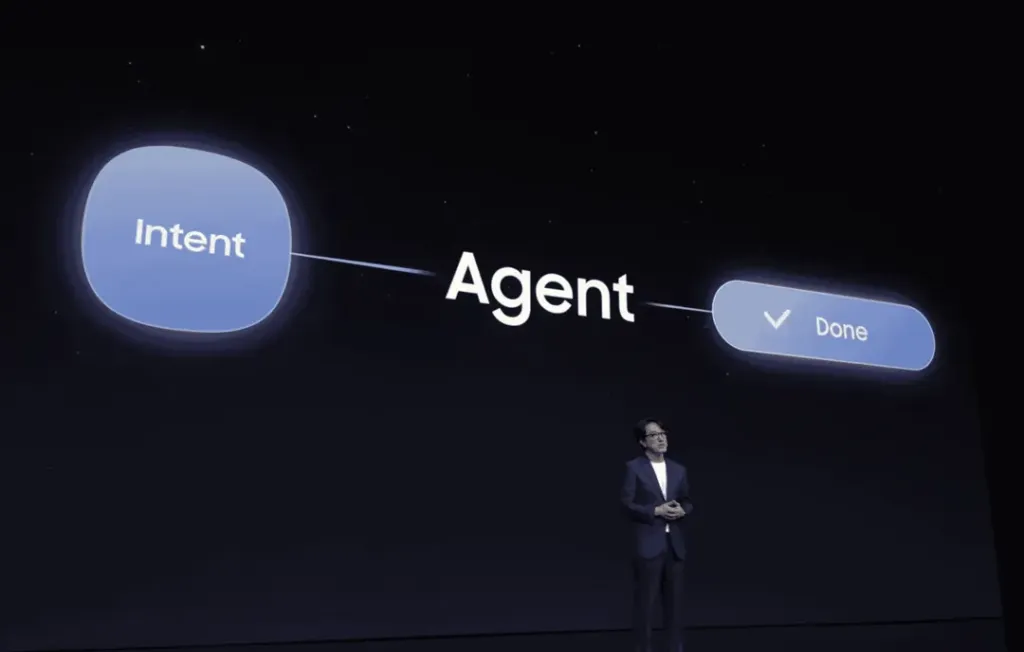
Samsung CEO Tae Moon Roh kicked off the event by describing a phone that anticipates user needs before they even realize them — one that learns habits, adapts in real time, and acts on the owner's behalf.
The agentic AI capabilities of the Galaxy S26 run on Google's Gemini. The neural network can launch apps in a virtual background window and operate them autonomously while the user handles other tasks.
During the Unpacked event, Google representative Sameer Samat demonstrated the feature in action: in a family group chat discussing a pizza order, Gemini read the conversation, identified each person's preferences, opened DoorDash, assembled the cart, and waited for the user's final confirmation. At launch, the feature also works with GrubHub, Uber, Kroger, Walmart, and several other apps.
Perplexity and Revamped Bixby
Samsung added Perplexity as a second system-level AI agent. It functions as an "answer engine" rather than a conventional chatbot and can be summoned via voice or the side button. Perplexity's Ask AI browser feature simultaneously analyzes all open tabs and browsing history to deliver answers without switching between sources.
The South Korean manufacturer noted that 80% of users currently interact with at least two AI agents daily. Reflecting this trend, Samsung overhauled its proprietary Bixby assistant. It now better understands natural language — for instance, saying "my eyes hurt from the screen" automatically lowers display brightness. The assistant can also pull real-time information directly into conversations without redirecting to other apps.
Additional AI Tools
Beyond the agentic features, Samsung announced several supplementary tools:
- Now Brief — a personalized daily briefing that surfaces restaurant reservations from notification history or flags scheduling conflicts;
- Call Screening — identifies unknown callers and provides a brief summary of the call's purpose before answering;
- Nudge — contextual awareness in messaging: if someone asks about weekend plans, the calendar pops up right in the chat;
- Photo Assist — fills in missing elements in photos using Galaxy AI.
The front camera leverages an AI processor for sharper selfies. Night video has been improved with noise reduction, and the S26 Ultra supports 8K recording with the new APV codec.
Hardware-Level Privacy Display
A standout announcement was a new display privacy technology. The screen incorporates a "black matrix" layer that physically narrows the light dispersion angle from each pixel. The image is only visible when viewed head-on — from any angle, the display appears completely off. The feature can be toggled manually, including on a per-app basis.
The Samsung Galaxy S26 Ultra is the only smartphone on the market with this type of built-in hardware display protection.
Why It Matters
Samsung's shift toward the "phone as agent" concept marks a fundamental change in the mobile industry. Smartphones are evolving from app collections into autonomous digital assistants. The integration of multiple AI engines — Gemini, Perplexity, and an upgraded Bixby — signals that the world's largest Android manufacturer is betting heavily on multi-agent architecture. For both the tech and crypto sectors, this accelerates demand for AI-native applications and services.
Pricing and Availability
Pre-orders for the Galaxy S26 are now open. The base model starts at $899, the Plus version at $1,099, and the flagship S26 Ultra at $1,299.
For reference, Samsung released the Galaxy S25 lineup in January 2025, which also emphasized chip performance and artificial intelligence features.
Frequently Asked Questions
What AI agent powers the Samsung Galaxy S26?
The Samsung Galaxy S26 is powered by a full AI agent built on Google's Gemini engine. Gemini can launch apps in a virtual background window, operate them autonomously, and act on the user's behalf — for example, reading a group chat, identifying preferences, and assembling a DoorDash order for final confirmation.
What is the new display privacy feature on the Samsung Galaxy S26 Ultra?
The Galaxy S26 Ultra features a "black matrix" display layer that physically narrows the light dispersion angle from each pixel, making the screen visible only when viewed head-on. From any other angle, the display appears completely off. The feature can be toggled manually, including on a per-app basis.
How does Perplexity work on the Samsung Galaxy S26?
Perplexity is integrated as a second system-level AI agent that functions as an "answer engine" rather than a conventional chatbot. It can be summoned via voice or the side button, and its Ask AI browser feature simultaneously analyzes all open tabs and browsing history to deliver answers without switching between sources.
What new AI tools does the Samsung Galaxy S26 offer?
The Galaxy S26 introduces Now Brief (personalized daily briefings from notification history), Call Screening (identifies unknown callers and summarizes the call's purpose), Nudge (contextual awareness that surfaces relevant apps like the calendar directly in chats), and Photo Assist (fills in missing elements in photos using Galaxy AI).
How has Bixby been improved on the Samsung Galaxy S26?
Bixby now better understands natural language — for example, saying "my eyes hurt from the screen" automatically lowers display brightness. It can also pull real-time information directly into conversations without redirecting the user to other apps.
Read also
Alphabet Posts $94.7B Q1 Revenue Beating Estimates Amid AI-Driven Growth
Google's parent company Alphabet reported Q1 2026 revenue of $94.7 billion, surpassing Wall Street forecasts, with its cloud division and AI integration fueling a strong beat across all metrics.
Google Launches Nano Banana 2 Image Model and Redesigned Flow Creative Studio
Google released Nano Banana 2, a new visual generation model delivering Pro-level quality at Gemini Flash speed, alongside a major overhaul of its Flow creative platform.
Google Enhances Opal AI Platform with New Autonomous Agents
Google has upgraded its visual AI workflow builder Opal with agent functionality that automatically analyzes tasks and selects appropriate tools for completion.
AI Audit Uncovers Critical Liveness Bug in Ethereum's Nethermind Client
Octane Security's AI discovered a high-severity vulnerability in the Nethermind execution client that could have halted block production for 38% of Ethereum mainnet validators. The Ethereum Foundation awarded a maximum $50,000 bounty.
Gemini Exchange Faces Crisis After IPO Amid Crypto Market Turmoil
Gemini exchange lost 85% of its market cap post-IPO, cut 25% of staff, and exited three regions. What went wrong for the Winklevoss empire?
OpenAI Secures Record $110 Billion Round at $730 Billion Valuation
OpenAI closed the largest startup funding round in history at $110 billion, backed by Amazon, SoftBank, and Nvidia, with a $730 billion valuation.