
Aster Chain Goes Live: Privacy-First L1 Blockchain Targets Perp-DEX Market With 100,000 TPS
Backed by YZi Labs, Aster has launched Aster Chain mainnet — a Layer 1 blockchain designed for perpetual futures trading with built-in ZK privacy and claimed throughput of 100,000 transactions per second.
YZi Labs-backed project Aster has launched the mainnet of Aster Chain, a purpose-built Layer 1 blockchain designed for perpetual futures trading. The network combines zero-knowledge cryptography with stealth address mechanisms, aiming to match centralized exchange performance while preserving on-chain privacy.
«As the lotus lives in water, where no trace will remain. Leave nothing behind. Trade on Aster Chain.» — Aster 🥷 (@Aster_DEX), original post
Claimed Throughput: 100,000 TPS
According to the development team, Aster Chain produces blocks every 50 milliseconds and achieves a throughput of 100,000 transactions per second — all with zero transaction fees. For comparison, Solana's theoretical maximum stands at 65,000 TPS with a block time of 0.39 seconds.
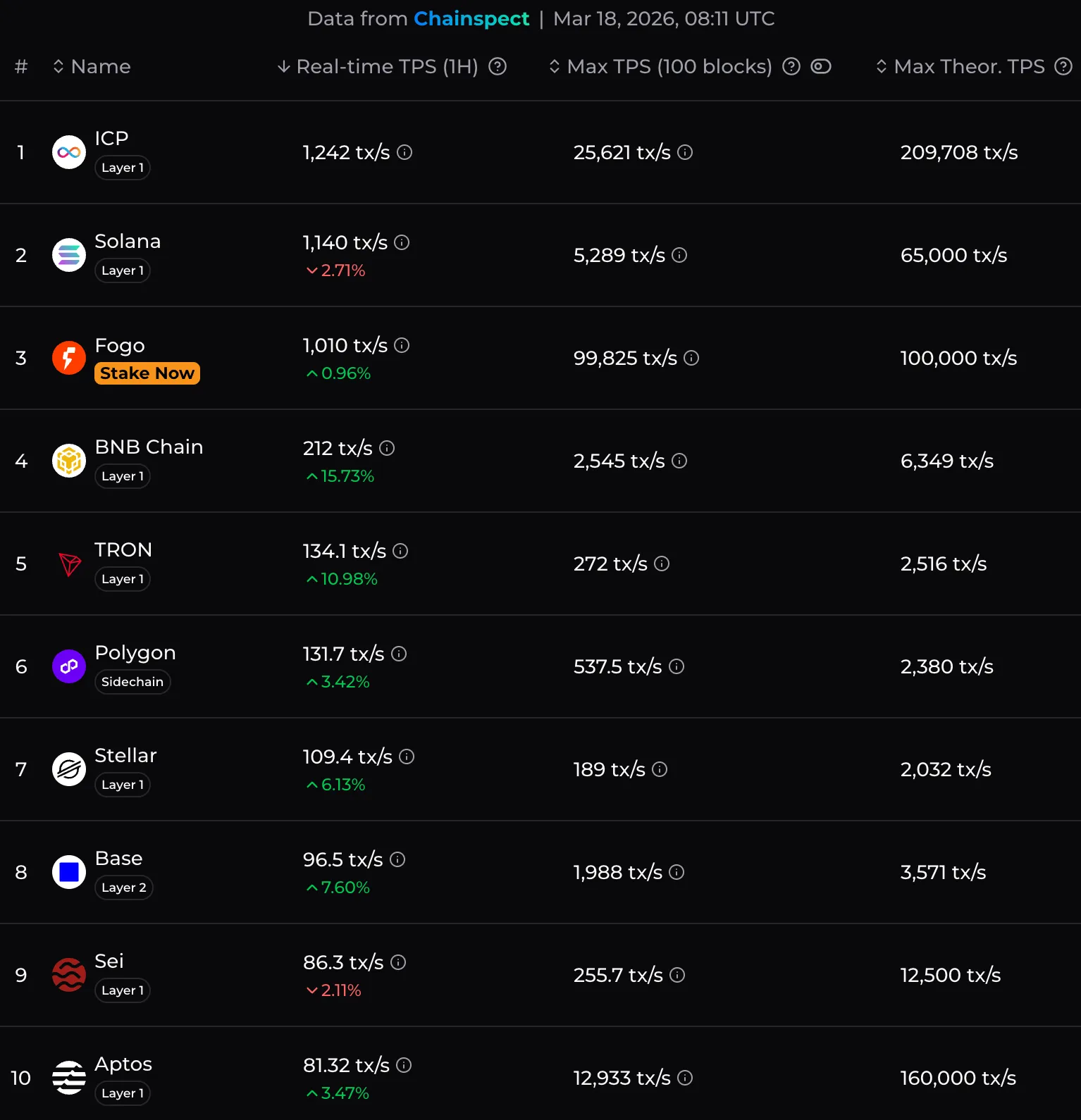
These figures remain developer claims at this stage, and real-world stress testing will determine whether Aster Chain can sustain such performance under actual market conditions.
Why This Matters
Decentralized perpetual exchanges face a fundamental tension: they need the speed of centralized platforms but operate in a fully transparent environment where every order is visible. This transparency exposes traders to front-running, sandwich attacks, and behavioral tracking. Aster Chain attempts to address both bottlenecks simultaneously by embedding privacy at the execution layer rather than treating it as an add-on feature.
The developers specifically identified this challenge, stating that transparency between the protocol and its users is a fundamental property, but openness to competitors represents a critical vulnerability.
ZK-Verified Privacy by Default
Account privacy on Aster Chain is enabled by default. Every trading order is encrypted using zero-knowledge proof verification, and all transactions route through one-time stealth addresses. This architecture makes it impossible to link a wallet to specific trades.
«Every order is ZK-verifiable encrypted and every transaction routes through a one-time stealth address. Put it another way: there's no way to link your wallet to your trades. No one can trace, correlate, or reconstruct your trading behavior.» — Aster 🥷 (@Aster_DEX), original post
The system is not entirely opaque, however. Users can selectively disclose information through a "Viewer Pass" — a key that decrypts on-chain data exclusively for parties the account owner has authorized. This enables auditing and compliance verification without compromising privacy from other market participants.
Competitive Landscape in Perp-DEX
Despite a broader decline in on-chain derivatives volume since late last year, Aster remains among the more active perpetual DEX platforms. Its trading volume is comparable to Lighter and EdgeX, though it trails significantly behind the segment leader Hyperliquid.
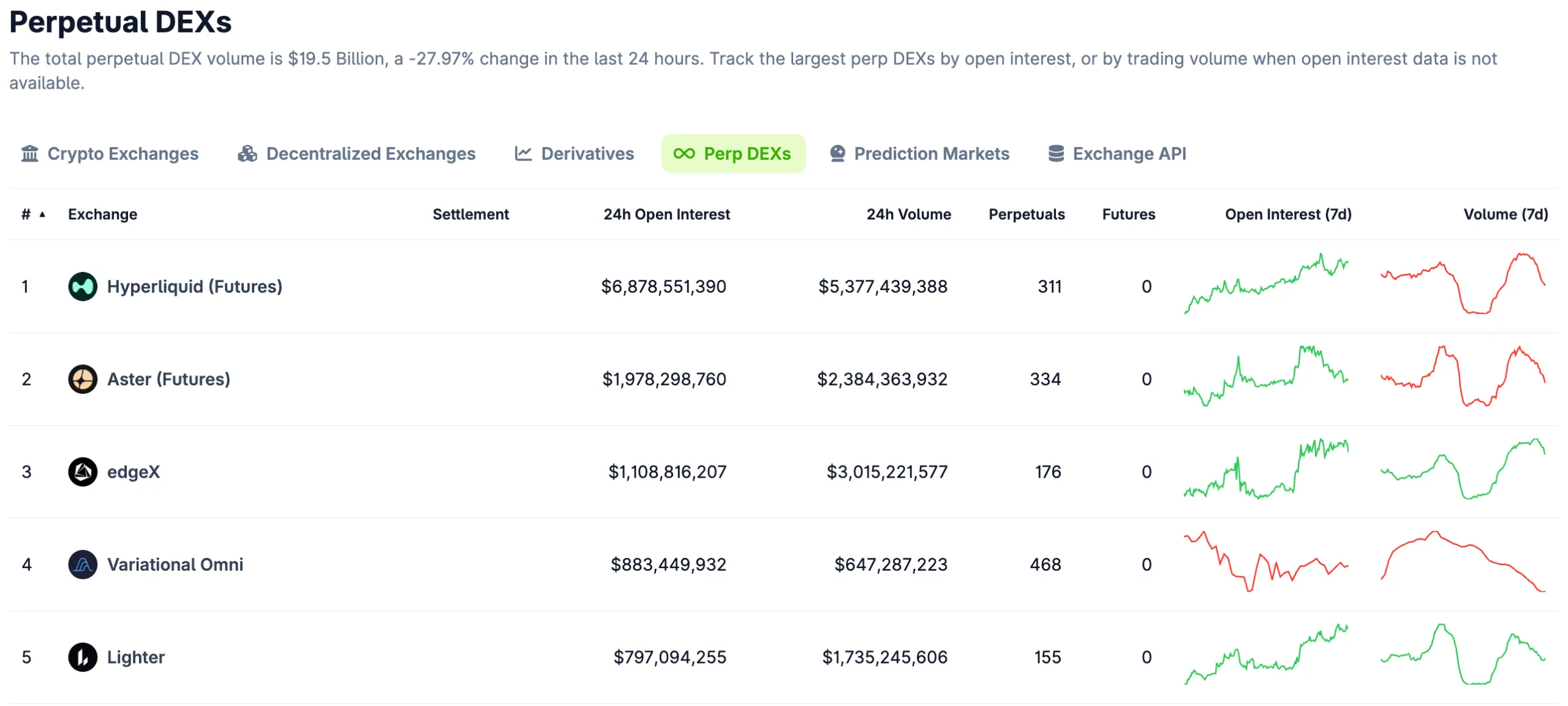
Hyperliquid, meanwhile, has been experiencing a surge in oil contract trading driven by escalating tensions in the Middle East.
Token Reaction and Roadmap
The ASTER token initially rallied 8% following the mainnet announcement, but the gains proved short-lived — the asset retraced, erasing its entire daily increase. At the time of the original report, ASTER was trading around $0.73, ranking 47th by market capitalization on CoinGecko.
At launch, Aster Chain supports cross-chain deposits between Solana and EVM-compatible networks including BNB Chain, Arbitrum, and Ethereum. The team plans to activate staking in the coming days and expand developer programs, including the Aster Code initiative.
Former BitMEX CEO Arthur Hayes has previously predicted that price discovery for major US equities could migrate from traditional venues to on-chain platforms, with markets increasingly relying on perpetual contract charts.
Frequently Asked Questions
What is Aster Chain and what makes it different?
Aster Chain is a Layer 1 blockchain built specifically for perpetual futures trading. It integrates zero-knowledge cryptography and stealth addresses at the execution layer, offering privacy by default with claimed throughput of 100,000 TPS and zero transaction fees.
How fast is Aster Chain compared to Solana?
Aster Chain claims 100,000 TPS with a 50-millisecond block time. For comparison, Solana's theoretical maximum is 65,000 TPS with a 0.39-second block time, while its real-time performance hovers slightly above 1,000 TPS.
How does privacy work on Aster Chain?
Every trading order is encrypted using ZK-proof verification, and transactions are routed through one-time stealth addresses. Users can selectively share their data through a Viewer Pass key, granting access only to authorized parties.
What happened to the ASTER token price after mainnet launch?
The ASTER token initially surged 8% on the mainnet announcement but quickly retraced, erasing all daily gains. At the time of reporting, it was trading around $0.73, ranked 47th by market cap on CoinGecko.
Which blockchains can deposit into Aster Chain?
At launch, Aster Chain supports cross-chain deposits from Solana and EVM-compatible networks including BNB Chain, Arbitrum, and Ethereum. Staking and developer programs like Aster Code are planned for activation in the near term.
Read also
TON Wallet Introduces Yield Vaults for BTC, ETH, and USDT Directly in Telegram
TON Wallet has launched yield vaults for BTC, ETH, and USDT directly within Telegram, offering up to 18% APY on stablecoins through partnerships with Morpho, TAC, and Re7.
Weekly Recap: Aave Ecosystem Rescue Mobilizes 100,000 ETH and Quantum Computer Cracks 15-Bit ECC Key
Bitcoin held near $78,000, the DeFi community rallied over 100,000 ETH to help Aave recover from the Kelp hack, and a researcher cracked a 15-bit ECC key on a quantum computer.
Bitcoin Hits $70,000 as Iran Ceasefire Talks Boost Risk Appetite
Bitcoin surged 4% to test the $70,000 level on April 6 amid reports of ceasefire negotiations between the US, Israel, and Iran. The derivatives market, however, sends mixed signals.
Options Traders Bet on Bitcoin Rally to $80,000 by Summer
Bitcoin consolidates near $70,000 after a volatility spike. Options market participants are increasingly positioning for a rally to $80,000 by early summer, despite macroeconomic headwinds.
Stablecoin Transfer Volume Hits $10.5 Trillion in January — Highest Since April 2022
January stablecoin transaction volume surpassed $10.5 trillion, marking the highest monthly figure since April 2022. USDC led transfers while USDT maintained market cap dominance.
Top 10 Dollar Stablecoins in 2026: From Dominant Players to Exit Candidates
The stablecoin market has surpassed $311 billion in total capitalization. Here's a breakdown of the ten largest USD-pegged stablecoins — from undisputed leaders Tether and Circle to ambitious newcomers.