
Bitcoin Hits $70,000 as Iran Ceasefire Talks Boost Risk Appetite
 BinanceEXCHANGE
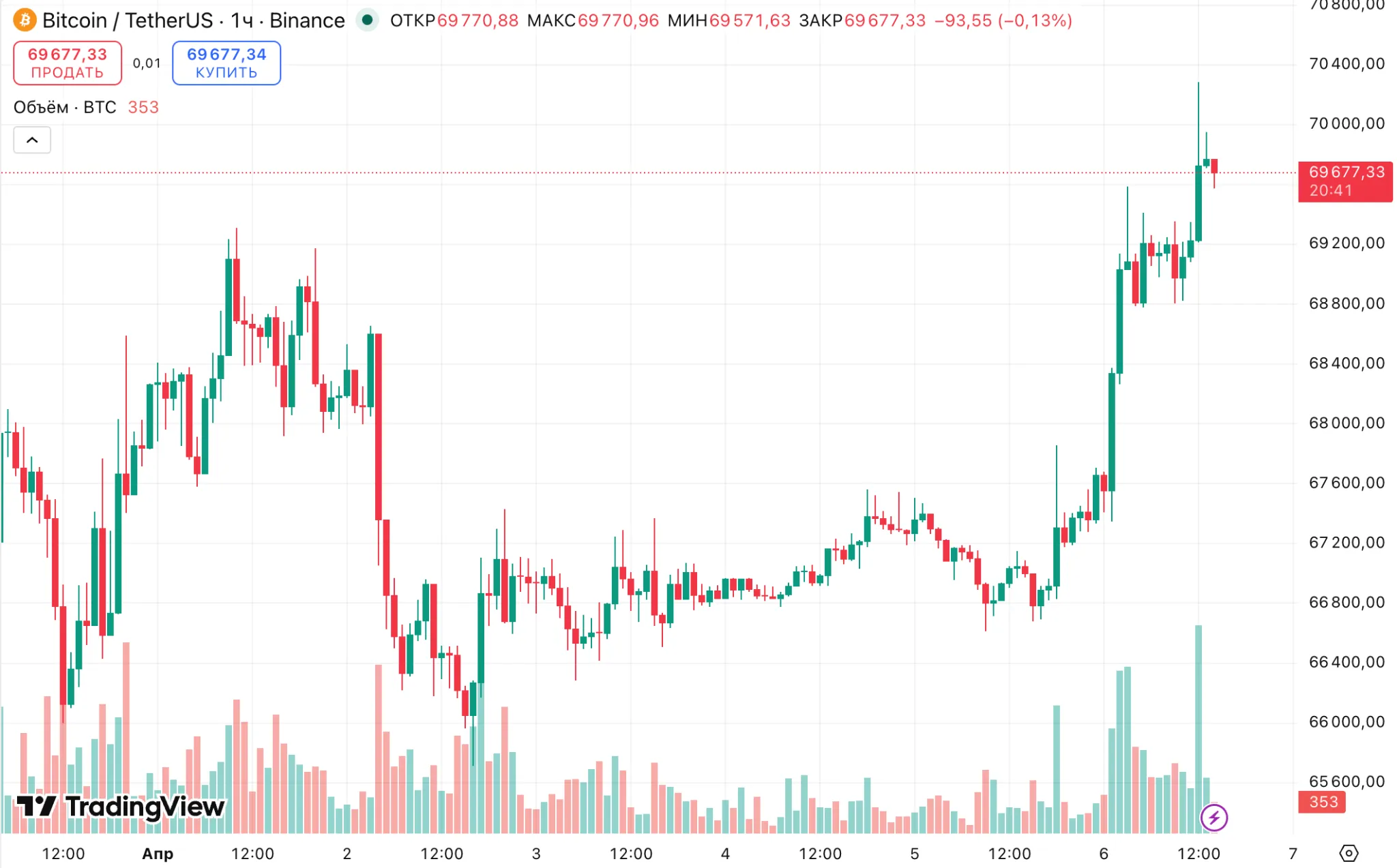
Bitcoin surged 4% to test the $70,000 level on April 6 amid reports of ceasefire negotiations between the US, Israel, and Iran. The derivatives market, however, sends mixed signals.
BTC Surges 4% on Middle East De-escalation Hopes
Bitcoin climbed 4% on April 6, testing the $70,000 mark as geopolitical developments fueled renewed demand for risk assets. At the time of reporting, BTC was trading around $69,700.
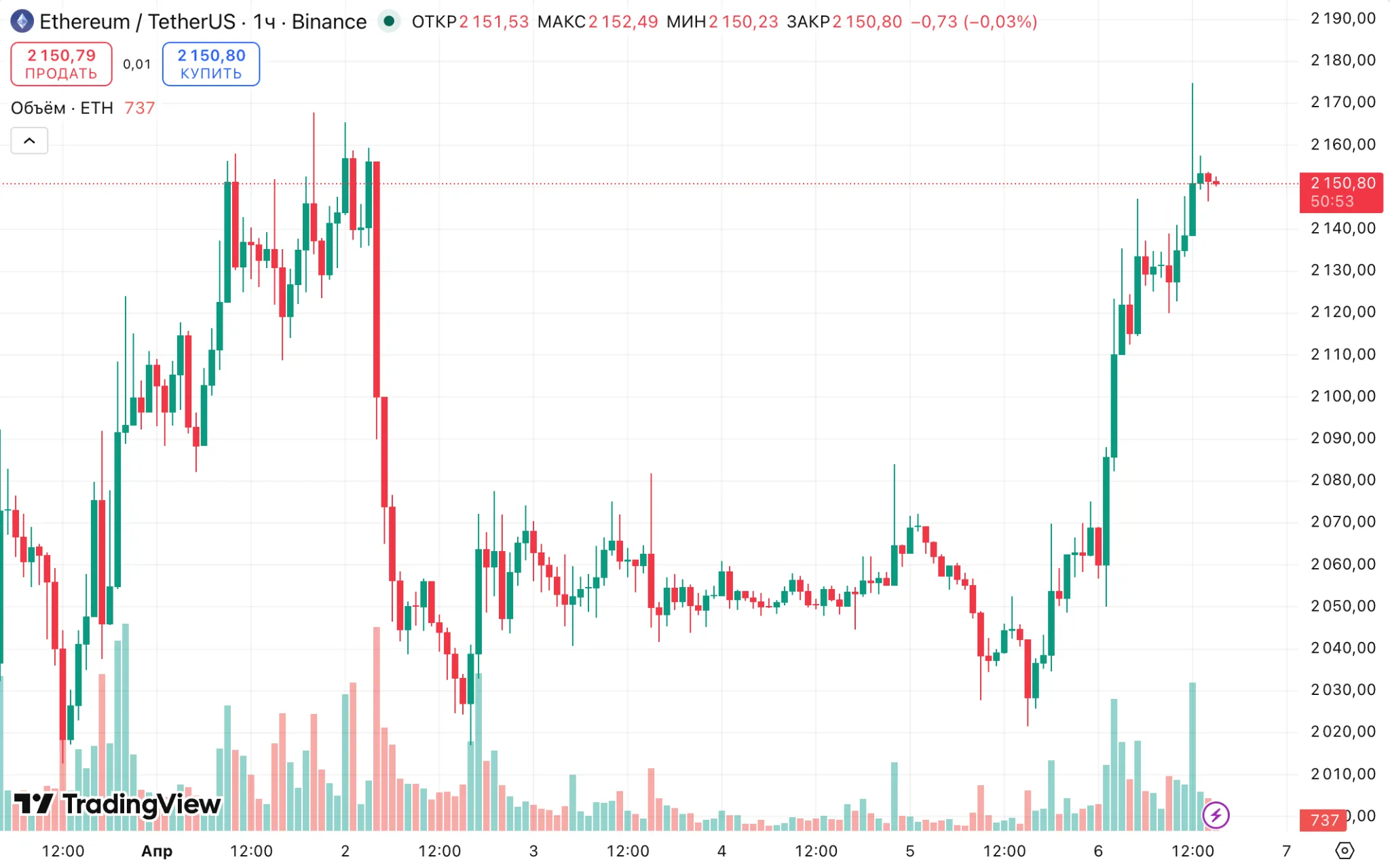
Ethereum posted an even stronger gain of 5.5%, reaching $2,150.
Why This Matters
According to Axios, the United States, Israel, and Iran are discussing a 25-day ceasefire. The news sparked optimism about reduced tensions in the Middle East and the reopening of the Strait of Hormuz. Risk asset demand increased while the dollar index declined.
The greenback's weakness accelerated following reports that Pakistan is mediating what has been dubbed the Islamabad Agreement. Under its terms, the ceasefire and the reopening of the strait would take effect immediately.
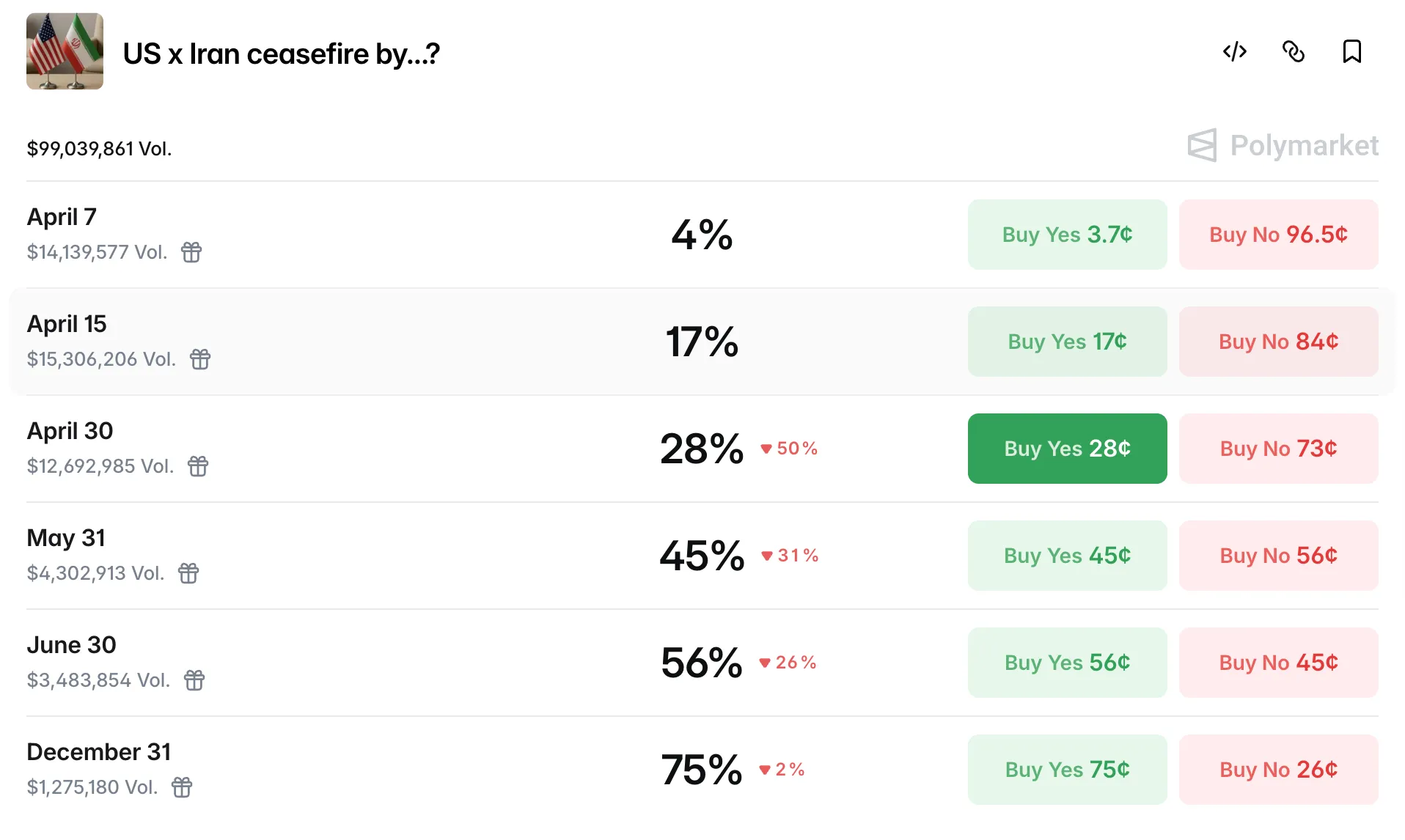
On Polymarket, the probability of a ceasefire surged from 18% to 28%.
MN Trading founder Michaël van de Poppe believes BTC's trajectory hinges on the outcome of negotiations. He suggested that a breakout above $71,000 would open the door for a test of $80,000.
"Pretty strong momentum on the markets of #Bitcoin. Volatility picking up, and I think it's fireworks during this week as we might be getting to the end stage of the entire situation in the Strait of Hormuz. If #Bitcoin breaks $71K, then markets are in for a test at $80K." — Michaël van de Poppe (@CryptoMichNL), original post
Derivatives Market Sends Mixed Signals
Open interest for Bitcoin and Ethereum jumped 5.5% and 11% respectively, signaling fresh capital entering the market. On Deribit, the most popular options contracts are a BTC put with a $60,000 strike and a call at $80,000 — each carrying over $1.4 billion in open interest.
Analyst Axel Adler Jr. noted that the Bitcoin Regime Score flipped positive for the first time in 14 days, reaching +14.1. However, the funding rate dropped to -0.43%, its lowest reading in two weeks.
"🔴 Bitcoin funding rate just dropped to -0.43% the most negative reading in two weeks. At the same time, the Regime Score flipped positive: +14.1 after 13 straight bearish days. Two signals. Opposite directions. One of them is wrong." — Axel Adler Jr (@AxelAdlerJr), original post
According to the analyst, derivatives traders remain skeptical about a sustained reversal. The divergence between negative funding and a positive Regime Score points to two possible outcomes:
- Short squeeze: if the broader market signal proves correct, rising prices will force short closures and funding rates will follow the Regime Score higher.
- Technical bounce: if price fails to hold, the Regime Score will weaken and turn negative again, validating the funding rate as a leading indicator.
Adler Jr. emphasized that the key confirmation of a genuine reversal would be rising funding rates alongside continued price appreciation.
On-Chain Data Shows Long-Term Holder Accumulation
Pseudonymous analyst Darkfost observed that Bitcoin's long-term holder (LTH) supply has turned positive for the first time since November. On average, 308,000 BTC have transitioned into the long-term holder category.
"📈 Bitcoin LTH supply turns positive again. Between geopolitical tensions and their economic consequences, the current environment remains very challenging for markets, particularly for risk assets but some investors seem to be betting on the long term." — Darkfost (@Darkfost_Coc), original post
Darkfost described the trend as a "constructive and favorable signal," noting that similar behavioral shifts have historically preceded positive BTC price action.
The metric is based on the UTXO model and reflects the aging of unspent outputs rather than active buying. Coins that remain unmoved for six months automatically transition from short-term to long-term holder status. When investor behavior shifts toward holding rather than selling, LTH supply naturally increases. During bearish phases, however, such transitions can occur without generating a definitive signal of structural trend change.
Darkfost stressed the importance of monitoring LTH behavior going forward — sustained positive dynamics would serve as a compelling bullish indicator. For context, Bloomberg Intelligence senior commodity strategist Mike McGlone previously warned that Bitcoin could fall to $10,000 if it loses the $75,000 level.
Frequently Asked Questions
Why did Bitcoin surge to $70,000 on April 6, 2026?
Bitcoin rallied 4% to test $70,000 following reports from Axios that the US, Israel, and Iran are negotiating a 25-day ceasefire. Hopes for de-escalation in the Middle East and the reopening of the Strait of Hormuz boosted risk asset demand and weakened the US dollar.
What is the Bitcoin funding rate signaling?
The Bitcoin funding rate dropped to -0.43%, its most negative reading in two weeks, suggesting derivatives traders are skeptical about a sustained reversal. This contrasts with the Regime Score flipping positive at +14.1 after 13 consecutive bearish days.
What does Bitcoin long-term holder supply turning positive mean?
LTH supply turned positive for the first time since November, with an average of 308,000 BTC transitioning into long-term holder status. Historically, such behavioral shifts have preceded positive BTC price movements, though during bearish phases they can occur without signaling a structural trend change.
What price level could trigger a Bitcoin rally to $80,000?
MN Trading founder Michaël van de Poppe suggested that a breakout above $71,000 would open the path for a test of $80,000. The outcome largely depends on the progress of ceasefire negotiations in the Middle East.
What are the most popular Bitcoin options on Deribit?
The most popular options contracts on Deribit are a put with a $60,000 strike price and a call at $80,000. Open interest on each of these contracts exceeds $1.4 billion, reflecting both hedging demand and bullish speculation.
Read also
Bitcoin Down 2.5% Weekly: Jane Street Accusations & 7 Ethereum Forks
Bitcoin lost ~2.5% over the week amid macro shocks and geopolitical tensions. Jane Street faced market manipulation allegations while Ethereum unveiled an ambitious seven hard fork roadmap through 2029.
TON Wallet Introduces Yield Vaults for BTC, ETH, and USDT Directly in Telegram
TON Wallet has launched yield vaults for BTC, ETH, and USDT directly within Telegram, offering up to 18% APY on stablecoins through partnerships with Morpho, TAC, and Re7.
Options Traders Bet on Bitcoin Rally to $80,000 by Summer
Bitcoin consolidates near $70,000 after a volatility spike. Options market participants are increasingly positioning for a rally to $80,000 by early summer, despite macroeconomic headwinds.
Bitcoin Rebounds to $70,000 as Leverage Drops and ETF Inflows Continue
BTC recovered above $70,000 on March 10, erasing weekend losses. Spot ETFs attracted $568M in weekly inflows while the estimated leverage ratio on Binance fell sharply from 0.198 to 0.152.
Bitcoin Drops Below $67,000 as Ethereum Foundation Unveils Quantum Defense Roadmap
Bitcoin lost 3% over the week amid Middle East tensions and ETF outflows, miner activity hit historic lows, and Ethereum Foundation outlined a four-hardfork plan for quantum resistance by 2029.
AI Audit Uncovers Critical Liveness Bug in Ethereum's Nethermind Client
Octane Security's AI discovered a high-severity vulnerability in the Nethermind execution client that could have halted block production for 38% of Ethereum mainnet validators. The Ethereum Foundation awarded a maximum $50,000 bounty.