
Tokenized Gold Explained: Why Billions Are Flowing Into Digital Precious Metals
A deep dive into how tokenized gold works, its benefits and risks, and why XAUT and PAXG dominate the sector with combined market caps exceeding $5 billion.
A digital wrapper for physical bullion
Gold has served as a store of value for centuries, but owning physical bars comes with practical headaches — costly storage, transport logistics, and a high price tag that puts whole ingots out of reach for many investors. Blockchain technology and the expanding real-world asset (RWA) sector now offer an alternative: tokenized gold, a digital asset where each unit is backed by a specific weight of physical metal.
Mechanically, these tokens resemble stablecoins, except their price is pegged to the spot price of gold rather than a fiat currency. Typically, one token equals one troy ounce or one gram of bullion stored in certified vaults under custodian oversight. Issuing them on networks like Ethereum enables free transfers, exchange trading, and integration with DeFi protocols — just like any other cryptocurrency.
How gold tokenization works
The process follows three core stages:
- Custody. The issuer purchases physical bars or coins and deposits them in an insured vault, backing the tokens with real metal.
- Minting. Smart contracts create tokens on-chain in strict proportion to reserves — for example, 100 tokens for 100 ounces of gold.
- Auditing. Independent auditors verify that vault holdings match circulating supply. Some projects also integrate oracle networks such as Chainlink to publish Proof-of-Reserve data on-chain.
Holders can sell their tokens on an exchange or redeem them for physical gold through the issuer's platform. During redemption, the digital asset is burned — removed from circulation — to maintain the 1:1 backing ratio.
Why it matters
Tokenized gold bridges the gap between traditional precious-metals markets and the crypto economy. It dramatically lowers the entry barrier: investors can buy fractions as small as 0.01 of a token. Trading runs 24/7, bypassing traditional market hours, and settlements are near-instant. Blockchain guarantees immutable ownership records, while regular audits and Proof-of-Reserves mechanisms bolster confidence in collateral backing.
DeFi integration adds another dimension. Instead of sitting idle in a vault, tokenized metal can be deposited into liquidity pools or used as loan collateral — turning a traditionally passive asset into productive capital.
Key risks to consider
- Regulatory uncertainty. Legal frameworks for RWA assets and stablecoins are still evolving. Shifting regulations could restrict issuance or trading.
- Custodial risk.Unlike Bitcoin's trustless architecture, tokenized gold depends on the issuer. Bankruptcy or mismanagement of reserves could lead to token devaluation.
- Limited liquidity. Trading volumes on crypto exchanges remain well below those of the traditional spot gold market.
- Fees. Blockchain gas costs, along with issuer fees for storage and reserve management, can eat into returns.
Market leaders: XAUT and PAXG
Two projects dominate the tokenized gold landscape.
Tether Gold (XAUT)
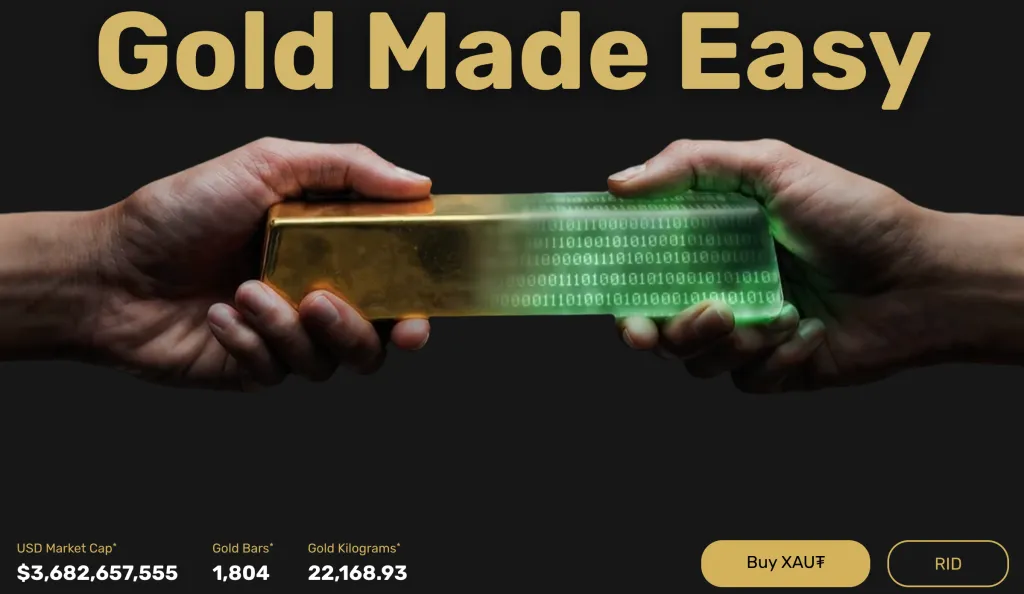
Issued by the company behind the USDT stablecoin, each XAUT token is backed by one troy ounce of Good Delivery-standard gold stored in Swiss vaults. As of February 26, 2026, XAUT's market cap exceeds $3.6 billion, backed by 1,804 gold bars weighing over 22 tonnes in total.
In late January, XAUT entered the top-10 perpetual futures pairs on Binance.
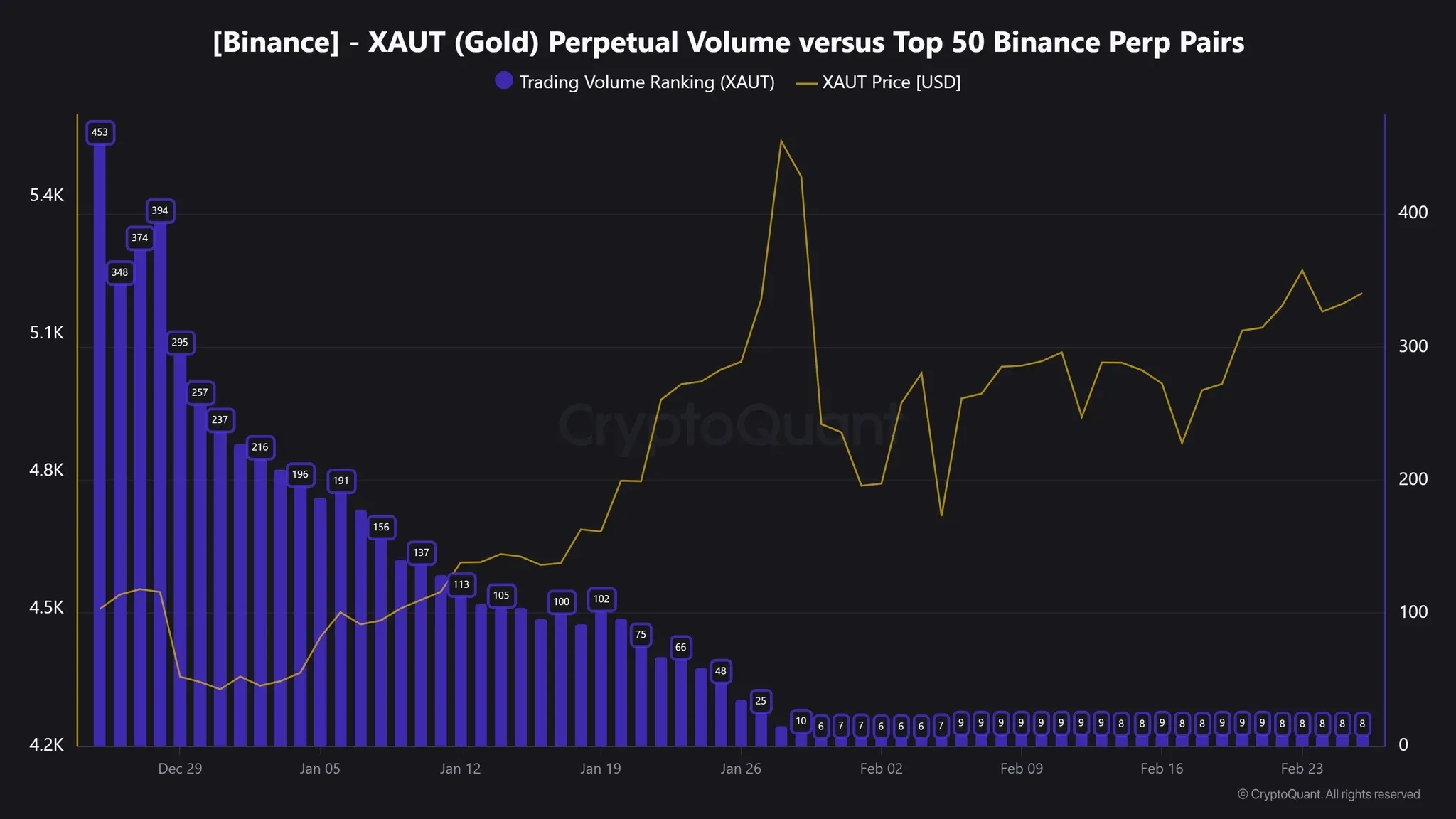
CryptoQuant researcher maartunn noted that gold-backed tokens have moved beyond niche hedging and now compete directly with leading crypto derivatives.
Paxos Gold (PAXG)
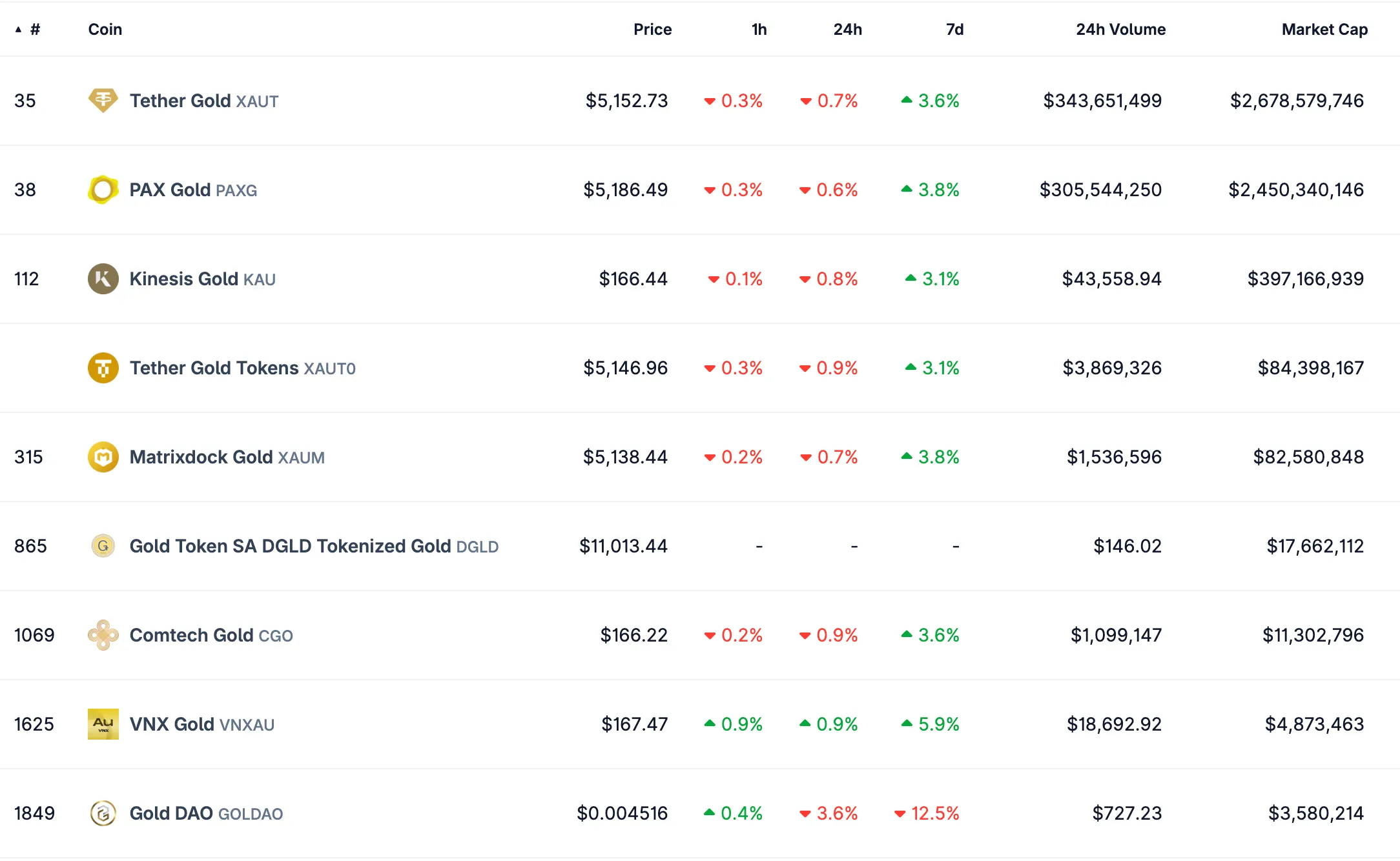
Issued by Paxos Trust, a company regulated by New York State authorities, each PAXG token is backed by one troy ounce of gold held in LBMA-accredited London vaults. Both XAUT and PAXG carry market caps above $2 billion each, far outpacing the nearest competitor.
The closest rival by market cap is JWMH from Justoken — a digital asset backed by megawatt-hours of electricity.
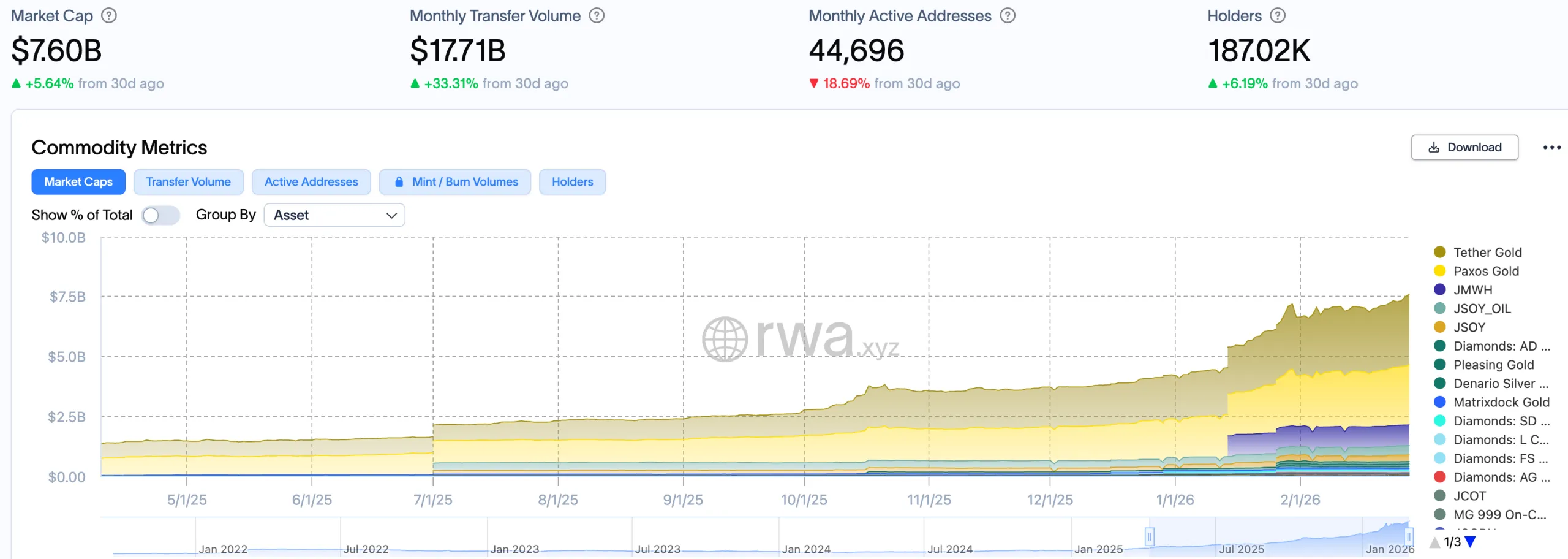
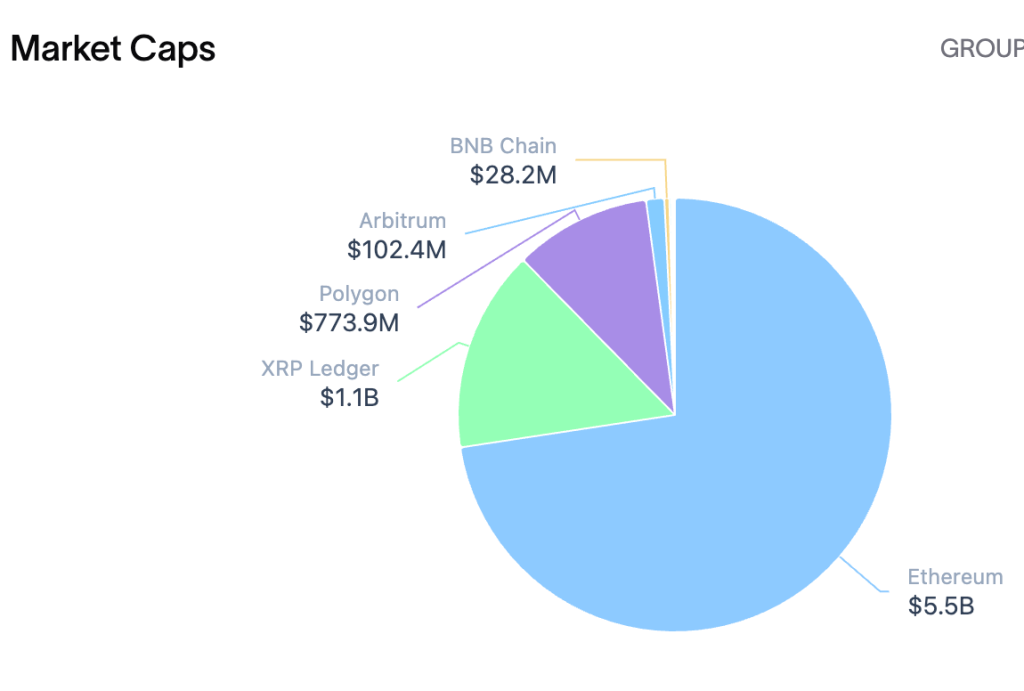
The vast majority of RWA token value resides on Ethereum:
What lies ahead for tokenized precious metals
Capital is flowing into the sector amid macroeconomic turbulence and gradually clarifying regulatory frameworks in the US and other jurisdictions. Infrastructure is maturing rapidly:
- In February, Kraken launched 24/7 perpetual futures trading on tokenized assets — gold, indices, and major tech stocks.
- Canadian firm Elemental Royalty Corporation became the first public company in the sector to offer shareholders dividends in gold-backed digital assets, using XAUT for payouts.
- Institutional clients of market maker Wintermute gained access to physically backed gold instruments, with OTC settlements available in crypto, stablecoins, and fiat.
- On September 3, 2025, the World Gold Council (WGC) launched a pilot tokenization project. WGC CEO David Tait told the Financial Times that the new format will allow market participants to transfer gold digitally within the ecosystem for the first time to collateralize obligations.
Growing institutional demand and discussions around potentially monetizing the Federal Reserve's gold reserves are creating new use cases for digital gold, accelerating the transformation of one of humanity's oldest reserve assets.
Frequently Asked Questions
What is tokenized gold?
Tokenized gold is a blockchain-based digital asset where each token is backed by a fixed weight of physical gold, typically one troy ounce or one gram. The metal is stored in certified vaults, and independent audits verify that reserves match circulating supply.
What is the difference between XAUT and PAXG?
Tether Gold (XAUT) is issued by Tether with reserves stored in Swiss vaults. Paxos Gold (PAXG) is issued by New York-regulated Paxos Trust and backed by gold held in LBMA-accredited London vaults. Both tokens represent one troy ounce of gold.
Can you redeem tokenized gold for physical metal?
Yes, holders can convert their tokens back to physical gold through the issuer's platform by paying applicable fees. During redemption, the digital asset is burned to maintain the 1:1 backing ratio.
What are the risks of investing in tokenized gold?
Key risks include custodial dependence on the issuer, evolving regulatory frameworks, relatively low liquidity compared to traditional spot gold markets, and additional costs from blockchain gas fees and issuer storage charges.
How big is the tokenized gold market in 2026?
As of February 26, 2026, Tether Gold (XAUT) has a market cap exceeding $3.6 billion, while Paxos Gold (PAXG) surpasses $2 billion. Together, these two projects dominate the tokenized gold segment by a wide margin.
Read also
Bernstein Calls $60,000 a 'Clear Bottom' for Bitcoin, Expects Extended Bull Cycle
Analysts at Bernstein have identified $60,000 as a firm floor for Bitcoin, projecting a structurally longer bull cycle. On-chain data from Glassnode confirms a resurgence of buying activity.
CoinShares: TradFi and DeFi Are Merging Into a Hybrid Finance System
A joint report by CoinShares and Token Terminal documents the convergence of traditional and decentralized finance into a measurable market structure, with stablecoins at $297.6 billion and the RWA market approaching $29 billion.
Aave Becomes First DeFi Protocol to Surpass $1 Trillion in Cumulative Loans
Lending protocol Aave has reached a historic milestone: its all-time loan volume has exceeded $1 trillion, a first for any DeFi project. The achievement comes amid governance tensions within the DAO.
Binance Emerges as 24/7 Price-Setting Venue for Gold and Silver — DL Research
DL Research finds that Binance has become a key venue for round-the-clock gold and silver trading through perpetual contracts, bridging the gap between crypto and traditional commodity markets.
OKX Launches Perpetual Stock Contracts With Up to 10x Leverage
Crypto exchange OKX has introduced USDT-denominated perpetual contracts on stocks of major companies, available 24/7 with up to 10x leverage.
Wave of DeFi Exploits Puts Wall Street's Crypto Ambitions at Risk
Attacks on Drift and Kelp triggered over $15 billion in DeFi outflows. A Jefferies analyst warns that major financial firms may slow their blockchain adoption efforts.