
Bernstein Calls $60,000 a 'Clear Bottom' for Bitcoin, Expects Extended Bull Cycle
 BinanceEXCHANGE
Analysts at Bernstein have identified $60,000 as a firm floor for Bitcoin, projecting a structurally longer bull cycle. On-chain data from Glassnode confirms a resurgence of buying activity.
Bernstein Identifies $60,000 as Bitcoin's Firm Support Level
As Bitcoin edges toward $80,000, investment firm Bernstein has declared the market fundamentally stronger. According to analysts, the recent dip to $60,000 formed a "clear bottom," and they expect "the best for digital assets is ahead — a higher and structurally longer bull cycle," as reported by The Block.
Bernstein outlined several catalysts underpinning their bullish thesis:
- Institutional capital inflows. ETF demand is reinforcing Bitcoin's holder base, with roughly 60% of supply unmoved for over a year.
- Strategy's aggressive accumulation. The company has amassed 818,334 BTC and attracts yield-oriented investors through its STRC product.
- Traditional finance expanding crypto access. Analysts highlighted Morgan Stanley's spot exchange-traded fund and Charles Schwab's platform for trading Bitcoin and Ethereum.
Why This Matters
Bernstein's assessment extends well beyond Bitcoin's price action. Blockchain infrastructure is increasingly being adopted for settlements, payments, and tokenization. A prime example: the stablecoin market, whose total supply has surpassed $300 billion.
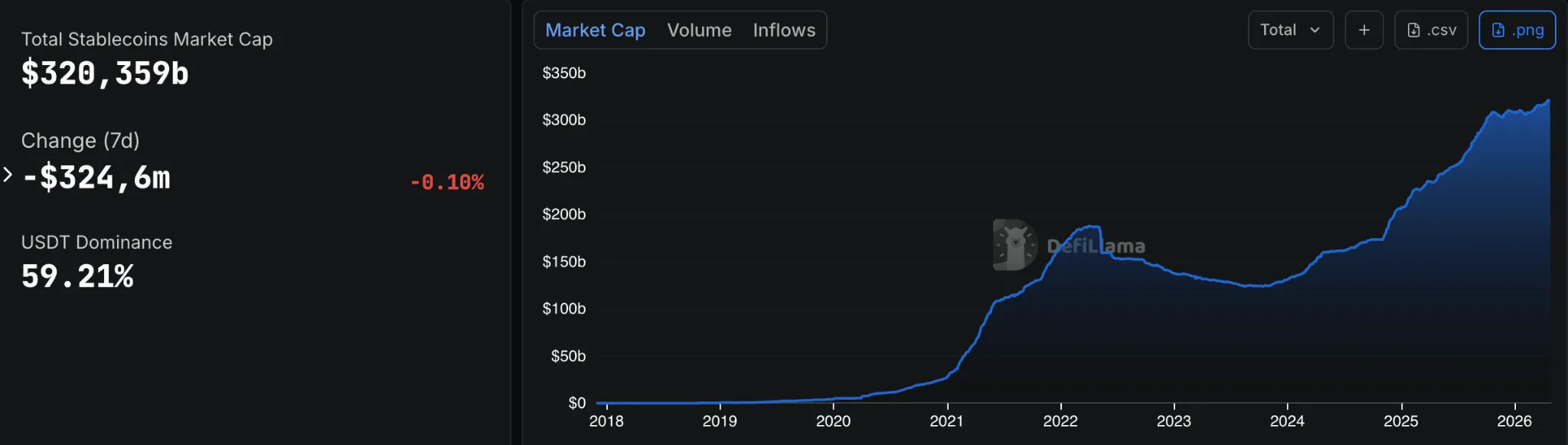
According to the analysts, stablecoins are becoming less dependent on speculative market sentiment and are increasingly used for real dollar-denominated payments. The tokenized real-world assets (RWA) segment has reached $345 billion — a 110% year-over-year increase driven primarily by private credit and treasury bonds.
Bernstein acknowledged that long-term risks remain, including the quantum computing threat. However, the team expects blockchains to transition to post-quantum security mechanisms in time.
Current Market Snapshot: Pullback Amid Leverage Liquidations
At the time of the original report, Bitcoin was trading near $76,800, down 1.3% over 24 hours after briefly climbing above $79,000.
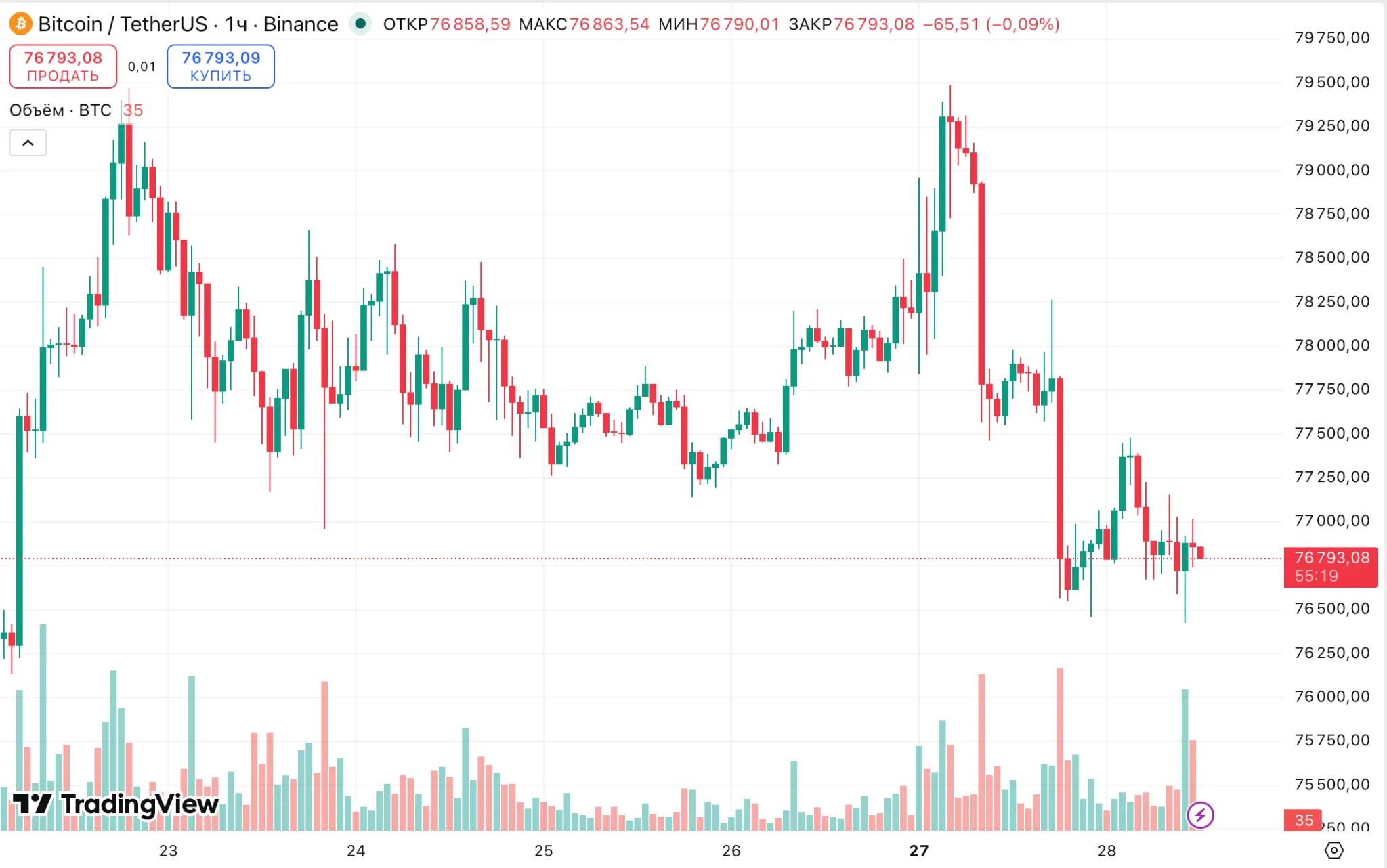
XWIN Japan analysts attributed the correction to a liquidity crunch triggered by forced closures of leveraged long positions totaling $100 million.
«Bitcoin's Sudden Drop Explained — Structural Downside Driven by Leverage Liquidations. Weekend market structure played a key role. With reduced participation from institutions and liquidity providers, order books become thin, making prices more sensitive to market orders.» — CryptoQuant.com (@cryptoquant_com), original post
Open interest recovering to $25 billion signals the return of leverage to the market. Experts warned that Bitcoin's price dynamics are once again sensitive to trader positioning, raising the risk of sharp moves driven by liquidation cascades.
Glassnode On-Chain Data: Buyers Are Back
Analytics platform Glassnode detected a significant uptick in buying activity. The Spot CVD indicator — measuring the balance of market buy versus sell orders — surged 199% in a single week, from $18.3 million to $54.8 million. Perpetual CVD climbed 174.7% to $315.1 million. Together, these metrics point to strengthening buyer pressure across both spot and derivatives markets.
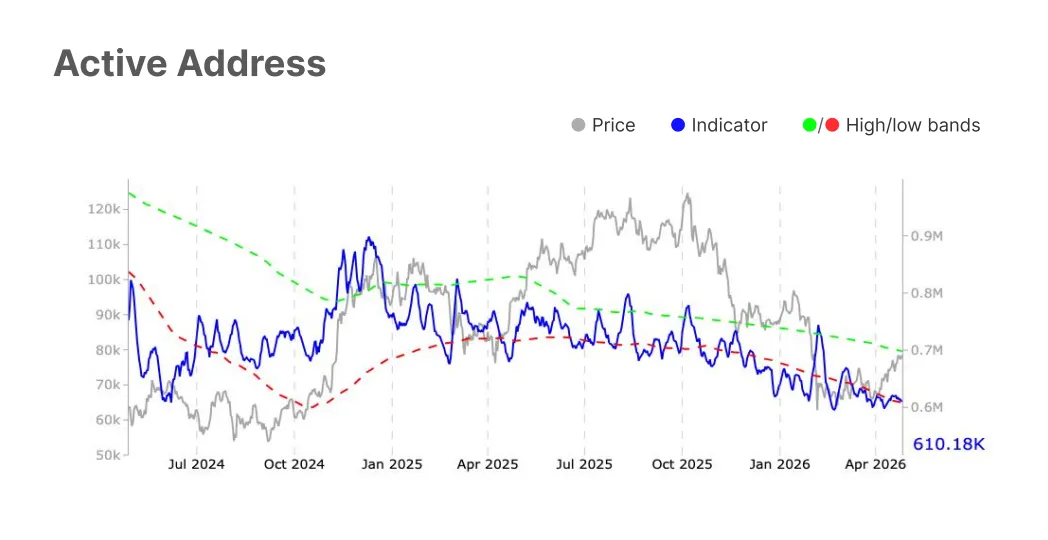
On-chain metrics further confirm capital flowing back into the network. Adjusted transfer volume on the Bitcoin blockchain rose 36.6% to $7.6 billion.
Glassnode found no signs of speculative overheating. The share of "hot capital" — funds belonging to short-term participants — declined to 17.5%, well below historical euphoria levels. According to the analysts, long-term holders remain in control of the market.
The net unrealized profit/loss metric improved from -7.4% to -3.5%, while the share of supply in profit reached 63.9%. The pool of underwater investors is shrinking, reducing their selling pressure on prices.
Glassnode summarized that Bitcoin's market shows a combination of bullish momentum, cautious sentiment, and consolidation. While buying pressure remains steady, reduced speculative activity points to a more measured approach, with investors balancing risk and capital rotation.
Earlier in April, analyst Michael Terpin projected Bitcoin's bottom at $57,000, expecting the cryptocurrency to reach that level in October.
Frequently Asked Questions
Why does Bernstein consider $60,000 the bottom for Bitcoin?
Bernstein analysts believe the recent dip to $60,000 formed a clear support level. Approximately 60% of Bitcoin's supply hasn't moved in over a year, and institutional demand through ETFs continues to strengthen the holder base.
What is Bernstein's Bitcoin price outlook?
Bernstein expects a 'higher and structurally longer bull cycle' for digital assets. Key drivers include institutional inflows, Strategy's accumulation of 818,334 BTC, and expanding crypto access through platforms like Morgan Stanley and Charles Schwab.
What do Glassnode on-chain metrics show about Bitcoin?
Glassnode reported Spot CVD surging 199% in one week to $54.8 million and Perpetual CVD rising 174.7% to $315.1 million. The share of hot capital dropped to 17.5%, indicating no speculative overheating and long-term holder dominance.
Why did Bitcoin drop from $79,000 to $76,800?
XWIN Japan attributed the pullback to a liquidity crunch caused by forced liquidations of leveraged long positions totaling $100 million. Thin weekend order books made prices more vulnerable to market orders.
How large is the stablecoin market in 2026?
Total stablecoin supply has exceeded $300 billion. Bernstein notes that stablecoins are increasingly used for real dollar payments rather than being driven by speculative sentiment. The RWA segment has also grown to $345 billion, up 110% year-over-year.
Read also
Bitcoin Hits $70,000 as Iran Ceasefire Talks Boost Risk Appetite
Bitcoin surged 4% to test the $70,000 level on April 6 amid reports of ceasefire negotiations between the US, Israel, and Iran. The derivatives market, however, sends mixed signals.
Bitcoin Down 2.5% Weekly: Jane Street Accusations & 7 Ethereum Forks
Bitcoin lost ~2.5% over the week amid macro shocks and geopolitical tensions. Jane Street faced market manipulation allegations while Ethereum unveiled an ambitious seven hard fork roadmap through 2029.
TON Wallet Introduces Yield Vaults for BTC, ETH, and USDT Directly in Telegram
TON Wallet has launched yield vaults for BTC, ETH, and USDT directly within Telegram, offering up to 18% APY on stablecoins through partnerships with Morpho, TAC, and Re7.
Weekly Recap: Aave Ecosystem Rescue Mobilizes 100,000 ETH and Quantum Computer Cracks 15-Bit ECC Key
Bitcoin held near $78,000, the DeFi community rallied over 100,000 ETH to help Aave recover from the Kelp hack, and a researcher cracked a 15-bit ECC key on a quantum computer.
Strategy Becomes Most-Shorted US Stock With $6B in Bets
Strategy tops the list of most-shorted large-cap US stocks with $6 billion in short positions, representing 14% of its market cap, as Bitcoin's decline erodes confidence in the company's debt-fueled BTC accumulation model.
Institutional Investors Dump ETF Shares Worth 25,000 BTC During Market Crash
Institutional investors massively sold Bitcoin ETF positions in Q4 2025, offloading shares equivalent to 25,098 BTC during the crypto market correction.