
Resolv Hacked for $25M as USR Stablecoin Crashes to $0.44
An attacker exploited a vulnerability in the Resolv protocol, minting 50 million unbacked USR tokens and causing the stablecoin to lose its dollar peg, resulting in approximately $25 million in losses.
Exploit Allowed Minting of 50M Unbacked USR
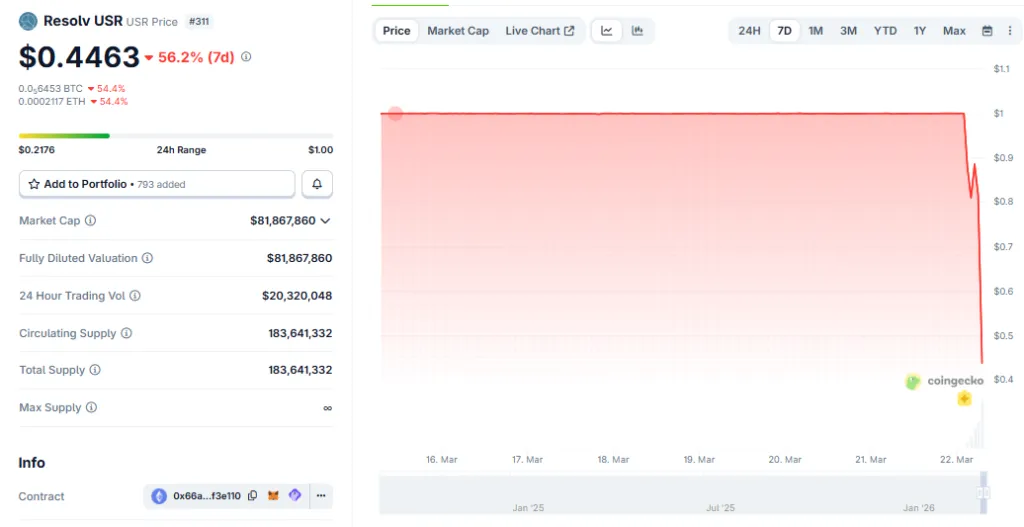
On March 22, 2026, the Resolv protocol suffered a major security breach. An attacker exploited a vulnerability in the platform's smart contract to mint 50 million USR tokens without any backing. The project's native stablecoin, designed to maintain a $1 peg, plummeted to $0.44.
"Resolv has experienced an exploit that allowed the attackers to mint 50mn of unbacked USR. The team has currently paused all the protocol functions to prevent further malicious actions and is actively working on recovery." — Resolv Labs (@ResolvLabs), original post
The Resolv Labs team immediately paused all protocol functions to prevent further malicious activity and began working on recovery efforts.
Why This Matters
Resolv is a stablecoin issuance platform that offered high yields through delta-neutral strategies built on Ethereum and Bitcoin. This incident raises serious questions about the security of USR's minting mechanism and could erode confidence in similar protocols.
According to Immunefi, the average damage from a single crypto protocol hack is approximately $25 million — excluding the subsequent crash of native tokens. The Resolv attack fits squarely into this pattern, with USR holders suffering additional losses as the token lost more than 55% of its value.
How the Attack Unfolded
Researchers at D2 published a detailed breakdown of the incident. According to their analysis, the attacker deposited 100,000 USDC into the USR Counter contract using the requestSwap function. In return, they received 49.95 million USR — a sum 500 times larger than the deposit.
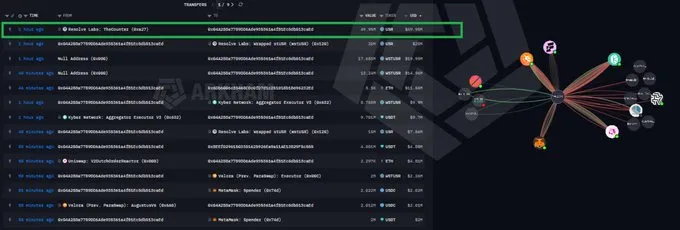
This outcome was made possible by a flaw in the smart contract. D2 experts suggested several possible explanations: the oracle was deceived, the validator was compromised offline, or there was simply no verification algorithm to check the amount between the requestSwap and completeSwap stages.
How Funds Were Extracted
Once in possession of the tokens, the hacker immediately began liquidating them. They converted USR into wstUSR and initiated mass sell-offs across every available venue. Due to rapidly depleting liquidity, trades executed with significant slippage, further accelerating the USR price collapse.
In the final stage, the attacker moved the proceeds through swaps and cross-chain bridges into other networks. D2 researchers estimated the total damage at approximately $25 million.
The central question posed by D2 analysts: how was a requestSwap for 100,000 USDC authorized as 50 million USR at the completeSwap stage? Someone needs to explain what happened between those two steps, the researchers noted. The Resolv team has not yet provided a detailed explanation.
Current Status
All Resolv protocol functions remain suspended. The project team has stated they are working on mitigating the aftermath and recovering lost funds. No further details have been disclosed by Resolv Labs at this time.
Frequently Asked Questions
What happened to the Resolv protocol?
On March 22, 2026, a hacker exploited a smart contract vulnerability in Resolv to mint 50 million unbacked USR tokens. The attacker then sold and bridged the tokens across networks, causing an estimated $25 million in losses.
Why did USR stablecoin lose its dollar peg?
The attacker dumped the illegitimately minted USR across all available liquidity venues, draining liquidity pools. The massive selling pressure caused USR to crash from $1 to $0.44.
How did the hacker get 50M USR for only 100K USDC?
According to D2 researchers, the attacker used the requestSwap function with a 100,000 USDC deposit. A flaw in the smart contract caused the system to authorize 49.95 million USR in return — 500 times the deposited amount. The exact root cause has not been disclosed yet.
Will Resolv users get their funds back?
Resolv Labs has paused all protocol functions and stated they are working on recovery. However, no detailed compensation plan has been announced at this time.
What is Resolv and how does it work?
Resolv is a stablecoin issuance platform that offered high yields through delta-neutral strategies built on Ethereum and Bitcoin. Its native stablecoin USR was designed to maintain a 1:1 peg with the US dollar.
Read also
Drift Protocol Hack Victims File Class Action Lawsuit Against Circle Over $230M in USDC
Over 100 victims of the Drift Protocol exploit have filed a class action lawsuit against Circle in Massachusetts court, accusing the USDC issuer of negligence and enabling hackers.
Drift Protocol on Solana Hacked for $280M in Sophisticated Durable Nonce Attack
Solana-based DeFi platform Drift Protocol lost at least $280 million in a hack on April 1. The DRIFT token dropped 37% while Circle faces criticism for failing to freeze stolen USDC.
TON Wallet Introduces Yield Vaults for BTC, ETH, and USDT Directly in Telegram
TON Wallet has launched yield vaults for BTC, ETH, and USDT directly within Telegram, offering up to 18% APY on stablecoins through partnerships with Morpho, TAC, and Re7.
Weekly Recap: Aave Ecosystem Rescue Mobilizes 100,000 ETH and Quantum Computer Cracks 15-Bit ECC Key
Bitcoin held near $78,000, the DeFi community rallied over 100,000 ETH to help Aave recover from the Kelp hack, and a researcher cracked a 15-bit ECC key on a quantum computer.
Stablecoin Transfer Volume Hits $10.5 Trillion in January — Highest Since April 2022
January stablecoin transaction volume surpassed $10.5 trillion, marking the highest monthly figure since April 2022. USDC led transfers while USDT maintained market cap dominance.
Top 10 Dollar Stablecoins in 2026: From Dominant Players to Exit Candidates
The stablecoin market has surpassed $311 billion in total capitalization. Here's a breakdown of the ten largest USD-pegged stablecoins — from undisputed leaders Tether and Circle to ambitious newcomers.