
Only 1 Out of 150 Crypto Projects Publicly Disclosed Market Maker Agreements — Novora Study
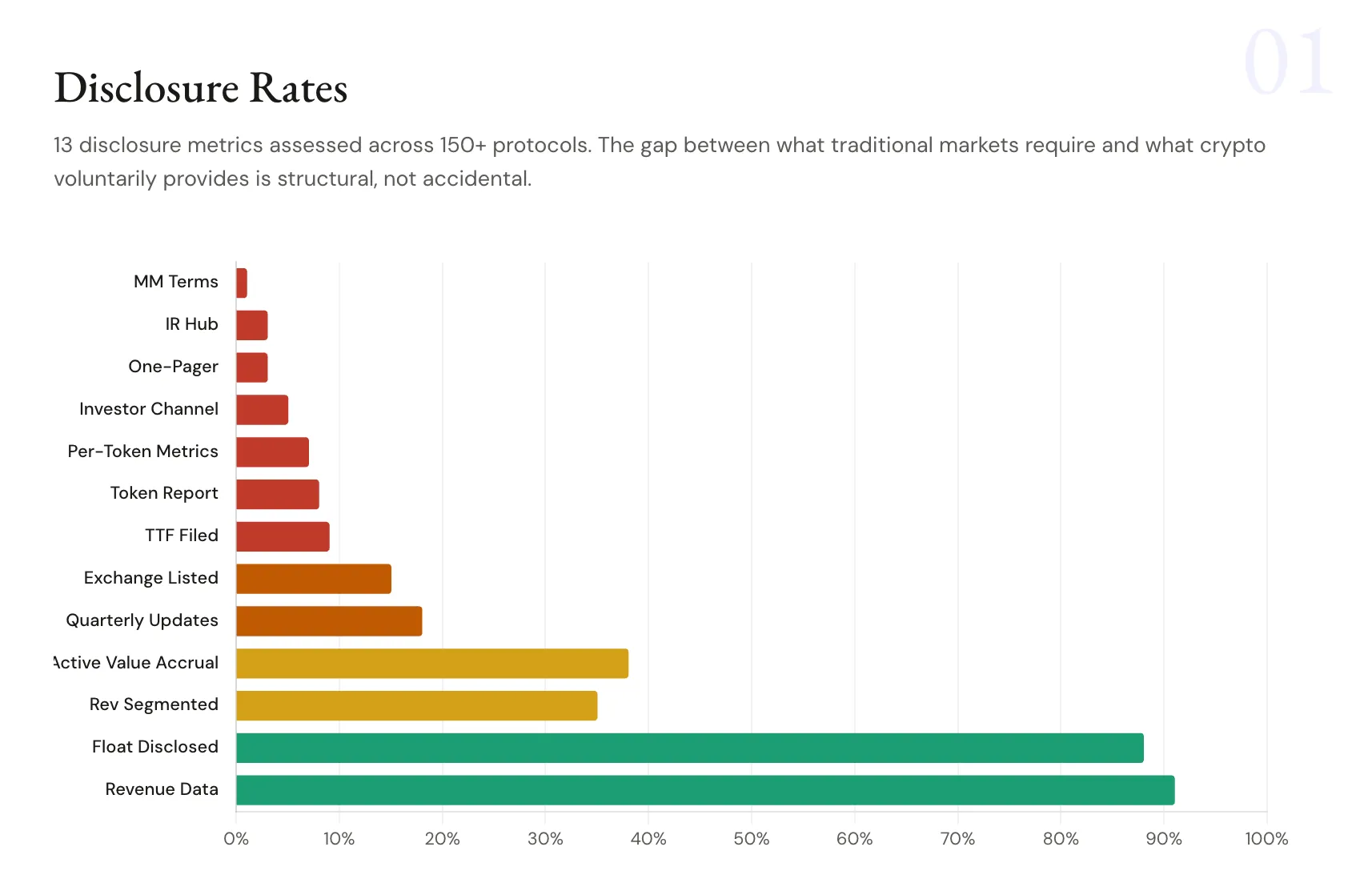
Novora researchers found that out of 150 major crypto protocols, only one has publicly disclosed the terms of its market-making arrangements. The transparency gap spans the entire industry.
Less than 1% of protocols disclose liquidity provider arrangements
Out of 150 major cryptocurrency protocols, just one has publicly revealed the details of its market-making agreements. This finding comes from a new report by Novora, focused on investor relations and token transparency in 2026.
"New from Novora Research: IR & Token Transparency in 2026" — Novora (@novora_), original post
The study covered a wide range of project types: decentralized exchanges, lending platforms, perp-DEXs, Layer 1 and Layer 2 networks, cross-chain bridges, and CEX tokens. The fully diluted valuations (FDV) of projects in the sample ranged from $40 million to $45 billion. Researchers evaluated each protocol using a binary transparency framework based on publicly available information.
The sole project that disclosed its market-making terms was the decentralized platform Meteora, whose team published partnership details in its annual report for token holders covering 2025.
Why this matters
Opaque market-making arrangements represent a persistent risk vector for crypto investors. Novora founder Connor King described the situation as "the most significant transparency gap in our industry," noting that traditional financial markets routinely disclose such agreements, while "in crypto, every participant operates without this information."
A particular concern is the widely used loan option model, where projects lend tokens to market makers. The market makers then use these tokens to maintain trading activity and volume — often tied to exchange listing agreements. Critics argue that in practice, this structure incentivizes selling borrowed tokens. The market maker profits from price declines, while the project faces reduced liquidity and deteriorating market metrics.
A systemic gap in investor reporting
Beyond market-maker disclosures, the Novora study uncovered a broad disconnect between revenue generation and formal reporting. According to the data, 91% of protocols generate trackable revenue, yet only 18% of teams produce quarterly reports. Materials specifically aimed at token holders are published by a mere 8%.
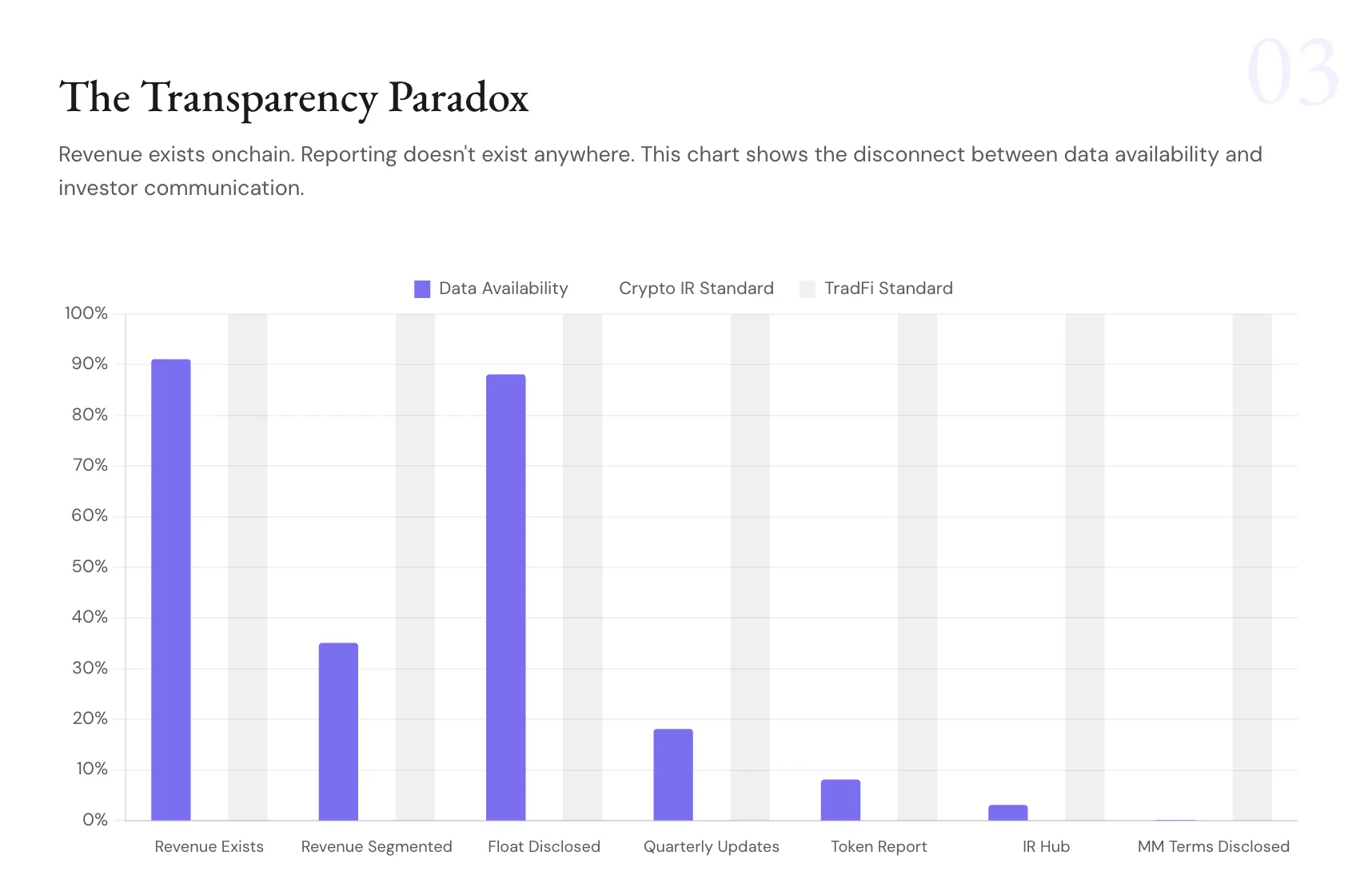
Researchers noted that third-party analytics infrastructure has already reached maturity, with coverage on major platforms exceeding 85%. The underlying data is broadly available, but projects rarely translate it into formal reporting for their communities.
Transparency varies significantly by project type
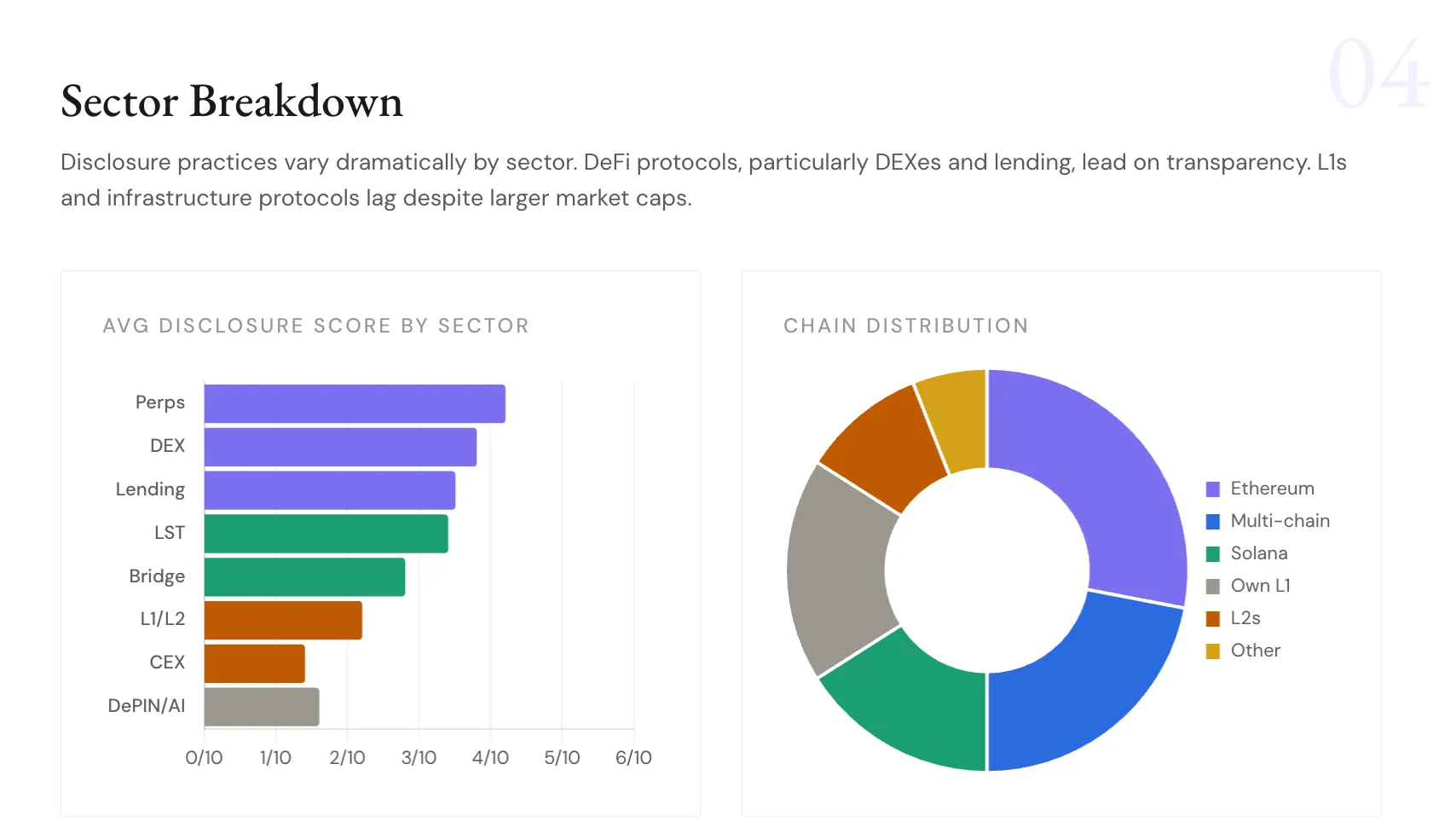
A breakdown by category revealed uneven transparency across the crypto landscape. Perpetual futures protocols and decentralized exchanges led in both information disclosure and value accrual mechanisms. Layer 1 networks and infrastructure projects lagged behind despite their higher market capitalizations. Among blockchain networks, Ethereum ranked highest for transparency.
In early 2025, market maker CLS Global admitted to conducting wash trades involving the AI token NexFundAI — a project created by the FBI specifically to detect fraud in crypto markets. That case illustrated the kind of abuse that can flourish when market-making relationships lack transparency.
Frequently Asked Questions
Which crypto project disclosed its market maker agreement?
Meteora was the only project out of 150 analyzed that publicly disclosed its market-making terms. The team published the details in its annual report for token holders covering 2025.
What is the loan option model in crypto market making?
Under this model, crypto projects lend tokens to market makers to maintain trading activity and volume. Critics argue it incentivizes selling borrowed tokens, causing price drops that benefit the market maker while harming the project.
How many crypto projects publish quarterly reports?
According to Novora's research, only 18% of the 150 analyzed protocols produce quarterly reports. Even fewer — just 8% — publish materials specifically for token holders.
Which types of crypto projects are most transparent?
Perpetual futures protocols and decentralized exchanges scored highest for transparency and value accrual mechanisms. Layer 1 networks and infrastructure projects ranked lower despite their larger market caps. Ethereum leads among networks.
What was the Novora transparency study about?
Novora analyzed 150 major crypto protocols with FDVs ranging from $40 million to $45 billion, evaluating their disclosure practices using a binary transparency framework. The study found that less than 1% disclosed market maker arrangements publicly.
Read also
TON Wallet Introduces Yield Vaults for BTC, ETH, and USDT Directly in Telegram
TON Wallet has launched yield vaults for BTC, ETH, and USDT directly within Telegram, offering up to 18% APY on stablecoins through partnerships with Morpho, TAC, and Re7.
Weekly Recap: Aave Ecosystem Rescue Mobilizes 100,000 ETH and Quantum Computer Cracks 15-Bit ECC Key
Bitcoin held near $78,000, the DeFi community rallied over 100,000 ETH to help Aave recover from the Kelp hack, and a researcher cracked a 15-bit ECC key on a quantum computer.
Stablecoin Transfer Volume Hits $10.5 Trillion in January — Highest Since April 2022
January stablecoin transaction volume surpassed $10.5 trillion, marking the highest monthly figure since April 2022. USDC led transfers while USDT maintained market cap dominance.
Top 10 Dollar Stablecoins in 2026: From Dominant Players to Exit Candidates
The stablecoin market has surpassed $311 billion in total capitalization. Here's a breakdown of the ten largest USD-pegged stablecoins — from undisputed leaders Tether and Circle to ambitious newcomers.
Weekly Recap: Bitcoin Tests $74K, Miners Dump Holdings, ChatGPT Boycott Grows
Bitcoin briefly touched $74,000 before retreating to $67,500. Public miners sold over 15,000 BTC in five months, traders flocked to Hyperliquid for oil and gold futures, and a ChatGPT boycott gained major traction.
End of the "Cheap Ether" Era: Buterin Rewrites the L2 Playbook
Vitalik Buterin has signaled a fundamental shift away from Ethereum's rollup-centric roadmap. With the Strawmap plan targeting 10,000 TPS on L1, Layer 2 projects must find new reasons to exist.