
LayerZero Commits 10,000 ETH to DeFi United Recovery Initiative
Omnichain protocol LayerZero Labs is pledging over 10,000 ETH (~$23M) to the Aave-led DeFi United initiative launched after the Kelp exploit. The move drew mixed reactions from the community.
LayerZero Allocates 10,000 ETH to Recovery Efforts
Omnichain protocol LayerZero Labs has announced a pledge of more than 10,000 ETH (approximately $23 million) to the Aave-led DeFi United initiative. The allocation is split evenly: 5,000 ETH goes directly to the DeFi United ecosystem recovery fund, while another 5,000 ETH is deposited into Aave reserves to bolster market liquidity.
"LayerZero Labs is pledging more than 10,000 ETH to @Aave-led DeFi United efforts. We are: Donating 5,000 ETH to DeFi United, Depositing an additional 5,000 ETH to strengthen Aave markets liquidity, Strategically deepening GHO liquidity" — LayerZero (@LayerZero_Core), original post
Beyond the direct capital injection, LayerZero stated its intention to deepen liquidity for GHO, the stablecoin issued by the Aave lending platform. Separately, TokenLogic raised the GHO borrow cap on the Aave Ethereum Core V3 Market from 100 million to 125 million, with a fixed 3.5% borrow rate.
"We raised the $GHO borrow cap on the @aave Ethereum Core V3 Market from 100M to 125M. Enjoy a fixed 3.5% borrow rate." — TokenLogic (@Token_Logic), original post
Why This Matters
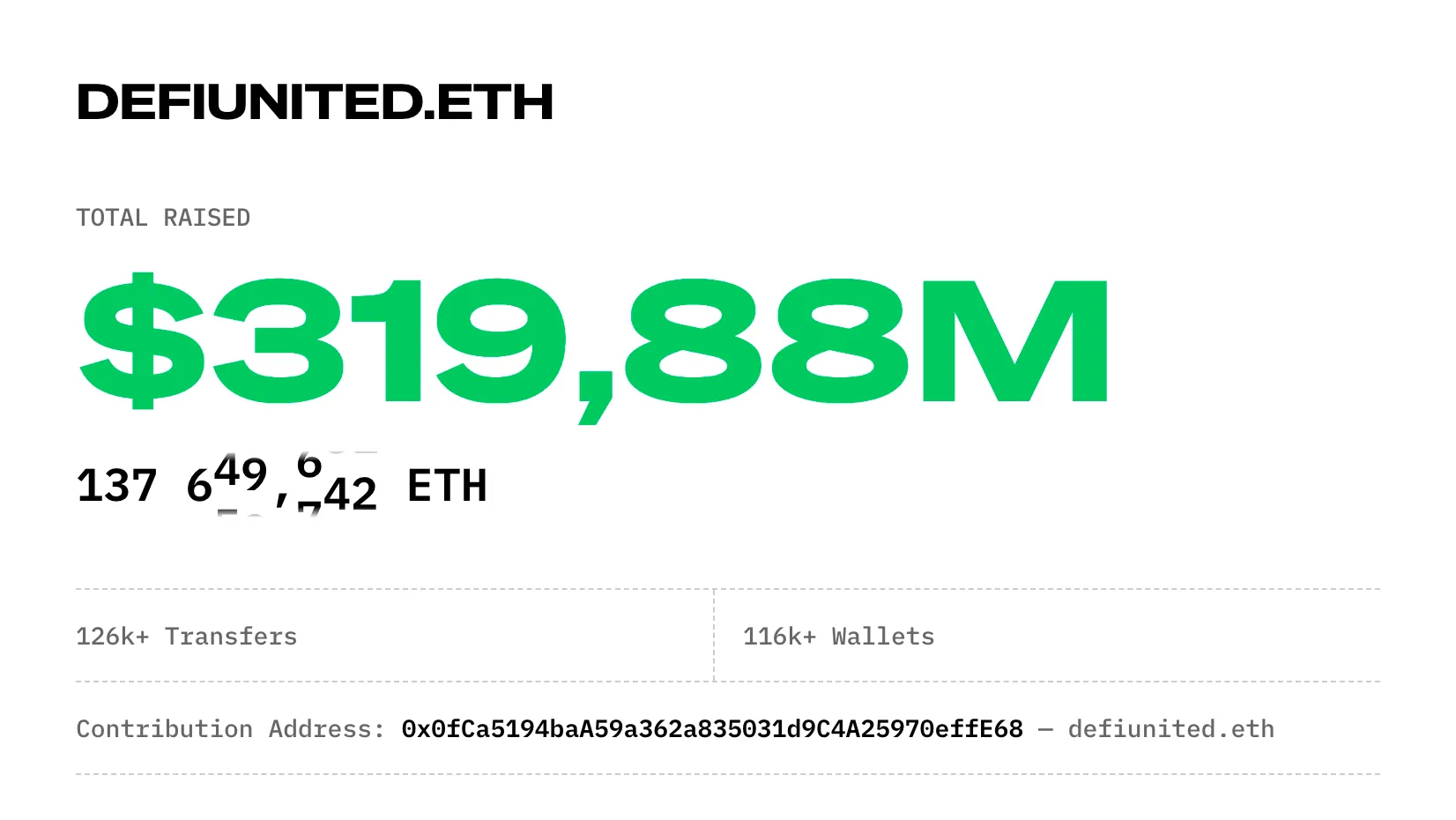
The DeFi United initiative was established in response to the Kelp exploit, which caused an estimated $290 million in damages. As of April 29, the program has attracted over 137,000 ETH (~$320 million) — surpassing the total exploit losses. LayerZero's contribution ranks among the largest individual pledges, signaling the DeFi sector's capacity for collective crisis response.
On April 28, ConsenSys and its founder Joseph Lubin joined the effort with a 30,000 ETH contribution. DeFi platform Compound committed up to 3,000 ETH, pending community approval. Puffer Finance also deployed treasury capital in support of Aave.
"DeFi is built on resilience. Puffer has deployed treasury capital in support of @aave DeFi United. As a security-first liquid staking protocol, we believe strong infrastructure and aligned incentives are what sustain DeFi through moments like this." — Puffer Finance 🐡 (@puffer_finance), original post
Community Pushback
Despite the significant financial commitment, LayerZero's announcement was met with sharp criticism. Community members pointed to LayerZero Labs' DVN configuration as a potential root cause of the Kelp exploit. Many considered the 5,000 ETH donation to the recovery fund insufficient given the protocol's alleged role in the incident.
"Only 5,000 ETH when you were the CAUSE of this exploit? This might actually be criminal." — LIMITLΞSS 🐺👑 (@goodguyaugust), original post
Some users called on projects to disconnect from LayerZero's infrastructure entirely, deeming it unsafe. A user going by Rajmani stated they had sold all their ZRO tokens at a 70% loss, citing a complete erosion of trust in the project.
Broader Context: Debt Tokenization and What Comes Next
Amid ongoing discussions about the Kelp exploit's aftermath, Curve founder Michael Egorov proposed a debt tokenization mechanism — a potential tool for more efficient crisis management in future incidents.
The total amount raised through DeFi United continues to grow as more participants join the program. The fact that collected funds ($320 million) now exceed the exploit's damages ($290 million) demonstrates the DeFi ecosystem's ability to mobilize rapidly under pressure, though questions around individual protocol accountability remain unresolved.
Frequently Asked Questions
How much ETH did LayerZero pledge to DeFi United?
LayerZero Labs committed over 10,000 ETH (~$23 million). The pledge is split into a 5,000 ETH donation to the DeFi United recovery fund and a 5,000 ETH deposit to strengthen Aave market liquidity.
How much has DeFi United raised after the Kelp exploit?
As of April 29, DeFi United has raised over 137,000 ETH (~$320 million). This amount exceeds the $290 million in damages caused by the Kelp exploit.
Why is the community criticizing LayerZero's donation?
Community members have pointed to LayerZero Labs' DVN configuration as a potential cause of the Kelp exploit. Many consider the 5,000 ETH recovery donation insufficient given the protocol's alleged role in the incident, and some have called for projects to disconnect from LayerZero's infrastructure.
Who are the biggest contributors to DeFi United?
ConsenSys and founder Joseph Lubin made the largest known contribution at 30,000 ETH. LayerZero Labs pledged 10,000 ETH, Compound committed up to 3,000 ETH pending community approval, and Puffer Finance deployed treasury capital as well.
What changed with the GHO borrow cap on Aave?
TokenLogic raised the GHO borrow cap on the Aave Ethereum Core V3 Market from 100 million to 125 million. The fixed borrow rate for GHO remains at 3.5%.
Read also
TON Wallet Introduces Yield Vaults for BTC, ETH, and USDT Directly in Telegram
TON Wallet has launched yield vaults for BTC, ETH, and USDT directly within Telegram, offering up to 18% APY on stablecoins through partnerships with Morpho, TAC, and Re7.
Weekly Recap: Aave Ecosystem Rescue Mobilizes 100,000 ETH and Quantum Computer Cracks 15-Bit ECC Key
Bitcoin held near $78,000, the DeFi community rallied over 100,000 ETH to help Aave recover from the Kelp hack, and a researcher cracked a 15-bit ECC key on a quantum computer.
Bitcoin Down 2.5% Weekly: Jane Street Accusations & 7 Ethereum Forks
Bitcoin lost ~2.5% over the week amid macro shocks and geopolitical tensions. Jane Street faced market manipulation allegations while Ethereum unveiled an ambitious seven hard fork roadmap through 2029.
AI Audit Uncovers Critical Liveness Bug in Ethereum's Nethermind Client
Octane Security's AI discovered a high-severity vulnerability in the Nethermind execution client that could have halted block production for 38% of Ethereum mainnet validators. The Ethereum Foundation awarded a maximum $50,000 bounty.
Bitcoin Hits $70,000 as Iran Ceasefire Talks Boost Risk Appetite
Bitcoin surged 4% to test the $70,000 level on April 6 amid reports of ceasefire negotiations between the US, Israel, and Iran. The derivatives market, however, sends mixed signals.
Bitcoin Rebounds to $70,000 as Leverage Drops and ETF Inflows Continue
BTC recovered above $70,000 on March 10, erasing weekend losses. Spot ETFs attracted $568M in weekly inflows while the estimated leverage ratio on Binance fell sharply from 0.198 to 0.152.