
London Crypto Club Analysts: Iran War Could Be a Bitcoin Catalyst
London Crypto Club analysts David Brickell and Chris Mills argue the US-Israel military operation against Iran is a long-awaited "narrative catalyst" for Bitcoin growth, outlining two key scenarios.
The US-Israel military operation against Iran could serve as a significant growth driver for Bitcoin, according to London Crypto Club analysts David Brickell and Chris Mills, who outlined their view in a new market brief.
«Loads going on in politics, AI and macro. Read our summary of the current setup and what it means for crypto markets in the latest edition of Connecting the Dots — out now 👇» — LondonCryptoClub (@LDNCryptoClub), March 2, 2026
Why It Matters
The death of Ayatollah Ali Khamenei and the escalating Middle East conflict have reshaped the macro backdrop for crypto markets. Brickell and Mills describe the situation as a "narrative catalyst" the market had been waiting for. Bitcoin had been under pressure from US liquidity tightening and a rotation out of tech stocks driven by AI fears — dynamics that led many to question BTC's role as a macro asset. The analysts argue those doubts were misplaced: Bitcoin's core fundamentals remain intact.
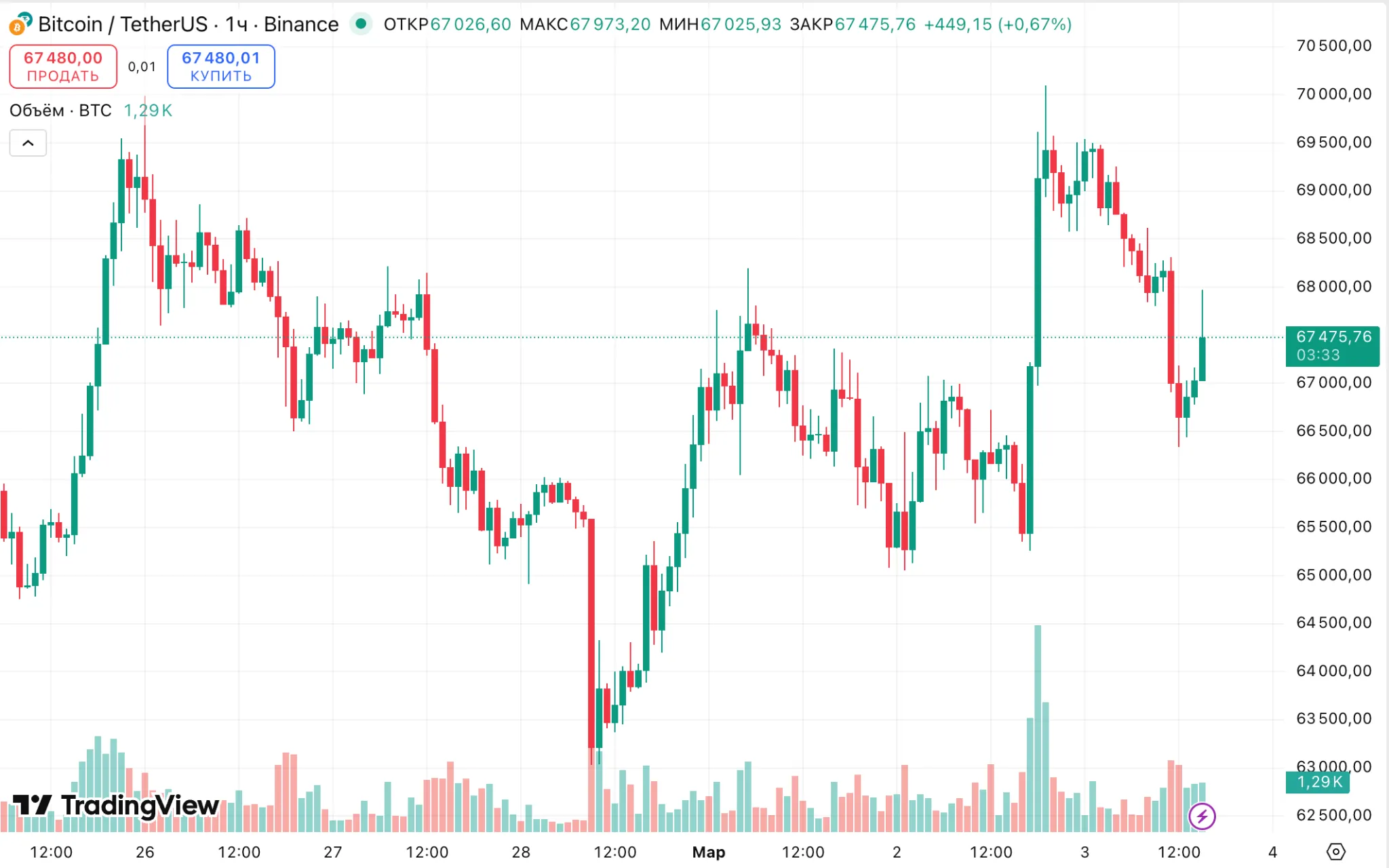
BTC/USDT hourly chart, Binance. Source: TradingView
Two Scenarios for Bitcoin
Scenario one — a prolonged conflict. Under this outcome, the analysts expect an "extreme risk-off" environment in which investors turn to Bitcoin as protection against the breakdown of existing economic and political structures. Brickell and Mills believe BTC would emerge as a beneficiary alongside gold.
Scenario two — a swift resolution. If President Donald Trump announces a peace deal, markets would price in a "peace premium," sending Bitcoin higher on a wave of euphoria.
Either way, the analysts argue the Federal Reserve will be compelled to expand its balance sheet to fund military operations, injecting additional liquidity into the financial system and supporting crypto markets in the process.
"Risk-asset selloffs during wars tend to be very short-lived, as conflicts lead to rising debt and deficits, requiring even more liquidity and money printing to finance the war." — David Brickell & Chris Mills, London Crypto Club.
Historical Precedent: Arthur Hayes Weighs In
BitMEX founder Arthur Hayes holds a similar view, predicting the Fed will pivot to monetary easing to support US foreign policy objectives. Hayes points to a consistent historical pattern: every major American military campaign has been followed by increased federal spending and lower interest rates — conditions that have historically benefited financial markets, including crypto.
At the time of writing, Bitcoin is trading near $67,400, up roughly 2% over the past 24 hours.
Frequently Asked Questions
How does the Iran war affect Bitcoin price?
London Crypto Club analysts outline two scenarios: a prolonged conflict drives investors into Bitcoin as a safe-haven asset, while a quick resolution triggers a euphoric 'peace premium' rally. In both cases, Fed money printing to fund military spending is expected to boost crypto markets.
What does Arthur Hayes say about war and Bitcoin?
BitMEX founder Arthur Hayes argues the Federal Reserve will ease monetary policy to support US foreign policy goals. He cites historical data showing that American military campaigns consistently led to higher federal spending and lower interest rates, which benefited financial markets including crypto.
What is the current Bitcoin price amid Iran conflict?
At the time of writing, Bitcoin was trading around $67,400, up approximately 2% in the past 24 hours. Analysts attribute part of this move to the geopolitical narrative surrounding the Middle East conflict.
Who are the London Crypto Club analysts behind this forecast?
The analysis was authored by David Brickell and Chris Mills of London Crypto Club, published on March 2, 2026 in their Connecting the Dots newsletter. They describe the Iran conflict as a long-awaited 'narrative catalyst' for Bitcoin.
Why do wars historically lead to Bitcoin gains?
According to Brickell, Mills, and Hayes, wartime spending forces governments to increase debt and deficits, which leads central banks to expand money supply. This liquidity injection has historically been bullish for risk assets and crypto in particular.
Read also
Bitcoin Hits $70,000 as Iran Ceasefire Talks Boost Risk Appetite
Bitcoin surged 4% to test the $70,000 level on April 6 amid reports of ceasefire negotiations between the US, Israel, and Iran. The derivatives market, however, sends mixed signals.
Bernstein Calls $60,000 a 'Clear Bottom' for Bitcoin, Expects Extended Bull Cycle
Analysts at Bernstein have identified $60,000 as a firm floor for Bitcoin, projecting a structurally longer bull cycle. On-chain data from Glassnode confirms a resurgence of buying activity.
Bitcoin Down 2.5% Weekly: Jane Street Accusations & 7 Ethereum Forks
Bitcoin lost ~2.5% over the week amid macro shocks and geopolitical tensions. Jane Street faced market manipulation allegations while Ethereum unveiled an ambitious seven hard fork roadmap through 2029.
TON Wallet Introduces Yield Vaults for BTC, ETH, and USDT Directly in Telegram
TON Wallet has launched yield vaults for BTC, ETH, and USDT directly within Telegram, offering up to 18% APY on stablecoins through partnerships with Morpho, TAC, and Re7.
Weekly Recap: Aave Ecosystem Rescue Mobilizes 100,000 ETH and Quantum Computer Cracks 15-Bit ECC Key
Bitcoin held near $78,000, the DeFi community rallied over 100,000 ETH to help Aave recover from the Kelp hack, and a researcher cracked a 15-bit ECC key on a quantum computer.
Strategy Becomes Most-Shorted US Stock With $6B in Bets
Strategy tops the list of most-shorted large-cap US stocks with $6 billion in short positions, representing 14% of its market cap, as Bitcoin's decline erodes confidence in the company's debt-fueled BTC accumulation model.