
INDEX Unveils LITRO: A Tokenized Oil Asset Backed by Physical Crude with Real-World Delivery
RWA platform International Digital Exchange (INDEX) has announced LITRO, a token backed 1:1 by physical oil. Holders will be able to trade the asset or request actual crude delivery.
One token, one liter: INDEX brings physical oil on-chain
Real-world asset (RWA) platform International Digital Exchange (INDEX) has announced plans to launch LITRO, a token where each unit is backed by one liter of physical crude oil. The news was shared with CoinDesk by the project's co-founder, Baron Lamarr.
LITRO's price will be pegged to global benchmarks Brent and WTI. The full product launch is scheduled for early 2027, while a testnet and demo version are expected between March and May 2026.
Why this matters
Tokenization of physical commodities is rapidly gaining traction in the RWA space. What sets LITRO apart is its promise of physical delivery — not just price exposure but the ability to actually claim crude oil through blockchain infrastructure. With geopolitical tensions driving oil prices sharply higher, demand for such instruments is intensifying across both traditional and decentralized markets.
How LITRO's issuance and logistics work
Token minting follows a multi-step process. Oil producers first submit reserve data to INDEX, which is then verified by independent auditors. These experts confirm the volume, authenticity of the crude, and legal clarity of ownership rights. According to Lamarr, tokens are minted strictly at a 1:1 ratio to verified physical oil — only after all audits are complete.
The physical crude remains in storage with the producer, but legal rights are transferred to the INDEX system. The project is built on Arbitrum and maintains compatibility with other EVM blockchains.
LITRO holders will have two exit options: selling tokens for fiat currency or requesting physical oil delivery. To facilitate the latter, the platform is building a "smart logistics routing system" powered by IoT sensors, AIS vessel tracking, and artificial intelligence. The system will match crude grades, coordinate tankers and terminals, issue electronic bills of lading, and manage delivery end-to-end.
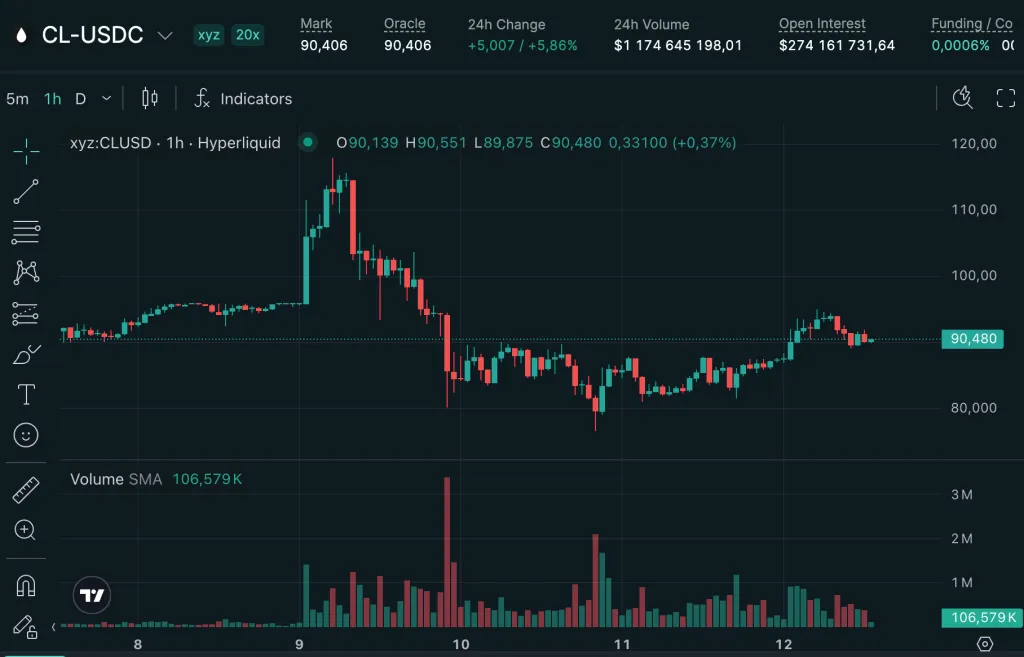
Oil trading surge on Hyperliquid
The INDEX announcement arrives amid a dramatic spike in tokenized oil interest. Over the past several weeks, oil prices have surged by tens of percent following the Middle Eastern conflict and the closure of the Strait of Hormuz — the critical export route for Persian Gulf hydrocarbons.
The crisis has drawn a wave of traders to decentralized exchange Hyperliquid, where perpetual oil contracts have seen explosive demand. Trading volume for the CL-USDC derivative, which tracks WTI prices, reached $1.1 billion with open interest exceeding $274 million.
Hyperliquid has effectively become a 24/7 "war terminal" — a primary venue for round-the-clock macro risk trading. This momentum has lifted the exchange's native token HYPE, which gained 10% in the past 24 hours to reach $37.6.
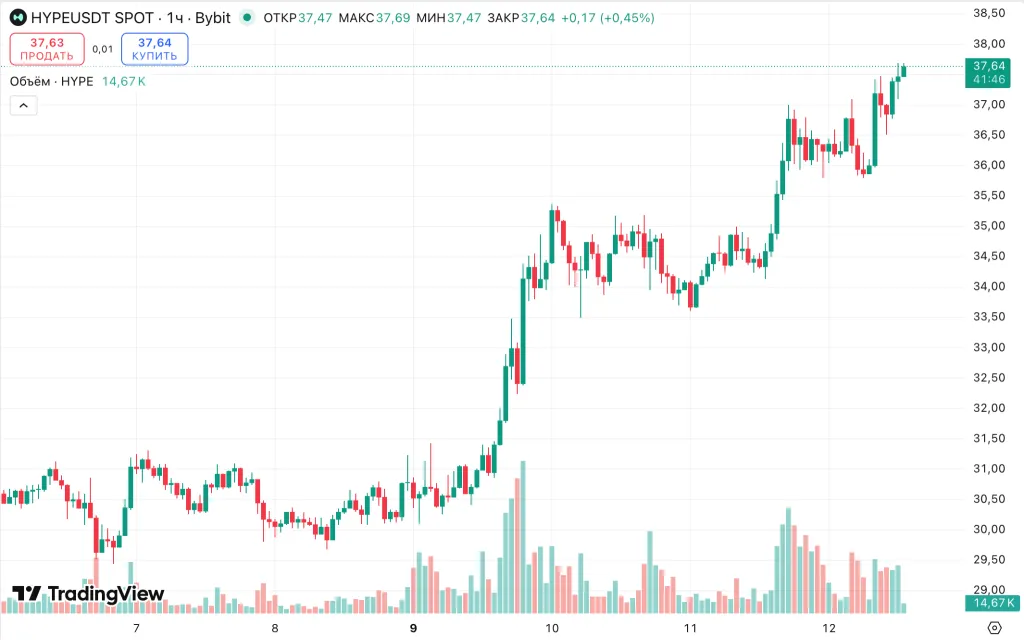
The Hyperliquid team highlighted that RWA trading on the platform continues to break records:
"Over the past 2 weeks, RWA trading on Hyperliquid has repeatedly broken records, surpassing $1.3B in open interest and $1.4B in weekend volume. When traditional markets are closed, Hyperliquid is the premier venue for 24/7 price discovery on oil, metals, indices, and other…" — Hyperliquid (@HyperliquidX), original post
Record volumes and the road ahead
On March 11, Hyperliquid crossed the $4 trillion mark in cumulative perpetual futures trading volume — a milestone reached in three years of operation.
The convergence of geopolitical instability, growing demand for alternative hedging tools, and maturing RWA infrastructure creates fertile ground for projects like INDEX and its LITRO token. Whether the physical-delivery model for tokenized oil proves viable will become clearer once the testnet goes live in spring 2026.
Frequently Asked Questions
What is INDEX LITRO token?
LITRO is a token issued by International Digital Exchange (INDEX) where each unit is backed by one liter of physical crude oil. Its price tracks global Brent and WTI benchmarks, and holders can either sell for fiat or request actual physical delivery.
When does LITRO tokenized oil launch?
The testnet and demo version are expected between March and May 2026. The full product launch is scheduled for early 2027.
Which blockchain does INDEX use?
INDEX is built on Arbitrum and is compatible with other EVM blockchains. This enables broad interoperability across the decentralized application ecosystem.
Why is Hyperliquid HYPE token price rising?
HYPE surged 10% to $37.6 as Hyperliquid became the go-to platform for 24/7 oil and macro risk trading during the Middle Eastern conflict. The closure of the Strait of Hormuz drove massive trading volumes to the decentralized exchange.
How much oil trading volume is on Hyperliquid?
The CL-USDC derivative tracking WTI reached $1.1 billion in trading volume with over $274 million in open interest. Overall RWA trading on Hyperliquid surpassed $1.3B in open interest and $1.4B in weekend volume.
Read also
CoinShares: TradFi and DeFi Are Merging Into a Hybrid Finance System
A joint report by CoinShares and Token Terminal documents the convergence of traditional and decentralized finance into a measurable market structure, with stablecoins at $297.6 billion and the RWA market approaching $29 billion.
Weekly Recap: Bitcoin Tests $76K, SEC Greenlights Tokenized Stocks on Nasdaq
Bitcoin briefly touched $76,000 before retreating to $68,800. The SEC approved tokenized stock trading on Nasdaq, while mining difficulty dropped 7.76% amid growing miner losses.
Weekly Recap: Bitcoin Tests $74K, Miners Dump Holdings, ChatGPT Boycott Grows
Bitcoin briefly touched $74,000 before retreating to $67,500. Public miners sold over 15,000 BTC in five months, traders flocked to Hyperliquid for oil and gold futures, and a ChatGPT boycott gained major traction.
TON Wallet Introduces Yield Vaults for BTC, ETH, and USDT Directly in Telegram
TON Wallet has launched yield vaults for BTC, ETH, and USDT directly within Telegram, offering up to 18% APY on stablecoins through partnerships with Morpho, TAC, and Re7.
Weekly Recap: Aave Ecosystem Rescue Mobilizes 100,000 ETH and Quantum Computer Cracks 15-Bit ECC Key
Bitcoin held near $78,000, the DeFi community rallied over 100,000 ETH to help Aave recover from the Kelp hack, and a researcher cracked a 15-bit ECC key on a quantum computer.
Stablecoin Transfer Volume Hits $10.5 Trillion in January — Highest Since April 2022
January stablecoin transaction volume surpassed $10.5 trillion, marking the highest monthly figure since April 2022. USDC led transfers while USDT maintained market cap dominance.