IMF Warns Tokenization of Real-World Assets Could Transmit Crypto Risks to Traditional Finance
The International Monetary Fund has flagged the rapid growth of the RWA market as a potential threat to global financial stability, warning that tokenization could accelerate the spread of financial crises.
The International Monetary Fund (IMF) has raised concerns that the expanding real-world asset (RWA) tokenization market could introduce new systemic risks to the global financial system. According to the institution's specialists, tokenization is far more than a technological upgrade — it represents a fundamental transformation of the financial architecture.
Moving instruments such as equities, bonds, and money market products onto blockchain eliminates intermediaries, reduces settlement delays, and lowers costs. At the same time, however, it fundamentally alters the nature of financial risk.
Why This Matters
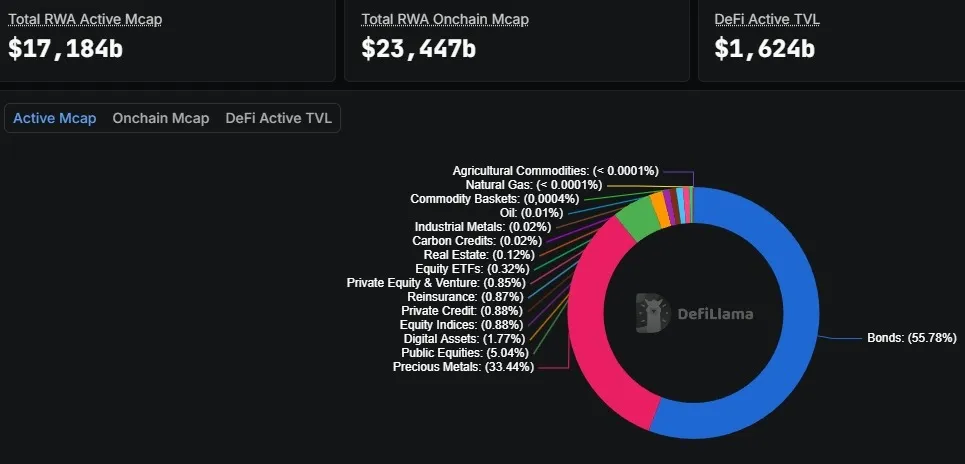
The tokenized RWA sector is experiencing explosive growth. According to DeFi Llama data, the market has already surpassed $23.4 billion(excluding stablecoins). Money market funds account for approximately 56% of the market, while tokenized precious metals make up around 33.5%. In March, analysts noted that the tokenized equities market grew 2,900% year-over-year, a trend supported by major stock exchanges NYSE and Nasdaq.
Given this pace of expansion, the IMF's warnings carry significant weight: without coordinated regulation, the integration of crypto infrastructure with traditional finance could become a conduit for systemic shocks.
Instant Settlement as a Crisis Accelerator
One of the primary threats identified by the fund is the speed of transactions. Instant settlement removes traditional time-based "buffers" that previously gave regulators and market participants room to respond to stress events. IMF experts believe this could lead to:
- Crises developing at a significantly faster pace;
- Automated processes amplifying negative effects;
- Substantially reduced opportunities for intervention and containment.
Additional Sources of Instability
The IMF also outlined several supplementary risks. These include liquidity fragmentation across different blockchain platforms and infrastructure concentration, where the failure of a single network could impact the entire market. Additionally, risks are being transferred from the banking system to smart contracts and digital ledgers, while global access to tokenized assets creates unpredictable capital flows.
Stablecoins received particular attention. They are widely used in RWA operations, serving as the bridge to the broader crypto market. Their stability depends directly on the quality of reserves and redemption mechanisms, making them vulnerable during mass withdrawals in stressful conditions.
Heightened Risks for Developing Economies
The fund's specialists specifically highlighted threats that the proliferation of tokenized assets and stablecoins poses to developing economies:
- Displacement of national currencies;
- Increased volatility in cross-border capital flows;
- Reduced effectiveness of central bank monetary policy.
The IMF concluded that while tokenization can genuinely improve market efficiency, without coordinated regulatory action and robust infrastructure, it risks becoming a source of systemic problems.
Aave founder Stani Kulechov has previously projected that the RWA segment could grow to $50 trillion through the digitization of so-called "abundance assets."
Frequently Asked Questions
What risks does the IMF see in RWA tokenization?
The IMF identifies accelerated crisis propagation due to instant settlement, liquidity fragmentation across blockchain platforms, infrastructure concentration, and unpredictable capital flows. Stablecoin vulnerability in the RWA segment is also highlighted as a major concern.
How big is the tokenized real-world assets market?
According to DeFi Llama, the RWA market exceeds $23.4 billion excluding stablecoins. Money market funds account for approximately 56% while tokenized precious metals represent about 33.5% of the total.
Why is RWA tokenization risky for developing countries?
The IMF warns that tokenized assets and stablecoins could displace national currencies in developing economies, increase cross-border capital flow volatility, and reduce the effectiveness of central bank monetary policy.
How fast is the tokenized equities market growing?
The tokenized equities market grew 2,900% year-over-year as of March 2026. This trend was supported by major stock exchanges including NYSE and Nasdaq.
What is the long-term RWA market forecast?
Aave founder Stani Kulechov has projected that the RWA segment could expand to $50 trillion through the digitization of so-called 'abundance assets.'
Read also
Stablecoin Transfer Volume Hits $10.5 Trillion in January — Highest Since April 2022
January stablecoin transaction volume surpassed $10.5 trillion, marking the highest monthly figure since April 2022. USDC led transfers while USDT maintained market cap dominance.
Bernstein Calls $60,000 a 'Clear Bottom' for Bitcoin, Expects Extended Bull Cycle
Analysts at Bernstein have identified $60,000 as a firm floor for Bitcoin, projecting a structurally longer bull cycle. On-chain data from Glassnode confirms a resurgence of buying activity.
Top 10 Dollar Stablecoins in 2026: From Dominant Players to Exit Candidates
The stablecoin market has surpassed $311 billion in total capitalization. Here's a breakdown of the ten largest USD-pegged stablecoins — from undisputed leaders Tether and Circle to ambitious newcomers.
Weekly Recap: Bitcoin Tests $74K, Miners Dump Holdings, ChatGPT Boycott Grows
Bitcoin briefly touched $74,000 before retreating to $67,500. Public miners sold over 15,000 BTC in five months, traders flocked to Hyperliquid for oil and gold futures, and a ChatGPT boycott gained major traction.
TON Wallet Introduces Yield Vaults for BTC, ETH, and USDT Directly in Telegram
TON Wallet has launched yield vaults for BTC, ETH, and USDT directly within Telegram, offering up to 18% APY on stablecoins through partnerships with Morpho, TAC, and Re7.
Weekly Recap: Aave Ecosystem Rescue Mobilizes 100,000 ETH and Quantum Computer Cracks 15-Bit ECC Key
Bitcoin held near $78,000, the DeFi community rallied over 100,000 ETH to help Aave recover from the Kelp hack, and a researcher cracked a 15-bit ECC key on a quantum computer.