
Bitcoin Posts Worst Q1 Performance Since 2018, Dropping 22.2%
Bitcoin closed Q1 2026 at $66,619, marking a 22.2% decline and the worst first-quarter performance in eight years. Geopolitical tensions, ETF outflows, and Fed caution drove the sell-off.
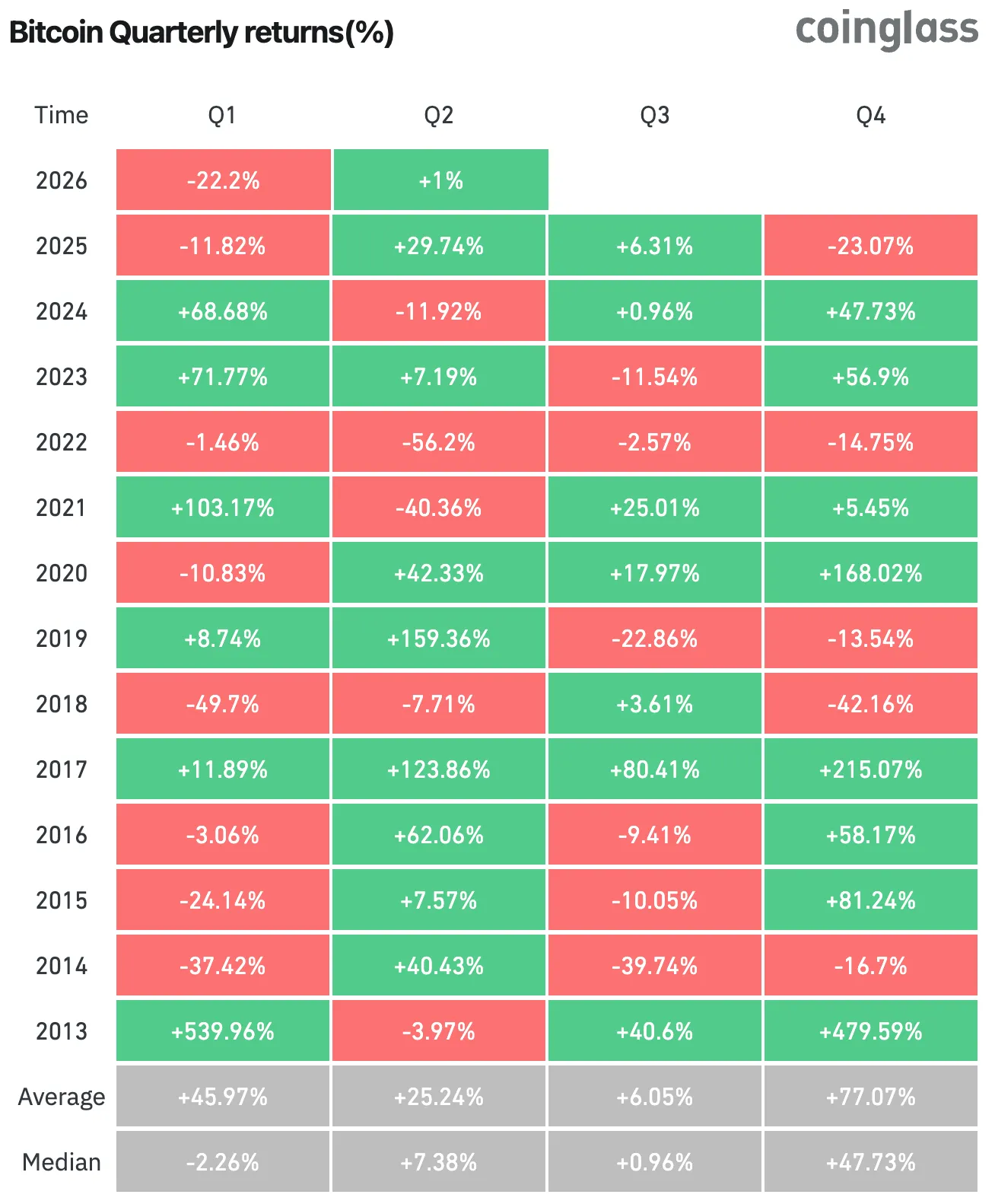
Bitcoin ended the first quarter of 2026 at $66,619 — down 22.2% from its January 1 price of $87,508, according to Yahoo Finance. The last time BTC posted a worse start to the year was in 2018, when it plunged 50% from $14,112 to $6,973.
Six months of relentless decline
The Q1 sell-off extended a downward trend that began in Q4 2025, when Bitcoin dropped 23% from $114,057 to $87,508. Combined, the leading cryptocurrency has shed more than 40% over the past six months from its all-time highs.
Why this matters
A 40%+ drawdown over two consecutive quarters signals deep stress across crypto markets. Losses of this magnitude impact not just retail speculators but also institutional investors who gained exposure through spot ETFs. Bitcoin's trajectory in the coming months will likely set the tone for the broader digital asset industry.
What drove the correction
The retreat from record levels has been largely fueled by geopolitical uncertainty surrounding the escalating conflict in the Middle East. Rising tensions eroded risk appetite across both crypto and traditional financial markets.
Outflows from U.S. spot Bitcoin ETFs added further pressure. Andri Fauzan Adzima, head of research at Bitrue, pointed to persistently high inflation, the Federal Reserve's cautious stance, and a broad risk-off shift among investors as compounding factors.
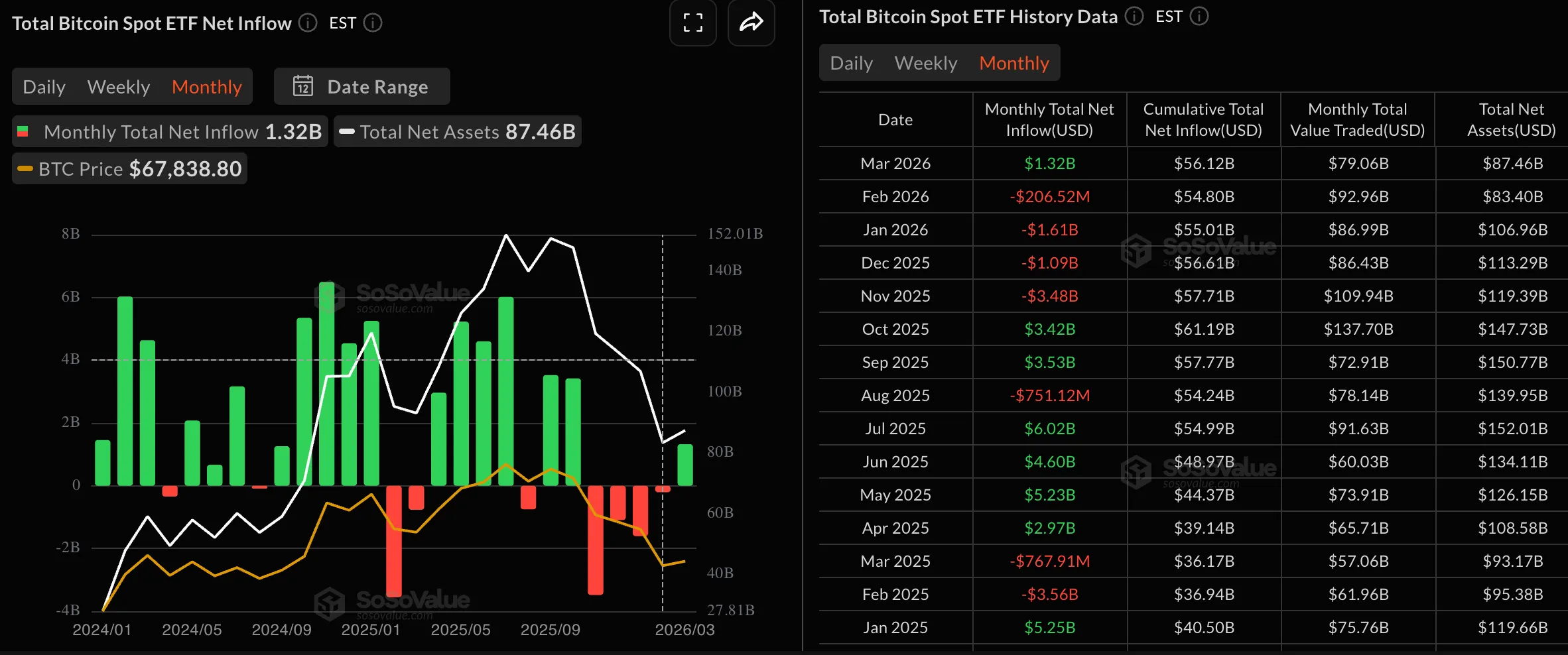
According to SoSoValue, net outflows from spot Bitcoin funds totaled $496.5 million for the quarter. A $1.32 billion inflow in March only partially offset the $1.8 billion in losses recorded during January and February.
Analysts eye conditions for a Q2 reversal
Despite the prolonged downturn and uneven ETF flows, several analysts maintain that long-term conviction in Bitcoin remains intact among major market participants.
Min Jung, an analyst at Presto Research, noted that institutional participation and adoption trends have held steady. In her view, the current correction reflects cyclical movement rather than a fundamental shift. However, she emphasized that a second-quarter recovery hinges on greater macroeconomic clarity — particularly regarding the Middle East situation.
Nick Ruck, director of research at LVRG, told The Block that a trend reversal in Q2 would require renewed ETF inflows, tangible progress on U.S. crypto regulation, and a pivot toward looser monetary policy.
Geopolitical backdrop
Donald Trump previously stated that the conflict with Iran could conclude within two to three weeks, even without a formal deal. Meanwhile, Iran has continued striking neighboring Persian Gulf states. A primetime address by the U.S. president on the evening of April 1 was expected to provide an update on the military operation.
At the time the original report was published, Bitcoin was trading near $68,800, up 2.9% over the preceding 24 hours, per CoinGecko data.
Frequently Asked Questions
How much did Bitcoin drop in Q1 2026?
Bitcoin fell 22.2% during the first quarter of 2026, declining from $87,508 on January 1 to $66,619 by March 31. This marked the worst Q1 performance since 2018, when BTC lost 50% of its value.
Why is Bitcoin falling in 2026?
The decline has been driven by escalating geopolitical tensions in the Middle East, net outflows of $496.5 million from U.S. spot Bitcoin ETFs, persistently high inflation, and the Federal Reserve's cautious monetary stance. These factors combined triggered a broad risk-off movement among investors.
What were the Bitcoin ETF outflows in Q1 2026?
According to SoSoValue, U.S. spot Bitcoin ETFs recorded net outflows of $496.5 million in Q1 2026. January and February saw $1.8 billion in outflows, while a $1.32 billion March inflow only partially offset the losses.
What needs to happen for Bitcoin to recover in Q2 2026?
Analysts at LVRG and Presto Research identified several catalysts for a potential reversal: renewed ETF inflows, meaningful progress on U.S. crypto regulation, a shift toward dovish monetary policy, and greater clarity on the Middle East conflict.
How much has Bitcoin fallen from its all-time high?
Over the past six months spanning Q4 2025 and Q1 2026, Bitcoin has declined more than 40% from its all-time highs. It dropped 23% in Q4 2025 from $114,057 to $87,508, followed by a further 22.2% decline in Q1 2026.
Read also
Bitcoin Hits $70,000 as Iran Ceasefire Talks Boost Risk Appetite
Bitcoin surged 4% to test the $70,000 level on April 6 amid reports of ceasefire negotiations between the US, Israel, and Iran. The derivatives market, however, sends mixed signals.
Bernstein Calls $60,000 a 'Clear Bottom' for Bitcoin, Expects Extended Bull Cycle
Analysts at Bernstein have identified $60,000 as a firm floor for Bitcoin, projecting a structurally longer bull cycle. On-chain data from Glassnode confirms a resurgence of buying activity.
Bitcoin Down 2.5% Weekly: Jane Street Accusations & 7 Ethereum Forks
Bitcoin lost ~2.5% over the week amid macro shocks and geopolitical tensions. Jane Street faced market manipulation allegations while Ethereum unveiled an ambitious seven hard fork roadmap through 2029.
TON Wallet Introduces Yield Vaults for BTC, ETH, and USDT Directly in Telegram
TON Wallet has launched yield vaults for BTC, ETH, and USDT directly within Telegram, offering up to 18% APY on stablecoins through partnerships with Morpho, TAC, and Re7.
Weekly Recap: Aave Ecosystem Rescue Mobilizes 100,000 ETH and Quantum Computer Cracks 15-Bit ECC Key
Bitcoin held near $78,000, the DeFi community rallied over 100,000 ETH to help Aave recover from the Kelp hack, and a researcher cracked a 15-bit ECC key on a quantum computer.
Strategy Becomes Most-Shorted US Stock With $6B in Bets
Strategy tops the list of most-shorted large-cap US stocks with $6 billion in short positions, representing 14% of its market cap, as Bitcoin's decline erodes confidence in the company's debt-fueled BTC accumulation model.