
Bitcoin Miners Ramp Up BTC Sales as Profitability Crumbles: TheEnergyMag Report
Public Bitcoin miners have sold over 15,000 BTC in five months, with debt burdens and a hashprice below $30 per PH/s forcing continued liquidation of reserves.
Major publicly traded Bitcoin mining companies have been steadily liquidating their coin reserves over the past several months, and recent corporate reports suggest this trend is poised to accelerate. That's the conclusion from energy and mining publication TheEnergyMag.
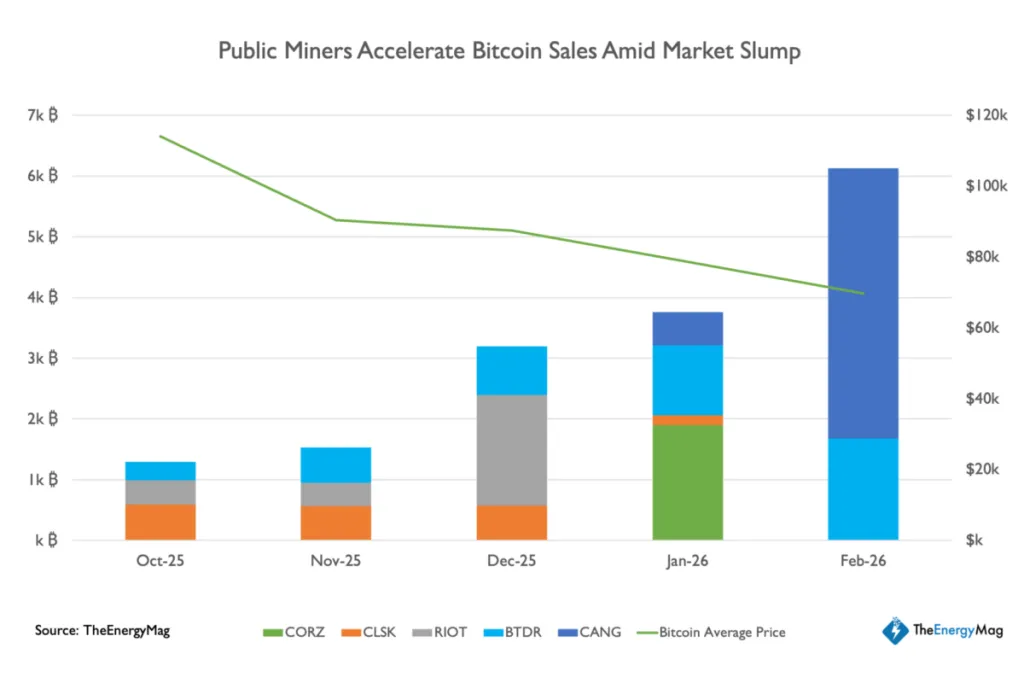
Who Sold and How Much
The most notable sellers in recent months include:
- Riot — sold four times more BTC in December than it mined during the 30-day period;
- Cango — liquidated 4,451 BTC in February, representing 60% of its reserves;
- Bitdeer— completely emptied its Bitcoin treasury that same month (approximately 943.1 BTC);
- Core Scientific — announced plans to sell the bulk of its holdings before the end of Q1.
According to TheEnergyMag's calculations, public miners collectively offloaded more than 15,000 BTC over five months. The publication's analysts note that the HODL era among miners is gradually ending, with sell-side pressure building as profit margins collapse.
Why This Matters
Miner selling constitutes a significant source of supply-side pressure on Bitcoin's market. When multiple large operators simultaneously liquidate their treasuries, it creates persistent downward force on price. The 15,000 BTC figure over a relatively short window is a meaningful signal — especially if the pace quickens further as financial conditions tighten for the sector.
Hashprice Below $30 — Operating at Break-Even or Worse
Analysis of recent quarterly filings reveals that hashprice — the key profitability metric for miners — has fallen below $30 per PH/s per day. At this level, most publicly listed operators are running at break-even or outright losses.
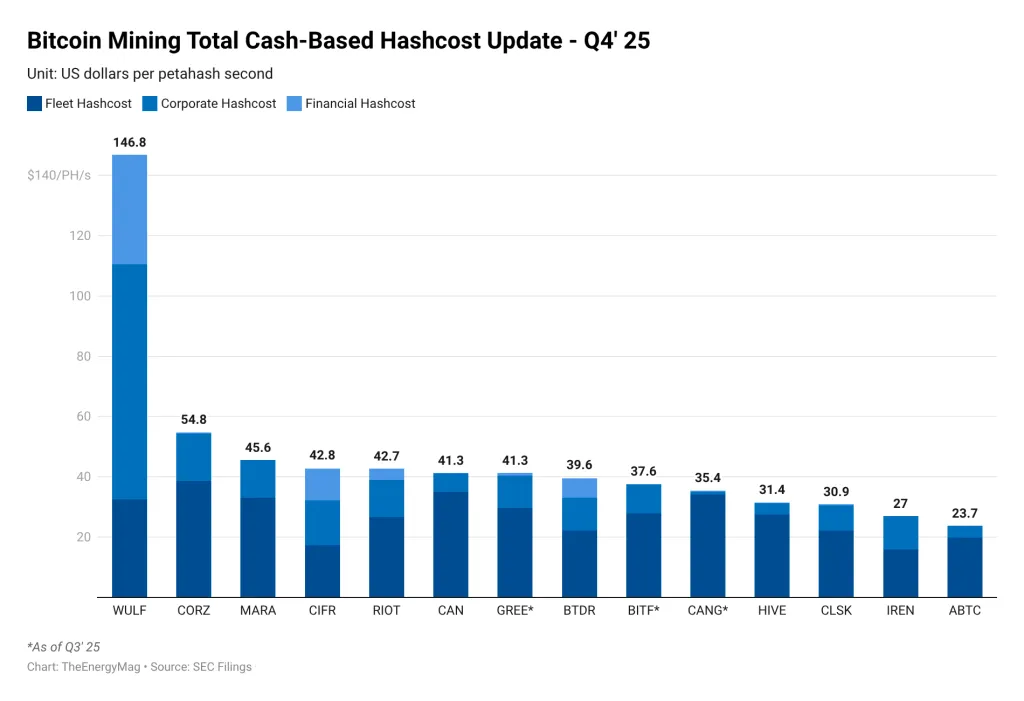
TheEnergyMag points out that the spread between hashprice and hashcost has historically been one of the strongest drivers behind treasury liquidation events in mining.
The Debt Trap: Collateral and a Falling BTC Price
Unlike previous downturns, many public miners entered 2025 carrying substantial debt. The industry leveraged credit facilities, Bitcoin-collateralized loans, and secured bonds to fund both day-to-day operations and aggressive buildouts of AI and HPC data center infrastructure.
As of December 31, the three largest miners — Hut 8, MARA Holdings, and Riot — had collectively pledged over 14,500 BTC as loan collateral, according to the report.
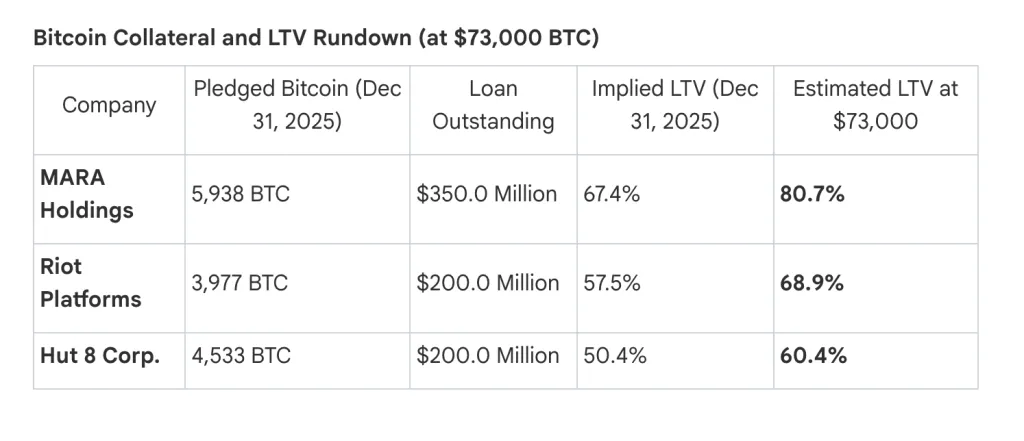
The mechanics of collateralized lending create a vicious feedback loop: as Bitcoin's price drops, loan-to-value ratios deteriorate automatically. TheEnergyMag notes that following the recent price decline, collateral ratios have likely worsened, forcing companies to pledge additional coins to maintain their lending thresholds.
Recovery to $74,000 Offers Little Relief
Even Bitcoin's bounce back toward $74,000 has not meaningfully eased conditions for the mining sector. Companies still need to sell assets to cover operational costs and fund their strategic pivots toward AI-related business lines.
A telling case is MARA Holdings, which reported $1.7 billion in losses in February and announced intentions to shift its focus toward artificial intelligence.
The public mining sector finds itself squeezed between declining mining margins, mounting debt obligations, and the capital demands of transitioning to AI infrastructure. All indicators point toward sustained — and potentially increasing — sell-side pressure from miners on the Bitcoin market in the coming months.
Frequently Asked Questions
How much BTC have public miners sold in 2025?
According to TheEnergyMag, public mining companies collectively sold over 15,000 BTC in five months. Major sellers include Riot, Cango (4,451 BTC), Bitdeer (943.1 BTC), and Core Scientific, which announced plans to sell most of its holdings by end of Q1.
Why are Bitcoin miners selling their BTC reserves?
Hashprice has fallen below $30 per PH/s per day, pushing most public miners to break-even or loss-making territory. Heavy debt loads and the capital requirements of pivoting to AI infrastructure are compounding the pressure to liquidate reserves.
Which Bitcoin miners have pledged BTC as loan collateral?
As of December 31, the three largest miners — Hut 8, MARA Holdings, and Riot — had pledged over 14,500 BTC as loan collateral combined. Falling Bitcoin prices worsen loan-to-value ratios, potentially forcing additional collateral pledges.
What is hashprice and why does it matter?
Hashprice measures the revenue a miner earns per unit of computing power (PH/s) per day. When hashprice drops below hashcost (the cost of mining), operations become unprofitable, driving miners to sell their Bitcoin treasury holdings to cover expenses.
How much did MARA Holdings lose in 2025?
MARA Holdings reported $1.7 billion in losses in February 2025. The company also announced plans to shift its strategic focus toward artificial intelligence, reflecting a broader industry trend among miners.
Read also
Bitcoin Miners Dump Crypto Reserves to Fund AI Infrastructure Pivot
Major public Bitcoin mining companies are liquidating their BTC holdings to finance a transition toward AI data center infrastructure. MARA Holdings, the largest public miner by reserves, denied rumors of a massive sell-off of its 53,822 BTC.
American Bitcoin Acquires 11,298 ASIC Miners, Restarts Dormant Drumheller Data Center
Hut 8's subsidiary purchased over 11,000 ASIC miners for its Drumheller facility, which has been offline since March 2024. The deployment will push American Bitcoin's total hashrate to 28.1 EH/s.
Trader Ran Neuner Warns Bitcoin Faces 'Death' as Miners Pivot to AI — Critics Push Back
AI hosting generates up to eight times more revenue per megawatt than Bitcoin mining. Ran Neuner argues this is killing the BTC network, but prominent crypto figures strongly disagree.
Wintermute Says Traditional Bitcoin Mining Model Is No Longer Viable
Wintermute analysts have declared the traditional Bitcoin mining business model outdated, suggesting miners must either pivot to AI hosting or actively manage their BTC reserves as working capital to survive.
Public Bitcoin Miners Sell Record 32,000 BTC in Q1 2026 as Hash Price Hits Rock Bottom
The six largest public mining companies collectively sold over 32,000 BTC in Q1 2026 — more than total sales for all of 2025. Plunging hash price below the breakeven threshold is forcing miners to liquidate reserves.
Bitcoin Drops Below $67,000 as Ethereum Foundation Unveils Quantum Defense Roadmap
Bitcoin lost 3% over the week amid Middle East tensions and ETF outflows, miner activity hit historic lows, and Ethereum Foundation outlined a four-hardfork plan for quantum resistance by 2029.