
On-Chain Metrics Signal Bitcoin May Be Approaching a Cycle Bottom
 BinanceEXCHANGE
CryptoQuant analyst identifies two historically reliable indicators pointing to a potential BTC trend reversal, while Glassnode outlines conditions for sustained recovery and Michael Saylor argues the bottom is already in.
Sharpe Ratio and Capitulation Indicator: What the Data Shows
CryptoQuant analyst Ignacio Moreno de Vicente has flagged two critical on-chain metrics that historically coincided with the formation of long-term bitcoin price floors. According to his analysis, the Sharpe Ratio has plunged deep into negative territory, reaching -40.
«Bitcoin's Stress Cycle Is Ending — But Not Yet Reversing. Risk remains present… But for investors with a cycle-aware framework, the data suggests we are closer to the beginning of an opportunity than the end of one» — CryptoQuant.com (@cryptoquant_com), original post
Breaches of the -40 threshold on the Sharpe Ratio in 2015, 2019, 2020, and 2023 each preceded subsequent rallies. The second metric — a buy/sell pressure indicator — adds further context. Moreno de Vicente explained that durable cycle lows form in stages rather than all at once.
First, the market flushes into a zone of maximum sell pressure — forced sellers and panic-driven participants capitulate. Then, as available supply contracts, conditions gradually normalize. The most favorable risk-reward ratio emerges when the indicator returns to the «buy pressure» range, signaling genuine demand recovery rather than mere stabilization.
The analyst noted that the «orange flush» (capitulation) phase has already occurred and the market is transitioning into the next stage. The delta is slowly recovering but has not yet reached «blue levels.» This gap — between confirmed capitulation and demand revival — has historically been the optimal window for asymmetric capital deployment. Moreno de Vicente cautioned, however, that macroeconomic risks, liquidity conditions, and fragile investor sentiment could prolong the transition.
Why This Matters
The convergence of signals across multiple on-chain indicators strengthens the case that a cycle bottom may be forming. For market participants, this suggests a potential phase shift from prolonged decline to accumulation. However, confirmation of a full reversal depends on specific conditions that remain unmet, making timing uncertain.
Glassnode: Bitcoin in a Typical Bear Phase
Glassnode analysts confirmed that bitcoin is operating within a characteristic bear market phase.
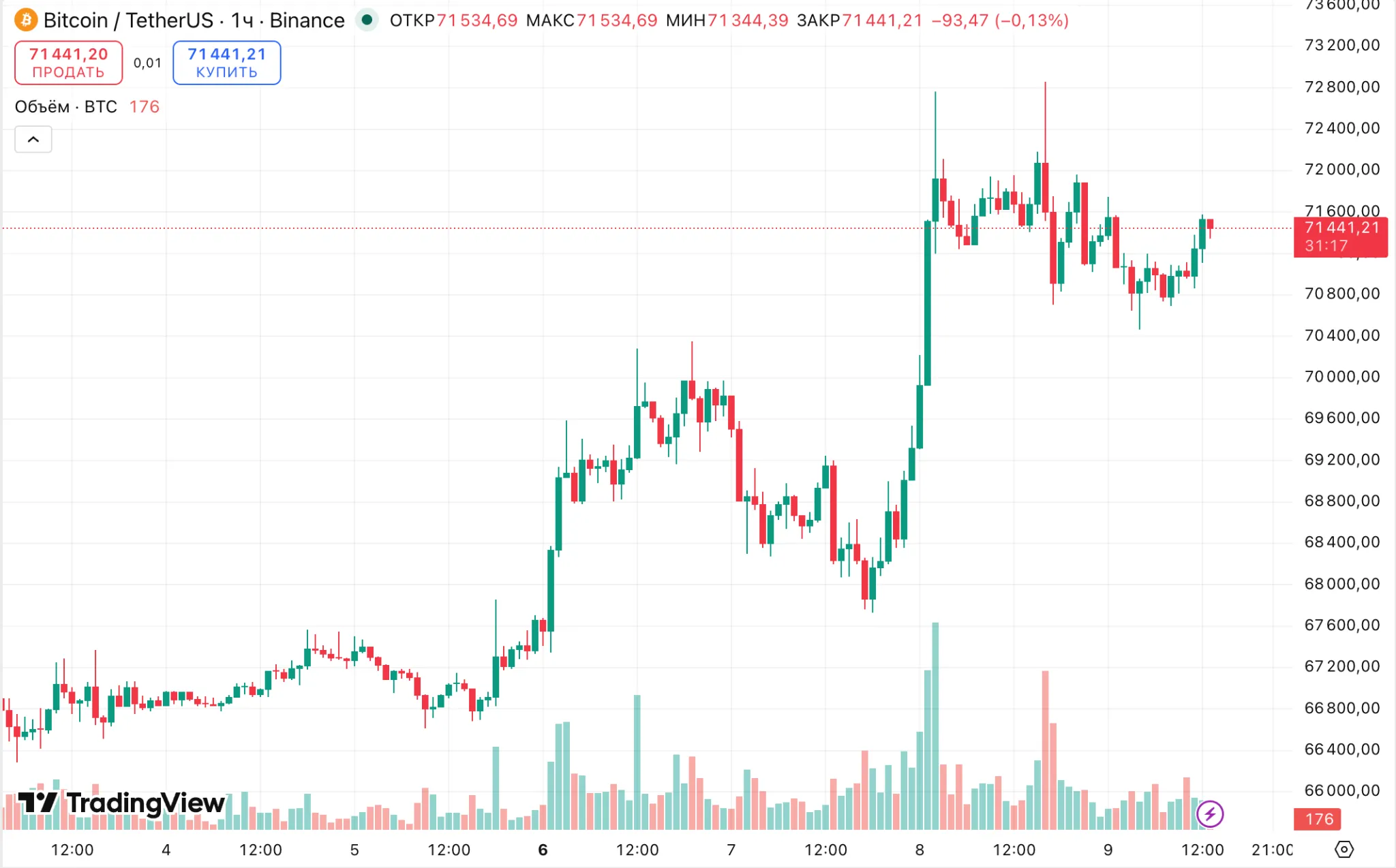
«Bouncing in a Bear. Bitcoin bounced from $67k to $72k, but weak spot demand and softer futures activity suggest the recovery still lacks strong conviction, even as ETF flows begin to turn modestly positive» — glassnode (@glassnode), original post
A «relief rally» driven by a temporary US-Iran truce could push the price toward $78,000 — the level of the true market mean price. Yet no meaningful shift in momentum has been observed so far. Two conditions are necessary for a sustained recovery:
- Stabilization of short-term holder cost basis (currently still declining);
- A sharp reduction in losses among those who bought at cycle peaks.
The seven-day moving average of realized losses by long-term investors has exceeded 4,000 BTC per day since November 2025 — a capitulation signal from buyers who entered at highs. The most reliable confirmation of a phase change would be a sustained decline of this metric below 1,000 BTC per day combined with price reclaiming the short-term holder cost basis of $81,600.
At the time of writing, bitcoin was trading near $71,400, down 0.3% over the past 24 hours but up 7.5% over the week.
Saylor: The Cycle Bottom Is Already In
Strategy founder Michael Saylor takes a more bullish stance, arguing that bitcoin has already bottomed around $60,000, according to The Block. He pointed to a familiar pattern: downtrends end not when sentiment improves, but when forced selling is exhausted.
Saylor attributed the latest decline primarily to overleveraged miners and weaker participants liquidating their positions. As their supply dries up, the balance of power shifts. He identified several factors limiting further downside:
- More stable demand for bitcoin ETFs;
- Improving liquidity expectations;
- Growing corporate treasury allocations.
He characterized current conditions as asymmetric: supply from weak hands is being depleted while bitcoin demand continues to grow.
Addressing quantum computing concerns, Saylor stated that these risks are distant and manageable. Any real threat would develop gradually, giving the network ample time to adapt. Bitcoin's open architecture will allow developers to implement quantum-resistant upgrades well before such attacks become practically viable. On April 8, Lightning Labs CTO Olaoluwa Osuntokun unveiled a prototype tool designed to protect wallets from potential quantum attacks.
Frequently Asked Questions
What is Bitcoin's Sharpe Ratio saying about the market bottom?
Bitcoin's Sharpe Ratio has dropped to -40, a level that historically coincided with long-term price floors. In 2015, 2019, 2020, and 2023, breaching this threshold preceded subsequent rallies.
What conditions does Glassnode require for a Bitcoin trend reversal?
Glassnode identifies two conditions: stabilization of the short-term holder cost basis (currently declining) and a drop in realized losses of long-term investors below 1,000 BTC per day, combined with price reclaiming the $81,600 level.
Does Michael Saylor think Bitcoin has bottomed?
Yes, Saylor believes Bitcoin already hit its cycle low around $60,000. He argues that downtrends end when forced selling is exhausted, not when sentiment improves, and points to overleveraged miners liquidating as the primary driver of the recent decline.
What is Bitcoin's price in April 2026?
At the time of the analysis, Bitcoin was trading around $71,400, down 0.3% over 24 hours but up 7.5% for the week. Analysts noted a potential relief rally could push it toward $78,000.
What is the Bitcoin capitulation signal from CryptoQuant?
CryptoQuant's buy/sell pressure indicator showed an 'orange flush' — a phase of maximum sell pressure where forced sellers and panicked participants exit. According to analyst Moreno de Vicente, this capitulation phase has already occurred, and the market is transitioning to the next stage.
Read also
Bernstein Calls $60,000 a 'Clear Bottom' for Bitcoin, Expects Extended Bull Cycle
Analysts at Bernstein have identified $60,000 as a firm floor for Bitcoin, projecting a structurally longer bull cycle. On-chain data from Glassnode confirms a resurgence of buying activity.
Bitcoin Hits $70,000 as Iran Ceasefire Talks Boost Risk Appetite
Bitcoin surged 4% to test the $70,000 level on April 6 amid reports of ceasefire negotiations between the US, Israel, and Iran. The derivatives market, however, sends mixed signals.
Bitcoin Down 2.5% Weekly: Jane Street Accusations & 7 Ethereum Forks
Bitcoin lost ~2.5% over the week amid macro shocks and geopolitical tensions. Jane Street faced market manipulation allegations while Ethereum unveiled an ambitious seven hard fork roadmap through 2029.
TON Wallet Introduces Yield Vaults for BTC, ETH, and USDT Directly in Telegram
TON Wallet has launched yield vaults for BTC, ETH, and USDT directly within Telegram, offering up to 18% APY on stablecoins through partnerships with Morpho, TAC, and Re7.
Weekly Recap: Aave Ecosystem Rescue Mobilizes 100,000 ETH and Quantum Computer Cracks 15-Bit ECC Key
Bitcoin held near $78,000, the DeFi community rallied over 100,000 ETH to help Aave recover from the Kelp hack, and a researcher cracked a 15-bit ECC key on a quantum computer.
Strategy Becomes Most-Shorted US Stock With $6B in Bets
Strategy tops the list of most-shorted large-cap US stocks with $6 billion in short positions, representing 14% of its market cap, as Bitcoin's decline erodes confidence in the company's debt-fueled BTC accumulation model.