
Bitcoin Retreats Below $70,000 as Short-Term Holders Lock in Profits
Bitcoin's brief surge above $74,000 was quickly reversed, with the price sliding to $68,000 amid geopolitical tensions and heavy selling from short-term holders and whales.
Short-Lived Rally Fades Fast
Bitcoin briefly reclaimed the $74,000 level for the first time in a month, only to surrender those gains rapidly. By the evening of March 6, BTC had settled into a sideways range near $68,000, losing 4.1% over 24 hours. Ethereum fared even worse, dropping more than 5% and falling below $2,000.
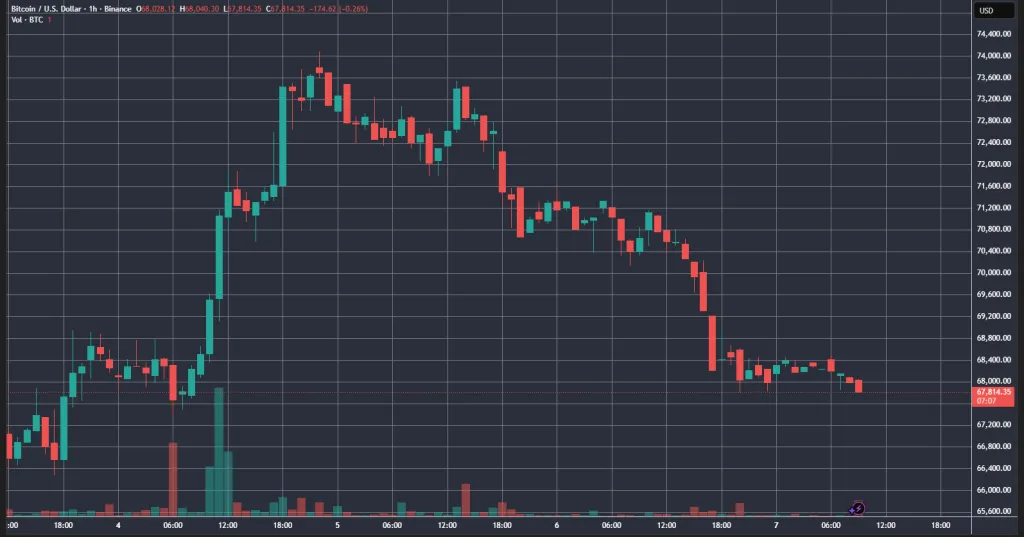
BTC/USD hourly chart on Binance. Data: TradingView
The rally began on March 4 when BTC surged close to $72,000, eventually breaching $74,000 for the first time in a month. However, bulls were unable to defend those levels. Total crypto market capitalization declined 3.4% to approximately $2.4 trillion.
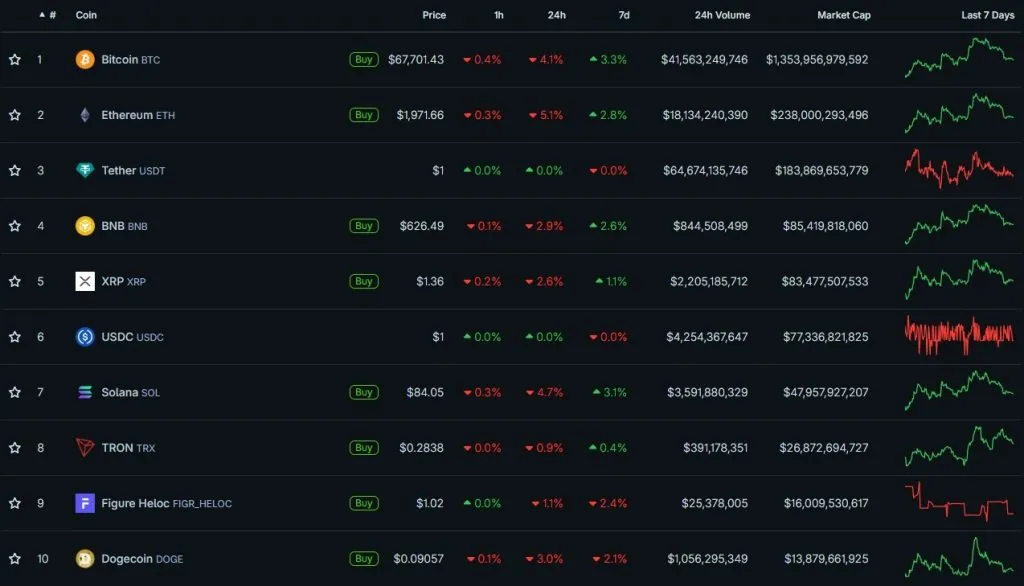
Crypto market dynamics. Source: CoinGecko
Why This Matters
The pullback coincided with an escalation in geopolitical risk. A statement from U.S. President Donald Trump ruling out any diplomatic resolution to the conflict with Iran triggered a spike in oil prices and a stronger dollar index, putting pressure on risk assets including tech stocks and cryptocurrencies.
The prospect of higher fuel costs intensified inflation fears and cast doubt on near-term Fed rate cuts. At the time of writing, fewer than 4% of market participants expected the central bank to lower rates at its upcoming March 18 meeting — half the proportion from just one week earlier.
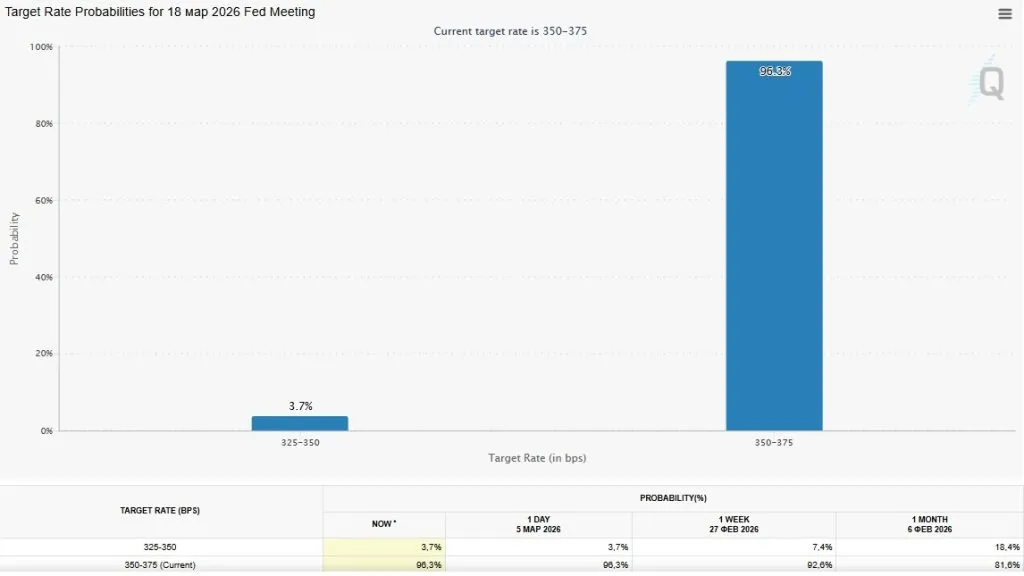
Market expectations for Fed rate decision. Source: CME Group
Short-Term Holders and Whales Take Profits
CryptoQuant analyst Darkfost highlighted significant profit-taking by short-term holders (STH) following Bitcoin's push to $74,000. Over 24 hours, this cohort sent 27,000 BTC to exchanges — one of the highest readings in recent months. The realized price for STH sits around $68,000.
"STH Selling Pressure Emerges Despite BTC Recovery. Over the past 24 hours, STHs have sent more than 27,000 BTC in profit to exchanges, which ranks among the highest levels observed in recent months." — CryptoQuant.com (@cryptoquant_com), original post
According to Darkfost, the current news flow and macroeconomic outlook remain negative in the short term, making this behavior rational. STH are not yet willing to hold their positions longer, generating sustained sell-side pressure that warrants monitoring.
Santiment data corroborated the trend: whales holding between 10 and 10,000 BTC sold approximately 66% of their positions after Bitcoin crossed $70,000. Conversely, small retail investors (under 0.1 BTC) used the dip to accumulate.
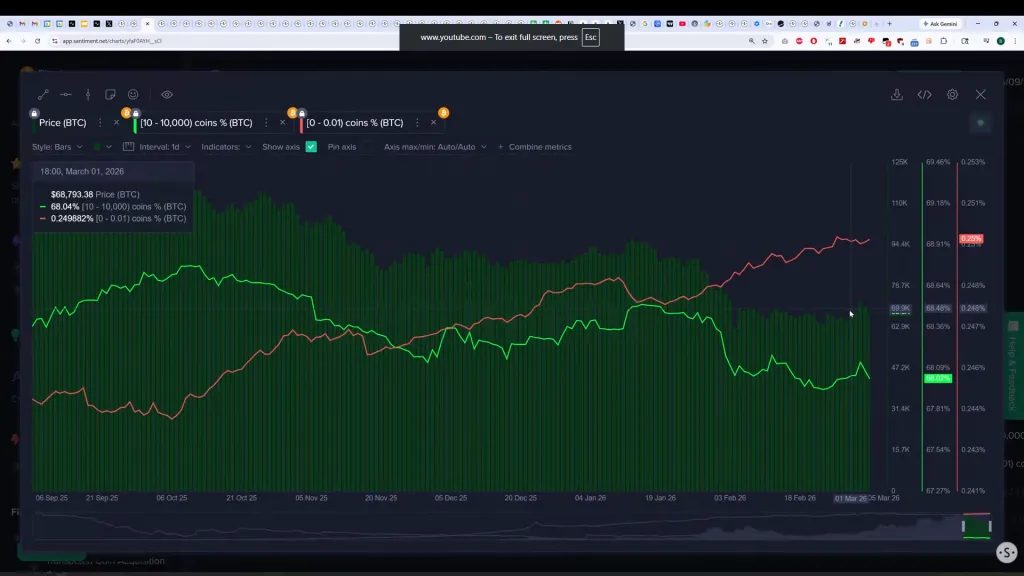
Investor behavior by cohort. Source: Santiment
Santiment analysts warned that when retail participants buy while large players sell, it typically signals that the correction has further to run.
The Four-Year Cycle and Deeper Downside Risk
ZX Squared Capital founder CK Zheng told CoinDesk that Bitcoin is in the deepest phase of a bear market and conditions could worsen. He projected an additional 30% price decline over the course of 2026, citing the ongoing war with Iran as a catalyst.
Zheng pointed to halving-linked cycles as a key driver of the ongoing correction. Historically, BTC has peaked 12–18 months after each block reward halving, followed by roughly a year of prolonged decline. The fourth halving occurred in April 2024, and Bitcoin printed its all-time high above $126,000 eighteen months later in October 2025.
In Zheng's view, the momentum of the "four-year crypto cycle" is building and is extremely difficult to break due to the psychological behavior of individual investors. Bitcoin continues to trade as a speculative asset, having failed to establish itself as a safe haven like gold.
Zheng also cautioned against overstating institutional adoption. The combined share of crypto ETFs and digital asset management firms accounts for roughly 10% of the total market. Some of these entities may be forced to liquidate crypto holdings to meet debt servicing requirements under current conditions, potentially creating a vicious selling cycle.
Previously, CryptoQuant analysts characterized Bitcoin's surge to $74,000 as a short-lived bounce rather than the beginning of a new bull market.
Frequently Asked Questions
Why did Bitcoin drop below $70,000 in March 2026?
The decline was driven by geopolitical tensions after President Trump ruled out diplomatic negotiations with Iran, causing oil prices to spike and the dollar index to strengthen. This pressured risk assets and dampened expectations for a near-term Fed rate cut.
How much BTC did short-term holders sell after the $74,000 rally?
According to CryptoQuant, short-term holders sent 27,000 BTC in profit to exchanges within 24 hours of Bitcoin reaching $74,000. This was among the highest levels observed in recent months.
What is the Bitcoin price prediction for 2026?
ZX Squared Capital founder CK Zheng projected an additional 30% decline in Bitcoin's price during 2026. He attributed this to the four-year halving cycle and the geopolitical impact of the Iran conflict.
What was Bitcoin's all-time high and when was it reached?
Bitcoin set its all-time high above $126,000 in October 2025, approximately 18 months after the fourth halving event that took place in April 2024.
Are Bitcoin whales buying or selling right now?
Santiment data shows whales holding 10 to 10,000 BTC sold approximately 66% of their positions after Bitcoin crossed $70,000. Smaller retail investors with under 0.1 BTC were accumulating during the pullback.
Read also
Bitcoin Down 2.5% Weekly: Jane Street Accusations & 7 Ethereum Forks
Bitcoin lost ~2.5% over the week amid macro shocks and geopolitical tensions. Jane Street faced market manipulation allegations while Ethereum unveiled an ambitious seven hard fork roadmap through 2029.
Options Traders Bet on Bitcoin Rally to $80,000 by Summer
Bitcoin consolidates near $70,000 after a volatility spike. Options market participants are increasingly positioning for a rally to $80,000 by early summer, despite macroeconomic headwinds.
Bitcoin Rebounds to $70,000 as Leverage Drops and ETF Inflows Continue
BTC recovered above $70,000 on March 10, erasing weekend losses. Spot ETFs attracted $568M in weekly inflows while the estimated leverage ratio on Binance fell sharply from 0.198 to 0.152.
Wintermute Links Bitcoin Stagnation to Macroeconomic Regime Shift
The market maker explains crypto weakness through structural economic changes: AI sector reassessment and deglobalization. Bitcoin behaves as a high-risk asset alongside tech stocks.
TON Wallet Introduces Yield Vaults for BTC, ETH, and USDT Directly in Telegram
TON Wallet has launched yield vaults for BTC, ETH, and USDT directly within Telegram, offering up to 18% APY on stablecoins through partnerships with Morpho, TAC, and Re7.
Weekly Recap: Aave Ecosystem Rescue Mobilizes 100,000 ETH and Quantum Computer Cracks 15-Bit ECC Key
Bitcoin held near $78,000, the DeFi community rallied over 100,000 ETH to help Aave recover from the Kelp hack, and a researcher cracked a 15-bit ECC key on a quantum computer.