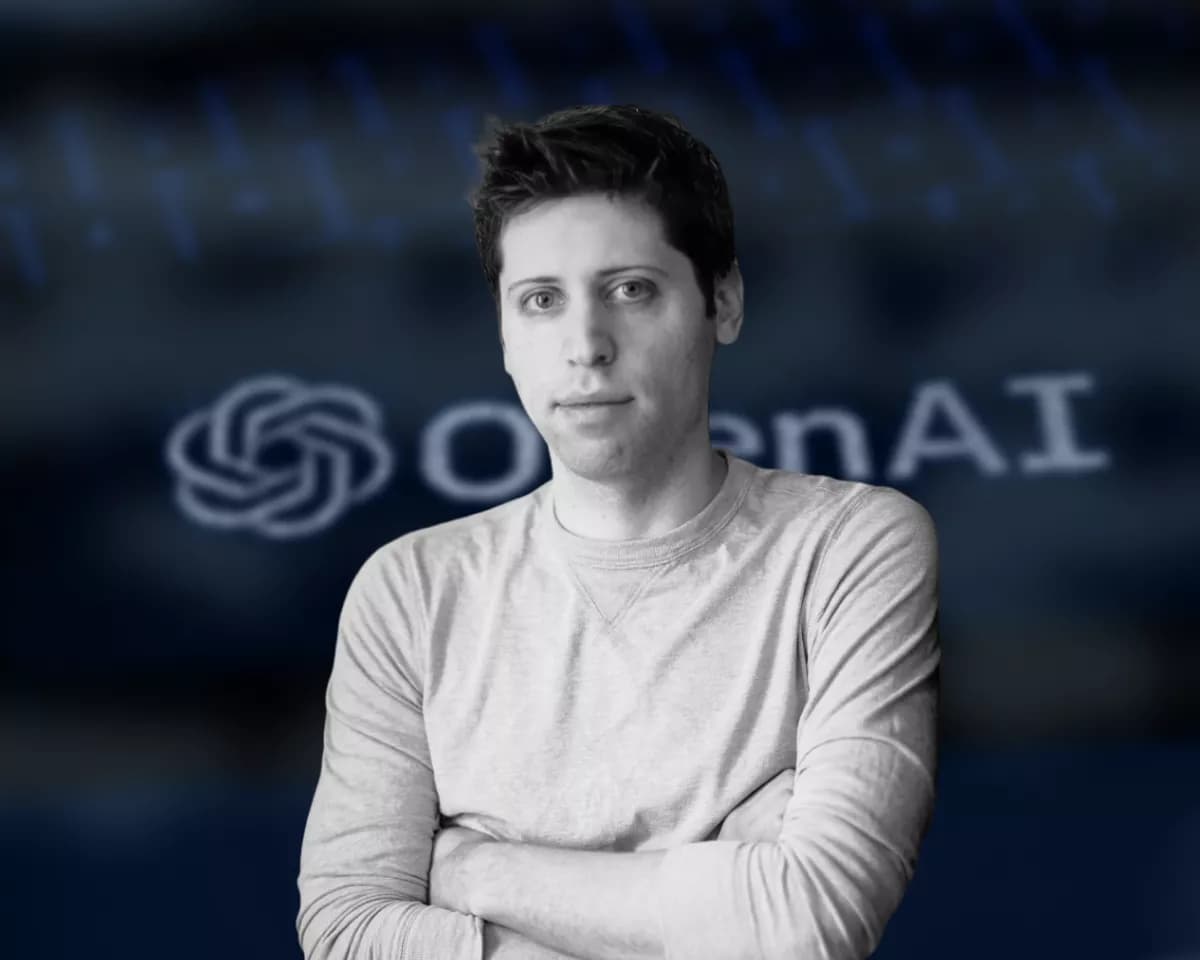
Sam Altman Outlines Five Core Principles for OpenAI's Path to Universal AI Benefit
OpenAI CEO Sam Altman has laid out five guiding principles — democratization, empowerment, universal prosperity, resilience, and adaptability — aimed at ensuring AGI benefits all of humanity rather than concentrating power among a few.
Altman lays out OpenAI's five foundational principles for AGI
OpenAI CEO Sam Altman has published a manifesto of five principles that will guide the company's pursuit of artificial general intelligence (AGI). The overarching goal: deliver truly universal AI into as many hands as possible and prevent a small group of companies from monopolizing superintelligence.
"Our Principles: Democratization, Empowerment, Universal Prosperity, Resilience, and Adaptability" — Sam Altman (@sama), original post
Altman declared that AI has the potential to reshape society more profoundly than steam engines or electricity ever did. He envisioned a future where "prosperity will reach a level that is currently hard to imagine," with individual potential, agency, and self-realization growing dramatically. However, the OpenAI chief stressed that this outcome is far from guaranteed — power could instead end up concentrated among a handful of companies controlling superintelligence.
Why this matters
OpenAI has become one of the most influential players in the AI industry, and the principles it adopts set a tone for the entire sector. The question of how access to AGI is distributed has direct implications for the global economy, government technology policy, and digital ecosystems — including the crypto industry, where decentralization is a foundational value. Altman's statement effectively acknowledges that without deliberate action, AI risks becoming a tool of centralization rather than empowerment.
Democratization and empowerment
The first principle is democratization. OpenAI pledges to resist any scenario where the technology concentrates power in the hands of a few. According to Altman, critical decisions about AI should be made through democratic processes grounded in principles of equality, not solely within neural network research labs.
The second principle is empowerment. The maker of ChatGPT believes AI can help everyone pursue their goals, learn more, feel happier, and achieve greater fulfillment. Reaching that vision requires giving people the tools to explore AI's vast potential and build useful products. At the same time, the company accepts responsibility for minimizing the negative consequences of AI integration — from catastrophic risks down to minor harms.
Universal prosperity: economics and infrastructure
The third principle targets universal prosperity. OpenAI aspires to a future where everyone "can live a fulfilling life." Altman is convinced that granting broad access to high-compute AI systems will unlock new ways of creating value — particularly in scientific discovery.
Achieving this, he argued, requires two key conditions:
- Governments must explore new economic models that ensure everyone can participate in value creation.
- Massive new AI infrastructure must be built, alongside technologies that reduce the cost of constructing it.
Resilience in the face of emerging risks
The fourth principle is resilience. Altman acknowledged that AI introduces novel risks, and OpenAI stands ready to collaborate with other companies, ecosystems, governments, and civil society to address them. No single lab, he emphasized, can secure a safe future on its own.
He offered two concrete scenarios. First, the emergence of extremely powerful models that simplify the creation of new pathogens — a threat that would demand countermeasures from humanity as a whole. Second, the growing capabilities of neural networks in cybersecurity, which necessitate deploying AI to protect open-source software and critical infrastructure.
Altman stated that society must contend with each successive level of AI capability, understand it, integrate it, and collectively find the best path forward, because "this cannot be done in a vacuum."
Adaptability and willingness to evolve
The fifth principle is adaptability. OpenAI views the willingness to adjust its positions as new information emerges as the only viable strategy for navigating a deeply unpredictable future. Altman conceded that the company now plays a far more significant role in the world than it did a few years ago and committed to transparently communicating any changes to its operating principles.
The CEO also noted that OpenAI is prepared to sacrifice some degree of empowerment in favor of greater resilience — an explicit acknowledgment that trade-offs are inevitable on the road to AGI.
Previously, New Yorker journalists conducted an extensive 18-month investigation into Altman's conduct and concluded that he had frequently made misleading statements during his tenure as CEO of OpenAI.
Frequently Asked Questions
What are OpenAI's five principles announced by Sam Altman?
The five principles are democratization, empowerment, universal prosperity, resilience, and adaptability. They are intended to guide OpenAI's development of AGI for the benefit of all humanity.
What does OpenAI mean by democratization of AI?
OpenAI commits to preventing AI technology from concentrating power in the hands of a few. Altman stated that key decisions about AI should be made through democratic processes based on equality, not just within research labs.
What AI risks did Sam Altman highlight?
Altman cited two specific scenarios: powerful models that could simplify the creation of new pathogens, and growing AI capabilities in cybersecurity that require deploying AI to protect open-source software and critical infrastructure.
What conditions does Altman say are needed for universal prosperity?
Altman outlined two requirements: governments must develop new economic models ensuring everyone can participate in value creation, and massive new AI infrastructure must be built with technologies that reduce construction costs.
Will OpenAI change its principles over time?
The fifth principle — adaptability — explicitly allows for this. Altman acknowledged OpenAI's growing role and committed to transparently communicating any changes to operating principles as new information emerges.
Read also
Elon Musk Delivers First Testimony in OpenAI Lawsuit Against Altman and Brockman
The trial over Elon Musk's lawsuit against OpenAI began in Oakland federal court. Musk claims the company's shift from nonprofit to for-profit betrayed its founding mission.
OpenAI Secures Record $110 Billion Round at $730 Billion Valuation
OpenAI closed the largest startup funding round in history at $110 billion, backed by Amazon, SoftBank, and Nvidia, with a $730 billion valuation.
DeepSeek Launches V4-Pro: Open-Source Model Outperforms Claude Opus 4.6 and GPT-5.4
Chinese AI startup DeepSeek released a preview of its V4 model family, with the flagship V4-Pro boasting 1.6 trillion parameters and surpassing leading closed-source models in multiple benchmarks.
Anthropic Launches Claude Opus 4.7 as OpenAI Fires Back with Codex Overhaul and GPT-Rosalind
Anthropic released Claude Opus 4.7 with 10% gains in agentic coding and tripled image resolution. OpenAI responded the same day with a major Codex update featuring computer use on macOS and a new reasoning model GPT-Rosalind for drug discovery.
AI Audit Uncovers Critical Liveness Bug in Ethereum's Nethermind Client
Octane Security's AI discovered a high-severity vulnerability in the Nethermind execution client that could have halted block production for 38% of Ethereum mainnet validators. The Ethereum Foundation awarded a maximum $50,000 bounty.
Weekly Recap: Bitcoin Tests $78,000, Russia Introduces Criminal Penalties for Illegal Crypto Exchange
Bitcoin surged to $78,000 amid geopolitical developments, hackers drained hundreds of millions from Hyperbridge and Kelp, while Russia approved criminal liability for unlicensed crypto exchange operations.