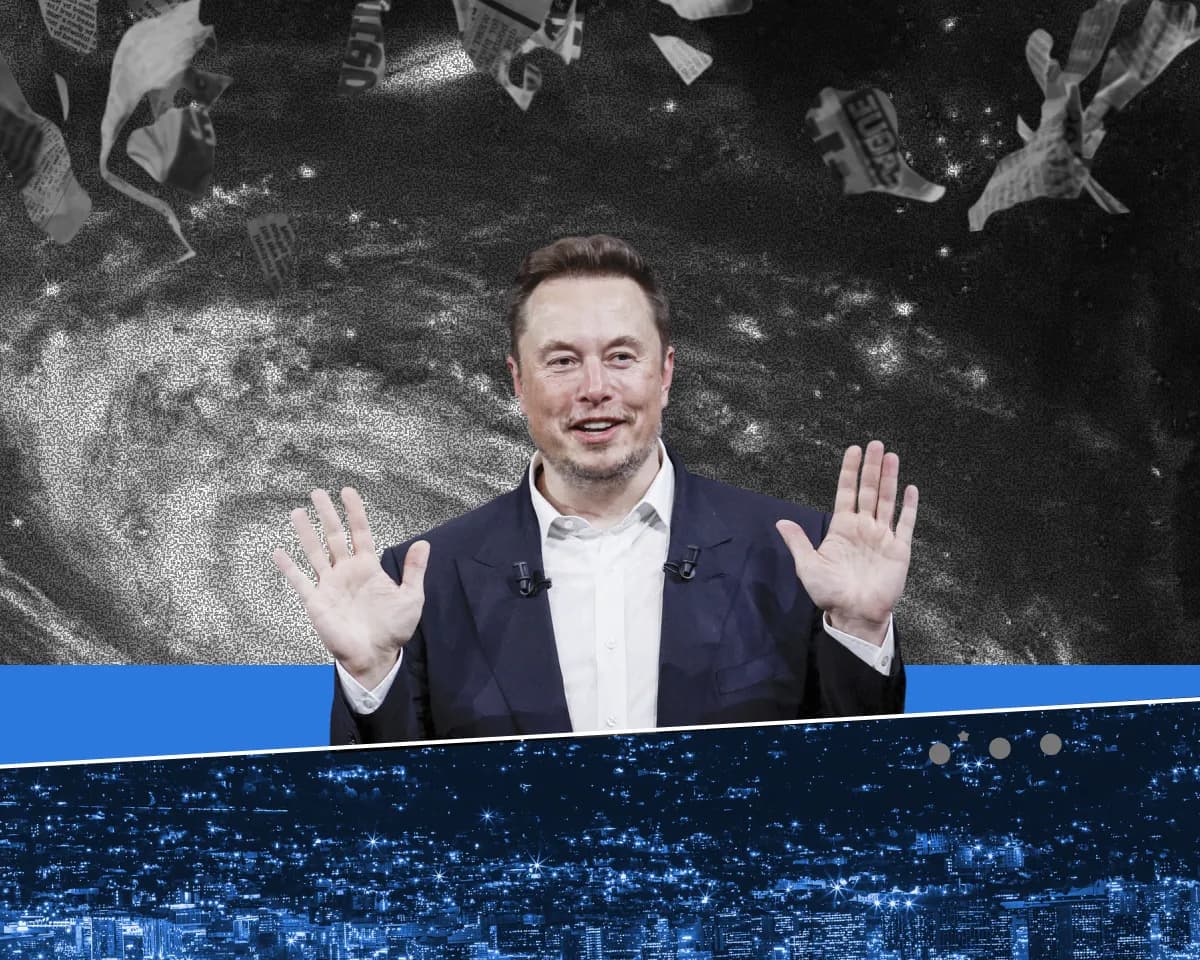
Elon Musk Delivers First Testimony in OpenAI Lawsuit Against Altman and Brockman
The trial over Elon Musk's lawsuit against OpenAI began in Oakland federal court. Musk claims the company's shift from nonprofit to for-profit betrayed its founding mission.
Musk v. OpenAI Trial Begins in Oakland Federal Court
On April 28, the trial over Elon Musk's lawsuit against OpenAI and its co-founders Sam Altman and Greg Brockman commenced in federal court in Oakland, California. All three founded the company in 2015, but their visions for its future diverged dramatically over time, Bloomberg reports.
Musk contends that OpenAI's transformation from a nonprofit organization to a for-profit entity was a grave mistake that sets a dangerous precedent for similar projects.
"You can't steal from a charity, that's my opinion," the billionaire told jurors at the start of the proceedings.
According to Musk, if Altman and Brockman's actions are not found to be wrongful, "it will set a precedent for the looting of every charity in America." He is seeking to reverse the restructuring.
Why This Matters
The outcome of the three-week trial could determine OpenAI's future as the company prepares for what would be one of the largest IPOs in history. The court's decision will also set a precedent for the broader industry: whether a nonprofit organization with multi-billion-dollar assets can freely convert to a for-profit structure without all founders' consent.
Musk's Case: From Google Fears to OpenAI's Creation
Musk dedicated much of his initial testimony to recounting his business ventures — Zip2, PayPal, SpaceX, Neuralink, and Tesla. He emphasized his longstanding interest in artificial intelligence alongside deep concerns about the technology's potential. In his view, AI can both significantly advance society and lead to its destruction.
Around 2015, Musk discussed AI capabilities "with everyone" and shared his concerns. Among his interlocutors was Google co-founder Larry Page, who Musk said "wasn't paying enough attention to AI safety." At the time, Google led AI development and had "all the money, computers, and talent."
"I thought: what could be the opposite of Google? Open source, a nonprofit," Musk said.
Musk's attorney Steven Molo told jurors he would prove that Altman and Brockman leveraged the Tesla CEO's money, reputation, and guidance to launch OpenAI, then abandoned its public-benefit principles and exploited the project for personal gain. According to Molo, Microsoft became a knowing accomplice, investing $13 billion in OpenAI since 2019 — one year after Musk departed the startup's board of directors.
OpenAI's Defense: Musk Himself Pushed for Commercialization
OpenAI attorney William Savitt characterized the lawsuit as an attempt to undermine the primary competitor of Musk's own AI company, xAI. He argued that Musk himself advocated for commercial transformation during the startup's early years.
Savitt presented Musk's correspondence. During OpenAI's first year as a nonprofit research lab, Musk wrote: "Probably better to create a standard C corp with a parallel nonprofit." The following year, he stated: "Given the progress that DeepMind has made, creating OpenAI as a nonprofit might have been a mistake."
In 2017, Musk and other team members recognized the company needed significantly more funding for computational resources. After "dozens of meetings," they agreed on the need to create a commercial arm.
"During these spirited discussions in 2017, Mr. Musk never once expressed the view that OpenAI should remain exclusively a nonprofit. Quite the opposite," Savitt told the jury.
The attorney argued that Musk wanted to turn the startup into a fully commercial company and establish absolute control over it, but the other co-founders "refused to hand over control of AI development to one person."
Musk's Rebuttal and What Comes Next
On the stand, Musk countered that he was always open to creating a commercial subsidiary — provided that profits were capped and funds flowed to the nonprofit. One proposal under discussion envisioned equal distribution of equity in the commercial entity among four key leaders: Musk, Altman, Brockman, and Ilya Sutskever. Musk deemed this unfair since the funding came from him, and expected to receive a controlling stake.
Jurors will hear from a series of high-profile witnesses and review years of correspondence and corporate documents. They will ultimately deliver an advisory verdict, with the final decision resting with Judge Gonzalez Rogers.
For context, OpenAI completed its restructuring in October, splitting the company into a for-profit corporation and a nonprofit foundation.
Frequently Asked Questions
What is the Elon Musk OpenAI lawsuit about?
Musk sued OpenAI and co-founders Sam Altman and Greg Brockman, alleging that the company's conversion from a nonprofit to a for-profit entity betrayed its founding mission. He argues this sets a dangerous precedent for looting charitable organizations and is seeking to reverse the restructuring.
What is OpenAI's defense against Musk's lawsuit?
OpenAI's attorney William Savitt argued that Musk himself pushed for commercialization in the company's early years, citing emails where Musk suggested creating a standard C corporation. The defense also claims the lawsuit is an attempt to undermine OpenAI as a competitor to Musk's own AI company, xAI.
How much did Microsoft invest in OpenAI?
According to testimony from Musk's attorney Steven Molo, Microsoft invested $13 billion in OpenAI starting in 2019. Molo characterized Microsoft as a knowing accomplice in what he describes as the betrayal of OpenAI's nonprofit mission.
When will the Musk vs OpenAI trial verdict be announced?
The trial is expected to last three weeks. Jurors will deliver an advisory verdict after hearing witnesses and reviewing documents. The final decision will be made by Judge Gonzalez Rogers.
Could the Musk lawsuit affect OpenAI's planned IPO?
The trial's outcome could significantly impact OpenAI's future as the company prepares for what would be one of the largest IPOs in history. If Musk succeeds in reversing the restructuring, it could fundamentally alter the company's corporate structure.
Read also
OpenAI Secures Record $110 Billion Round at $730 Billion Valuation
OpenAI closed the largest startup funding round in history at $110 billion, backed by Amazon, SoftBank, and Nvidia, with a $730 billion valuation.
Trump Orders All Federal Agencies to Drop Anthropic Technologies Within Six Months
Federal agencies have 6 months to drop Anthropic's Claude AI amid ethics clashes. See how xAI and Pentagon deals reshape the landscape.
DeepSeek Launches V4-Pro: Open-Source Model Outperforms Claude Opus 4.6 and GPT-5.4
Chinese AI startup DeepSeek released a preview of its V4 model family, with the flagship V4-Pro boasting 1.6 trillion parameters and surpassing leading closed-source models in multiple benchmarks.
AI Audit Uncovers Critical Liveness Bug in Ethereum's Nethermind Client
Octane Security's AI discovered a high-severity vulnerability in the Nethermind execution client that could have halted block production for 38% of Ethereum mainnet validators. The Ethereum Foundation awarded a maximum $50,000 bounty.
Drift Protocol Hack Victims File Class Action Lawsuit Against Circle Over $230M in USDC
Over 100 victims of the Drift Protocol exploit have filed a class action lawsuit against Circle in Massachusetts court, accusing the USDC issuer of negligence and enabling hackers.
Weekly Recap: Bitcoin Tests $78,000, Russia Introduces Criminal Penalties for Illegal Crypto Exchange
Bitcoin surged to $78,000 amid geopolitical developments, hackers drained hundreds of millions from Hyperbridge and Kelp, while Russia approved criminal liability for unlicensed crypto exchange operations.