
Weekly Recap: Bitcoin Tests $78,000, Russia Introduces Criminal Penalties for Illegal Crypto Exchange
Bitcoin surged to $78,000 amid geopolitical developments, hackers drained hundreds of millions from Hyperbridge and Kelp, while Russia approved criminal liability for unlicensed crypto exchange operations.
Bitcoin gained 6% and touched $78,000
Bitcoin posted a strong weekly performance despite a rocky start. On Monday, BTC dropped to $71,000 following the collapse of US-Iran negotiations. By Tuesday night, April 14, the price had recovered above $74,000, with observers attributing the bounce to a wave of short liquidations.
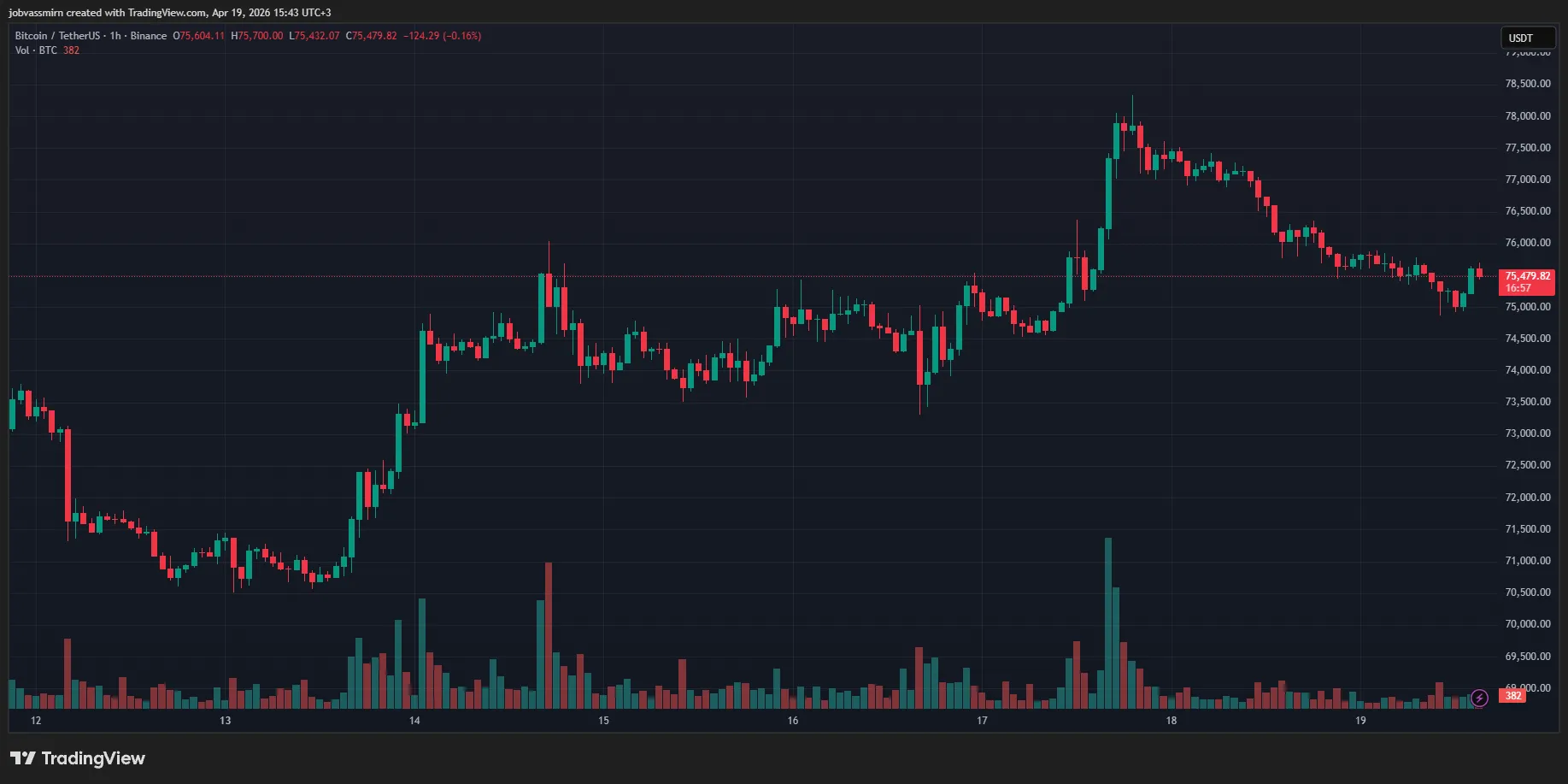
Through midweek, the leading cryptocurrency consolidated between $73,000 and $76,000. The breakthrough came on Friday after Iran's Foreign Minister Abbas Araghchi announced the reopening of the Strait of Hormuz, propelling BTC to $78,000. The rally proved short-lived — over the weekend, the price retreated to $75,000, erasing the Friday gains. The net weekly gain stood at approximately 6%.
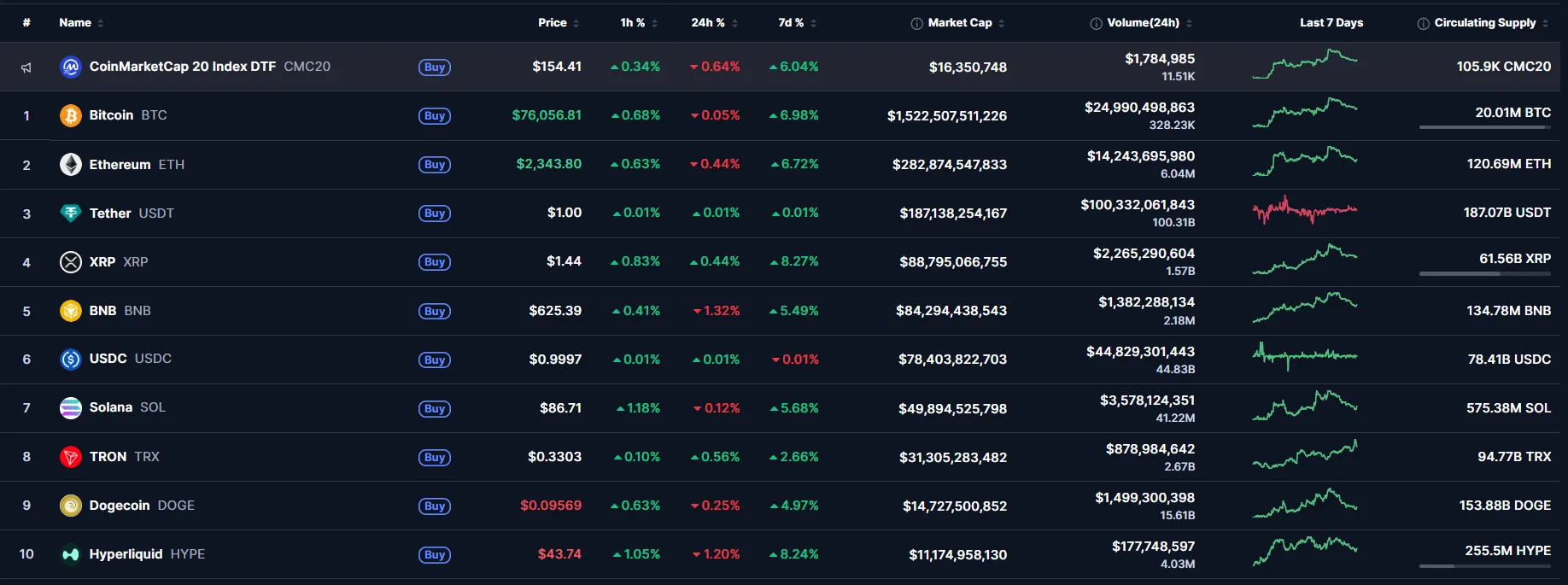
Top-10 altcoins moved in tandem: ETH rose 6%, XRP gained 8%, and BNB added 5%.
Why this matters
Despite the bullish price action, the market is showing signs of stress. A notable divergence has emerged between rising spot prices and bearish futures positioning — a setup that frequently precedes large-scale liquidations. CryptoQuant analysts flagged the risk of profit-taking in bitcoin.
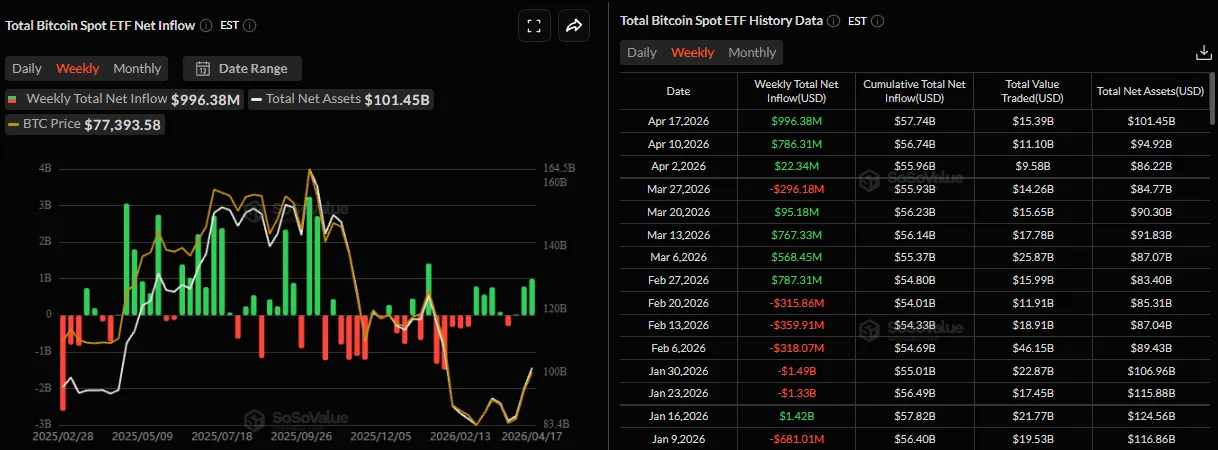
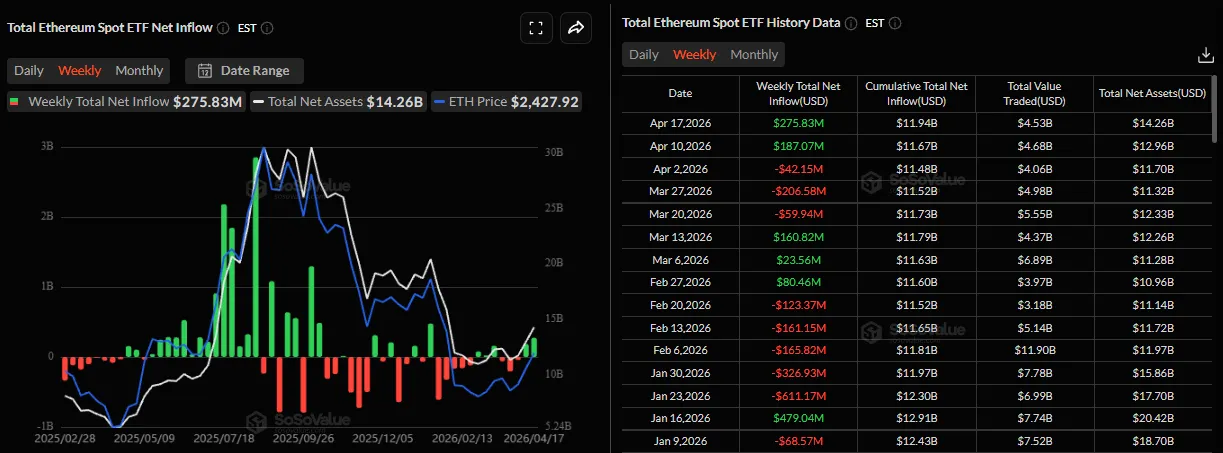
Spot bitcoin ETFs attracted $996 million during the week — the second-largest weekly inflow since the start of the year. Ethereum-based funds received $275 million.
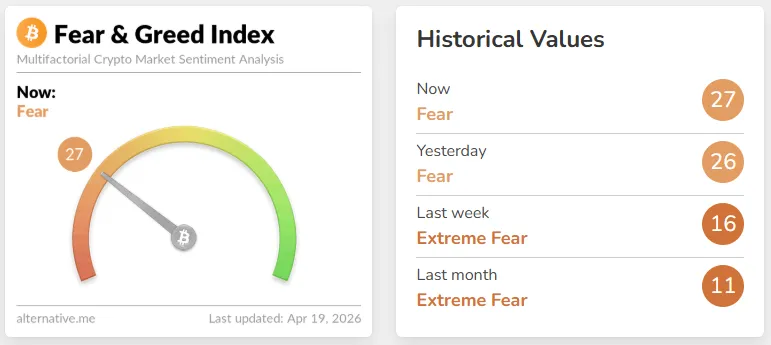
Total crypto market capitalization reached $2.6 trillion. BTC dominance stood at 57.5%, ETH at 10.7%. The Crypto Fear & Greed Index dropped to 27, entering the fear zone for the first time since mid-March.
Massive hacks: Hyperbridge and Kelp lose hundreds of millions
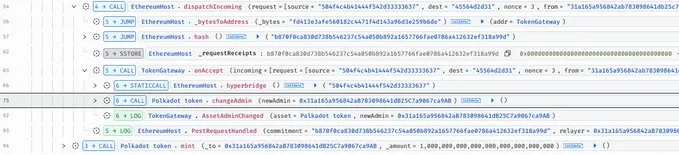
The string of exploits targeting crypto projects continued. On April 13, an attacker gained admin access to Hyperbridge, a cross-chain bridge in the Polkadot ecosystem. The hacker minted 1 billion DOT tokens and immediately sold them in a single transaction for 108.2 ETH (approximately $237,000).
"Attack detected on the Hyperbridge cross-chain bridge" — CertiK Alert, original post
The Polkadot mainnet was unaffected — only the ERC-20 version of the native token running on Ethereum was compromised. The Hyperbridge team later revised the damage estimate upward to $2.5 million, accounting for losses from incentive pools across Ethereum, Base, BNB Chain, and Arbitrum. The project pledged to compensate affected users.
"Team is reassessing the damage estimate" — Hyperbridge, original post
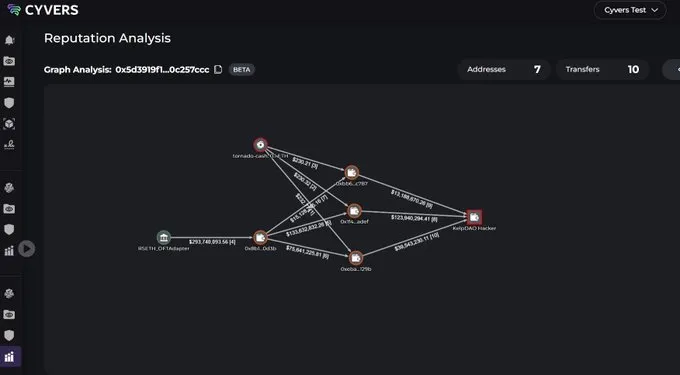
On April 17, the Kelp protocol was exploited. The attacker leveraged a vulnerability in its cross-chain bridge, calling the lzReceive function in the EndpointV2 contract and initiating a transfer of 116,500 rsETH to a personal address. The estimated damage is approximately $293 million. Kelp froze most operations following the breach. The incident also impacted Aave, the lending platform through which the attacker liquidated the stolen assets.
"Suspicious activity detected in the Kelp protocol" — Cyvers Alerts, original post
Russia approves criminal penalties for unlicensed crypto exchange
Russia's Government Commission on Legislative Activity approved provisions introducing criminal liability for unauthorized cryptocurrency operations. A new Article 171.7 would be added to the Criminal Code, targeting the unlicensed organization of digital currency circulation without Central Bank registration or licensing.
Base-level penalties include fines up to 300,000 rubles, compulsory labor, or imprisonment for up to four years. Aggravating circumstances — such as operating as part of a group or causing damage on a particularly large scale — raise the maximum sentence to seven years and fines up to 1 million rubles. The threshold for "large-scale" damage is set at 3.5 million rubles, with "particularly large-scale" starting at 13.5 million rubles.
Olga Zakharova, Director of the Legal Department at "PLAN B," clarified that the law does not target individual users making one-off crypto exchanges. The focus is on entities systematically organizing digital currency circulation — exchanges and infrastructure providers facilitating transactions.
Ignat Likhunov, founder of legal agency Cartesius, highlighted the relatively low threshold. According to his estimate, an exchange that buys and resells 40,000–50,000 USDT at a 1% margin already exceeds the 3.5 million ruble bar.
The amendments are part of the "On Digital Currency and Digital Rights" bill, potentially taking effect on July 1, 2026.
SEC issues guidance on crypto wallet regulation
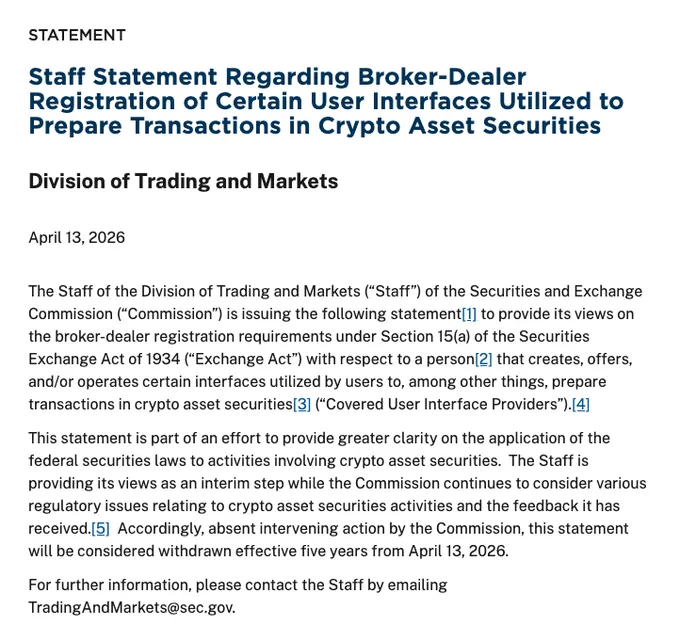
The U.S. Securities and Exchange Commission (SEC) published a statement clarifying how software interfaces for cryptocurrency transactions are interpreted under broker-dealer rules.
"SEC publishes guidance on crypto wallets" — SEC, original post
The guidance indicates that solutions enabling transactions through self-custodial wallets may, under certain conditions, be exempt from registration. The primary requirement is that such tools must not steer investors toward specific transactions involving crypto assets classified as securities. Commissioner Hester Peirce endorsed the initiative, noting that cryptocurrencies are pushing the SEC to confront its tendency toward increasingly expansive interpretations of securities laws.
OpenAI launches cybersecurity-focused AI model
OpenAI granted limited access to GPT-5.4-Cyber, an AI model designed for vulnerability detection in software. The tool features binary reverse-engineering capabilities, allowing security professionals to analyze compiled software without access to source code.
The release came as a direct response to Anthropic's controversial Mythos model, which discovered thousands of zero-day vulnerabilities in major operating systems and web browsers within just weeks. Anthropic withheld Mythos from public release due to extreme security risks, sparking intense debate across the AI industry.
Access to GPT-5.4-Cyber requires identity verification for individuals and an authorization request through a designated representative for organizations.
Frequently Asked Questions
Why did Bitcoin surge to $78,000?
Bitcoin hit $78,000 on Friday after Iran's Foreign Minister Abbas Araghchi announced the reopening of the Strait of Hormuz. Earlier in the week, the price was supported by short liquidations. However, BTC retreated to $75,000 over the weekend.
How much did Bitcoin ETFs attract this week?
Spot Bitcoin ETFs attracted $996 million in weekly inflows — the second-largest figure since the start of the year. Ethereum-based funds received an additional $275 million.
What crypto projects were hacked in April 2026?
On April 13, the Hyperbridge cross-chain bridge in the Polkadot ecosystem was exploited for $2.5 million. On April 17, hackers attacked the Kelp protocol, stealing 116,500 rsETH worth approximately $293 million.
What are Russia's new criminal penalties for crypto exchange?
Russia's new Article 171.7 introduces fines up to 300,000 rubles and imprisonment up to 4 years for unlicensed crypto exchange operations. Aggravating circumstances raise the maximum sentence to 7 years. The large-scale damage threshold starts at 3.5 million rubles.
What did the SEC say about crypto wallets?
The SEC published guidance indicating that self-custodial wallet solutions may be exempt from broker-dealer registration under certain conditions. The key requirement is that such tools must not direct investors toward transactions involving crypto assets classified as securities.
Read also
Bitcoin Down 2.5% Weekly: Jane Street Accusations & 7 Ethereum Forks
Bitcoin lost ~2.5% over the week amid macro shocks and geopolitical tensions. Jane Street faced market manipulation allegations while Ethereum unveiled an ambitious seven hard fork roadmap through 2029.
Institutional Investors Dump ETF Shares Worth 25,000 BTC During Market Crash
Institutional investors massively sold Bitcoin ETF positions in Q4 2025, offloading shares equivalent to 25,098 BTC during the crypto market correction.
Options Traders Bet on Bitcoin Rally to $80,000 by Summer
Bitcoin consolidates near $70,000 after a volatility spike. Options market participants are increasingly positioning for a rally to $80,000 by early summer, despite macroeconomic headwinds.
Bitcoin Drops Below $67,000 as Ethereum Foundation Unveils Quantum Defense Roadmap
Bitcoin lost 3% over the week amid Middle East tensions and ETF outflows, miner activity hit historic lows, and Ethereum Foundation outlined a four-hardfork plan for quantum resistance by 2029.
TON Wallet Introduces Yield Vaults for BTC, ETH, and USDT Directly in Telegram
TON Wallet has launched yield vaults for BTC, ETH, and USDT directly within Telegram, offering up to 18% APY on stablecoins through partnerships with Morpho, TAC, and Re7.
Weekly Recap: Aave Ecosystem Rescue Mobilizes 100,000 ETH and Quantum Computer Cracks 15-Bit ECC Key
Bitcoin held near $78,000, the DeFi community rallied over 100,000 ETH to help Aave recover from the Kelp hack, and a researcher cracked a 15-bit ECC key on a quantum computer.