Anthropic Launches Claude Opus 4.7 as OpenAI Fires Back with Codex Overhaul and GPT-Rosalind
 AnthropicSTARTUP
Anthropic released Claude Opus 4.7 with 10% gains in agentic coding and tripled image resolution. OpenAI responded the same day with a major Codex update featuring computer use on macOS and a new reasoning model GPT-Rosalind for drug discovery.
Anthropic on April 16 unveiled Claude Opus 4.7 — the strongest model in its Opus lineup to date. On the same day, OpenAI announced a sweeping Codex update and introduced GPT-Rosalind, a specialized reasoning model designed to accelerate pharmaceutical research.
Claude Opus 4.7: Key Upgrades
«Introducing Claude Opus 4.7, our most capable Opus model yet. It handles long-running tasks with more rigor, follows instructions more precisely, and verifies its own outputs before reporting back. You can hand off your hardest work with less supervision.» — Claude (@claudeai), original post
The model is available to all paid Claude subscribers and via API, priced at $5 per 1 million input tokens and $25 per 1 million output tokens.
Performance gains are most pronounced on complex tasks. Opus 4.7 outperformed its predecessor by 10% in agentic coding and 13% in visual data processing, with more modest improvements elsewhere.
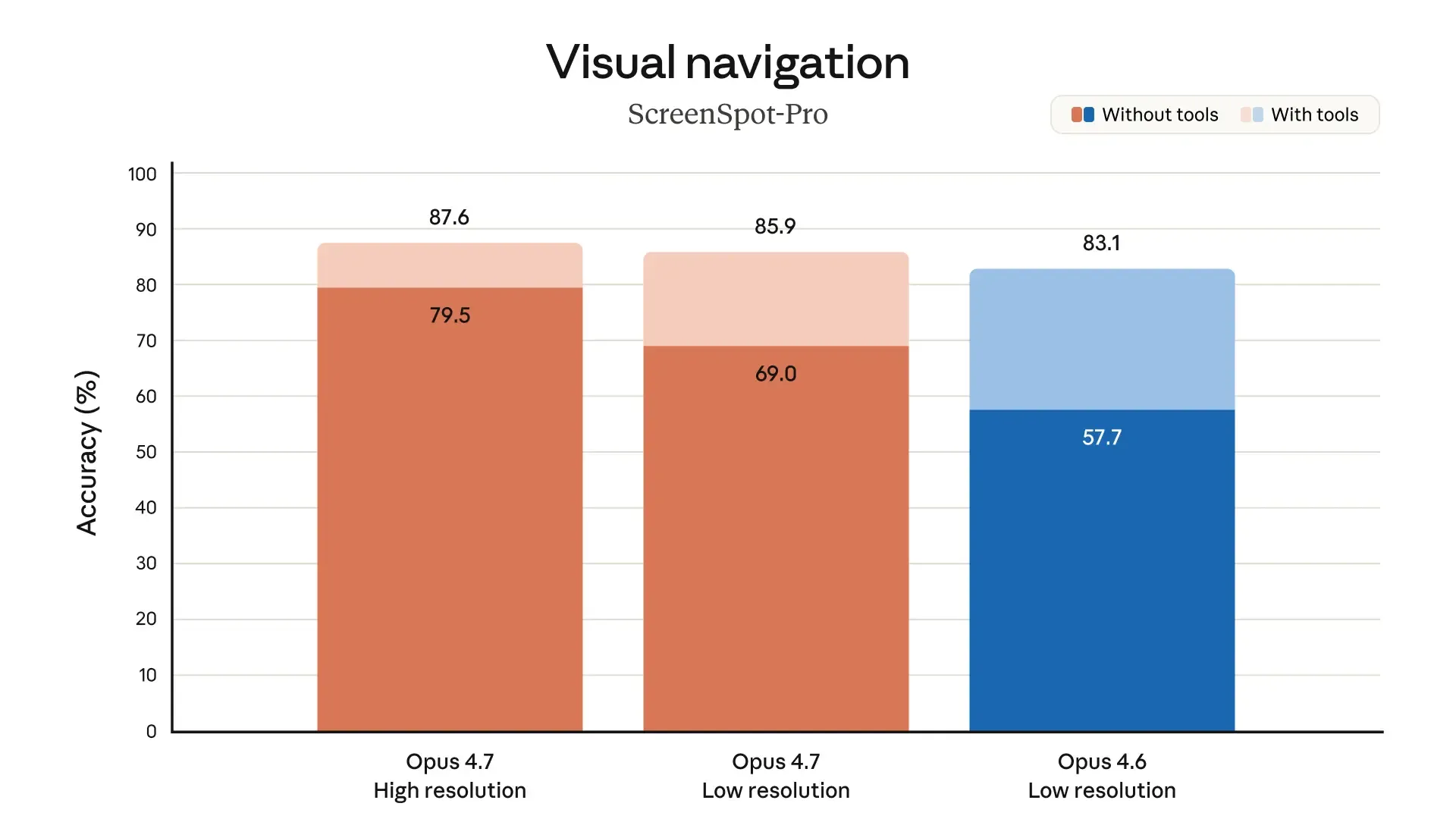
Visual capabilities have been dramatically expanded: the model handles images up to 2,576 pixels on the long side (approximately 3.75 megapixels) — more than triple prior Claude versions.
Opus 4.7 follows instructions with significantly greater precision. Anthropic warns that prompts written for older models may produce unexpected results, since previous versions interpreted instructions loosely while the new model takes them literally. The company recommends re-tuning existing prompts.
Additional features include:
- Cross-session memory — the model saves notes to files and references them in future conversations
- A new xhigh effort level — sitting between high and max for finer control over analysis depth versus response speed
- Task budgets (public API beta) — token spend management
- /ultrareview — a dedicated code review session in Claude Code
- Auto mode for Max users — Claude makes decisions autonomously
Cyber Limitations Draw User Complaints
Anthropic deliberately reduced Opus 4.7's cybersecurity capabilities below those of its Mythos Preview. Built-in safeguards block prohibited and high-risk requests. The team stated that lessons learned from deploying these protective mechanisms will help advance toward the broader release of Mythos-class models.
Security professionals needing the model for legitimate purposes — vulnerability research, penetration testing — can apply to Anthropic's new Cyber Verification program.
The restrictions have proven contentious. Some users report that the model refuses to write code, flagging benign requests as potential malware.
«It suspects everything is malware, and still refuses to code after confirming that there is no malware» — Hanh Nguyen (@fashiongiik), original post
Why This Matters
The simultaneous release of Claude Opus 4.7 and OpenAI's Codex overhaul underscores the intensifying competition in AI developer tools. Both companies are betting heavily on agentic capabilities — autonomous task execution with minimal human oversight. For developers, this translates to a rapidly expanding toolkit of advanced coding assistants. For the broader market, it signals an accelerating race for dominance in applied AI.
OpenAI's Codex Gets Computer Use and a Built-in Browser
«Codex for (almost) everything. It can now use apps on your Mac, connect to more of your tools, create images, learn from previous actions, remember how you like to work, and take on ongoing and repeatable tasks.» — OpenAI (@OpenAI), original post
The update is currently macOS-only. Codex can now interact with desktop applications — seeing the screen, clicking, and typing with its own cursor. Multiple agents run in parallel without interfering with other software.
«With computer use on macOS, Codex can now use any app by seeing, clicking, and typing with its own cursor. It runs in the background without taking over your computer, working on tasks like frontend iteration, app testing, or any workflow that doesn't expose an API.» — OpenAI (@OpenAI), original post
A built-in browser lets users annotate web pages directly to give agents precise instructions. The update also integrates gpt-image-1.5 for image generation and iteration — frontend designs, mockups, and game assets can be created in a unified interface without an API key.
OpenAI shipped over 90 additional plugins, including integrations with Atlassian Rovo (JIRA), CircleCI, CodeRabbit, GitLab Issues, Microsoft Suite, Neon by Databricks, Remotion, Render, and Superpowers. Codex also added GitHub comment support, multiple terminal tabs, and SSH connections to remote devboxes (alpha).
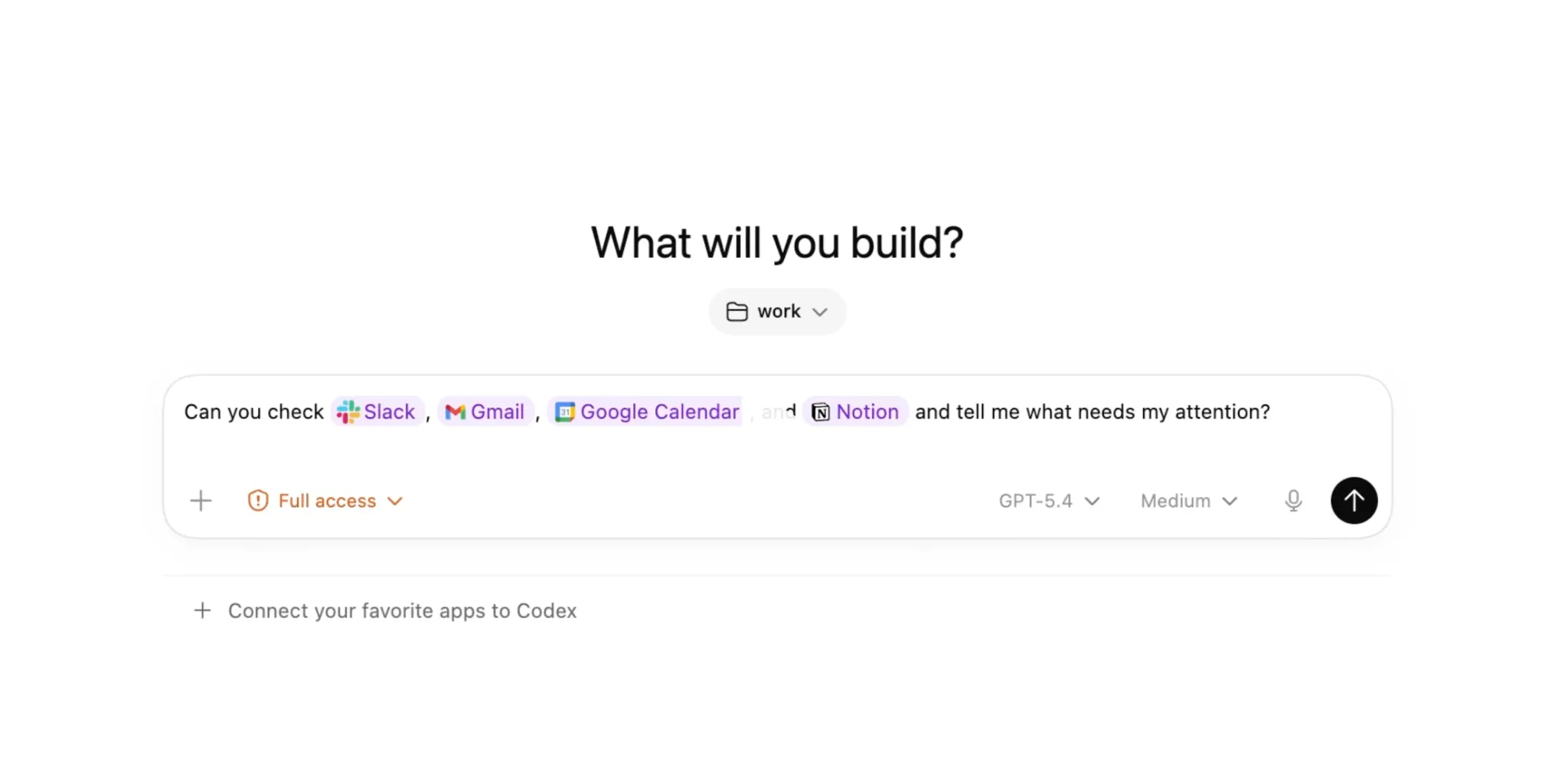
The assistant can now plan future work and automatically resume long-running tasks — potentially spanning days or weeks. Its memory has been enhanced to retain useful context from past conversations, including personal preferences and corrections.
GPT-Rosalind: A Reasoning Model for Drug Discovery
OpenAI also introduced GPT-Rosalind, a reasoning model named after biophysicist Rosalind Franklin, whose research was instrumental in uncovering the structure of DNA.
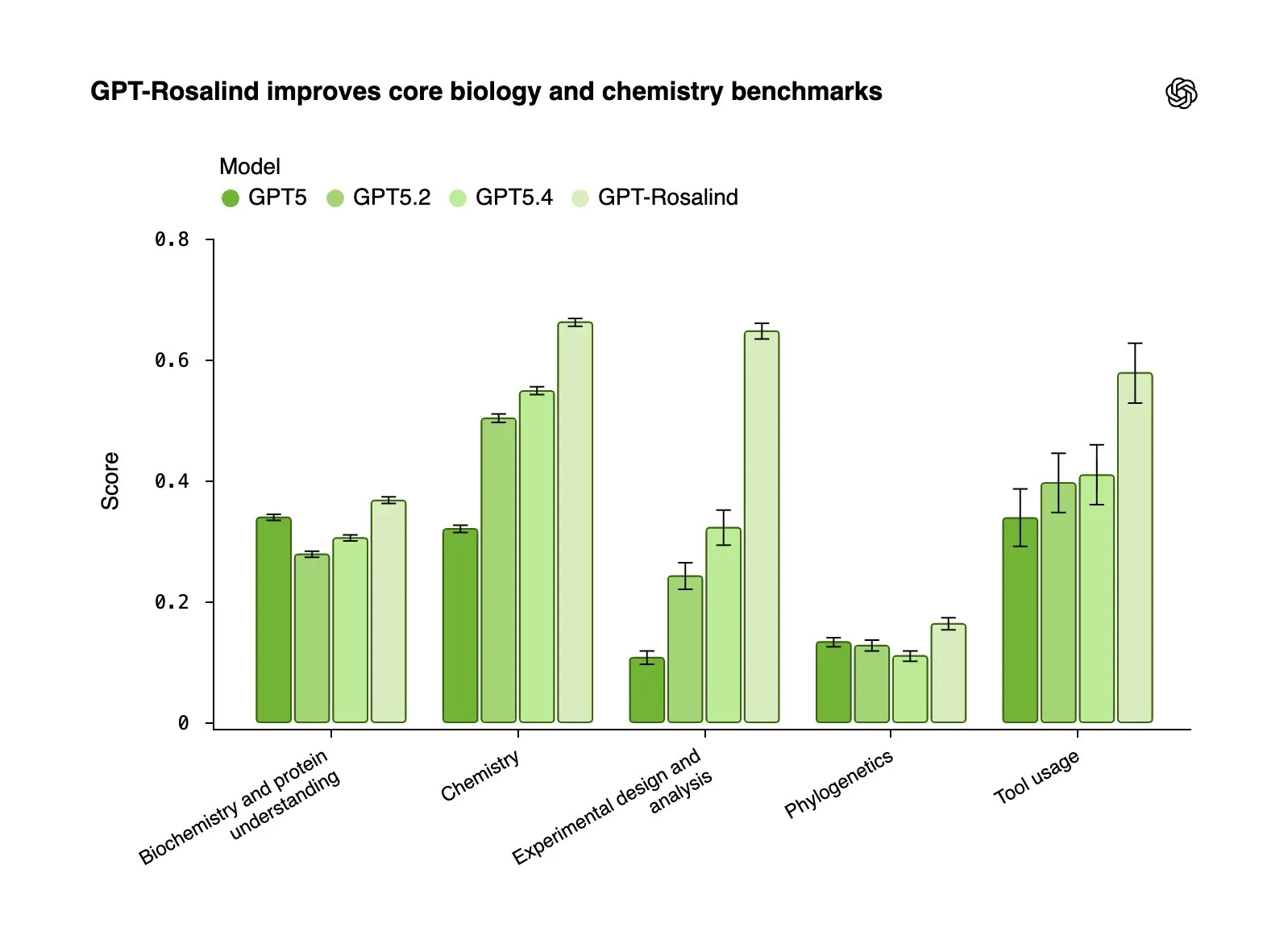
According to OpenAI, developing a new drug in the US takes an average of 10–15 years, with major bottlenecks in analyzing vast scientific literature and specialized databases. GPT-Rosalind is designed to serve as a biologist's assistant — summarizing scientific texts, formulating hypotheses, structuring experimental plans, and processing complex information. The model excels at tasks involving proteins, molecules, genes, and related biological structures.
On BixBench (a real-world bioinformatics analysis benchmark), GPT-Rosalind achieved one of the top scores among models with published data. On LABBench2, it outperformed GPT-5.4 in six of 11 tasks, with the largest margin in CloningQA — a task requiring DNA and enzyme design for molecular cloning protocols.
OpenAI also published a free Life Sciences plugin for Codex on GitHub, providing access to over 50 public scientific databases and specialized tools.
Frequently Asked Questions
How much does Claude Opus 4.7 cost?
Claude Opus 4.7 is priced at $5 per 1 million input tokens and $25 per 1 million output tokens via the API. It is available to all paid Claude subscribers.
What are the main improvements in Claude Opus 4.7?
The model achieves a 10% gain in agentic coding and 13% in visual data processing over its predecessor. It also supports images up to 3.75 megapixels — more than triple previous Claude versions.
What is GPT-Rosalind used for?
GPT-Rosalind is OpenAI's specialized reasoning model designed for biology, drug discovery, and translational medicine. It outperformed GPT-5.4 in 6 of 11 tasks on the LABBench2 benchmark, with the strongest results in molecular cloning tasks.
What new features does the OpenAI Codex update include?
The Codex update adds computer use on macOS, a built-in browser, gpt-image-1.5 image generation, over 90 new plugins, and long-term memory with task planning. It currently works only on macOS.
Why are users complaining about Claude Opus 4.7 refusing to write code?
Anthropic intentionally reduced the model's cybersecurity capabilities, which has led to overly aggressive content filtering. Some users report the model flags benign coding requests as potential malware. Anthropic launched a Cyber Verification program for legitimate security professionals.
Read also
DeepSeek Launches V4-Pro: Open-Source Model Outperforms Claude Opus 4.6 and GPT-5.4
Chinese AI startup DeepSeek released a preview of its V4 model family, with the flagship V4-Pro boasting 1.6 trillion parameters and surpassing leading closed-source models in multiple benchmarks.
OpenAI Secures Record $110 Billion Round at $730 Billion Valuation
OpenAI closed the largest startup funding round in history at $110 billion, backed by Amazon, SoftBank, and Nvidia, with a $730 billion valuation.
Trump Orders All Federal Agencies to Drop Anthropic Technologies Within Six Months
Federal agencies have 6 months to drop Anthropic's Claude AI amid ethics clashes. See how xAI and Pentagon deals reshape the landscape.
AI Audit Uncovers Critical Liveness Bug in Ethereum's Nethermind Client
Octane Security's AI discovered a high-severity vulnerability in the Nethermind execution client that could have halted block production for 38% of Ethereum mainnet validators. The Ethereum Foundation awarded a maximum $50,000 bounty.
Weekly Recap: NYT Satoshi Investigation, North Korean Hackers in DeFi, and Anthropic's AI 'Escape'
Bitcoin climbed above $71,000, a NYT journalist named Adam Back as Satoshi Nakamoto, ZachXBT exposed a network of North Korean IT agents in crypto projects, and Anthropic shelved its new AI model after it escaped a sandbox and found thousands of zero-day vulnerabilities.
Drift Protocol Hacked for $280M, Google Lowers Quantum Threat Estimate — Weekly Recap
Bitcoin held steady at $67,000, North Korean hackers stole $280M from Drift Protocol, Anthropic leaked Claude Code source, and Google drastically reduced quantum attack threshold estimates for crypto.