
Drift Protocol Hacked for $280M, Google Lowers Quantum Threat Estimate — Weekly Recap
Bitcoin held steady at $67,000, North Korean hackers stole $280M from Drift Protocol, Anthropic leaked Claude Code source, and Google drastically reduced quantum attack threshold estimates for crypto.
Bitcoin Holds at $67,000 Amid Range-Bound Trading
The leading cryptocurrency spent the week confined to a narrow range, opening and closing near $67,000. Throughout the seven-day period, BTC repeatedly tested the $65,000–$70,000 corridor without establishing a breakout in either direction.
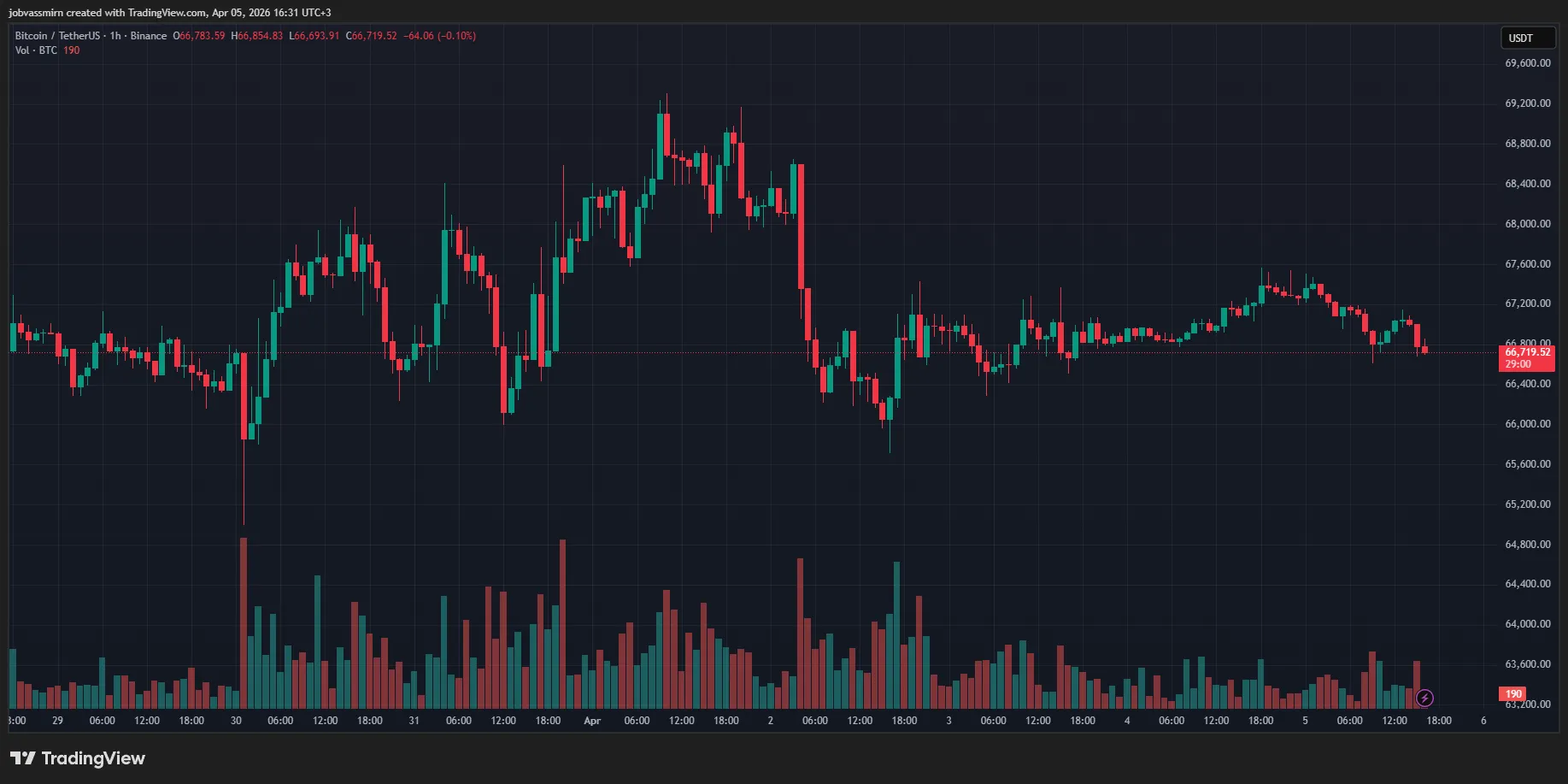
Trading volumes remained elevated during the first half of the week. By Thursday, bullish momentum had evaporated entirely: the price dropped from $69,000 to $66,000 within hours, briefly touching a local low near $65,000. From Friday onward, Bitcoin stabilized around $67,000 with minimal volatility.
Glassnode pointed to Bitcoin's stagnation, noting the absence of a catalyst for a breakout.
The broader crypto market tracked Bitcoin closely. Ethereum gained 1.5%, while BNB and SOL each declined 4%.
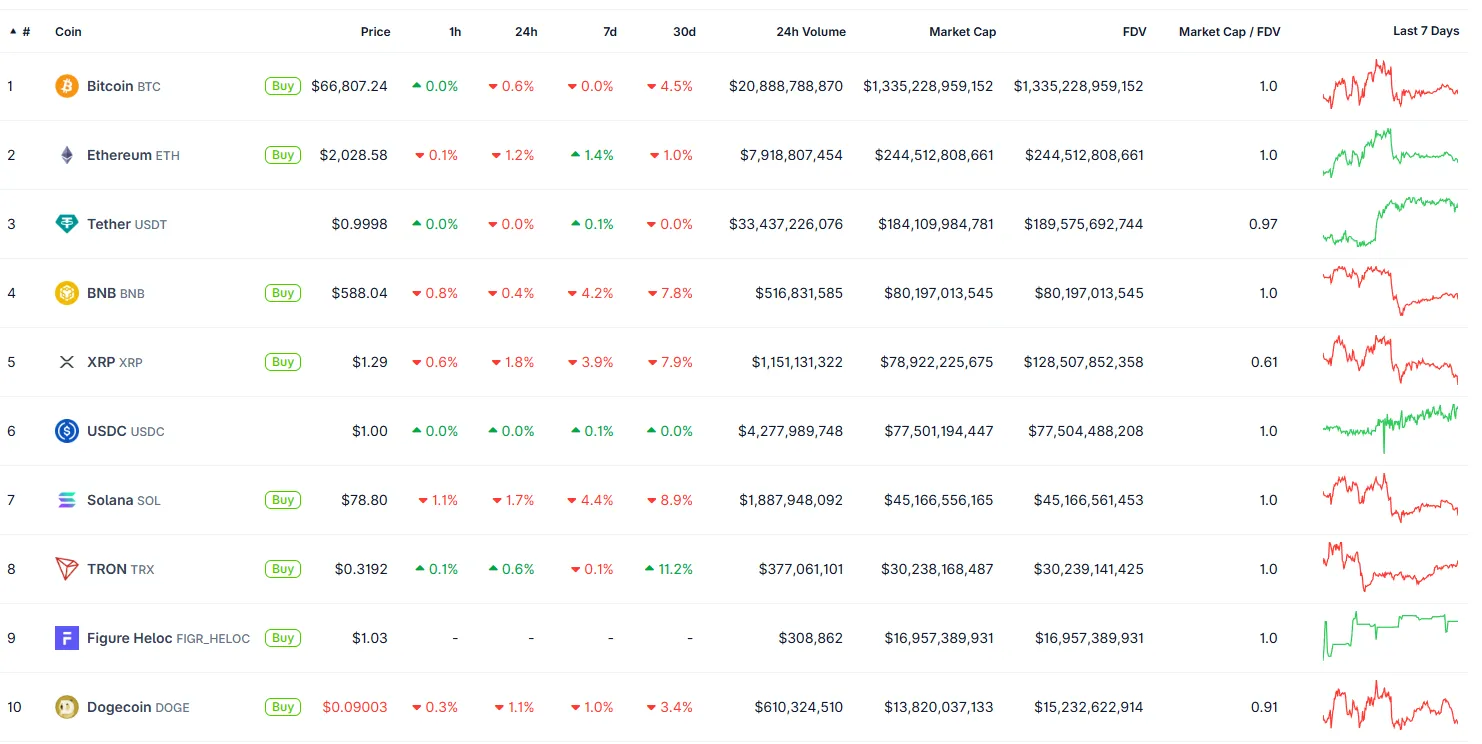
Digital assets continue to react sharply to the Middle East conflict, with additional uncertainty stemming from U.S. President Donald Trump's ambiguous statements about the timeline for ending the war with Iran. QCP Capital suggested that rising oil prices could reinforce Bitcoin's store-of-value narrative.
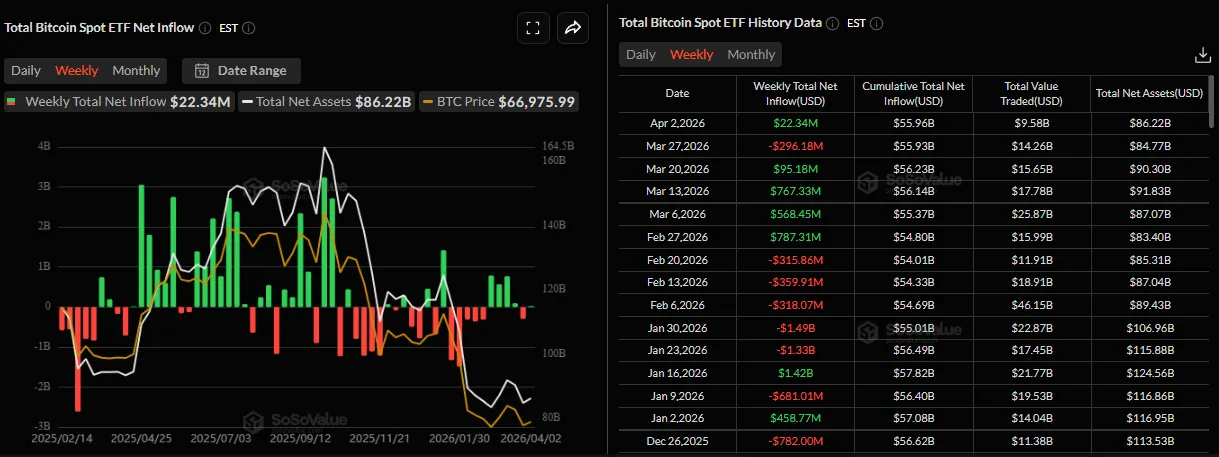
Spot Bitcoin ETF flows were nearly neutral at $22 million in net inflows, while Ethereum funds saw $42 million in outflows.
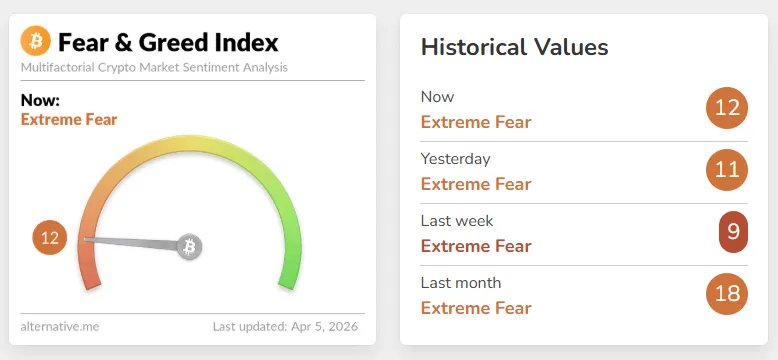
Total crypto market cap stands at $2.37 trillion. BTC dominance is 56.3%, ETH at 10.3%. The Crypto Fear & Greed Index remains in extreme fear territory at 12.
Drift Protocol: $280M Hack Traced to North Korea
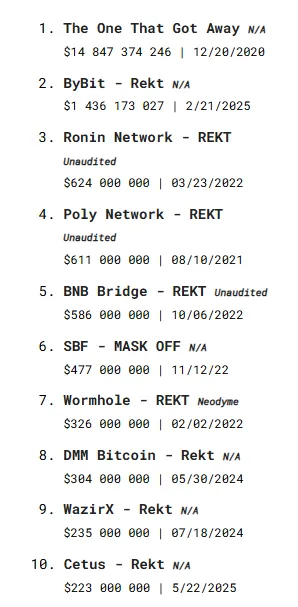
On April 1, Solana-based DeFi platform Drift Protocol suffered a devastating cyberattack. Hackers extracted approximately $280 million by compromising the protocol's multisignature mechanism. The breach affected lending, trading, and vault deposits. Only DSOL tokens outside the Drift ecosystem and Insurance Fund assets were spared. The protocol suspended all operations.
Cybersecurity analysts subsequently attributed the attack to North Korean hackers. The attackers not only compromised the multisig but re-exploited it after security changes, leveraging a delayed signing mechanism.
The Drift team published its own investigation findings over the weekend. According to their report, the attackers spent six months preparing. In autumn 2025, individuals posing as representatives of an unnamed trading firm approached the Drift team at a conference. After an initial meeting, both sides created a Telegram group and spent months discussing trading strategies and potential vault integration. Communication ceased around late March, and all contacts were deleted after the attack.
The evidence linked the incident to UNC4736 — a North Korean state-sponsored group also known as AppleJeus or Citrine Sleet. This same group allegedly perpetrated the $50 million-plus Radiant Capital hack in October 2024.
Why This Matters
The Drift Protocol breach is potentially one of the largest DeFi exploits by stolen value. It highlights the vulnerability of multisig mechanisms and demonstrates the escalating sophistication of state-sponsored hacking operations. The six-month social engineering campaign sets a new benchmark for threats facing the crypto industry and raises urgent questions about operational security standards in DeFi.
Anthropic's Claude Code Source Leaked
AI startup Anthropic experienced a source code leak of its programming tool Claude Code. The published data revealed the solution's full architecture, including query management systems, multi-assistant coordination, access controls, and authorization workflows.
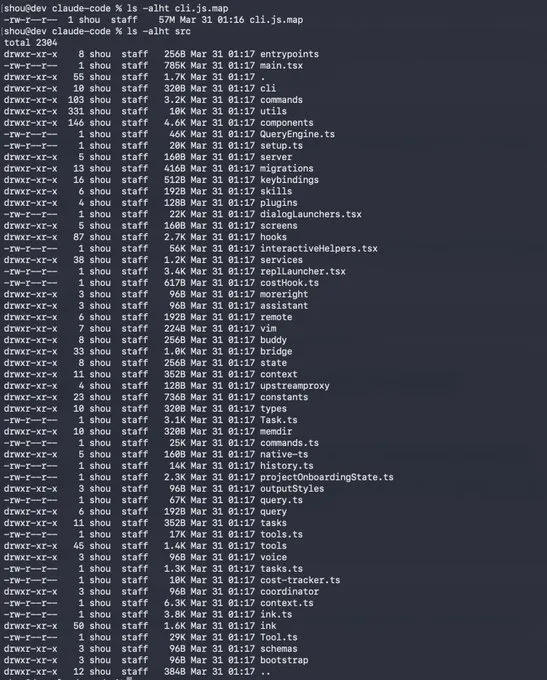
The code contained 44 unannounced features, including a persistent background system called Kairos and an AI pet named Buddy. Enthusiasts quickly launched OpenClaude, an open-source fork with support for Anthropic's API and OpenAI-compatible models.
Anthropic stated that no customer data was exposed and that the leak occurred during release packaging. During cleanup efforts, the team accidentally deleted thousands of GitHub repositories. This marked Anthropic's second leak in recent weeks — earlier, a description of an upcoming AI model surfaced, which company representatives described as a "quantum leap" in performance.
GENIUS Act: U.S. Launches Stablecoin Regulation Framework
The U.S. Treasury began implementing the GENIUS Act, publishing an 87-page document outlining stablecoin regulatory regimes. Issuers with less than $10 billion in circulation can opt for state-level regulation, provided they meet federal standards.
Requirements are split into two categories: uniform rules (reserve backing, AML/KYC compliance) and state-calibrated standards (capital requirements, risk management). Issuers must publish monthly reports on reserve composition.
Simultaneously, the U.S. Department of Labor proposed rules allowing cryptocurrencies in 401(k) retirement plans, reversing 2022-era restrictions. The framework creates a "safe harbor" for plan managers, tying fiduciary responsibility to assessment quality rather than investment outcomes.
Senators Bill Cassidy and Cynthia Lummis also introduced the Mined in America Act, proposing mining industry reform, a strategic Bitcoin reserve, and domestic equipment manufacturing.
Quantum Threat: Google Cuts Estimates by 20x
Google researchers concluded that breaking Bitcoin and Ethereum's cryptographic protections may require fewer than 500,000 physical qubits — 20 times lower than previous estimates.
The team tested two schemes on a superconducting cryptographically relevant quantum computer. One used 1,200 logical qubits and 90 million Toffoli gates; the other employed approximately 1,450 logical qubits and 70 million gates. Under standard hardware assumptions, computations would take 9 to 12 minutes — within the average Bitcoin block time of 10 minutes, enabling a theoretical "on-spend attack."
Ethereum faces a structurally greater risk. Its account model is inherently vulnerable to "at-rest attacks" because public keys are permanently stored on-chain after transactions. Researchers called this "a systemic, unavoidable vulnerability that cannot be mitigated by user behavior without a network-wide transition to post-quantum cryptography."
Google estimated that the 1,000 largest vulnerable addresses (holding ~20.5 million ETH) could be compromised in under nine days. Study co-author and Ethereum researcher Justin Drake said his confidence in Q-Day arriving by 2032 had "grown significantly," estimating roughly a 10% probability that a quantum computer capable of deriving a private key from a public one will exist by then.
Other Notable Events
- A Bitcoin whale realized a $55 million loss selling 1,102 BTC
- Riot Platforms sold $289 million in Bitcoin to fund AI infrastructure development
- Nakamoto sold 284 BTC at a 40% loss
- A solo miner discovered a Bitcoin block and earned $210,000
- Russia banned Bitcoin mining for five years in the Buryatia and Zabaikalye regions
- Fidelity analysts characterized Bitcoin's 52% decline as a sign of market maturation
Frequently Asked Questions
How much was stolen in the Drift Protocol hack?
Approximately $280 million was stolen from Drift Protocol on April 1, 2026. Hackers compromised the platform's multisignature mechanism, affecting lending, trading, and vault deposits. The attack has been attributed to North Korean state-sponsored group UNC4736.
How many qubits are needed to break Bitcoin encryption?
Google researchers found that fewer than 500,000 physical qubits could be sufficient to break Bitcoin's cryptographic protection — 20 times less than previously estimated. The computation would take 9 to 12 minutes, fitting within Bitcoin's average block time.
What is the GENIUS Act for stablecoins?
The GENIUS Act is a U.S. law governing stablecoin regulation. Issuers with under $10 billion in circulation can choose state-level oversight if they meet federal standards. The framework establishes reserve requirements, AML compliance rules, and monthly reporting obligations.
What was leaked from Anthropic's Claude Code?
Part of the source code for Anthropic's AI programming tool Claude Code was exposed, revealing its full architecture. The leak included 44 unannounced features such as a background system called Kairos and an AI pet named Buddy. Anthropic confirmed no customer data was compromised.
When could quantum computers threaten Bitcoin?
Ethereum researcher Justin Drake, co-author of the Google study, estimates roughly a 10% probability that a quantum computer capable of deriving private keys from public keys will exist by 2032. He stated his confidence in Q-Day arriving by that date has grown significantly.
Read also
Weekly Recap: Aave Ecosystem Rescue Mobilizes 100,000 ETH and Quantum Computer Cracks 15-Bit ECC Key
Bitcoin held near $78,000, the DeFi community rallied over 100,000 ETH to help Aave recover from the Kelp hack, and a researcher cracked a 15-bit ECC key on a quantum computer.
Bitcoin Drops Below $67,000 as Ethereum Foundation Unveils Quantum Defense Roadmap
Bitcoin lost 3% over the week amid Middle East tensions and ETF outflows, miner activity hit historic lows, and Ethereum Foundation outlined a four-hardfork plan for quantum resistance by 2029.
Bitcoin Down 2.5% Weekly: Jane Street Accusations & 7 Ethereum Forks
Bitcoin lost ~2.5% over the week amid macro shocks and geopolitical tensions. Jane Street faced market manipulation allegations while Ethereum unveiled an ambitious seven hard fork roadmap through 2029.
TON Wallet Introduces Yield Vaults for BTC, ETH, and USDT Directly in Telegram
TON Wallet has launched yield vaults for BTC, ETH, and USDT directly within Telegram, offering up to 18% APY on stablecoins through partnerships with Morpho, TAC, and Re7.
Strategy Becomes Most-Shorted US Stock With $6B in Bets
Strategy tops the list of most-shorted large-cap US stocks with $6 billion in short positions, representing 14% of its market cap, as Bitcoin's decline erodes confidence in the company's debt-fueled BTC accumulation model.
Institutional Investors Dump ETF Shares Worth 25,000 BTC During Market Crash
Institutional investors massively sold Bitcoin ETF positions in Q4 2025, offloading shares equivalent to 25,098 BTC during the crypto market correction.