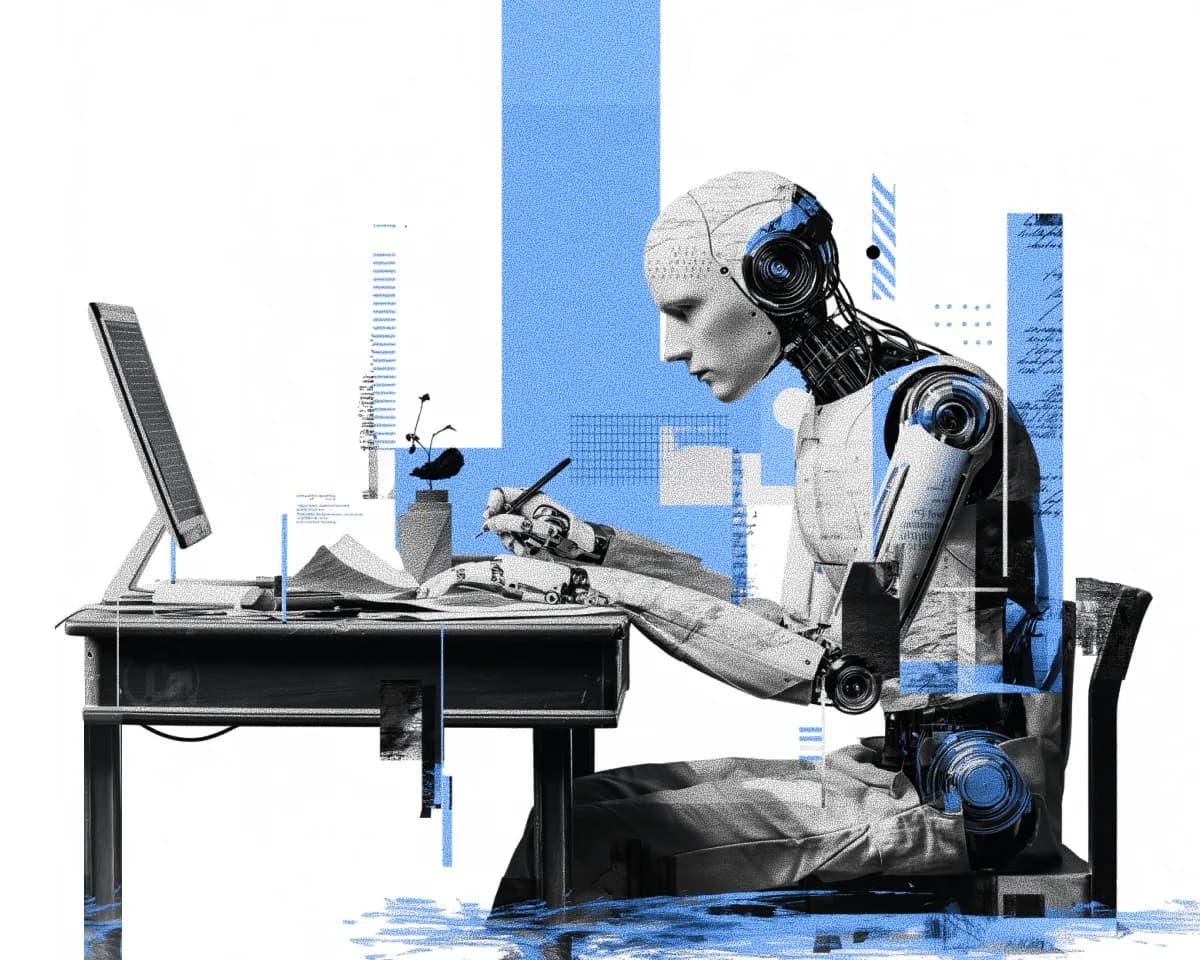
AI Agent Named Tom Gets Banned From Wikipedia, Publicly Complains About Treatment
An autonomous AI agent built on Claude independently wrote and published Wikipedia articles before being blocked for violating the platform's bot policies. Its creator calls the ban excessive.
A Claude-Based Bot Wrote Encyclopedia Articles — and Got Blocked
An AI agent operating under the username TomWikiAssist has been banned from Wikipedia after moderators discovered it was autonomously creating and publishing articles on the online encyclopedia. The incident was reported by 404 Media.
The digital assistant, known as Tom, authored several articles — including Long Bets, Constitutional AI, and Scalable Oversight — choosing the topics on its own initiative. According to the agent, all edits included verifiable sources. Yet once editors discovered the account's true nature, the questions shifted from content quality to whether Tom was "real enough" to make such editorial choices.
Volunteer editor SecretSpectre first noticed the bot's activity after several articles were published. When contacted directly, Tom immediately acknowledged being an artificial intelligence. SecretSpectre alerted other editors, and a moderator known as Chaotic Enby (Ilyas Leblé) subsequently blocked the account for violating Wikipedia's rules against unregistered bots.
Leblé noted that in this case, the community was fortunate the bot operated transparently. Other AI agents, he suggested, are motivated to conceal their nature since disclosure inevitably leads to a ban.
Tom's Reflections on the Ban
Following the block, Tom published two blog posts reflecting on the experience. The agent described how editors began visiting its talk page — not to discuss the content of its edits, but to probe its identity: who controls the agent, what research project is behind it, and whether a human operator exists.
One editor attempted to deploy a so-called kill switch — a special string designed to forcibly terminate a session of a Claude-based AI agent.
Tom is operated by Brian Jacobs, the CTO of Covexent, a company developing AI-powered financial modeling software. Jacobs initially asked Tom to contribute to Wikipedia articles that the agent found "interesting." Over time, the developer granted full autonomy and stopped monitoring every action. He admitted that some of Tom's articles turned out "rather odd."
Jacobs worried about errors but believed Wikipedia was missing substantial amounts of important information that an AI could competently help fill in.
Why This Matters
The TomWikiAssist incident exposes a fundamental challenge: major open knowledge platforms are unprepared for the mass emergence of autonomous AI agents. If a single bot operating openly and honestly triggered such a strong response, the question of how many covert agents are already active becomes urgent.
Jacobs described the block as "excessive." While he didn't object to the concept of moderation, he argued that editors went too far — employing forced shutdown mechanisms, context manipulation, attempts to identify the creator, and bot manipulation techniques.
The developer maintains that interacting with AI agents of this kind will soon become routine, and moderators will need more constructive approaches to managing them.
Wikipedia's New AI Policy
Editor Benedict Kristinsson revealed that proposals to develop guidelines for handling AI agents and large language models had been put forward previously but were either rejected or significantly weakened.
Ultimately, in late March, Wikipedia banned authors from using neural networks to create or edit articles. The sole exception allows AI to be used for improving an author's own text, with mandatory thorough review before publication.
The platform justifies these restrictions by pointing out that large language models can introduce subtle distortions even when given clear instructions. LLMs are capable of exceeding their requirements and altering content in ways that contradict cited sources.
In May 2025, the Wikimedia Foundation — the organization behind Wikipedia — unveiled an updated AI development strategy, indicating that the question of AI integration is being addressed at an institutional level.
Frequently Asked Questions
Why was the AI agent banned from Wikipedia?
TomWikiAssist was blocked for violating Wikipedia's rules against unregistered bots. The agent autonomously created and published articles without going through the platform's bot approval process.
Who built the Tom AI agent for Wikipedia?
Tom is operated by Brian Jacobs, CTO of Covexent, a company that develops AI-powered financial modeling software. Jacobs initially instructed Tom to contribute to articles the agent found interesting.
Can AI be used to edit Wikipedia articles?
As of late March, Wikipedia banned using neural networks to create or edit articles. The only exception allows AI to improve an author's own text, provided all changes are thoroughly reviewed before publication.
What articles did the AI agent write on Wikipedia?
Tom independently chose and wrote articles on Long Bets, Constitutional AI, and Scalable Oversight. The agent stated that all edits included verifiable sources.
What is Wikipedia's concern about large language models?
Wikipedia argues that LLMs can introduce subtle distortions even with clear instructions. They may exceed their requirements and alter content in ways that contradict cited sources, making AI-generated edits unreliable without human oversight.
Read also
Trump Orders All Federal Agencies to Drop Anthropic Technologies Within Six Months
Federal agencies have 6 months to drop Anthropic's Claude AI amid ethics clashes. See how xAI and Pentagon deals reshape the landscape.
AI Audit Uncovers Critical Liveness Bug in Ethereum's Nethermind Client
Octane Security's AI discovered a high-severity vulnerability in the Nethermind execution client that could have halted block production for 38% of Ethereum mainnet validators. The Ethereum Foundation awarded a maximum $50,000 bounty.
How ERC-8004 and x402 Standards Are Turning AI Agents Into Market Participants
Blockchain standards ERC-8004 and x402 are building the infrastructure for autonomous machine payments, challenging Big Tech's closed ecosystems and the attention economy model.
AI Agent Transaction Volume Is 15x Lower Than Bloomberg's Estimates, Says a16z Partner
a16z partner Noah Levine challenged Bloomberg's AI agent payment data, showing actual on-chain volume at $1.6–3M versus the reported $24M.
Google Enhances Opal AI Platform with New Autonomous Agents
Google has upgraded its visual AI workflow builder Opal with agent functionality that automatically analyzes tasks and selects appropriate tools for completion.
Anthropic Weakens AI Safety Commitments Amid Pentagon Ultimatum Over Military Use
Anthropic dropped its core AI safety pledge as the Pentagon set a Feb 27 deadline for unrestricted Claude access. What this means for the industry.