
Aave Deposits Plunge by $16 Billion in Days Following Kelp Hack
Aave's total deposits dropped 35% from $45.8 billion to $29.6 billion after the Kelp exploit. The protocol's TVL has fallen to $15.1 billion, while AAVE token lost 13.8% in a week.
Massive Liquidity Drain Hits Aave
The largest DeFi lending protocol Aave is experiencing a severe liquidity crisis in the aftermath of the Kelp exploit. On-chain analyst EmberCN highlighted that total deposits on the platform fell 35% — from $45.8 billion to $29.6 billion — representing a net outflow of $16.2 billion in just a few days.
"Total deposits on Aave have dropped below $30 billion. From $45.8 billion before the rsETH incident to $29.6 billion now — $16.2 billion in outflows." — EmberCN (@EmberCN), original post
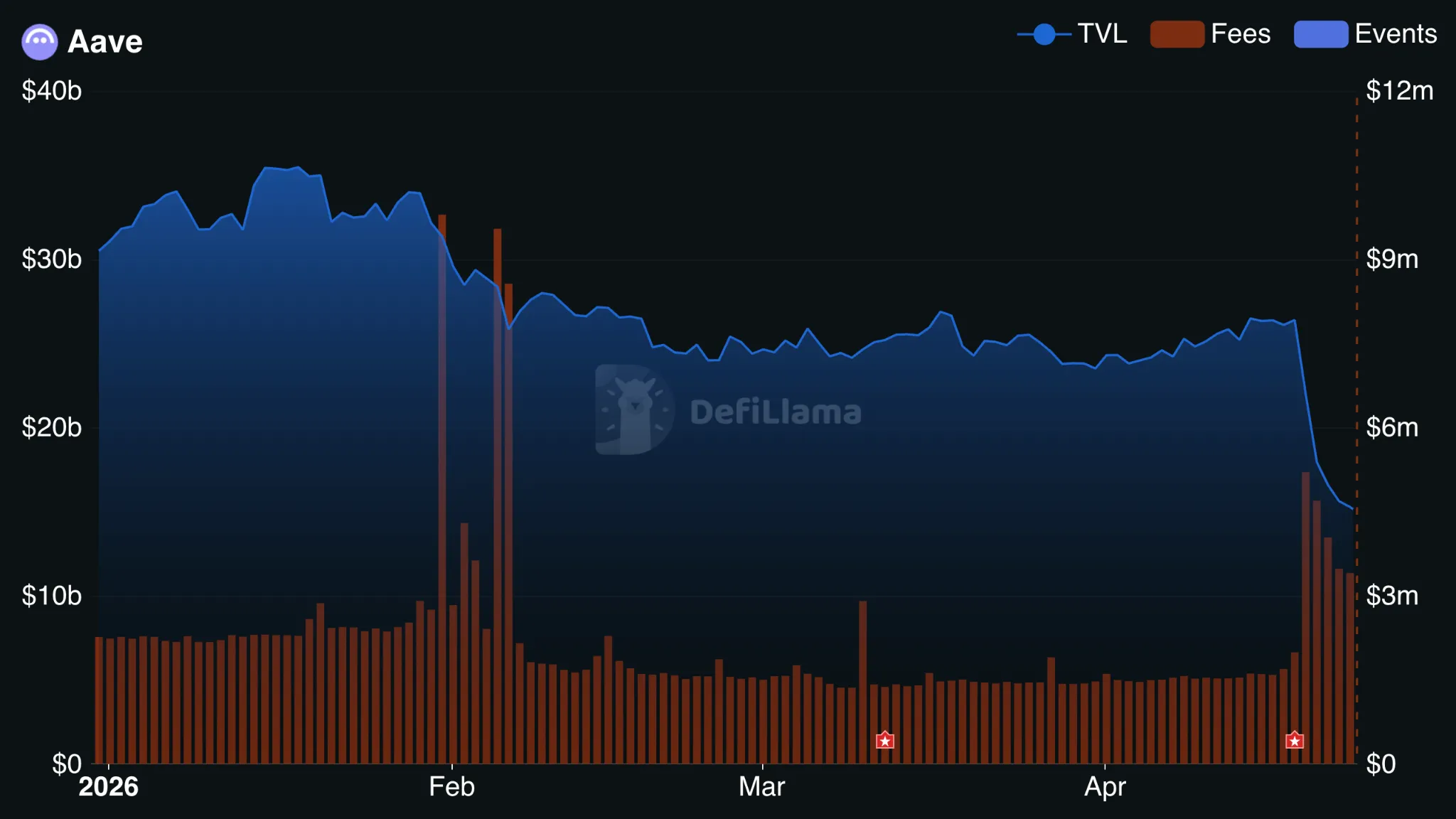
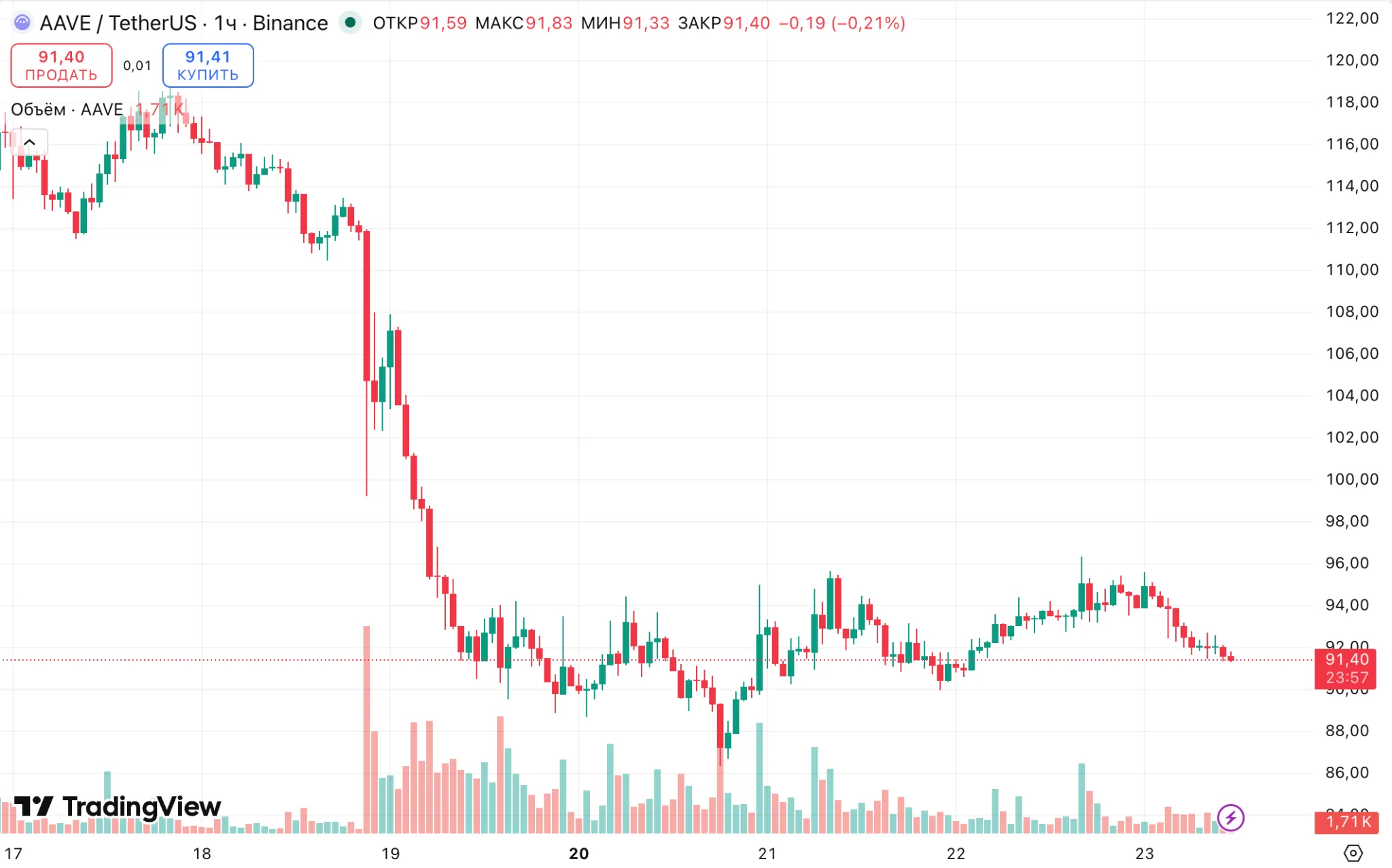
The decline shows no signs of abating. At the time of writing, TVL stands at $15.1 billion, down from over $26 billion on April 18. Aave's native token is also under significant pressure, losing 13.8% over the past week and trading near $91.4.
Why This Matters
Aave is the dominant DeFi lending protocol, and losing a third of its deposits within days signals a profound confidence crisis across decentralized finance. Making matters worse, the Kelp hacker has nearly finished laundering the stolen funds: over 1.5 days, 75,700 ETH ($175 million) was converted to Bitcoin via THORChain.
"In 1.5 days, the KelpDAO hacker converted essentially all 75,700 ETH ($175M) to BTC. The primary route was THORChain, which received $800M in trading volume and $910,000 in platform fee revenue from this activity." — EmberCN (@EmberCN), original post
Fluid Deploys aWETH Redemption Protocol
In an effort to stabilize liquidity and stem the outflows from Aave, the Fluid project launched an aWETH redemption mechanism. Within 48 hours, 166,772 aETH (approximately $400 million) was processed through it, allowing users to convert frozen assets into wstETH or weETH.
"The aWETH Redemption Protocol is now live on Arbitrum and Base. After processing $400M+ in redemptions on Aave Ethereum, we're expanding to L2s. This time, we'll be opening up for all loopers to unwind while ETH lenders exit to LSTs." — Fluid (@0xfluid), original post
The tool is built on Fluid's Lite Vault infrastructure, which holds wstETH and weETH as collateral against ETH debt on Aave, enabling direct closure of offsetting positions. Redemptions were executed at roughly a 2.2% discount — far better than secondary market conditions, where aWETH was trading at discounts as steep as 23%, according to Castle Labs.
Circle Proposes Progressive USDC Rate
Circle's Chief Economist Gordon Liao put forward a proposal to raise USDC borrowing rates on Aave v3. The stablecoin pool on the platform has been fully utilized for four consecutive days, with available liquidity falling below $3 million after declining by $60 million in a single day.
"A proposal on AAVE USDC market and liquidity parameters from Circle's Chief Economist Gordon Liao" — Jeremy Allaire (@jerallaire), original post
The current variable borrowing rate is capped at approximately 14%, but this level has proven insufficient to clear the market. Around $300 million in new borrowings emerged on Aave following the Kelp hack, with some borrowers largely indifferent to the rate — 14% APR is a small price to pay for exiting a position. Meanwhile, liquidity providers are demanding higher premiums as pools run dry.
Liao proposed implementing a progressive rate curve: 37% at 95% utilization and 53% at 100%. The idea is to incentivize borrowers to repay debts and attract fresh liquidity into the pools.
The proposal drew sharp criticism from the community. Avant protocol founder Rhett Shipp argued that raising rates would only accelerate capital flight from both Aave and USDC.
"You need to fire your chief economist. This will accelerate capital flight from both Aave and USDC. If you want Morpho and USDT to win, this is a great idea." — Rhett Shipp (@RhettShipp), original post
Arbitrum's Emergency Response
On April 21, the Arbitrum Security Council invoked emergency powers to freeze 30,766 ETH (~$71.2 million) stolen from Kelp. While this represented one of the first damage-control measures taken, the bulk of the stolen funds had already been swapped through THORChain by the time the freeze was enacted.
Frequently Asked Questions
How much money was withdrawn from Aave after the Kelp hack?
Aave's total deposits fell by $16.2 billion — from $45.8 billion to $29.6 billion, a 35% decline. The protocol's TVL dropped to $15.1 billion at the time of reporting.
How did the Kelp hacker launder the stolen ETH?
The attacker converted nearly all 75,700 ETH ($175 million) into Bitcoin through THORChain within 1.5 days. This activity generated $800 million in trading volume and $910,000 in fees for THORChain.
What is Fluid's aWETH redemption mechanism?
Fluid launched a tool that lets users swap frozen aWETH for wstETH or weETH at roughly a 2.2% discount. It processed 166,772 aETH (~$400 million) within 48 hours. On the secondary market, aWETH was trading at up to a 23% discount according to Castle Labs.
What USDC rate change did Circle propose for Aave?
Circle's Chief Economist Gordon Liao proposed a progressive rate curve: 37% at 95% pool utilization and 53% at 100%. The current 14% cap has failed to clear the market, with the USDC pool fully utilized for four consecutive days.
How much ETH did Arbitrum freeze from the Kelp hack?
The Arbitrum Security Council used emergency powers on April 21 to freeze 30,766 ETH (~$71.2 million) stolen from Kelp. However, the majority of stolen funds had already been swapped through THORChain by that point.
Read also
Drift Protocol Hack Victims File Class Action Lawsuit Against Circle Over $230M in USDC
Over 100 victims of the Drift Protocol exploit have filed a class action lawsuit against Circle in Massachusetts court, accusing the USDC issuer of negligence and enabling hackers.
Drift Protocol on Solana Hacked for $280M in Sophisticated Durable Nonce Attack
Solana-based DeFi platform Drift Protocol lost at least $280 million in a hack on April 1. The DRIFT token dropped 37% while Circle faces criticism for failing to freeze stolen USDC.
Weekly Recap: Aave Ecosystem Rescue Mobilizes 100,000 ETH and Quantum Computer Cracks 15-Bit ECC Key
Bitcoin held near $78,000, the DeFi community rallied over 100,000 ETH to help Aave recover from the Kelp hack, and a researcher cracked a 15-bit ECC key on a quantum computer.
Stablecoin Transfer Volume Hits $10.5 Trillion in January — Highest Since April 2022
January stablecoin transaction volume surpassed $10.5 trillion, marking the highest monthly figure since April 2022. USDC led transfers while USDT maintained market cap dominance.
Top 10 Dollar Stablecoins in 2026: From Dominant Players to Exit Candidates
The stablecoin market has surpassed $311 billion in total capitalization. Here's a breakdown of the ten largest USD-pegged stablecoins — from undisputed leaders Tether and Circle to ambitious newcomers.
Aave Becomes First DeFi Protocol to Surpass $1 Trillion in Cumulative Loans
Lending protocol Aave has reached a historic milestone: its all-time loan volume has exceeded $1 trillion, a first for any DeFi project. The achievement comes amid governance tensions within the DAO.