
Crypto Traders Flood Hyperliquid to Trade Oil, Gold, and Silver Amid Geopolitical Crisis
As the US-Israel-Iran conflict escalated over the weekend, crypto traders turned to decentralized exchange Hyperliquid, driving hundreds of millions in volume for tokenized commodity perpetuals.
A weekend escalation in the conflict between the US, Israel, and Iran drove crypto traders en masse to decentralized exchange Hyperliquid, where tokenized perpetual futures on oil, gold, and silver saw explosive trading volumes while traditional markets remained closed.
Oil Surges 20%, Silver Leads With $398M in Volume
On March 1, following US and Israeli strikes on Iran, oil perpetual futures on Hyperliquid surged nearly 20%. The weekend closure of traditional exchanges fueled a rush into tokenized commodities, with the strongest demand concentrated on HIP-3 instruments launched on Hyperliquid in October 2025.
The USOIL token paired with the USDH stablecoin hit a local high of $97 before correcting to $87. Daily trading volume for the asset peaked at $17 million and was above $10 million at the time of the original report.
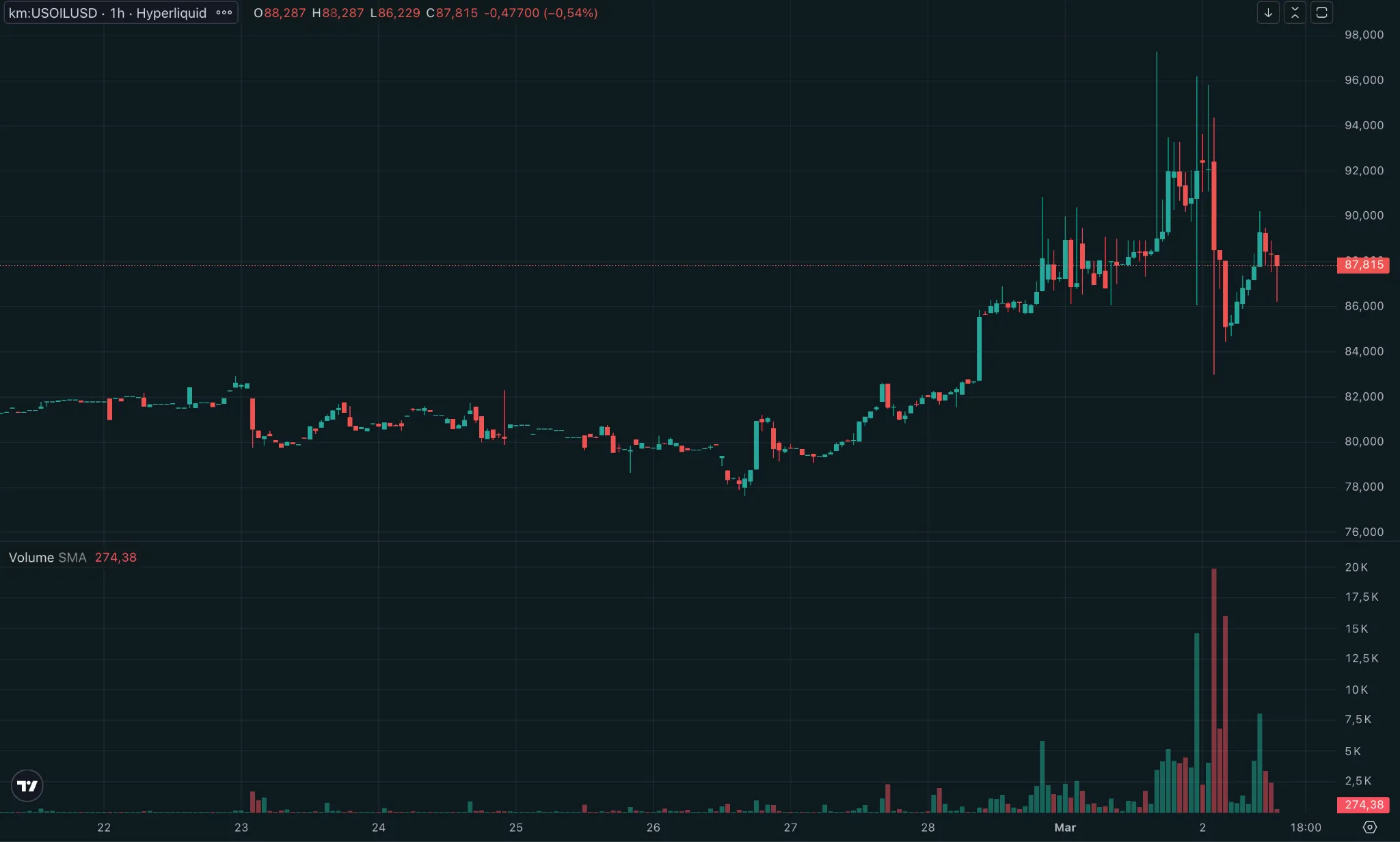
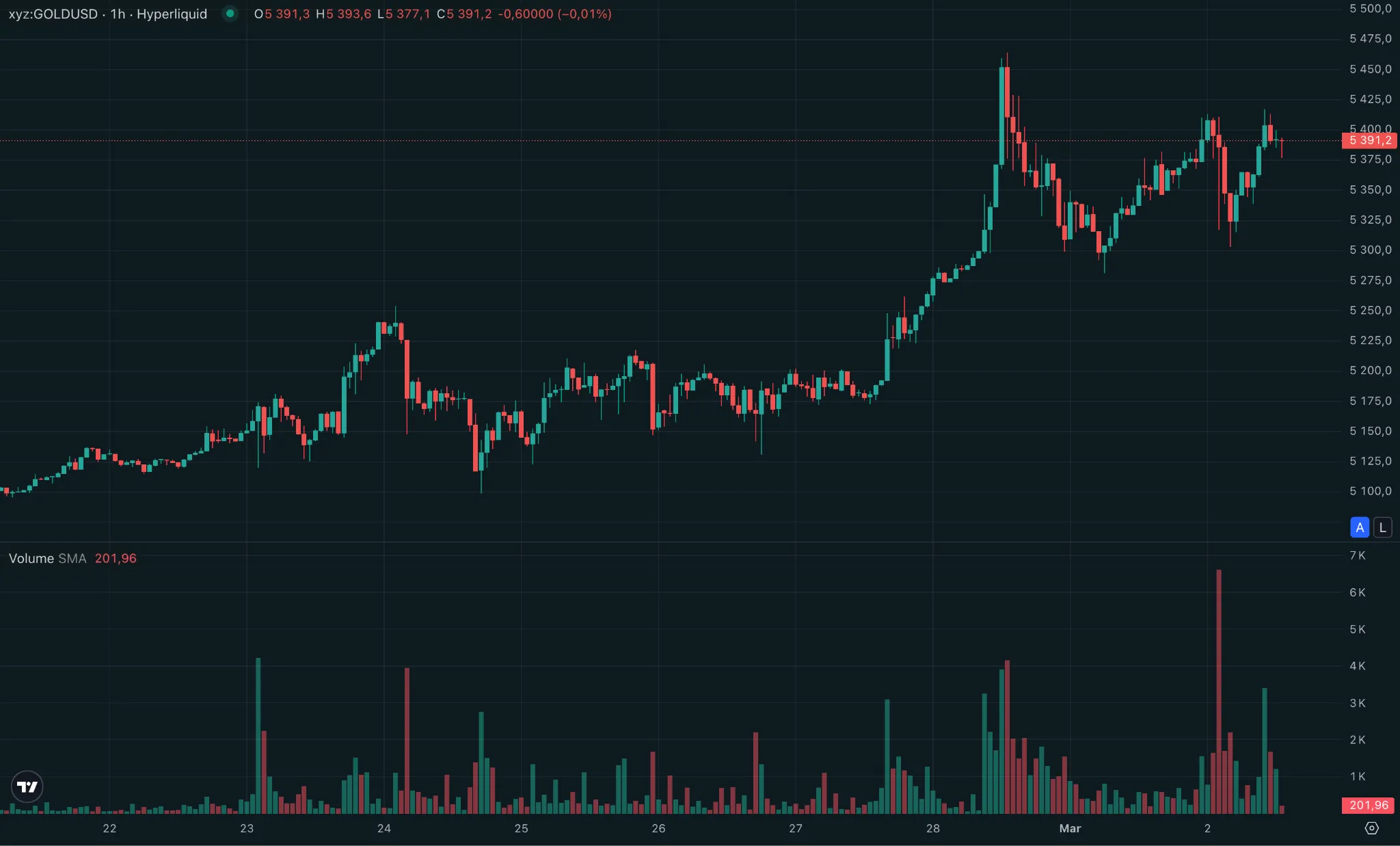
Gold on Hyperliquid returned to around $5,400 per ounce with trading turnover exceeding $159 million.
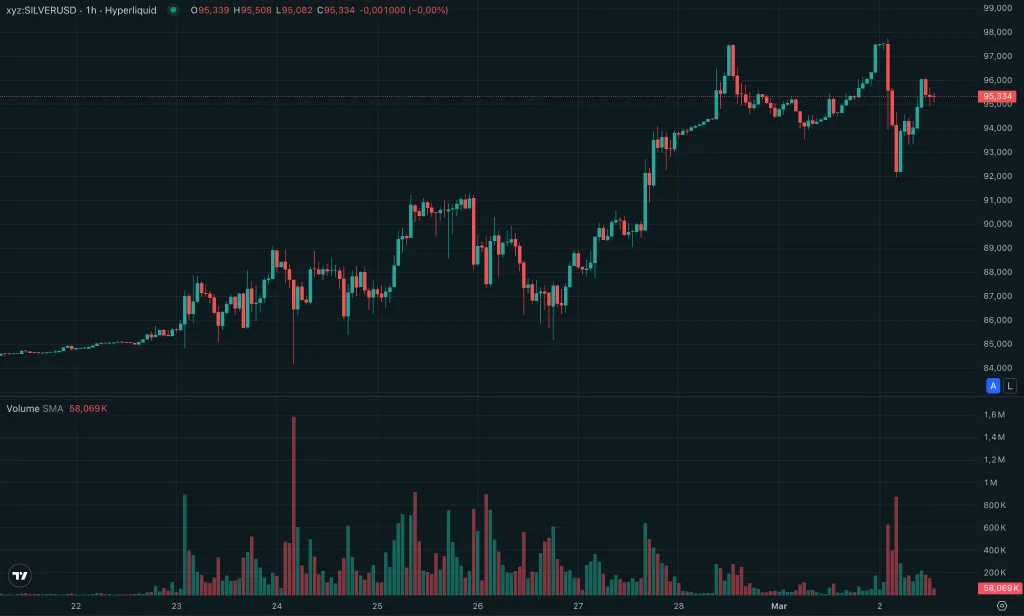
Silver stole the show, however. Daily volume for silver perpetual futures reached $398 million, with the precious metal's price breaking through $95 on the platform.
Why This Matters
Traditional commodity and equity exchanges shut down on weekends, leaving traders unable to react to sudden geopolitical events. Hyperliquid, operating 24/7, filled that gap by offering permissionless access to tokenized commodity instruments.
Kenny Chan, Head of Stablecoin Ecosystem at Coinbase, told DL News that the situation proves the strength of tokenized assets and perpetual contracts built on crypto infrastructure. He noted that in previous weekends marked by geopolitical shocks, traders had only one option — Bitcoin. This time, however, investors went directly to Hyperliquid and traded what actually mattered: oil, gold, and silver perpetual futures.
HYPE Token Rallies 20%, Bitcoin Dips
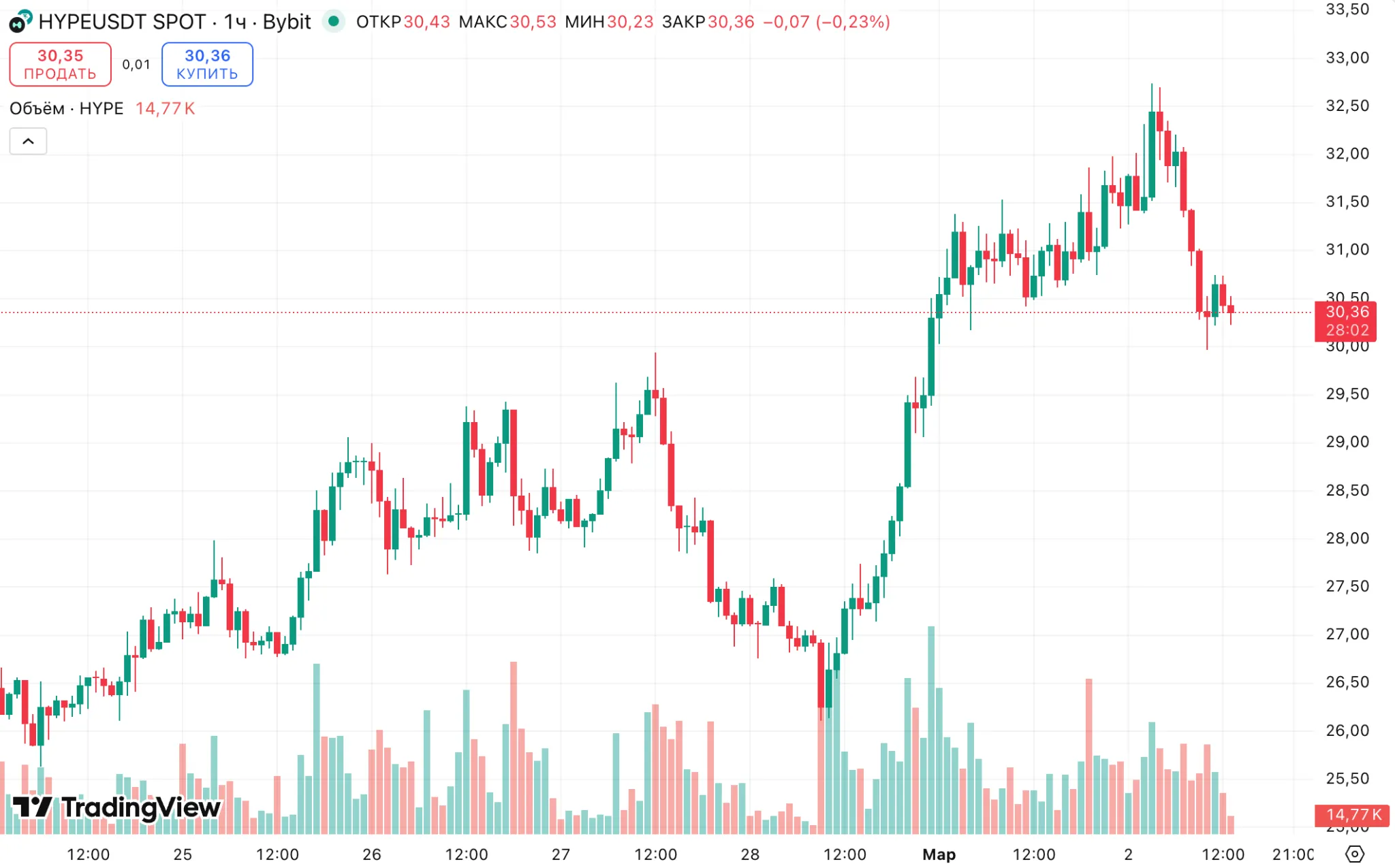
The trading frenzy lifted Hyperliquid's native token HYPE by 20%, from $26 to $32 at its peak. The asset subsequently stabilized around $30.3.
Major crypto assets moved in mixed fashion. Bitcoin fell 0.4% over the past 24 hours to $66,300, while Ethereum dropped 1.6% to $1,900, according to CoinGecko data.
Bitcoin Bull Cases Emerge Despite Dip
Despite BTC's slight decline, some market participants see upside ahead. On March 2, an analyst known as CryptoTalisman predicted a Bitcoin rally driven by a "flight from risk." JAN3 CEO Samson Mow expressed a similar view, pointing to an overheated gold market as a potential catalyst for capital rotation into Bitcoin.
The Hyperliquid episode underscores a growing competitive threat that decentralized platforms pose to traditional exchanges — particularly during off-hours when legacy markets are inaccessible. Tokenization of real-world assets is rapidly evolving from a niche experiment into a practical tool for traders demanding round-the-clock liquidity.
Frequently Asked Questions
Why did traders move to Hyperliquid for oil and gold trading?
US and Israeli strikes on Iran occurred over the weekend when traditional exchanges were closed. Hyperliquid, operating around the clock, provided access to tokenized perpetual futures on oil, gold, and silver, allowing traders to react in real time.
What was the trading volume on Hyperliquid for silver futures?
Silver perpetual futures on Hyperliquid reached $398 million in daily trading volume, making it the most actively traded commodity on the platform. The price of silver broke through $95.
What are HIP-3 instruments on Hyperliquid?
HIP-3 is a standard for tokenized commodities launched on Hyperliquid in October 2025. These instruments saw the highest demand during the geopolitical escalation, enabling trading of oil, gold, and silver as perpetual futures.
How much did the HYPE token gain during the trading surge?
Hyperliquid's native token HYPE rallied 20%, climbing from $26 to $32 at its peak. It later settled around $30.3.
What happened to Bitcoin price during the Iran crisis weekend?
Bitcoin dipped 0.4% to $66,300 over 24 hours, while Ethereum fell 1.6% to $1,900. However, analyst CryptoTalisman and JAN3 CEO Samson Mow both predicted a BTC rally driven by geopolitical risk aversion and an overheated gold market.
Read also
Oil and Silver Perpetuals on Hyperliquid Surpass Solana and XRP in Daily Volume
Perpetual futures on oil and silver on Hyperliquid exceeded $1.3 billion in daily trading volume, surpassing major altcoins like Solana and XRP amid escalating Middle East tensions.
Binance Emerges as 24/7 Price-Setting Venue for Gold and Silver — DL Research
DL Research finds that Binance has become a key venue for round-the-clock gold and silver trading through perpetual contracts, bridging the gap between crypto and traditional commodity markets.
Weekly Recap: 20M BTC Mined, US Treasury Backs Crypto Mixer Privacy Rights
Less than 1 million bitcoins remain to be mined, the US Treasury reversed its stance on crypto mixers to support privacy rights, and Hyperliquid crossed $4 trillion in cumulative trading volume.
Weekly Recap: Bitcoin Tests $76K, SEC Greenlights Tokenized Stocks on Nasdaq
Bitcoin briefly touched $76,000 before retreating to $68,800. The SEC approved tokenized stock trading on Nasdaq, while mining difficulty dropped 7.76% amid growing miner losses.
Weekly Recap: Bitcoin Tests $74K, Miners Dump Holdings, ChatGPT Boycott Grows
Bitcoin briefly touched $74,000 before retreating to $67,500. Public miners sold over 15,000 BTC in five months, traders flocked to Hyperliquid for oil and gold futures, and a ChatGPT boycott gained major traction.
CoinShares: TradFi and DeFi Are Merging Into a Hybrid Finance System
A joint report by CoinShares and Token Terminal documents the convergence of traditional and decentralized finance into a measurable market structure, with stablecoins at $297.6 billion and the RWA market approaching $29 billion.