
Oil Price Surge Hits Bitcoin Miners via BTC Price, Not Power Costs
Hashrate Index analysts concluded that surging oil prices pose a threat to mining profitability primarily through macroeconomic pressure on Bitcoin's price rather than rising electricity costs.
Oil Prices Surged, But Mining Electricity Costs Barely Moved
The dramatic spike in oil prices triggered by military strikes on Iran has had minimal direct impact on Bitcoin mining costs. That is the key finding from Hashrate Index analysts who examined the fallout from U.S. and Israeli strikes on Tehran that disrupted shipping through the Strait of Hormuz.
Under normal conditions, roughly 20% of global oil supply transits through the strait. Supply disruptions sent Brent crude from $60 to over $100 per barrel before retreating to $90. Despite the scale of this price shock, the direct correlation between oil prices and mining costs proved negligible.
Why This Matters
Geopolitical upheaval in energy markets has historically raised concerns about Bitcoin mining sustainability. However, the Hashrate Index analysis reveals that the mining industry's energy mix has fundamentally shifted. The primary transmission channel from oil crises to miners now runs through macroeconomic pressure on Bitcoin's price — not through electricity tariffs. Recognizing this distinction is essential for accurately assessing risk across the mining sector.
Which Miners Actually Depend on Oil
According to the Cambridge Centre and the Bitcoin Mining Council, more than half of the Bitcoin network's computing power runs on alternative energy sources. Analysts characterized the share of fuel oil and diesel in the mining energy mix as a "statistical rounding error."
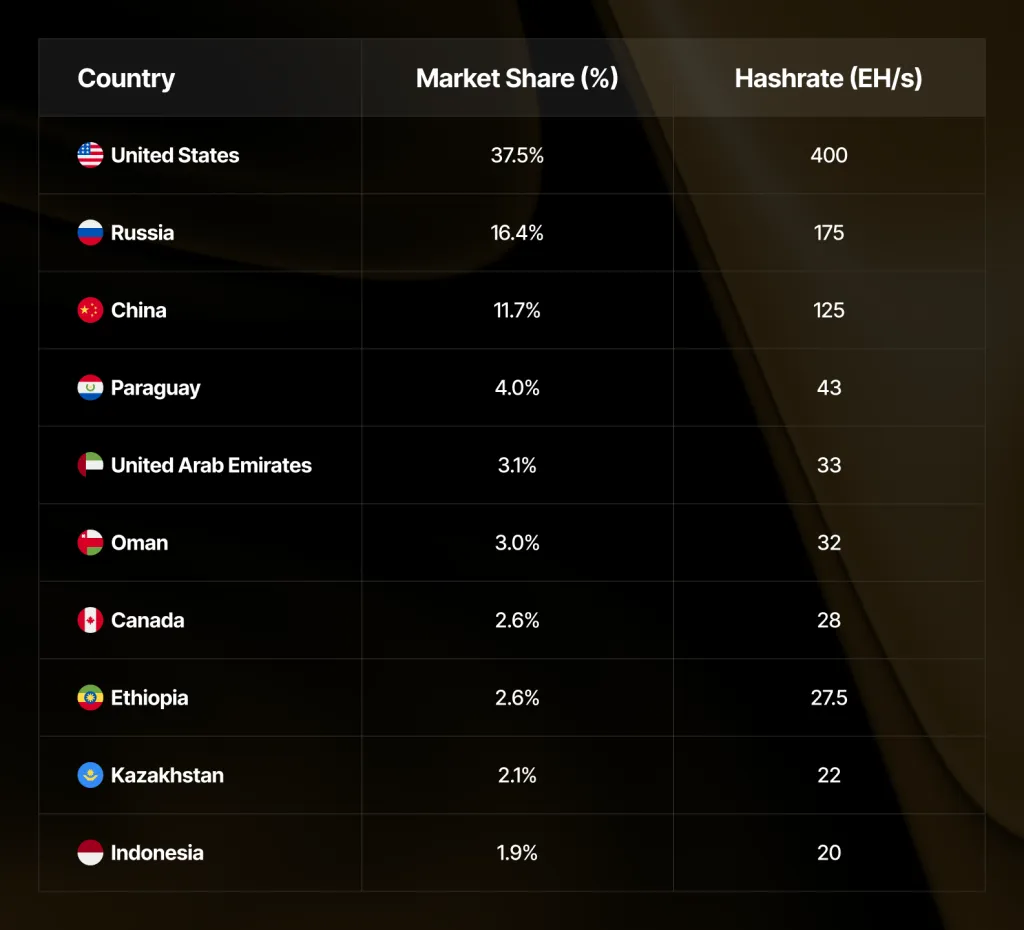
The United States, Russia, and China hold the largest shares of global hashrate, followed by Paraguay, the UAE, Oman, Canada, Ethiopia, and Kazakhstan. Power generation in most of these jurisdictions relies on natural gas, coal, or hydroelectric resources — the link to oil prices is minimal.
Only a small fraction of the network's computing power depends on energy grids where electricity prices genuinely correlate with oil. The UAE and Oman account for approximately 6% of global hashrate. Including Iran, Kuwait, Qatar, and Libya, the share of oil-sensitive regions reaches 8-10%. The analysts noted that even where such correlation exists, the impact is delayed due to lengthy tariff review cycles.
The Real Threat: Hashprice Compression via BTC Price
Researchers identified macroeconomic consequences as the primary danger for miners. Rising oil prices fuel inflation expectations and shift interest rate forecasts, pushing investors to exit risk assets — including Bitcoin. This directly compresses hashprice, the metric measuring revenue per unit of computing power.
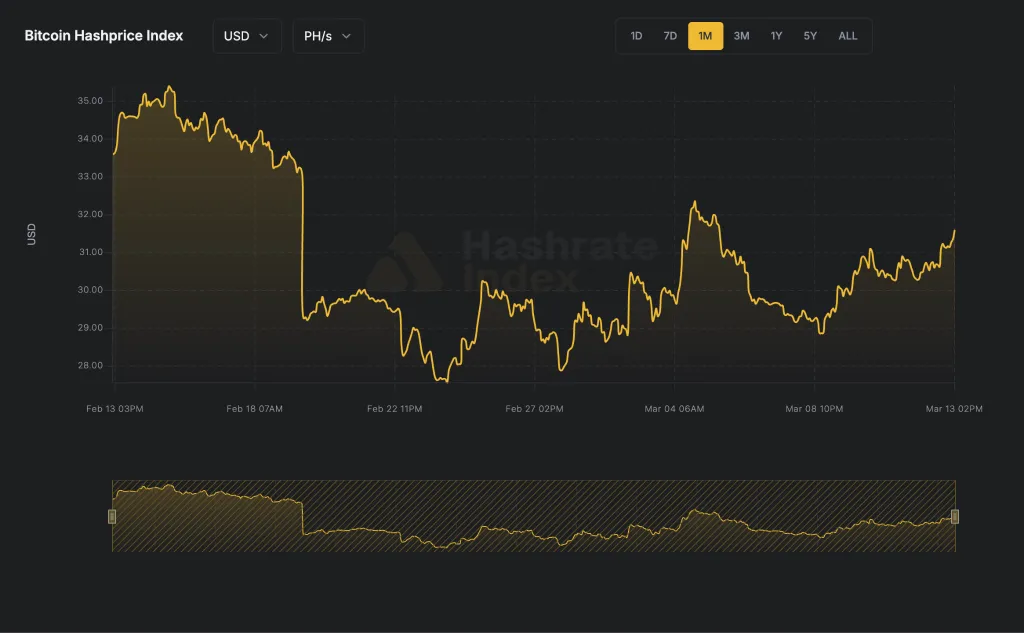
This dynamic already materialized earlier in the year. In February, hashprice plunged to a historic low of $27.89 per PH/s per day as Bitcoin dropped 23.8% — from $78,000 to $65,000.
How Miners Are Adapting to Volatility
Some miners have turned to hashrate forward contracts to lock in the selling price of their computing power in advance. Over the past year, this strategy delivered returns 8.2% higher than traditional spot mining.
At the time of the report, hashprice stood at $31.5 per PH/s. The seven-day moving average of total network computing power was estimated at 1.02 ZH/s. In the most recent difficulty adjustment on March 5, mining difficulty was nearly flat, rising just 0.45%.
Wintermute had previously declared the traditional Bitcoin mining model outdated. VanEck's head of digital assets, Matthew Sigel, has also assessed the prospects for mining companies pivoting toward AI infrastructure.
Frequently Asked Questions
How does the oil crisis affect Bitcoin mining profitability?
According to Hashrate Index, rising oil prices have minimal direct impact on miners' electricity costs. The main threat comes through macroeconomic channels — higher inflation expectations pressure Bitcoin's price, compressing hashprice and reducing mining revenue.
What percentage of Bitcoin hashrate is sensitive to oil prices?
Only 8-10% of global hashrate is located in oil-sensitive regions including the UAE, Oman, Iran, Kuwait, Qatar, and Libya. Over half of the network's computing power runs on alternative energy sources like gas, coal, or hydropower.
What is hashprice and what was its all-time low?
Hashprice measures the revenue generated per unit of mining computing power. In February 2026, it fell to a historic low of $27.89 per PH/s per day as Bitcoin dropped 23.8% from $78,000 to $65,000.
How are Bitcoin miners hedging against BTC price volatility?
Some miners use hashrate forward contracts to lock in the selling price of their computing power in advance. Over the past year, this hedging strategy outperformed traditional spot mining by 8.2%.
What is the current Bitcoin mining difficulty in March 2026?
At the most recent adjustment on March 5, 2026, Bitcoin mining difficulty barely changed, increasing by just 0.45%. The seven-day moving average of total network hashrate stood at 1.02 ZH/s.
Read also
Bitcoin Surges to $78,000 as Strait of Hormuz Reopens
Bitcoin rallied to $78,000 after Iran's foreign minister announced the reopening of the Strait of Hormuz. Oil crashed 10%, while S&P 500 and Nasdaq hit all-time highs.
Bitcoin Hits $70,000 as Iran Ceasefire Talks Boost Risk Appetite
Bitcoin surged 4% to test the $70,000 level on April 6 amid reports of ceasefire negotiations between the US, Israel, and Iran. The derivatives market, however, sends mixed signals.
Wintermute Links Bitcoin Stagnation to Macroeconomic Regime Shift
The market maker explains crypto weakness through structural economic changes: AI sector reassessment and deglobalization. Bitcoin behaves as a high-risk asset alongside tech stocks.
Bitcoin Drops Below $67,000 as Ethereum Foundation Unveils Quantum Defense Roadmap
Bitcoin lost 3% over the week amid Middle East tensions and ETF outflows, miner activity hit historic lows, and Ethereum Foundation outlined a four-hardfork plan for quantum resistance by 2029.
Weekly Recap: 20M BTC Mined, US Treasury Backs Crypto Mixer Privacy Rights
Less than 1 million bitcoins remain to be mined, the US Treasury reversed its stance on crypto mixers to support privacy rights, and Hyperliquid crossed $4 trillion in cumulative trading volume.
Forbes: American Bitcoin Investors Lost $500M While Eric Trump Grew Wealthier
Forbes estimates retail investors in mining firm American Bitcoin have lost around $500 million since its Nasdaq listing, while Eric Trump's net worth grew from $190M to $280M without investing his own capital.