Bitcoin Surges to $78,000 as Strait of Hormuz Reopens
 BinanceEXCHANGE
Bitcoin rallied to $78,000 after Iran's foreign minister announced the reopening of the Strait of Hormuz. Oil crashed 10%, while S&P 500 and Nasdaq hit all-time highs.
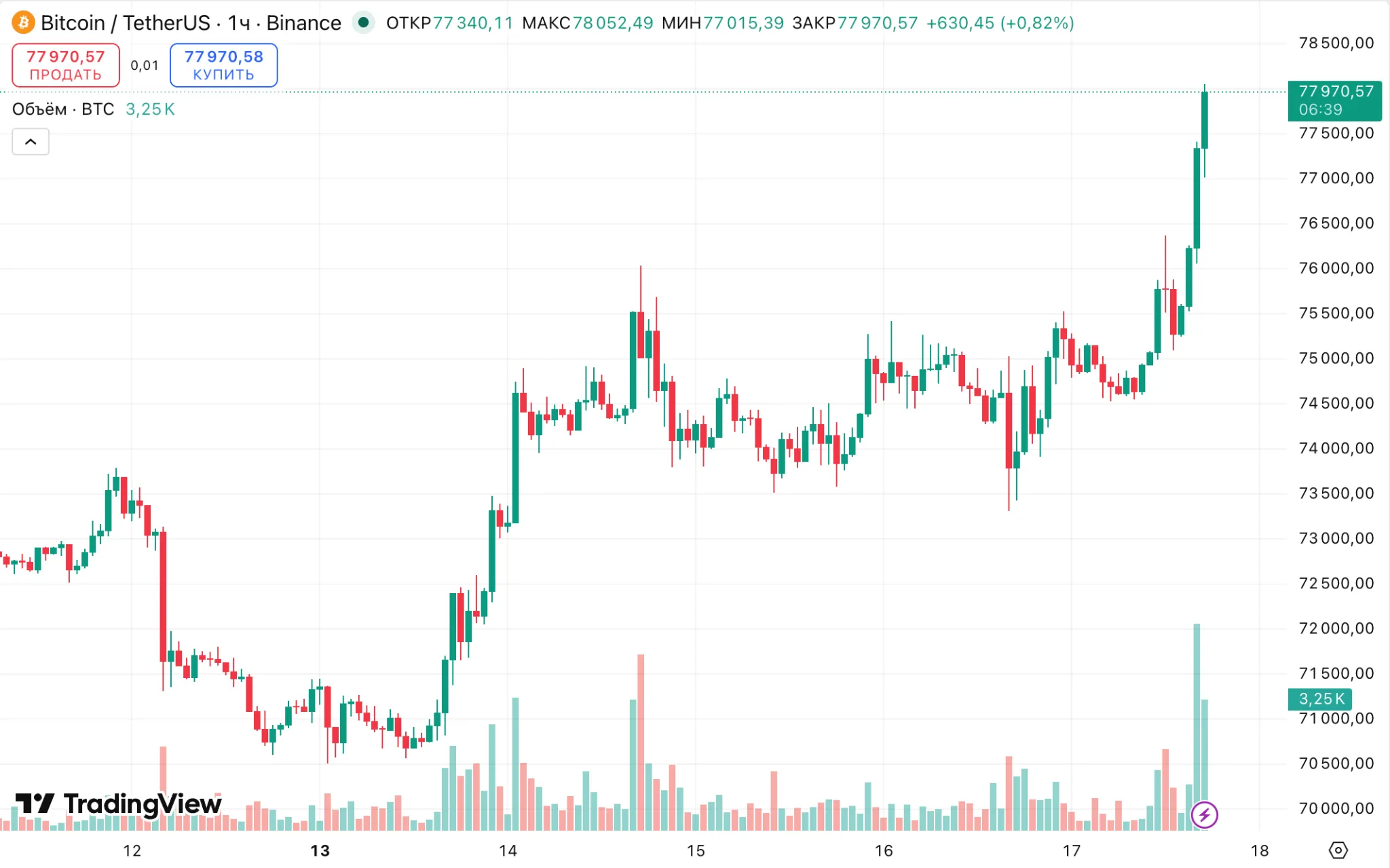
Bitcoin climbed to $78,000 for the first time since early February after Iran's Foreign Minister Abbas Araghchi announced the full reopening of the Strait of Hormuz for commercial shipping. At the time of writing, BTC was trading around $77,900, up 5% over the past 24 hours.
Geopolitical Catalyst Behind the Rally
Araghchi declared that the strait will remain open for the duration of the ceasefire between Israel and Lebanon. The ten-day ceasefire agreement was reached on April 16.
"In line with the ceasefire in Lebanon, the passage for all commercial vessels through Strait of Hormuz is declared completely open for the remaining period of ceasefire, on the coordinated route as already announced by Ports and Maritime Organisation of the Islamic Rep. of Iran." — Seyed Abbas Araghchi (@araghchi), original post
U.S. President Donald Trump confirmed the reopening but clarified that the American naval blockade of Iranian ports would continue until negotiations with Tehran are finalized. He stated that most points of the deal have been agreed upon and the process "should go very quickly."
Why This Matters
The Strait of Hormuz is the world's most critical chokepoint for oil transportation. Its closure during the Middle East conflict pushed crude prices above $100, accelerating inflation and dragging down risk assets including crypto. The reopening removes a major source of geopolitical uncertainty, fueling appetite for risk-on instruments across markets.
Glassnode analysts had previously noted that Bitcoin needed to breach $78,000 — the true mean market price — to confirm a bullish trend. The current move brings BTC right to that critical threshold.
Market Reactions: Oil Sinks, Equities Soar
Brent crude tumbled 10% to $89, while WTI dropped nearly 11% to $84. At the peak of the Middle East conflict, fuel prices had exceeded $100.
U.S. equities responded enthusiastically. The S&P 500 returned to all-time highs and crossed 7,000 points for the first time since late January. The Nasdaq also hit a new ATH. According to Bloomberg, tech stocks led the rally as retail investors pivoted from war concerns to AI and innovation plays.
Dave Mazza of Roundhill Investments commented that after the ceasefire announcement, focus quickly returned to artificial intelligence themes, and the most volatile retail-favorite stocks began driving the market higher from local lows.
However, experts warn that conditions remain "fragile." Oil has not returned to pre-war levels and posted its largest monthly gain since 2022 in March. Matt Maley of Miller Tabak cautioned that Middle East issues and private credit market problems "haven't gone away," and the current price action is "definitely concerning."
Liquidation Wave and Altcoin Performance
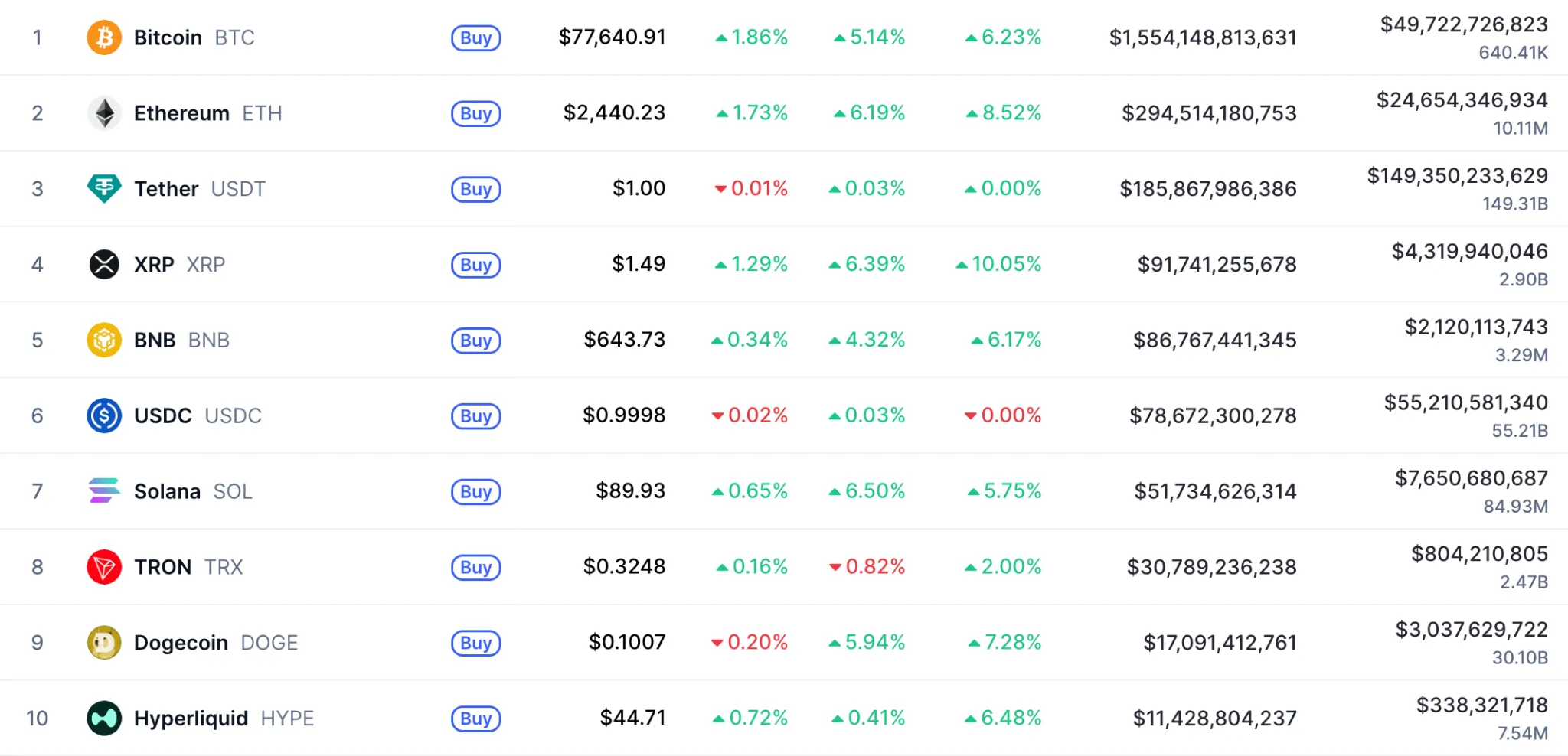
Altcoins followed Bitcoin higher: Ethereum gained 6% to reach $2,400, XRP rose 6.3%, and Solana added 6.5%.
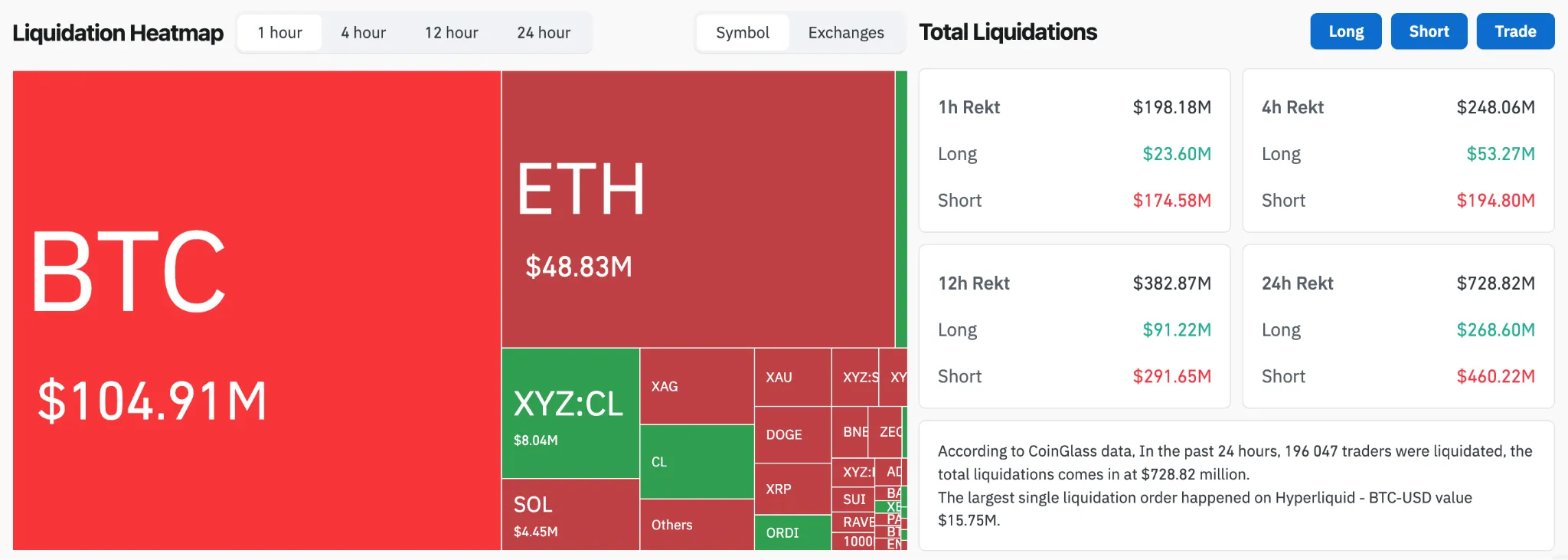
The sharp upward move triggered a massive liquidation cascade. Nearly $200 million in positions were liquidated within one hour, with $171 million coming from short sellers. The 24-hour liquidation total reached $728 million.
What Analysts Expect for Crypto
MN Trading founder Michaël van de Poppe highlighted the Nasdaq's 12-day winning streak — an extremely rare occurrence.
"The Nasdaq is up 12 days in a row. Only a few occasions we've seen this happening. What does that mean for $BTC?" — Michaël van de Poppe (@CryptoMichNL), original post
Van de Poppe identified only two historical parallels — July 2013 and July 2017 — when the Nasdaq experienced a powerful rally while Bitcoin was at a relatively mature stage. In 2013, BTC surged 1,000% within six months of the index's peak; in 2017, it jumped 400%. In less pronounced Nasdaq rallies, Bitcoin lagged by two to three weeks but then outperformed the index by four to six times. His base case calls for a rally to $85,000–88,000 as a first test, with potential to target all-time highs in Q4 2026 if the Nasdaq continues climbing.
Analyst Darkfost reported that aggressive buy volume in the derivatives sector exceeded $2.1 billion within one hour of the announcement, with over $1.9 billion on Binance alone. He stressed that the current environment remains highly unstable and speculative, with futures reacting sharply to every headline.
"More than $2B Buy Volume hits Bitcoin as Strait of Hormuz reopens. This week marks a real turning point, both in terms of geopolitics and macroeconomics." — Darkfost (@Darkfost_Coc), original post
According to Glassnode, options market positioning is ambiguous. Traders are actively buying calls, creating a zone that could accelerate gains if $74,000–78,000 is cleared. Yet volatility is declining, protective puts remain elevated, and there is no clear conviction in direction. Positions are tentative and the rally lacks a clear leader.
"Bitcoin is attempting to break above the 74–75K zone after two rejections in March." — glassnode (@glassnode), original post
Nexo analysts confirmed this contradiction: the rally is gaining momentum, but the derivatives market is not buying it. Funding rates remain low, demand is elevated, and positioning is defensive. Analysts also warned on April 17 about short-squeeze risks in the crypto market.
Frequently Asked Questions
Why did Bitcoin rally to $78,000?
Bitcoin surged after Iran's Foreign Minister Abbas Araghchi announced the reopening of the Strait of Hormuz for commercial vessels during the Israel-Lebanon ceasefire. The news eased geopolitical tensions and triggered strong demand for risk assets.
How much was liquidated in crypto on April 17, 2026?
Total 24-hour liquidations reached $728 million. Within the first hour of the announcement, nearly $200 million in positions were liquidated, with $171 million from short sellers.
How did oil prices react to the Strait of Hormuz reopening?
Brent crude fell 10% to $89 and WTI dropped nearly 11% to $84. During the conflict and the strait's closure, oil prices had been above $100.
What is the Bitcoin price prediction after the Hormuz reopening?
MN Trading founder Michaël van de Poppe expects a rally to $85,000–88,000 as a first test. If the Nasdaq continues its uptrend, he sees potential for Bitcoin to target all-time highs in Q4 2026.
How did U.S. stock markets react to the ceasefire news?
The S&P 500 reclaimed all-time highs and crossed 7,000 points for the first time since late January. The Nasdaq also hit a new ATH, with tech stocks leading the rally according to Bloomberg.
Read also
Bitcoin Hits $70,000 as Iran Ceasefire Talks Boost Risk Appetite
Bitcoin surged 4% to test the $70,000 level on April 6 amid reports of ceasefire negotiations between the US, Israel, and Iran. The derivatives market, however, sends mixed signals.
Bitcoin Drops Below $67,000 as Ethereum Foundation Unveils Quantum Defense Roadmap
Bitcoin lost 3% over the week amid Middle East tensions and ETF outflows, miner activity hit historic lows, and Ethereum Foundation outlined a four-hardfork plan for quantum resistance by 2029.
Bitcoin Down 2.5% Weekly: Jane Street Accusations & 7 Ethereum Forks
Bitcoin lost ~2.5% over the week amid macro shocks and geopolitical tensions. Jane Street faced market manipulation allegations while Ethereum unveiled an ambitious seven hard fork roadmap through 2029.
TON Wallet Introduces Yield Vaults for BTC, ETH, and USDT Directly in Telegram
TON Wallet has launched yield vaults for BTC, ETH, and USDT directly within Telegram, offering up to 18% APY on stablecoins through partnerships with Morpho, TAC, and Re7.
Weekly Recap: Aave Ecosystem Rescue Mobilizes 100,000 ETH and Quantum Computer Cracks 15-Bit ECC Key
Bitcoin held near $78,000, the DeFi community rallied over 100,000 ETH to help Aave recover from the Kelp hack, and a researcher cracked a 15-bit ECC key on a quantum computer.
Strategy Becomes Most-Shorted US Stock With $6B in Bets
Strategy tops the list of most-shorted large-cap US stocks with $6 billion in short positions, representing 14% of its market cap, as Bitcoin's decline erodes confidence in the company's debt-fueled BTC accumulation model.