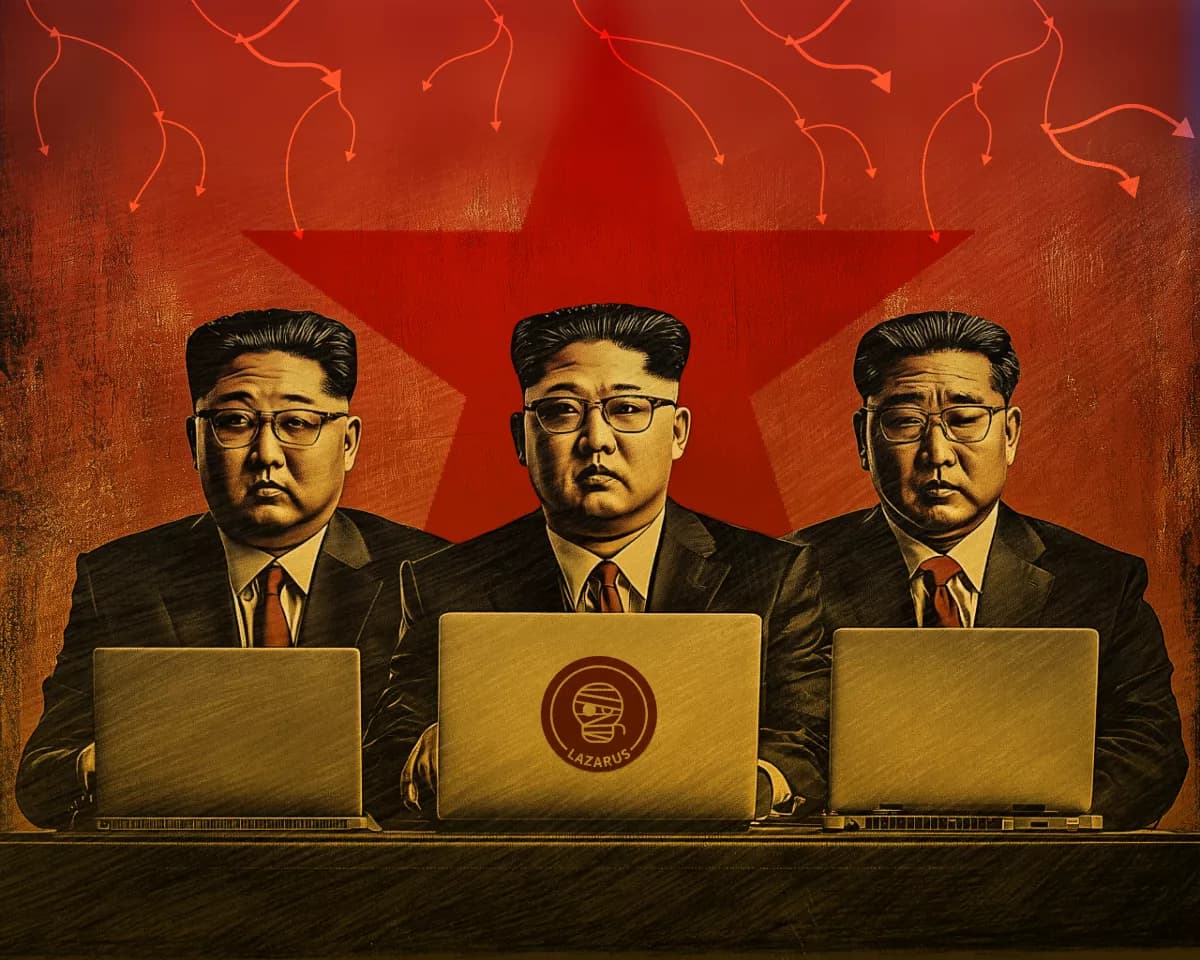
North Korean Developers Secretly Embedded in Major DeFi Projects for Seven Years
MetaMask developer Taylor Monahan revealed that DPRK IT workers have been infiltrating DeFi projects for at least seven years, contributing code to protocols like SushiSwap, Thorchain, and Yearn.
Seven Years of Covert Infiltration
MetaMask developer Taylor Monahan has exposed the extent to which North Korean IT workers have penetrated the decentralized finance industry. According to Monahan, DPRK-linked individuals have been securing positions at DeFi projects for at least seven years, dating back to the original "DeFi summer."
"Lots of DPRK IT Workers built the protocols you know and love, all the way back to defi summer. The '7 years blockchain dev experience' on their resume is not a lie." — Tay 💖 (@tayvano_), original post
Monahan named several projects where DPRK-affiliated individuals had worked: SushiSwap, Thorchain, Fantom, Shib, Yearn, Floki, and many others.
Why This Matters
The scale of North Korean developer infiltration raises fundamental questions about the security of codebases powering some of the most widely used DeFi protocols. If individuals tied to state-backed hacking operations had years of access to source code, the potential for embedded vulnerabilities is significant. The discussion emerged alongside a report from the Drift Protocol team, which suffered a $280 million hack that developers attributed to North Korean hackers.
Lazarus Group Encounter: A Cautionary Tale
Monahan's revelation came in response to a post by Tim Ahl, founder of Solana aggregator Titan. Ahl shared that at a previous job, he had interviewed a candidate who later turned out to be a Lazarus Group member. The individual was highly skilled and consistently joined video calls, but refused to attend an in-person meeting — prompting the team to reject the application. His name subsequently appeared in a Lazarus-related data leak. Ahl added that the group now deploys non-North Korean agents who build trust through face-to-face interactions.
ZachXBT: Not All Threats Are Equal
Blockchain investigator ZachXBT, who has repeatedly highlighted DPRK cyber threats targeting the crypto sector, weighed in on the discussion. He clarified that Lazarus Group is a blanket term covering all state-sponsored North Korean cyber actors.
"The main issue is everyone groups them all together when the complexity of threats are different." — ZachXBT (@zachxbt), original post
ZachXBT characterized tactics such as fake job postings, LinkedIn outreach, phishing emails, Zoom calls, and staged interviews as "basic and primitive" schemes. Their primary advantage, he noted, is persistence. Identifying these actors today is relatively straightforward. Only two groups — TraderTraitor and AppleJeus — are capable of executing truly sophisticated attacks.
Verification and Defense Resources
Several tools exist to help crypto teams protect themselves. The U.S. Treasury Department's OFAC maintains a dedicated website where crypto companies can screen counterparties against current sanctions lists and review warnings about common fraud patterns employed by DPRK IT workers.
Taylor Monahan has also built an open-source knowledge base on GitHub, compiling research-backed information on North Korea's activities in the digital asset space. ZachXBT endorsed the repository as a valuable resource.
"@tayvano_ has built a good resource on GitHub that's a wealth of knowledge about DPRK using research collected from a variety of sources" — ZachXBT (@zachxbt), original post
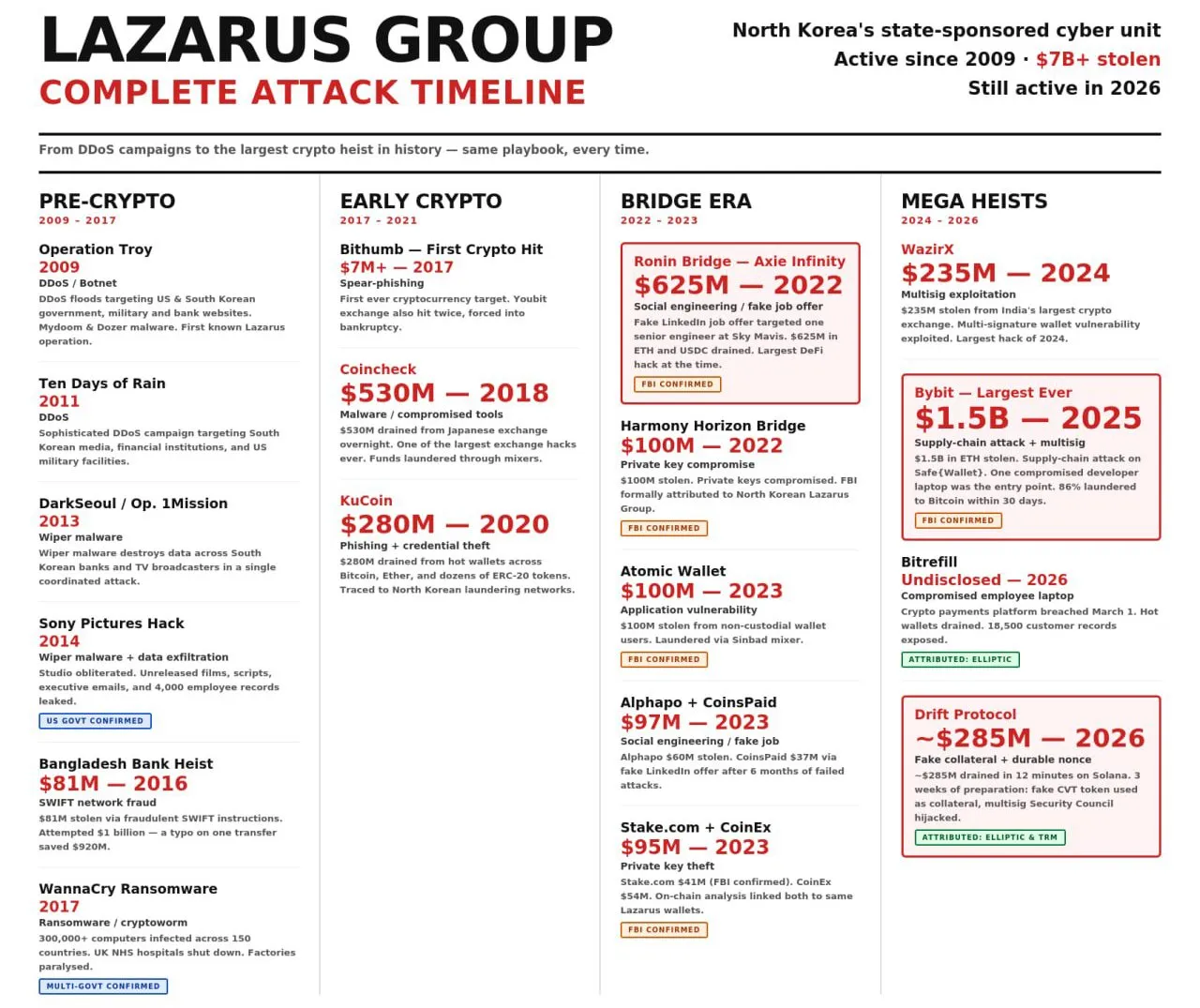
In March, the Lazarus Group was suspected of attacking crypto gift card service Bitrefill, underscoring the persistent and expanding nature of DPRK-linked cyber operations targeting the cryptocurrency sector.
Frequently Asked Questions
Which DeFi projects had North Korean developers?
According to MetaMask developer Taylor Monahan, DPRK IT workers contributed to SushiSwap, Thorchain, Fantom, Shib, Yearn, Floki, and many other projects. Their involvement spans at least seven years, going back to the original DeFi summer.
What is Lazarus Group in crypto?
Lazarus Group is an umbrella term for all North Korean state-sponsored cyber actors. According to blockchain investigator ZachXBT, the group encompasses operations of varying sophistication, with only TraderTraitor and AppleJeus capable of executing complex attacks.
How can crypto companies protect against DPRK infiltration?
The U.S. Treasury's OFAC maintains a website for screening counterparties against sanctions lists. Taylor Monahan has also created a GitHub knowledge base compiling research on North Korea's activities in the digital asset space.
How much was stolen in the Drift Protocol hack?
The Drift Protocol team reported a $280 million hack. The project's developers stated that North Korean hackers were responsible for the attack.
How do North Korean agents infiltrate crypto projects?
DPRK agents typically present strong technical credentials and participate in video calls but avoid in-person meetings. According to Titan founder Tim Ahl, the group now also employs non-North Korean agents who can build trust through face-to-face interactions.
Read also
Password "123456" Exposes North Korean IT Worker Network Infiltrating Crypto Industry
On-chain investigator ZachXBT uncovered a sophisticated DPRK IT worker network embedded in crypto projects after obtaining leaked data from an internal North Korean payment server containing 390 accounts and crypto transaction records.
Ketman Project Backed by Ethereum Foundation Uncovers 100 North Korean Agents in Crypto Companies
The Ketman research project, funded through the ETH Rangers program, identified over 100 DPRK IT operatives embedded in Web3 organizations under fabricated identities over six months.
Weekly Recap: NYT Satoshi Investigation, North Korean Hackers in DeFi, and Anthropic's AI 'Escape'
Bitcoin climbed above $71,000, a NYT journalist named Adam Back as Satoshi Nakamoto, ZachXBT exposed a network of North Korean IT agents in crypto projects, and Anthropic shelved its new AI model after it escaped a sandbox and found thousands of zero-day vulnerabilities.
Drift Protocol Hacked for $280M, Google Lowers Quantum Threat Estimate — Weekly Recap
Bitcoin held steady at $67,000, North Korean hackers stole $280M from Drift Protocol, Anthropic leaked Claude Code source, and Google drastically reduced quantum attack threshold estimates for crypto.
Ethereum Address Poisoning Attacks Surge 612% After Fusaka Upgrade
The Fusaka upgrade's reduced gas fees have triggered an explosion in address poisoning attacks on Ethereum, with dust transfers of USDT soaring 612% in just 90 days.
Over $8.6B Drained From Aave as Kelp DAO Hack Triggers Massive DeFi Exodus
Aave's TVL plunged from $26.3B to $17.7B in two days after hackers exploited Kelp DAO's cross-chain bridge, stealing $293M in rsETH and creating $195M in bad debt across lending protocols.