
Multicoin Capital: Decentralized Labor Markets Will Drive the Next Wave of Crypto Adoption
Multicoin Capital's investment partner Shayon Sengupta outlined a vision for Internet Labor Markets (ILM) — decentralized networks where a billion people will earn their first crypto by completing tasks, not buying tokens.
Earning, Not Buying: A New Onboarding Paradigm
Shayon Sengupta, investment partner at venture fund Multicoin Capital, has laid out a vision for what he calls Internet Labor Markets (ILM) — decentralized networks where participants receive crypto assets in exchange for tangible contributions: work performed, resources provided, or expertise delivered.
«1/ A billion people will get their first public key by earning crypto, not buying it. The next era of onramping is going to be powered by Internet Labor Markets.» — shayon (@shayonsengupta), original post
According to Sengupta, people in the future will receive their first cryptocurrency not because they purchased it on an exchange, but because they earned it. He identified two core characteristics of ILM:
- Dynamic task creation — specifications, verification parameters, and rewards are set programmatically for each request, eliminating bureaucratic overhead;
- Strict verification guarantees — automated (deterministic) verification or staking mechanisms for cases requiring human judgment.
Why This Matters
For the past decade, the crypto industry has onboarded new participants primarily through token purchases. Sengupta argues that over the next decade, the dominant pathway will be earning — and this wave will surpass the previous one both in participant count and volume. The reasoning is straightforward: the vast majority of people worldwide live on income, not asset purchases.
Blockchain infrastructure makes such systems viable through automatic verification and instant settlement via distributed ledgers, removing the delays and red tape of traditional employment. Sengupta illustrated the concept: a company forms around a specific market need, and 50,000 people across the globe get paid for their contributions.
DePIN's Evolution as the Foundation for ILM
The ILM concept builds on the principles of DePIN (Decentralized Physical Infrastructure Networks). Sengupta called DePIN the best example of on-chain coordination, noting it established the groundwork for next-generation labor markets by delivering fast and cheap settlement, verifiable outcomes, and reliable trust and reputation guarantees for resource providers.
The model is gaining traction particularly within the Solana ecosystem, where a growing number of projects reward users for completing verifiable tasks.
DePIN networks have evolved significantly in recent years:
- Improved incentive design, moving away from poorly thought-out inflationary emissions;
- Implemented stricter work verification (via zkTLS), spam prevention, and proportional compensation;
- Helped normalize token-based earnings;
- Found the optimal task granularity — the simpler the action, the more efficient the network.
Sengupta described the next phase as a shift from passive contributions (installing a hotspot and earning tokens indefinitely) to specific tasks with fixed compensation. Examples include delivering a package from point A to point B for a set reward, or reducing energy consumption by 100 kW during evening hours in exchange for tokens.
AI's Role in the Labor Transformation
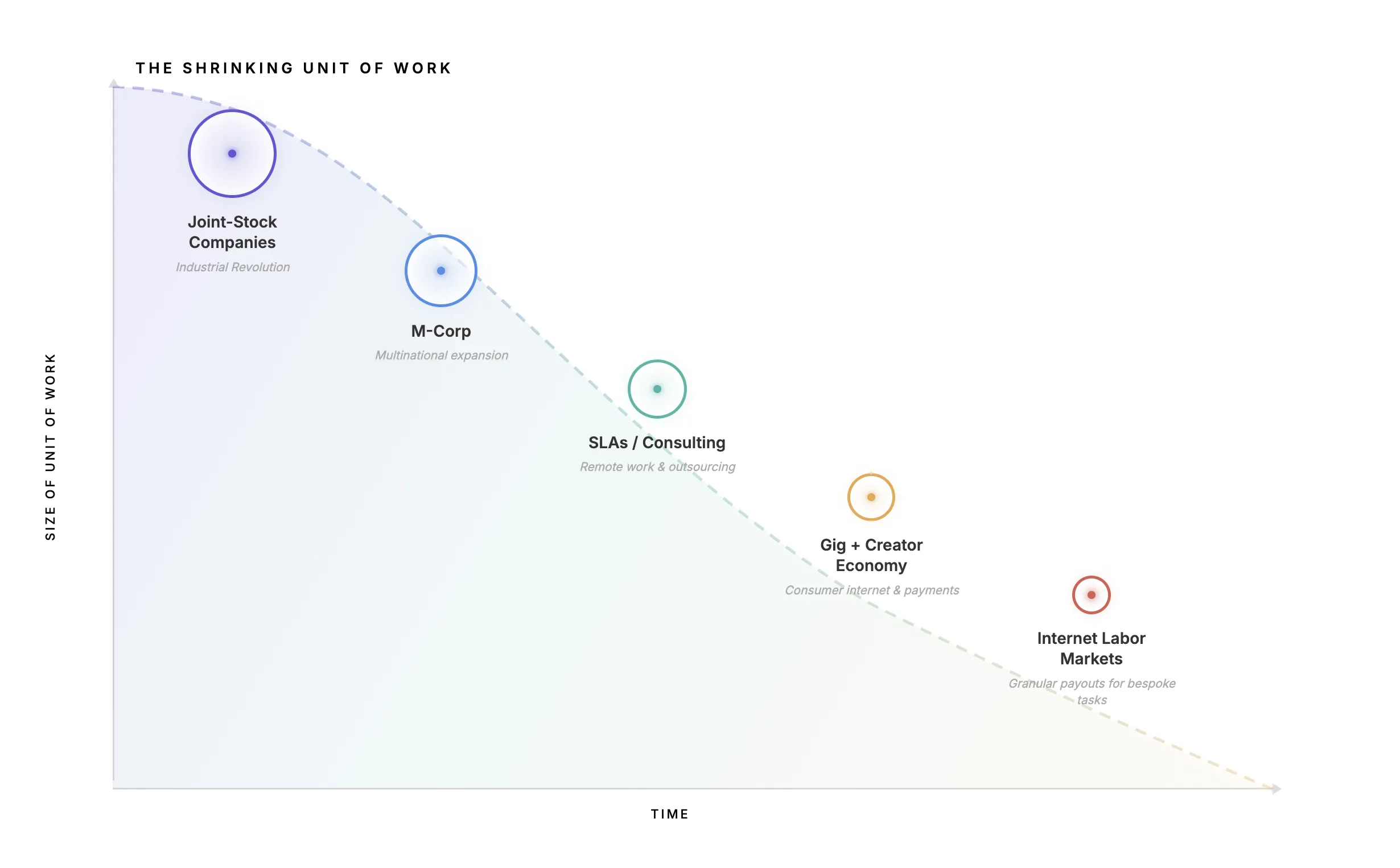
Sengupta maintains that AI will not render human labor obsolete. Instead, the technology will boost individual efficiency and expand the range of tasks each person can tackle. What was once a single profession will fragment into a set of small, modular roles.
Future organizations, in his view, will consist of a tiny core team surrounded by a vast periphery of on-demand workers. The primary bottleneck won't be hiring — it will be speed: how quickly the right person can be found, their work quality verified, and payment delivered. This is precisely where ILM steps in.
Closing the Loop: From Labor to Capital
Moving earnings on-chain will naturally drive consumption within crypto ecosystems, according to Sengupta. Users will increasingly engage with foundational crypto tools: yield services, lending, and trading. This creates a closed loop connecting labor markets and capital markets.
The new user, as Sengupta envisions it, won't arrive to read a white paper or buy a meme coin. They'll come because there's work to be done, payment to be collected, and reason to stay — because the compensation beats anything available elsewhere.
Frequently Asked Questions
What are Internet Labor Markets (ILM) in crypto?
Internet Labor Markets are decentralized networks where users earn crypto assets by contributing work, resources, or expertise. The concept was outlined by Multicoin Capital's Shayon Sengupta, featuring programmatic task creation with automated verification and instant blockchain-based payments.
How does DePIN relate to decentralized labor markets?
DePIN networks laid the groundwork for ILM by establishing fast settlement, verifiable outcomes, and trust guarantees for resource providers. Over recent years, DePIN projects improved incentive design, implemented zkTLS verification, and normalized token-based earnings.
Which blockchain ecosystem is leading ILM development?
The ILM concept is gaining particular traction within the Solana ecosystem, where an increasing number of projects offer rewards for completing verifiable tasks.
Will AI replace human workers in decentralized labor markets?
According to Sengupta, AI won't make human labor obsolete but will increase individual efficiency. Traditional professions will transform into sets of small modular roles, with future organizations having a tiny core team and a large periphery of on-demand workers.
How will ILM change crypto user onboarding?
Sengupta predicts a billion people will get their first public key by earning crypto rather than buying it. This earning-based onboarding wave could surpass purchase-based adoption in both participants and volume, since most people worldwide live on income rather than asset purchases.
Read also
Bitcoin Rebounds to $70,000 as Leverage Drops and ETF Inflows Continue
BTC recovered above $70,000 on March 10, erasing weekend losses. Spot ETFs attracted $568M in weekly inflows while the estimated leverage ratio on Binance fell sharply from 0.198 to 0.152.
Drift Protocol on Solana Hacked for $280M in Sophisticated Durable Nonce Attack
Solana-based DeFi platform Drift Protocol lost at least $280 million in a hack on April 1. The DRIFT token dropped 37% while Circle faces criticism for failing to freeze stolen USDC.
Infostealer Targets 700+ Crypto Wallets, Hackers Use Solana as Dead Drop, and UK Sanctions Xinbi
Weekly cybersecurity roundup: Torg Grabber infostealer targets 728 browser-based crypto wallets, GlassWorm campaign hides C2 addresses in Solana blockchain, and the UK imposes sanctions on crypto marketplace Xinbi linked to scam compounds.
Drift Secures $148M From Tether and Partners to Compensate Hack Victims
Solana-based protocol Drift has secured $148 million from Tether and other partners to recover from a $295 million hack and compensate affected users.
Crypto Funds Attract $619M in First Week of March Amid Volatile Sentiment
Cryptocurrency investment products recorded $619 million in net inflows from March 2–6, according to CoinShares, with US institutional investors driving nearly all of the capital.
Bitcoin Hits $74,450 as Spot ETF Inflows Fuel Recovery
BTC broke through the $74,000 resistance level, climbing 3.2% in 24 hours. Spot Bitcoin ETFs recorded $767 million in net inflows over the past week.