
Iran to Demand Bitcoin Payments for Strait of Hormuz Transit — FT
 BinanceEXCHANGE
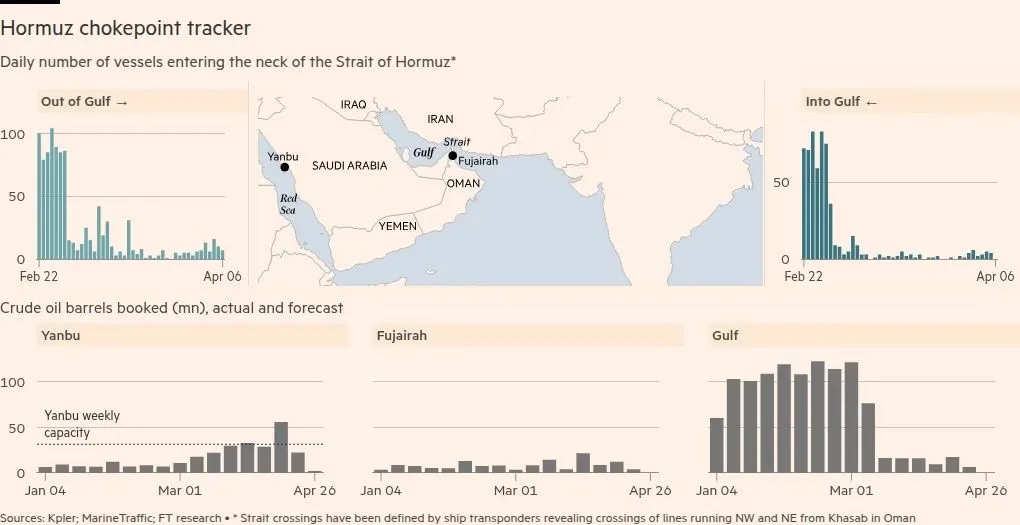
Iran plans to charge shipping companies in cryptocurrency for passing through the Strait of Hormuz during the ceasefire period, according to the Financial Times. The tariff is set at $1 per barrel.
Iran Introduces Crypto Tolls for Hormuz Strait Passage
Iran is preparing to mandate cryptocurrency payments from shipping companies seeking passage through the Strait of Hormuz during the ceasefire with the United States. The Financial Times reported the development, citing oil industry sources.
Hamid Hosseini, a spokesperson for Iran's Union of Oil, Gas, and Petrochemical Exporters, said that Tehran intends to inspect every vessel for weapons and charge loaded tankers a transit fee. According to Hosseini, Iran needs to monitor everything entering and leaving the strait to ensure the two-week truce is not exploited for arms transfers.
Why This Matters
The Strait of Hormuz is one of the world's most critical chokepoints for global oil trade. The ability of vessels to pass freely through it directly impacts worldwide crude prices. Iran's decision to accept payments exclusively in Bitcoin sets an unprecedented example of state-level cryptocurrency adoption designed to circumvent sanctions. It also reinforces the narrative of BTC as a financial instrument beyond the control of any single nation's institutions.
Digital asset markets have recently shown strong correlation with commodity price movements, making the Hormuz situation a relevant factor for crypto traders as well.
How the Payment Mechanism Works
Under the procedure described by Hosseini, vessels must notify Iranian authorities of their cargo via email in advance. Once the submission is received and assessed, Iran sends payment details for settlement in digital assets. Hosseini emphasized that after completing its evaluation, ships have only seconds to execute the Bitcoin payment — a method he says ensures funds cannot be traced or seized under sanctions enforcement.
The established tariff is $1 per barrel of cargo. Empty vessels may pass free of charge. Iran has warned that unauthorized crossing of its territorial waters could result in strikes against offending tankers.
Market Reaction and Analyst Outlook
At the time of the original report, Bitcoin was trading just above $71,000, having gained approximately 5% over 24 hours amid de-escalation in the Middle East.
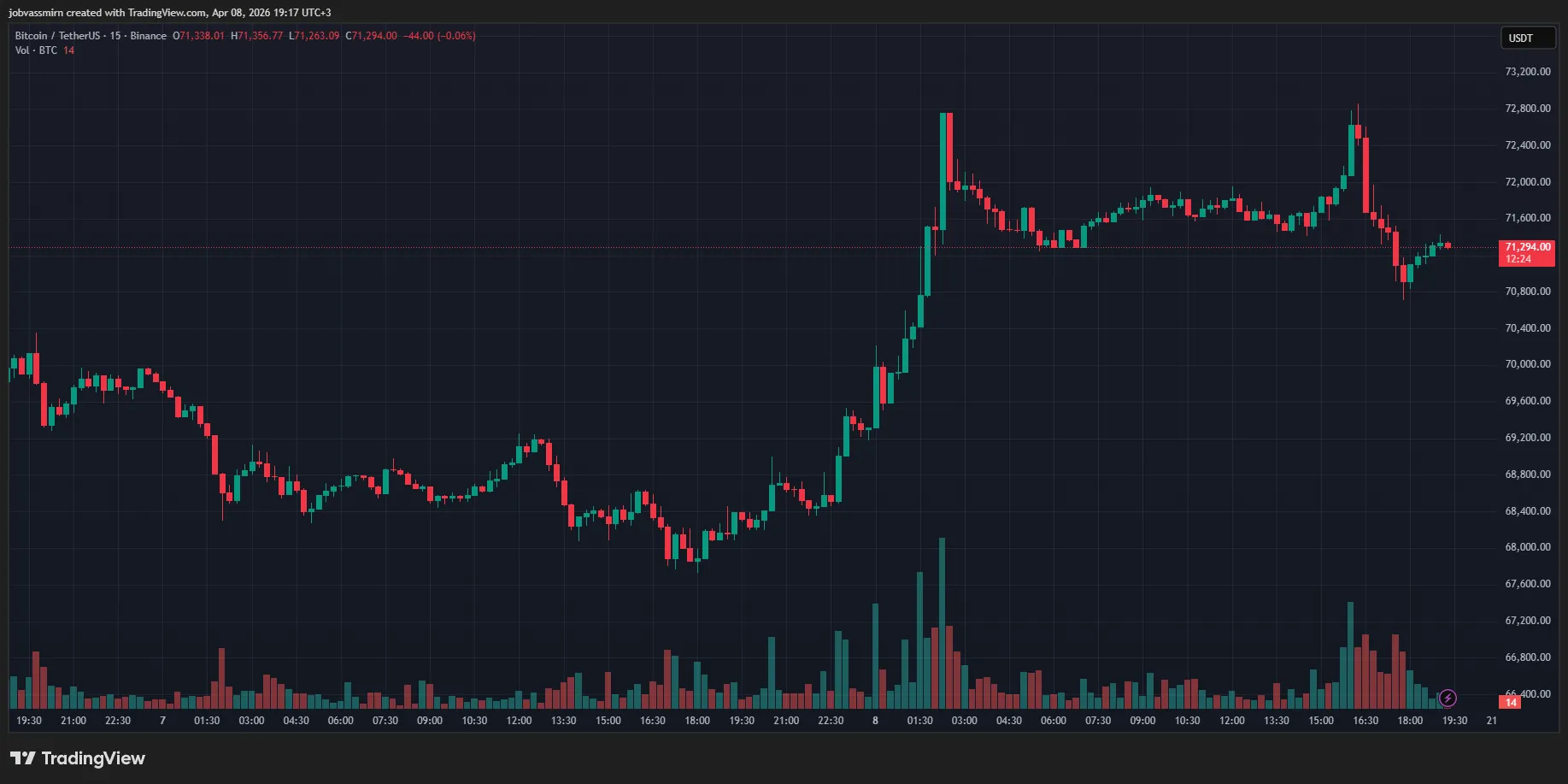
Analysts at QCP Capital struck a more cautious tone, noting that the resumption of shipping through the Strait of Hormuz does not guarantee the lifting of supply restrictions or a reduction in inflationary pressure driven by rising oil prices. As such, Bitcoin's positive reaction may prove short-lived.
Frequently Asked Questions
How much does Iran charge for Strait of Hormuz transit?
The tariff is set at $1 per barrel of cargo carried. Empty vessels are allowed to pass free of charge.
Why is Iran demanding Bitcoin payments for Hormuz passage?
According to Hamid Hosseini of Iran's oil exporters union, Bitcoin payments ensure that funds cannot be traced or confiscated due to international sanctions against the country.
How did Bitcoin react to the Iran ceasefire news?
Bitcoin was trading above $71,000 at the time of reporting, having gained approximately 5% in 24 hours amid de-escalation in the Middle East.
What happens to ships that cross the strait without paying?
Iranian authorities have threatened to strike tankers that attempt to cross through the strait illegally without authorization or payment.
Will the Hormuz ceasefire reduce oil prices and inflation?
Analysts at QCP Capital have expressed skepticism, arguing that resumed shipping through the strait does not guarantee the lifting of supply restrictions or a meaningful reduction in oil-driven inflationary pressure.
Read also
Bitcoin Hits $70,000 as Iran Ceasefire Talks Boost Risk Appetite
Bitcoin surged 4% to test the $70,000 level on April 6 amid reports of ceasefire negotiations between the US, Israel, and Iran. The derivatives market, however, sends mixed signals.
Bitcoin Down 2.5% Weekly: Jane Street Accusations & 7 Ethereum Forks
Bitcoin lost ~2.5% over the week amid macro shocks and geopolitical tensions. Jane Street faced market manipulation allegations while Ethereum unveiled an ambitious seven hard fork roadmap through 2029.
TON Wallet Introduces Yield Vaults for BTC, ETH, and USDT Directly in Telegram
TON Wallet has launched yield vaults for BTC, ETH, and USDT directly within Telegram, offering up to 18% APY on stablecoins through partnerships with Morpho, TAC, and Re7.
Weekly Recap: Aave Ecosystem Rescue Mobilizes 100,000 ETH and Quantum Computer Cracks 15-Bit ECC Key
Bitcoin held near $78,000, the DeFi community rallied over 100,000 ETH to help Aave recover from the Kelp hack, and a researcher cracked a 15-bit ECC key on a quantum computer.
Strategy Becomes Most-Shorted US Stock With $6B in Bets
Strategy tops the list of most-shorted large-cap US stocks with $6 billion in short positions, representing 14% of its market cap, as Bitcoin's decline erodes confidence in the company's debt-fueled BTC accumulation model.
Institutional Investors Dump ETF Shares Worth 25,000 BTC During Market Crash
Institutional investors massively sold Bitcoin ETF positions in Q4 2025, offloading shares equivalent to 25,098 BTC during the crypto market correction.