
Hyperliquid Vault Loses $1.5M After Coordinated FARTCOIN Pump Attack
 BinanceEXCHANGE
Four wallets accumulated $15M in FARTCOIN long positions on Hyperliquid, triggering a cascade of liquidations that drained roughly $1.5M from the HLP vault.
Coordinated Long Positions Drain Hyperliquid's Vault
On the night of April 9, an unknown actor used four wallets to orchestrate a manipulation attack against Hyperliquid's liquidity provider vault (HLP) through massive long positions on the FARTCOIN token. The vault suffered approximately $1.5 million in losses.
Blockchain security firm PeckShield shared a breakdown of the attack:
"#PeckShieldAlert #HLP is down ~$1.5M in the last 24h. Attacker accumulated a $15M $Fartcoin long (145.24M tokens) across 4 wallets. In a low-liquidity environment, the attacker triggered a 'suicide' liquidation, forcing the ADL mechanism to kick in. HLP was forced to absorb the…" — PeckShieldAlert (@PeckShieldAlert), original post
According to PeckShield's analysis, the attacker spread $15 million worth of long positions (145.24 million FARTCOIN) across four addresses. This briefly pushed the token's price up by 25% — from $0.20 to $0.25 — before order manipulation began in a thin-liquidity environment.
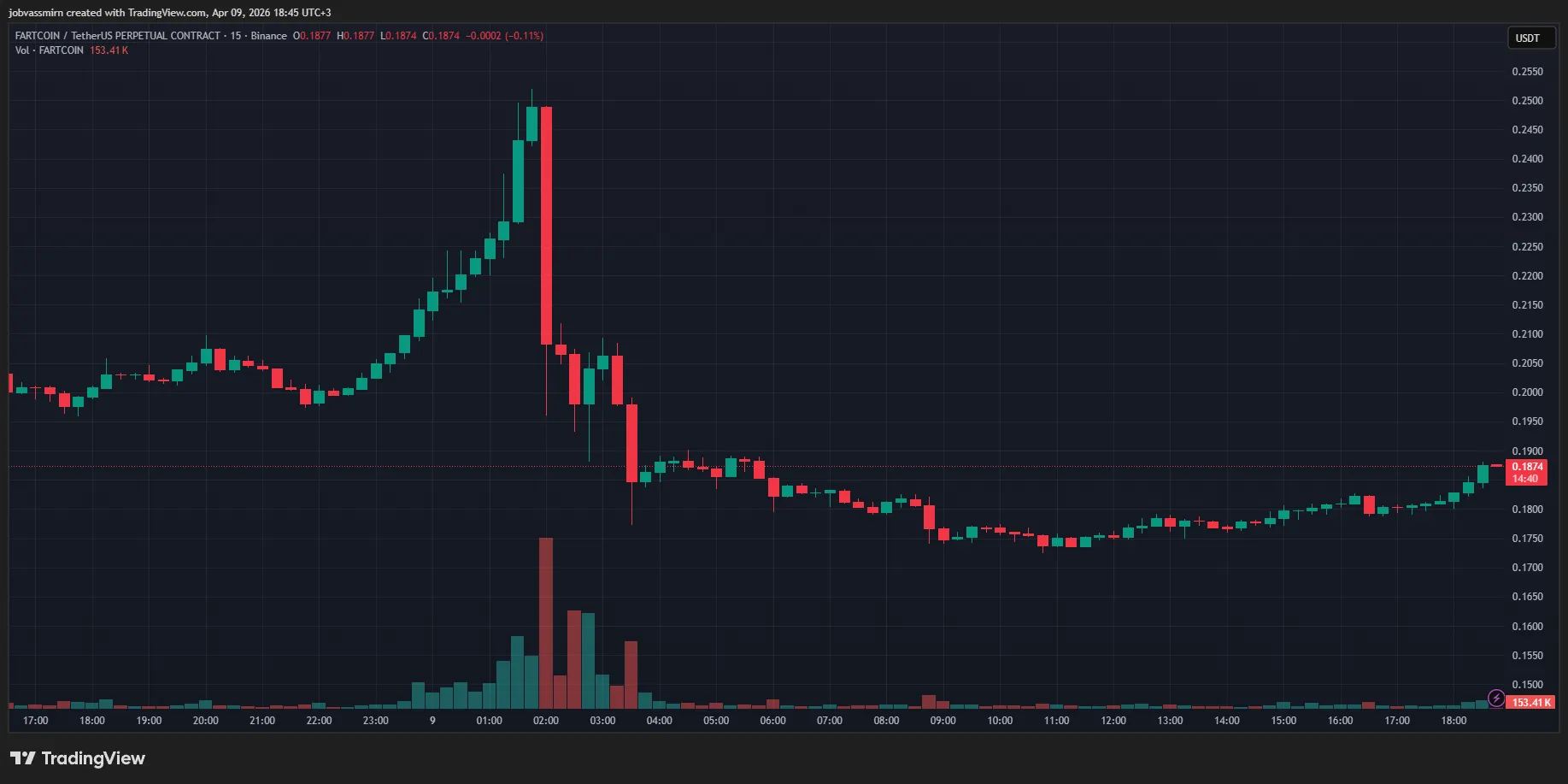
The attacker deliberately drove their positions into a "suicide" liquidation. As the longs were closed, the automatic deleveraging (ADL) mechanism kicked in, forcing the HLP system to absorb the losing positions.
Why This Matters
Repeated attacks on HLP expose a structural vulnerability in Hyperliquid's design: low liquidity in certain token pairs allows bad actors to systematically offload losses onto the platform's vault. Each incident erodes user trust in the liquidation mechanism and raises questions about whether stricter position limits are needed.
The Attacker's Loss Is Likely Illusory
Researchers estimated the attacker's on-paper loss from the liquidated positions at roughly $3 million. However, the real profit was likely substantial thanks to hedged positions on other platforms.
Following the attack, FARTCOIN's price dropped sharply. At the time of reporting, the token had fallen to $0.19, down about 7% over 24 hours.
A Pattern of Vault Exploits on Hyperliquid
This is far from the first time Hyperliquid's vault has been targeted. In March 2025, HLP lost roughly $4 million after a single large trader opened a highly leveraged long position on 175,000 ETH, setting off cascading liquidations.
That same month, a similar incident involved the JELLYJELLY token. A trader opened two longs worth $2.15 million and $1.9 million while hedging with a $4.1 million short position. A pump of approximately 400% in the token's price liquidated the short, transferring its assets to HLP. The exchange halted trading on the contract, but the user managed to withdraw around $6.2 million.
Analysts at 10x Research previously noted that Hyperliquid's transparent architecture enables what amounts to a "crowd hunt" against large leveraged traders, where other participants deliberately push positions toward liquidation thresholds.
Frequently Asked Questions
What happened to Hyperliquid's HLP vault on April 9, 2026?
Four wallets accumulated $15 million in FARTCOIN long positions and triggered cascading liquidations on Hyperliquid. The HLP vault was forced to absorb roughly $1.5 million in losses through the automatic deleveraging (ADL) mechanism.
How much did the FARTCOIN attacker actually lose?
The attacker's on-paper loss was approximately $3 million from the liquidated positions. However, analysts believe the real profit was substantial due to hedging positions on other platforms.
Has Hyperliquid's vault been exploited before?
Yes, in March 2025, HLP lost around $4 million due to a leveraged ETH position involving 175,000 ETH. A separate incident with the JELLYJELLY token that same month saw a user withdraw approximately $6.2 million through a similar manipulation scheme.
What is the ADL mechanism on Hyperliquid?
ADL (automatic deleveraging) is a liquidation mechanism that activates when large positions are closed in low-liquidity conditions. It forces the HLP vault or other positions on the platform to absorb the resulting losses.
What happened to FARTCOIN price after the attack?
FARTCOIN initially surged 25% from $0.20 to $0.25 during the pump. After the attack concluded, the price dropped sharply to $0.19, representing a 7% decline over 24 hours.
Read also
Oil Price Surge Triggers $17.18M Liquidation of Hyperliquid Whale
A sharp rally in Brent crude oil futures on Hyperliquid triggered $46.6 million in forced liquidations. The largest single position wipeout cost one trader $17.18 million.
Weekly Recap: Bitcoin Tests $74K, Miners Dump Holdings, ChatGPT Boycott Grows
Bitcoin briefly touched $74,000 before retreating to $67,500. Public miners sold over 15,000 BTC in five months, traders flocked to Hyperliquid for oil and gold futures, and a ChatGPT boycott gained major traction.
CoinShares: TradFi and DeFi Are Merging Into a Hybrid Finance System
A joint report by CoinShares and Token Terminal documents the convergence of traditional and decentralized finance into a measurable market structure, with stablecoins at $297.6 billion and the RWA market approaching $29 billion.
TON Wallet Introduces Yield Vaults for BTC, ETH, and USDT Directly in Telegram
TON Wallet has launched yield vaults for BTC, ETH, and USDT directly within Telegram, offering up to 18% APY on stablecoins through partnerships with Morpho, TAC, and Re7.
Weekly Recap: Aave Ecosystem Rescue Mobilizes 100,000 ETH and Quantum Computer Cracks 15-Bit ECC Key
Bitcoin held near $78,000, the DeFi community rallied over 100,000 ETH to help Aave recover from the Kelp hack, and a researcher cracked a 15-bit ECC key on a quantum computer.
Stablecoin Transfer Volume Hits $10.5 Trillion in January — Highest Since April 2022
January stablecoin transaction volume surpassed $10.5 trillion, marking the highest monthly figure since April 2022. USDC led transfers while USDT maintained market cap dominance.