
Grayscale: Bitcoin's Quantum Threat Is a Consensus Problem, Not a Technical One
Grayscale's head of research Zach Pandl argues that the real challenge of quantum computing for Bitcoin lies in community consensus rather than technical solutions.
Quantum Threat: Technology vs. Social Consensus
Zach Pandl, head of research at Grayscale, has argued that the quantum computing threat facing Bitcoin is fundamentally a social problem rather than a technical one. The real difficulty, according to Pandl, is not building defensive tools but getting the community to agree on a path forward.
«Grayscale Research's analysis of the @Google Quantum AI paper suggests breakthroughs may come in sudden leaps, not gradual steps. That means preparation can't be delayed.» — Grayscale (@Grayscale), original post
The discussion intensified following a Google research paper published in late March, which concluded that a quantum computer could break Bitcoin's cryptography using significantly fewer resources than previously assumed.
Why This Matters
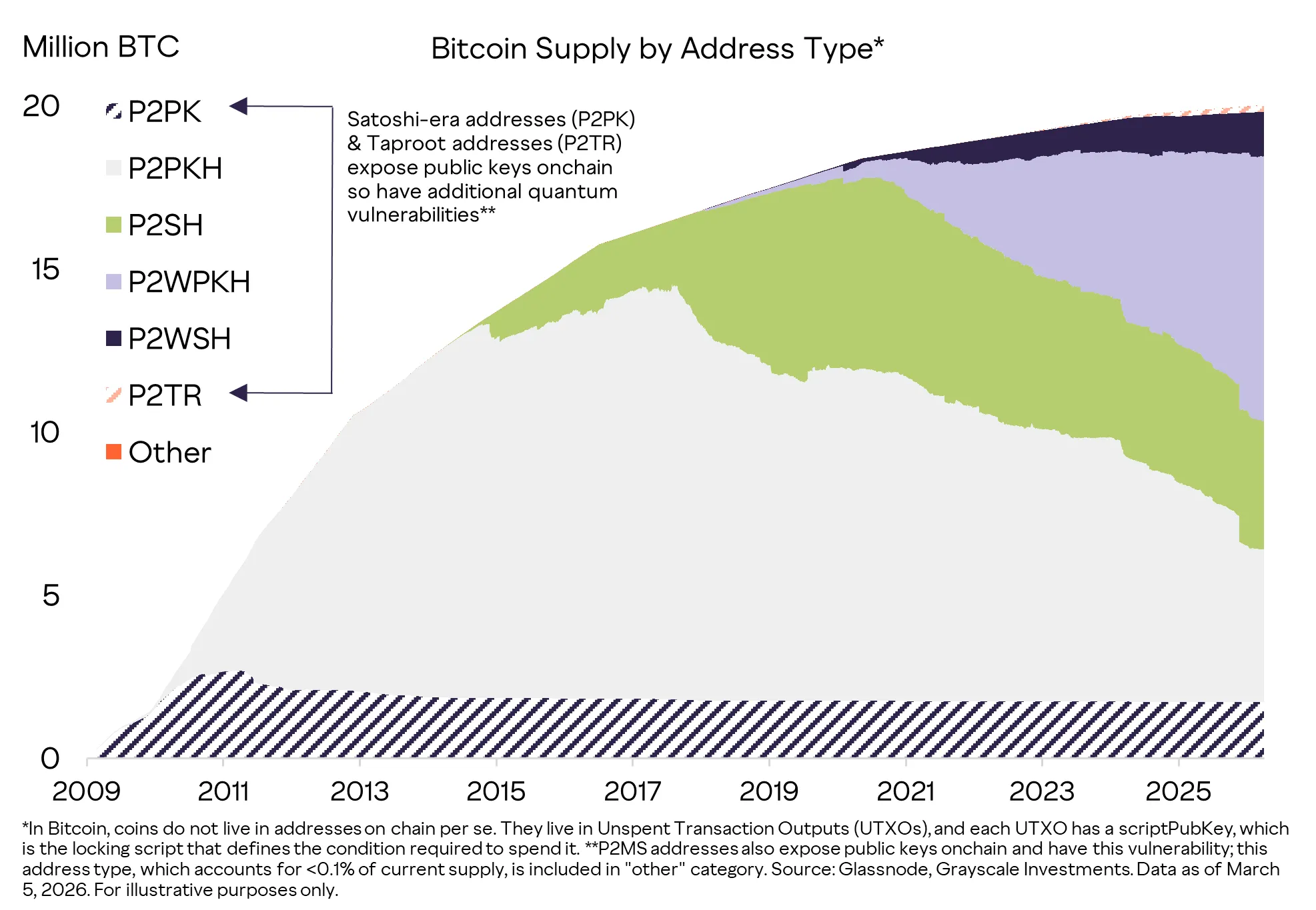
Quantum computing poses a potential risk to the entire blockchain ecosystem, but Bitcoin holds a unique position in this debate. Pandl noted that the network's architecture — the UTXO model, Proof-of-Work consensus, absence of native smart contracts, and quantum-resistant address types — makes it less vulnerable than some might expect. However, approximately 1.7 million BTC remain stored on early P2PK addresses, with an estimated 1 million BTC believed to belong to Satoshi Nakamoto.
Three Options for the Bitcoin Community
Pandl outlined three possible approaches the community could take regarding coins on vulnerable addresses:
- Burn them — permanently destroy the coins on exposed addresses;
- Throttle spending — deliberately limit the rate at which funds can be moved from vulnerable addresses;
- Do nothing — leave the situation as is.
All three options are technically feasible, but the challenge lies in reaching consensus. Pandl pointed to Bitcoin's long history of contentious protocol debates, including the 2023 conflict over Ordinals — the technology that enables inscribing data such as text and images onto individual satoshis. Two years later, the opposing camps still hold fundamentally different views on the matter.
Time to Prepare
While Pandl stated that investors have no immediate cause for alarm — there is currently no real quantum threat to public blockchain security — he urged developers to begin transitioning to post-quantum cryptography without delay. He echoed Google's researchers in emphasizing that blockchain projects need to start migrating now.
According to the Grayscale research head, the time has come to accelerate preparation for a post-quantum future, even if the danger is not yet imminent.
Several projects have already begun moving in this direction:
- Solana is testing quantum-resistant transactions;
- The Ethereum Foundation research group has proposed four key network upgrades;
- BTQ Technologies has launched a Bitcoin testnet with quantum-safe protections.
Earlier in March, Alex Thorn, head of research at Galaxy Digital, also characterized the threat of quantum computers breaking Bitcoin as overstated.
Frequently Asked Questions
Can quantum computers break Bitcoin?
A Google research paper published in late March suggested that quantum computers could crack Bitcoin's cryptography with fewer resources than previously thought. However, Grayscale's Zach Pandl says there is no immediate threat to blockchain security at this time.
How many Bitcoin are vulnerable to quantum attacks?
Approximately 1.7 million BTC are stored on early P2PK addresses, which are considered vulnerable. About 1 million of those BTC are believed to belong to Satoshi Nakamoto.
What are the options for protecting Bitcoin from quantum computing?
According to Grayscale, the community has three options: burn the vulnerable coins, throttle the rate at which they can be spent, or do nothing. The main challenge is reaching consensus on which approach to take.
Which blockchains are preparing for quantum threats?
Solana is testing quantum-resistant transactions, the Ethereum Foundation has proposed four key network upgrades, and BTQ Technologies has launched a Bitcoin testnet with quantum-safe protections.
Is the quantum threat to Bitcoin overstated?
Both Grayscale's Zach Pandl and Galaxy Digital's Alex Thorn have suggested that the immediate quantum threat is overstated. Pandl emphasized that while investors need not worry now, developers should begin preparing for a post-quantum future.
Read also
Bitcoin Rebounds to $70,000 as Leverage Drops and ETF Inflows Continue
BTC recovered above $70,000 on March 10, erasing weekend losses. Spot ETFs attracted $568M in weekly inflows while the estimated leverage ratio on Binance fell sharply from 0.198 to 0.152.
Bitcoin Down 2.5% Weekly: Jane Street Accusations & 7 Ethereum Forks
Bitcoin lost ~2.5% over the week amid macro shocks and geopolitical tensions. Jane Street faced market manipulation allegations while Ethereum unveiled an ambitious seven hard fork roadmap through 2029.
TON Wallet Introduces Yield Vaults for BTC, ETH, and USDT Directly in Telegram
TON Wallet has launched yield vaults for BTC, ETH, and USDT directly within Telegram, offering up to 18% APY on stablecoins through partnerships with Morpho, TAC, and Re7.
Bitcoin Hits $70,000 as Iran Ceasefire Talks Boost Risk Appetite
Bitcoin surged 4% to test the $70,000 level on April 6 amid reports of ceasefire negotiations between the US, Israel, and Iran. The derivatives market, however, sends mixed signals.
Bitcoin Drops Below $67,000 as Ethereum Foundation Unveils Quantum Defense Roadmap
Bitcoin lost 3% over the week amid Middle East tensions and ETF outflows, miner activity hit historic lows, and Ethereum Foundation outlined a four-hardfork plan for quantum resistance by 2029.
AI Audit Uncovers Critical Liveness Bug in Ethereum's Nethermind Client
Octane Security's AI discovered a high-severity vulnerability in the Nethermind execution client that could have halted block production for 38% of Ethereum mainnet validators. The Ethereum Foundation awarded a maximum $50,000 bounty.