
Ethena Capital Plunges 60% in a Month, Signaling Historic Low in Long Demand
Capital deployed by Ethena in market-neutral strategies collapsed from $2 billion to $800 million, pointing to historically weak demand for leveraged long positions.
Ethena's deployed capital sees sharp decline
Capital deployed by the Ethena protocol in market-neutral strategies has dropped roughly 60% over the past month, falling from $2 billion to $800 million. The trend was highlighted by WuBlockchain observer SoskaKyle.
The drawdown actually began in 2025, when deployed capital fell more than 75% — from $5 billion to $1.1 billion. At that time, the broader market shifted into a risk-off mode following the launch of the TRUMP meme coin and early discussions about U.S. trade tariffs.
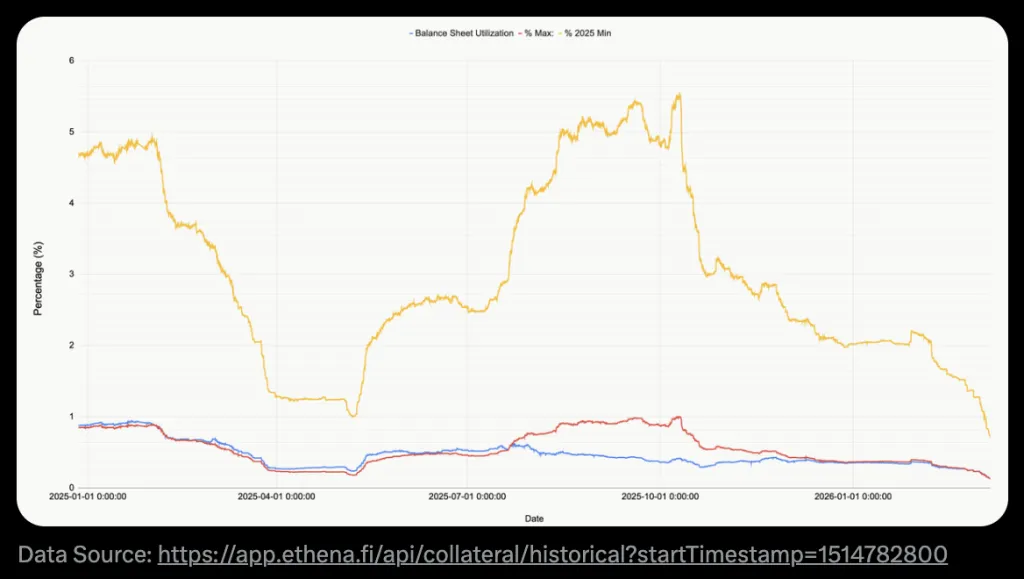
As of now, total deployed capital across BTC, ETH, SOL, BNB, XRP, and HYPE markets stands at $791.2 million — just 71% of last year's minimum and only 12.9% of the all-time high recorded in October.
Why this matters
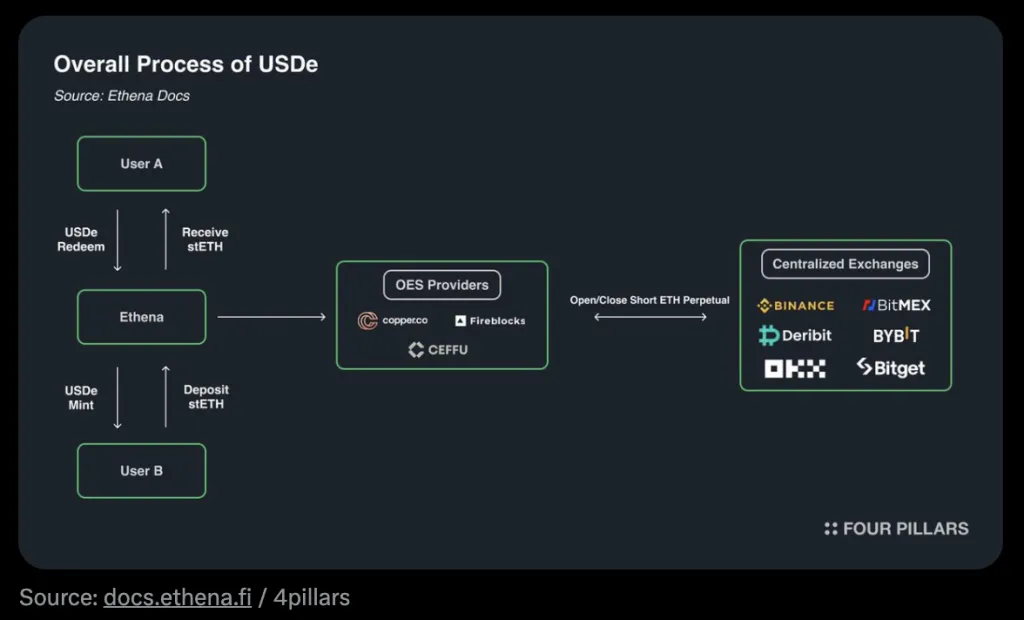
Ethena operates a cash-and-carry arbitrage strategy based on perpetual futures. When a trader opens a long position, Ethena acts as the counterparty by opening a short while simultaneously purchasing an equivalent amount of the underlying asset. This makes Ethena's deployed capital a useful proxy for excess long demand — demand the market cannot absorb through its natural supply of short positions.
The collapse of this metric suggests that net long demand has reached historically low levels. According to SoskaKyle, the data reflects the overall state of the market rather than any issues specific to the Ethena protocol itself.
USDe yield and market cap under pressure
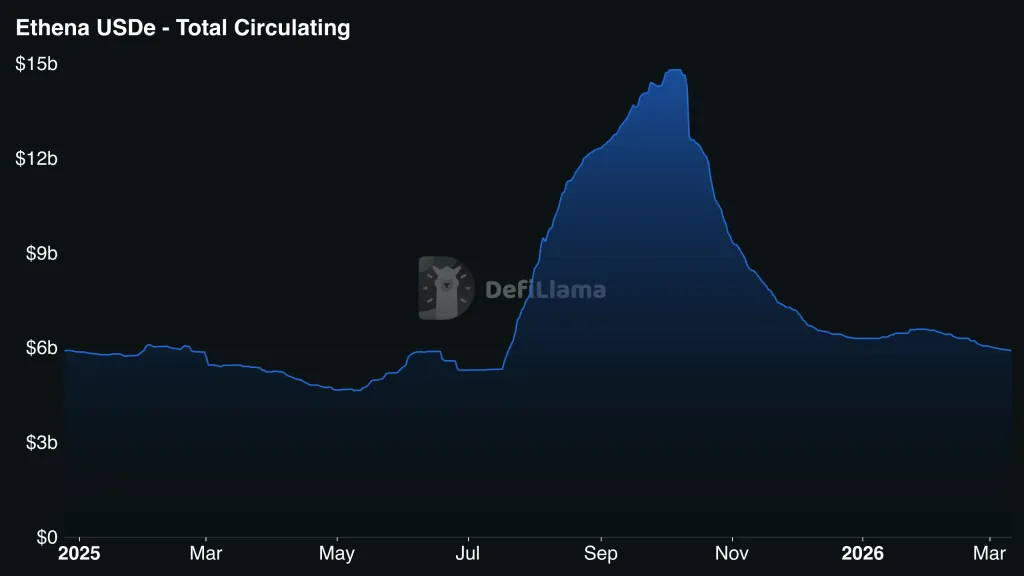
Supporting evidence comes from the declining yield on Ethena's synthetic stablecoin USDe. The current yield stands at just 3.5%, compared to double-digit figures at the start of 2025. Meanwhile, USDe's market capitalization has fallen from a peak of $14 billion to $5.9 billion.
Three drivers behind the capital outflow
The analyst described the situation as unusual, given that the market had largely been trading sideways during the period. He identified three potential causes:
- Gradual unwinding of profitable but unsustainable basis trades opened after February.
- Increased competition from directional shorts and hedgers crowding out basis traders.
- Weak demand for leveraged long positions.
SoskaKyle attributed the primary impact to the first two factors. Open interest in Bitcoin and other major assets remained relatively stable even as Ethena positions were being reduced. Funding rates, meanwhile, stayed negative for an extended period.
A rare market configuration
SoskaKyle pointed to an exceptionally rare crypto market configuration: directional long and short volumes have nearly equalized. He acknowledged this could theoretically become a new norm, but noted that based on experience from other markets and asset classes, such equilibrium rarely persists for long.
Additional selling pressure may have come from smaller projects like Eigen, Grass, and Monad, as well as from venture capital funds. These participants need to limit losses, lock in profits, and maintain liquidity reserves. Under these conditions, they tend to deploy structured products that short baskets of liquid assets to hedge exposure to less liquid tokens.
Signs of such products include sudden Ethereum price spikes that trigger short squeezes in mid- and small-cap altcoins. Another indicator is the aggressive displacement of speculative basis strategies, including those operated by Ethena.
Frequently Asked Questions
Why did Ethena's capital drop 60%?
The decline was driven primarily by the unwinding of unsustainable basis trades opened after February and increased competition from directional shorts and hedgers. Weak demand for leveraged long positions also contributed to the outflow.
What is Ethena's USDe yield right now?
The current yield on Ethena's synthetic stablecoin USDe is 3.5%, down significantly from double-digit levels at the start of 2025. USDe's market cap has also declined from a peak of $14 billion to $5.9 billion.
What does Ethena's capital decline signal for the crypto market?
Ethena's deployed capital serves as a proxy for excess long demand in the market. Its drop to $791.2 million indicates that net long demand is at historically low levels, with directional long and short volumes nearly equalizing.
How does Ethena's cash-and-carry strategy work?
When a trader opens a long position, Ethena acts as the counterparty by simultaneously shorting and purchasing the equivalent underlying asset. The higher the unmet demand for longs, the more capital the protocol deploys.
Could Ethena's capital loss become a new normal?
Analyst SoskaKyle noted that while long-short equilibrium could theoretically persist, historical evidence from other markets suggests such balance rarely lasts long. Additional pressure from projects like Eigen, Grass, Monad, and VC funds may also be temporary.
Read also
Drift Protocol Hack Victims File Class Action Lawsuit Against Circle Over $230M in USDC
Over 100 victims of the Drift Protocol exploit have filed a class action lawsuit against Circle in Massachusetts court, accusing the USDC issuer of negligence and enabling hackers.
TON Wallet Introduces Yield Vaults for BTC, ETH, and USDT Directly in Telegram
TON Wallet has launched yield vaults for BTC, ETH, and USDT directly within Telegram, offering up to 18% APY on stablecoins through partnerships with Morpho, TAC, and Re7.
Weekly Recap: Aave Ecosystem Rescue Mobilizes 100,000 ETH and Quantum Computer Cracks 15-Bit ECC Key
Bitcoin held near $78,000, the DeFi community rallied over 100,000 ETH to help Aave recover from the Kelp hack, and a researcher cracked a 15-bit ECC key on a quantum computer.
Stablecoin Transfer Volume Hits $10.5 Trillion in January — Highest Since April 2022
January stablecoin transaction volume surpassed $10.5 trillion, marking the highest monthly figure since April 2022. USDC led transfers while USDT maintained market cap dominance.
Top 10 Dollar Stablecoins in 2026: From Dominant Players to Exit Candidates
The stablecoin market has surpassed $311 billion in total capitalization. Here's a breakdown of the ten largest USD-pegged stablecoins — from undisputed leaders Tether and Circle to ambitious newcomers.
Weekly Recap: Bitcoin Tests $74K, Miners Dump Holdings, ChatGPT Boycott Grows
Bitcoin briefly touched $74,000 before retreating to $67,500. Public miners sold over 15,000 BTC in five months, traders flocked to Hyperliquid for oil and gold futures, and a ChatGPT boycott gained major traction.