
EIP-8142: Ethereum Proposes Moving Transaction Data From Blocks to Blobs
Ethereum researchers have drafted EIP-8142, a standard that encodes transaction data directly into blob objects to improve network scalability and reduce validator burden.
Block-in-Blobs: What EIP-8142 Proposes
A group of Ethereum researchers led by Tony Wahrstätter has published a draft standard called EIP-8142, or Block-in-Blobs. The proposal calls for encoding transaction data directly into blob objects that are published alongside blocks. The initiative aims to reduce bandwidth requirements for validators and eliminate architectural bottlenecks that constrain the network's growth.
In a post titled "Blocks Are Dead. Long Live Blobs," the authors outlined a mechanism that would free validators from having to download and re-execute the full execution payload. Instead, they would work with cryptographic commitments of blob objects.
Why This Matters
Ethereum's current architecture faces a scaling challenge: growing gas limits and larger blocks force validators to process increasing volumes of data. This creates throughput bottlenecks and limits the network's evolution.
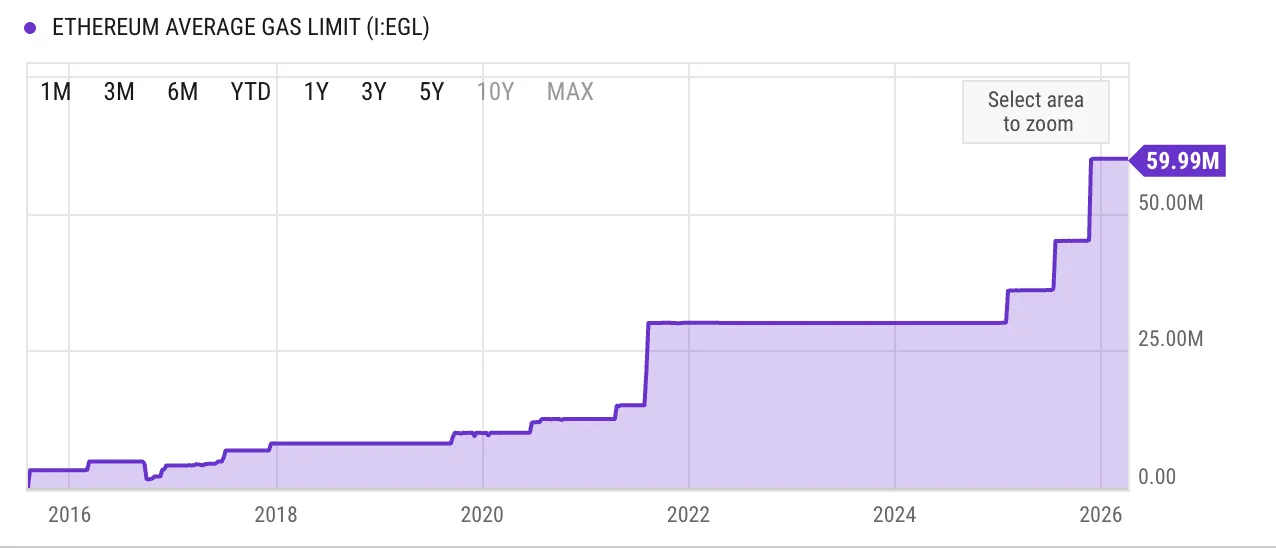
Blobs were first introduced in March 2024 with the activation of the Dencun hard fork. Implemented via EIP-4844 (proto-danksharding), they were designed for efficient transmission of large data payloads — as opposed to standard transaction calldata. Blobs allow data to be cryptographically committed and verified without full replication across the network.
How Block-in-Blobs Works
EIP-8142 extends the concept introduced in Dencun. The main execution payload, already encoded in RLP format, is moved directly into blobs. This transforms blob objects from a supplementary data layer into the primary carrier of transaction information.
Validators will verify cryptographic commitments of blobs and eventually transition to data availability sampling (DAS). This mechanism allows them to check small fragments to confirm the existence of the full dataset without downloading it entirely.
The proposal becomes especially relevant with the future adoption of zkEVM systems that use zero-knowledge proofs (ZKP) to confirm transaction processing correctness. ZKPs eliminate the need for re-execution but do not inherently guarantee that data is actually available. Wahrstätter explained that in zkEVM, proofs are verified rather than transactions directly. Without a separate data availability mechanism, information could be withheld even when consensus is reached. Block-in-Blobs is designed to address this vulnerability.
The update would also reshape the fee structure. Currently, Ethereum separates execution gas from blob gas. The new model could merge them into a unified "data gas," equalizing costs across different forms of data availability and preventing overlapping limits.
ERC-8211: Programmable Transactions by Biconomy
Alongside EIP-8142, the Biconomy project and the UX division within the Ethereum Foundation have proposed ERC-8211, a standard that transforms transactions into programmable workflows.
Unlike the current model where parameters are fixed at signing time, ERC-8211 allows operations to fetch on-chain data in real time, verify predefined conditions, and execute multiple sequential steps with a single signature. The primary goal is to reduce failed transactions and enable more complex agentic interactions within DeFi protocols.
Long-Term Roadmap Through the End of the Decade
Both initiatives are part of a broader research effort within the Ethereum ecosystem. Developers have already charted network upgrade paths through the end of the current decade. Previously, Gnosis and Zisk, with support from the Ethereum Foundation, developed a framework to unify the fragmented L2 ecosystem.
Frequently Asked Questions
What is EIP-8142 Block-in-Blobs?
EIP-8142 is a draft Ethereum standard that proposes encoding transaction data directly into blob objects instead of traditional blocks. This reduces validator bandwidth requirements and improves network scalability.
How do blobs differ from regular Ethereum blocks?
Blobs allow data to be cryptographically committed and verified without full replication across the network. They were introduced in March 2024 with the Dencun hard fork via EIP-4844 (proto-danksharding) for efficient large data transmission.
Why does Ethereum need Block-in-Blobs for zkEVM?
zkEVM systems use zero-knowledge proofs to verify transaction correctness without re-execution, but ZKPs alone don't guarantee data availability. EIP-8142 addresses this gap through data availability sampling (DAS), ensuring data can't be withheld even when consensus succeeds.
What is Biconomy's ERC-8211 standard?
ERC-8211 is a standard developed by Biconomy with the Ethereum Foundation's UX team. It turns transactions into programmable workflows that can fetch on-chain data in real time and execute multiple steps with a single signature.
How will EIP-8142 change Ethereum gas fees?
Currently Ethereum separates execution gas from blob gas. The new model may merge them into unified 'data gas,' equalizing costs across different forms of data availability and preventing overlapping limits.
Read also
Bitcoin Down 2.5% Weekly: Jane Street Accusations & 7 Ethereum Forks
Bitcoin lost ~2.5% over the week amid macro shocks and geopolitical tensions. Jane Street faced market manipulation allegations while Ethereum unveiled an ambitious seven hard fork roadmap through 2029.
AI Audit Uncovers Critical Liveness Bug in Ethereum's Nethermind Client
Octane Security's AI discovered a high-severity vulnerability in the Nethermind execution client that could have halted block production for 38% of Ethereum mainnet validators. The Ethereum Foundation awarded a maximum $50,000 bounty.
TON Wallet Introduces Yield Vaults for BTC, ETH, and USDT Directly in Telegram
TON Wallet has launched yield vaults for BTC, ETH, and USDT directly within Telegram, offering up to 18% APY on stablecoins through partnerships with Morpho, TAC, and Re7.
Bitcoin Hits $70,000 as Iran Ceasefire Talks Boost Risk Appetite
Bitcoin surged 4% to test the $70,000 level on April 6 amid reports of ceasefire negotiations between the US, Israel, and Iran. The derivatives market, however, sends mixed signals.
Bitcoin Rebounds to $70,000 as Leverage Drops and ETF Inflows Continue
BTC recovered above $70,000 on March 10, erasing weekend losses. Spot ETFs attracted $568M in weekly inflows while the estimated leverage ratio on Binance fell sharply from 0.198 to 0.152.
Bitcoin Drops Below $67,000 as Ethereum Foundation Unveils Quantum Defense Roadmap
Bitcoin lost 3% over the week amid Middle East tensions and ETF outflows, miner activity hit historic lows, and Ethereum Foundation outlined a four-hardfork plan for quantum resistance by 2029.