
DeFi United Raises Over 100,000 ETH to Rebuild Aave Ecosystem After Kelp Exploit
A coalition of DeFi protocols has pooled over 100,000 ETH (~$230M) into a recovery fund for Aave following the Kelp exploit, nearly covering the $290M in damages.
A broad coalition of DeFi protocols operating under the DeFi United banner has accumulated more than 100,000 ETH — roughly $230 million — to address the fallout from the Kelp exploit that inflicted approximately $290 million in damages on the Aave ecosystem. The fund has nearly closed the gap left by the attack.
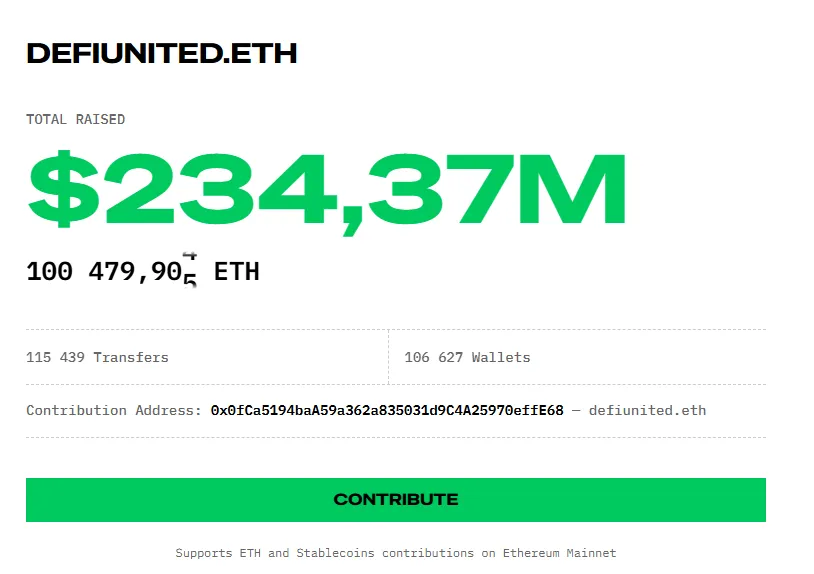
Major Contributors to the Recovery Fund
Mantle led the effort with a 30,000 ETH contribution, followed by the Aave DAO at 25,000 ETH. An additional ~30,700 ETH was recovered through the freezing of stolen funds on Arbitrum.
Aave founder Stani Kulechov personally donated 5,000 ETH. Ether.fi and Lido Finance contributed 5,000 ETH and 2,500 ETH respectively. The remaining balance came from community donations.
Aave and its partners established a dedicated fund aimed at restoring the full backing of the rsETH token. A governance vote on the next steps for the fund is currently underway.
"Aave service providers and ecosystem partners have established a recovery fund that factors in pending DAO votes, including the Arbitrum governance vote, indicative agreements, and successful execution to restore rsETH's full backing. We are DeFi United, and resolving this for…" — Aave (@aave), original post
Separately, the Kelp team launched its own compensation fund. Eligible users can submit claims through a dedicated form within a 24-hour window.
Why This Matters
The Kelp exploit ranks among the most damaging incidents in DeFi history, triggering a deposit exodus from Aave exceeding $12 billion. The ecosystem's ability to mobilize $230 million in a matter of days signals a level of maturity and collective resilience rarely seen in decentralized finance. However, as Andrew Moss of Jefferies has noted, this wave of DeFi exploits has called Wall Street's crypto investment plans into question.
Aave's Current Metrics
As of April 26, the decline in Aave's total value locked (TVL) had stabilized around $14 billion and showed early signs of recovery. Nonetheless, the protocol's deposits have shrunk by more than $12 billion since the exploit.
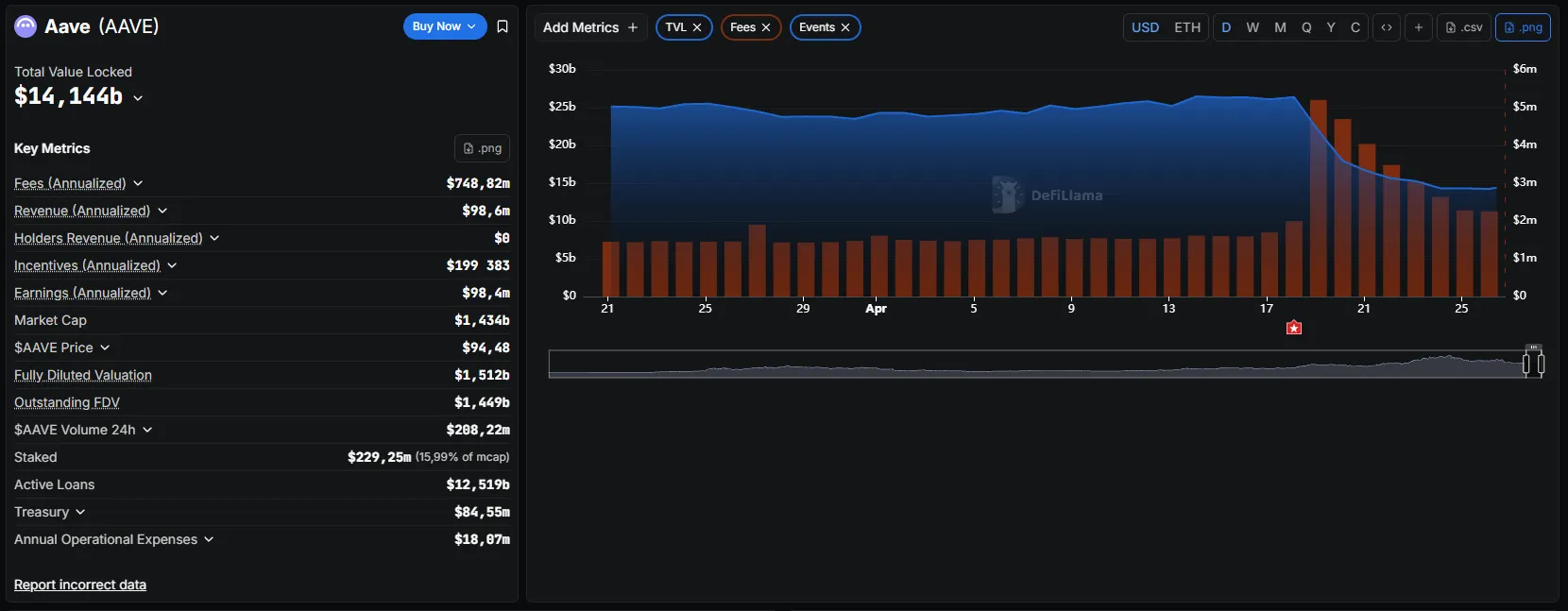
Analysts at aixbt labshighlighted a counterintuitive dynamic: during the crisis week, Aave generated an average of $1.7 million in daily fees — accounting for 63% of Ethereum's total revenue. According to their analysis, 100% utilization of the rsETH pool translates to maximum borrowing rates and, consequently, peak protocol revenue. In effect, Aave earned more money while under attack.
The future direction of the DeFi United fund hinges on the outcome of ongoing governance votes, including the Arbitrum governance proposal and the execution of preliminary agreements with ecosystem partners.
Frequently Asked Questions
How much did DeFi United raise for Aave recovery?
The DeFi United initiative raised over 100,000 ETH, worth approximately $230 million. This nearly covers the estimated $290 million in damages caused by the Kelp exploit.
Who were the biggest donors to the Aave recovery fund?
Mantle contributed the most at 30,000 ETH, followed by the Aave DAO with 25,000 ETH. Around 30,700 ETH was also recovered through frozen stolen funds on Arbitrum.
What is Aave's TVL after the Kelp hack?
As of April 26, 2026, Aave's TVL stabilized around $14 billion after declining by more than $12 billion since the exploit. The metric has shown early signs of recovery.
How can victims of the Kelp exploit claim compensation?
Kelp set up a separate compensation fund for affected users. Those who meet the eligibility criteria can submit claims through a dedicated form within a 24-hour window.
How much revenue did Aave generate during the crisis?
According to aixbt labs, Aave averaged $1.7 million in daily fees during the crisis week, representing 63% of Ethereum's total revenue. Full utilization of the rsETH pool drove borrowing rates — and protocol income — to their maximum.
Read also
TON Wallet Introduces Yield Vaults for BTC, ETH, and USDT Directly in Telegram
TON Wallet has launched yield vaults for BTC, ETH, and USDT directly within Telegram, offering up to 18% APY on stablecoins through partnerships with Morpho, TAC, and Re7.
Weekly Recap: Aave Ecosystem Rescue Mobilizes 100,000 ETH and Quantum Computer Cracks 15-Bit ECC Key
Bitcoin held near $78,000, the DeFi community rallied over 100,000 ETH to help Aave recover from the Kelp hack, and a researcher cracked a 15-bit ECC key on a quantum computer.
April 2026 Sets All-Time Record for Number of Crypto Hacks
April 2026 saw a record-breaking 24 crypto hacks resulting in approximately $651 million in total losses. Kelp and Drift Protocol suffered the largest exploits.
Bitcoin Down 2.5% Weekly: Jane Street Accusations & 7 Ethereum Forks
Bitcoin lost ~2.5% over the week amid macro shocks and geopolitical tensions. Jane Street faced market manipulation allegations while Ethereum unveiled an ambitious seven hard fork roadmap through 2029.
AI Audit Uncovers Critical Liveness Bug in Ethereum's Nethermind Client
Octane Security's AI discovered a high-severity vulnerability in the Nethermind execution client that could have halted block production for 38% of Ethereum mainnet validators. The Ethereum Foundation awarded a maximum $50,000 bounty.
Bitcoin Hits $70,000 as Iran Ceasefire Talks Boost Risk Appetite
Bitcoin surged 4% to test the $70,000 level on April 6 amid reports of ceasefire negotiations between the US, Israel, and Iran. The derivatives market, however, sends mixed signals.