
Culper Research Opens Short on Ethereum, Warns of 'Death Spiral'
Research firm Culper Research has shorted ETH and BitMine stock, arguing that Ethereum's economic model has deteriorated after the Fusaka upgrade slashed transaction fees by 90%.
Culper Research Bets Against Ethereum and BitMine
Research firm Culper Research has taken a bearish stance on Ethereum, opening short positions on both the altcoin and shares of BitMine, one of the largest corporate holders of ETH. In a newly published report, the analysts described the current situation around the second-largest cryptocurrency by market cap as a potential "death spiral."
The core argument centers on the economic damage from Ethereum's December 2025 Fusaka upgrade. According to Culper, the network update created an oversupply of block space, causing transaction fees to plummet by approximately 90%. Since validator revenues are directly tied to these fees, staking profitability has dropped sharply.
The analysts believe this triggers a negative feedback loop: declining yields reduce demand for locking up coins, which in turn threatens the blockchain's overall security.
Why This Matters
A public short from a recognized research firm amplifies selling pressure on an asset already under strain. Culper Research isn't merely criticizing ETH fundamentals — the firm has backed its thesis with concrete data points: cratering fees, declining staking yields, and substantial selling by Ethereum's own co-founder. For a market already pressured by macroeconomic headwinds, a report like this could accelerate capital outflows from the Ethereum ecosystem.
Buterin's Sales and the Bull Case Challenged
Culper cited data from analytics platform Lookonchain showing that Ethereum co-founder Vitalik Buterin sold approximately 20,000 ETH this year, worth nearly $40 million at current prices. The report states that Buterin has been selling while bulls like BitMine board chairman Tom Lee have failed to grasp the asset's new reality. The analysts declared they are siding with Buterin.
The short sellers also challenged Lee's argument that growing transaction counts and active addresses prove the network's stability. Culper contends these metrics are distorted by address "poisoning" — a practice where bad actors flood the network with spam transactions. The researchers stated that if the asset's utility isn't actually growing, Ethereum has indeed entered a "death spiral."
BitMine's ETH reserves data. Source: DropsTab
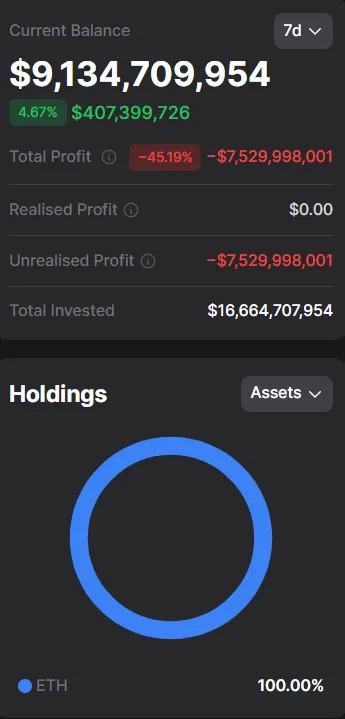
The second leg of the short targets BitMine itself, one of the biggest corporate buyers of ETH. Since July, the company has accumulated roughly 4.4 million ETH. Due to price declines, the value of these reserves has fallen 45%, according to DropsTab. BitMine's unrealized loss has reached $7.5 billion.
ETH Price Action and Macro Pressures
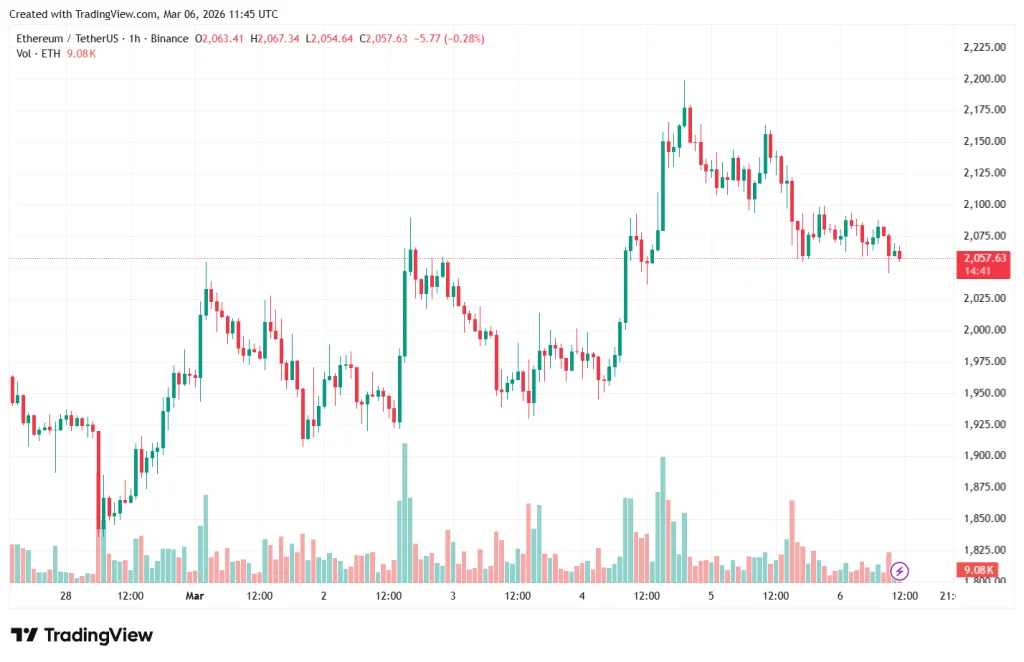
Ethereum's price dropped 6.5% to $2,057 after briefly spiking to $2,200. The pullback followed a decline in U.S. equity markets driven by global geopolitical tensions and energy supply disruptions. Investors revised their economic growth expectations and shifted toward risk-off strategies.
Hourly ETH/USDT chart on Binance. Source: TradingView
Adding to the uncertainty, a U.S. court ordered the government to pay businesses $130 billion in tariff reimbursements.
Derivatives Market Signals Caution
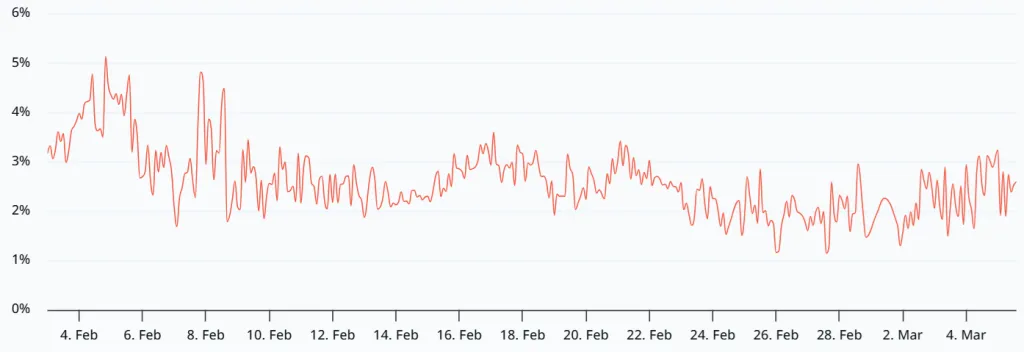
On-chain data and the derivatives market point to weak buyer interest. The annualized premium on 30-day ETH futures remains below the neutral 5% threshold, indicating a lack of demand for leveraged long positions.
Ethereum futures premium. Source: Laevitas.ch
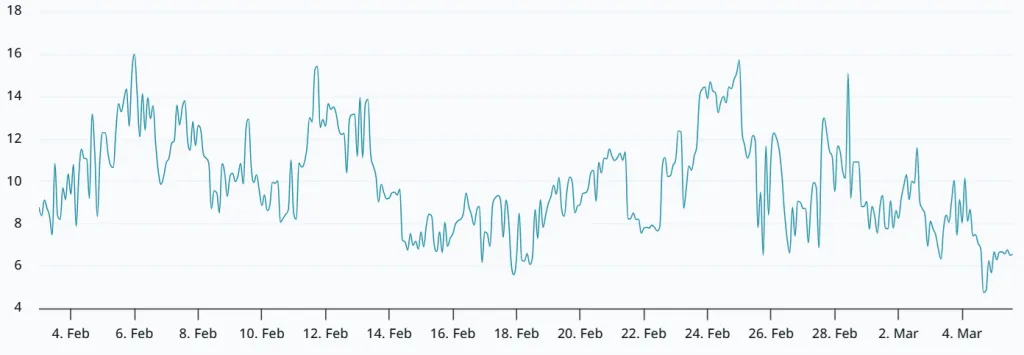
The put/call options skew for Ethereum has reached 7%. Readings above 6% are traditionally interpreted as a sign that large players and market makers are purchasing downside protection. This caution among sophisticated traders gives bears room to intensify selling pressure.
Ethereum options skew. Source: Laevitas.ch
Bitwise CIO: The Next Alt Season Will Be Different
Amid the pressure on Ethereum, Bitwise Chief Investment Officer Matt Hougan offered his perspective on altcoin prospects. He argued that the next altcoin season will reward tokens with real-world adoption and active user bases rather than replicate the euphoria of past cycles, when virtually every cryptocurrency rallied indiscriminately.
Hougan questioned the classic playbook where capital flows sequentially from Bitcoin to Ethereum, then into DeFi, and finally into NFTs. He forecasts a more selective market where investors favor tokens backed by sustainable business models and working products.
In February, investors withdrew 31.6 million ETH from centralized exchanges — the highest monthly outflow since November 2025.
Frequently Asked Questions
Why did Culper Research short Ethereum?
Culper Research argues that the December 2025 Fusaka upgrade created excess block space, causing transaction fees to drop by roughly 90%. This slashed staking profitability and, according to the firm, triggered a negative cycle threatening the blockchain's security.
How much ETH has Vitalik Buterin sold in 2026?
According to Lookonchain data cited by Culper Research, Vitalik Buterin sold approximately 20,000 ETH this year. At current prices, this amounts to nearly $40 million.
What are BitMine's unrealized losses on Ethereum?
BitMine acquired roughly 4.4 million ETH since July. Due to the price decline, the value of these holdings has fallen 45%, with unrealized losses reaching $7.5 billion according to DropsTab.
What do Ethereum derivatives data show right now?
The annualized premium on 30-day ETH futures sits below the neutral 5% threshold, while the put/call options skew has reached 7%. These readings suggest weak buyer interest and active hedging by institutional participants.
What does Bitwise predict for the next altcoin season?
Bitwise CIO Matt Hougan expects a more selective altcoin season ahead. He believes tokens with real-world utility and active user bases will outperform, unlike past cycles where nearly all cryptocurrencies rallied together.
Read also
TON Wallet Introduces Yield Vaults for BTC, ETH, and USDT Directly in Telegram
TON Wallet has launched yield vaults for BTC, ETH, and USDT directly within Telegram, offering up to 18% APY on stablecoins through partnerships with Morpho, TAC, and Re7.
Bitcoin Hits $70,000 as Iran Ceasefire Talks Boost Risk Appetite
Bitcoin surged 4% to test the $70,000 level on April 6 amid reports of ceasefire negotiations between the US, Israel, and Iran. The derivatives market, however, sends mixed signals.
Bitcoin Down 2.5% Weekly: Jane Street Accusations & 7 Ethereum Forks
Bitcoin lost ~2.5% over the week amid macro shocks and geopolitical tensions. Jane Street faced market manipulation allegations while Ethereum unveiled an ambitious seven hard fork roadmap through 2029.
AI Audit Uncovers Critical Liveness Bug in Ethereum's Nethermind Client
Octane Security's AI discovered a high-severity vulnerability in the Nethermind execution client that could have halted block production for 38% of Ethereum mainnet validators. The Ethereum Foundation awarded a maximum $50,000 bounty.
Weekly Recap: Aave Ecosystem Rescue Mobilizes 100,000 ETH and Quantum Computer Cracks 15-Bit ECC Key
Bitcoin held near $78,000, the DeFi community rallied over 100,000 ETH to help Aave recover from the Kelp hack, and a researcher cracked a 15-bit ECC key on a quantum computer.
Strategy Becomes Most-Shorted US Stock With $6B in Bets
Strategy tops the list of most-shorted large-cap US stocks with $6 billion in short positions, representing 14% of its market cap, as Bitcoin's decline erodes confidence in the company's debt-fueled BTC accumulation model.