
Bitcoin Whales Flip From Accumulation to Distribution as CryptoQuant Flags Structural Selling Pressure
 BinanceEXCHANGE
Addresses holding 1K–10K BTC have shed 188,000 coins over the past year after accumulating 200,000 BTC in 2024. Geopolitical turmoil and Trump's Iran speech amplified market turbulence.
Whale Wallets Shift Into Distribution Mode
Bitcoin addresses holding between 1,000 and 10,000 BTC have reduced their balances by 188,000 coins over the past year. The same cohort had accumulated roughly 200,000 BTC throughout 2024. CryptoQuant analysts flagged the reversal, noting that the 365-day accumulation trend is now firmly declining.
«Whales have flipped from buyers to sellers. 1K–10K BTC holders are now distributing, with 1Y holdings at -188K BTC after +200K accumulation in 2024. This isn't short-term. The 365D trend is declining, signaling structural selling pressure.» — CryptoQuant.com (@cryptoquant_com), original post
According to the analysts, the pace of distribution accelerated sharply in Q4 2025. Historically, sustained negative whale accumulation has coincided with extended periods of price weakness. The current data suggests that selling remains a significant structural headwind for Bitcoin.
Why This Matters
Whale behavior is among the most closely watched on-chain signals because large holders tend to front-run major price moves. Their pivot from accumulation to distribution means supply is entering the market faster than demand can absorb it.
Institutional buying has resumed and Strategy continues to accumulate, yet retail investors and other market participants keep selling. Apparent demand turned negative at the end of March, reaching -63,000 BTC. Mid-sized investors who previously increased their positions have slowed purchases. Meanwhile, the Coinbase Premium Index has dipped below zero, indicating that U.S.-based demand is no longer driving price appreciation.
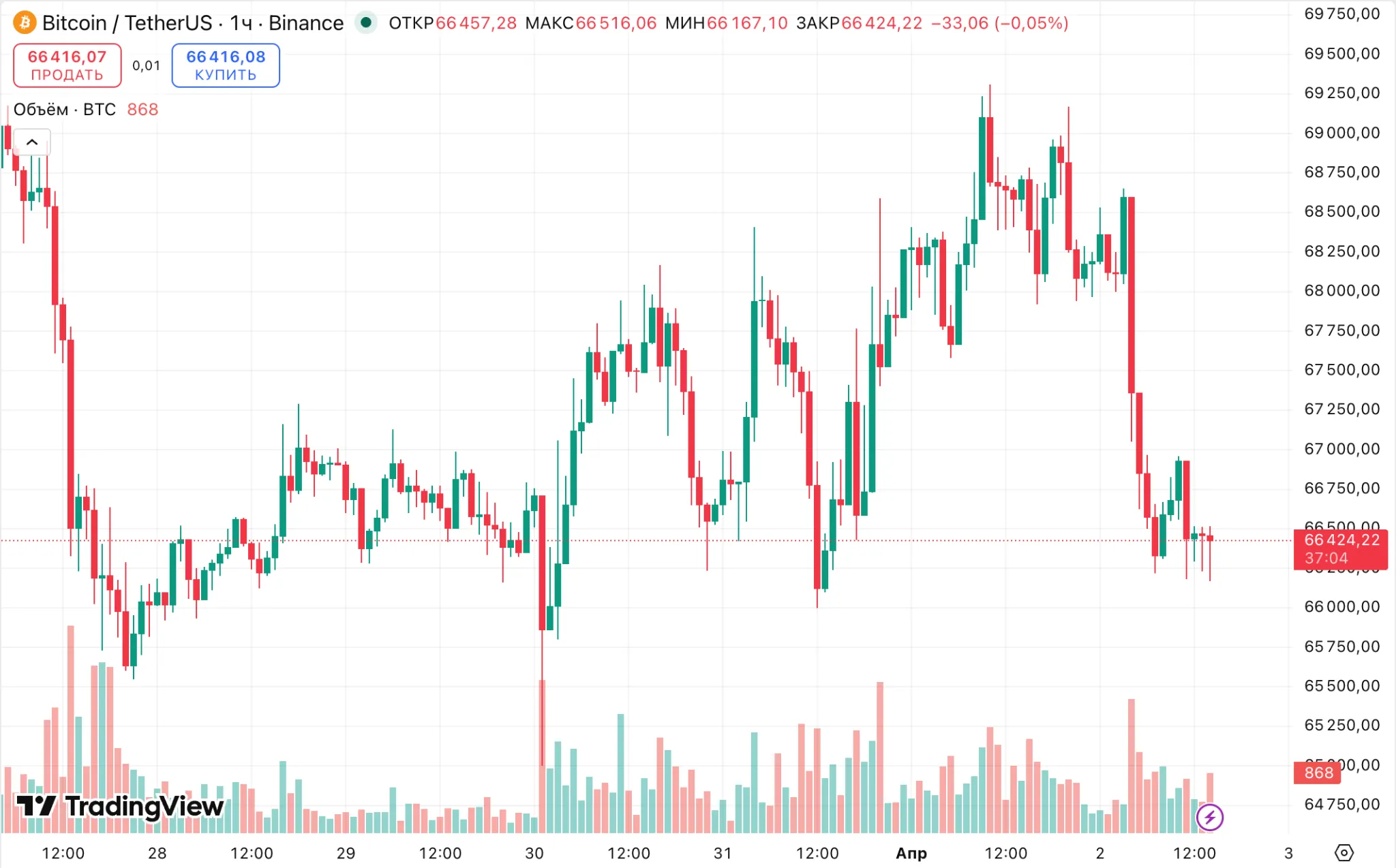
At the time of writing, Bitcoin is trading around $66,400 — roughly 45% below its October peak of $126,000. In March, the asset snapped a five-month losing streak with a 2.2% gain, even as the Iran conflict pushed energy prices higher and stoked inflation fears that weighed on other risk assets.
Geopolitical Whiplash Hammers Crypto Markets
On April 1, signs of a possible end to the Iran conflict emerged when U.S. President Donald Trump claimed Tehran had asked Washington for a ceasefire. Markets rallied on the prospect, but Iranian officials promptly denied the statement.
Hours later, Trump addressed the nation with a starkly different tone, promising to "hit Iran hard." Treasury bonds surged while the S&P 500 shed $500 billion in market capitalization within minutes. The shock wave rippled into digital assets immediately.
«$1B in ETH selling hits derivatives in 1 hour After Trump's speech. While markets around the world were expecting a de-escalation speech from Donald Trump regarding the conflict with Iran, his remarks went in a completely different direction.» — Darkfost (@Darkfost_Coc), original post
Analyst Darkfost reported that Ethereum derivatives saw over $1 billion in sell volume within a single hour, with $968 million occurring on Binance alone. The leading altcoin dropped nearly 5% in 24 hours, sliding toward the $2,000 level.
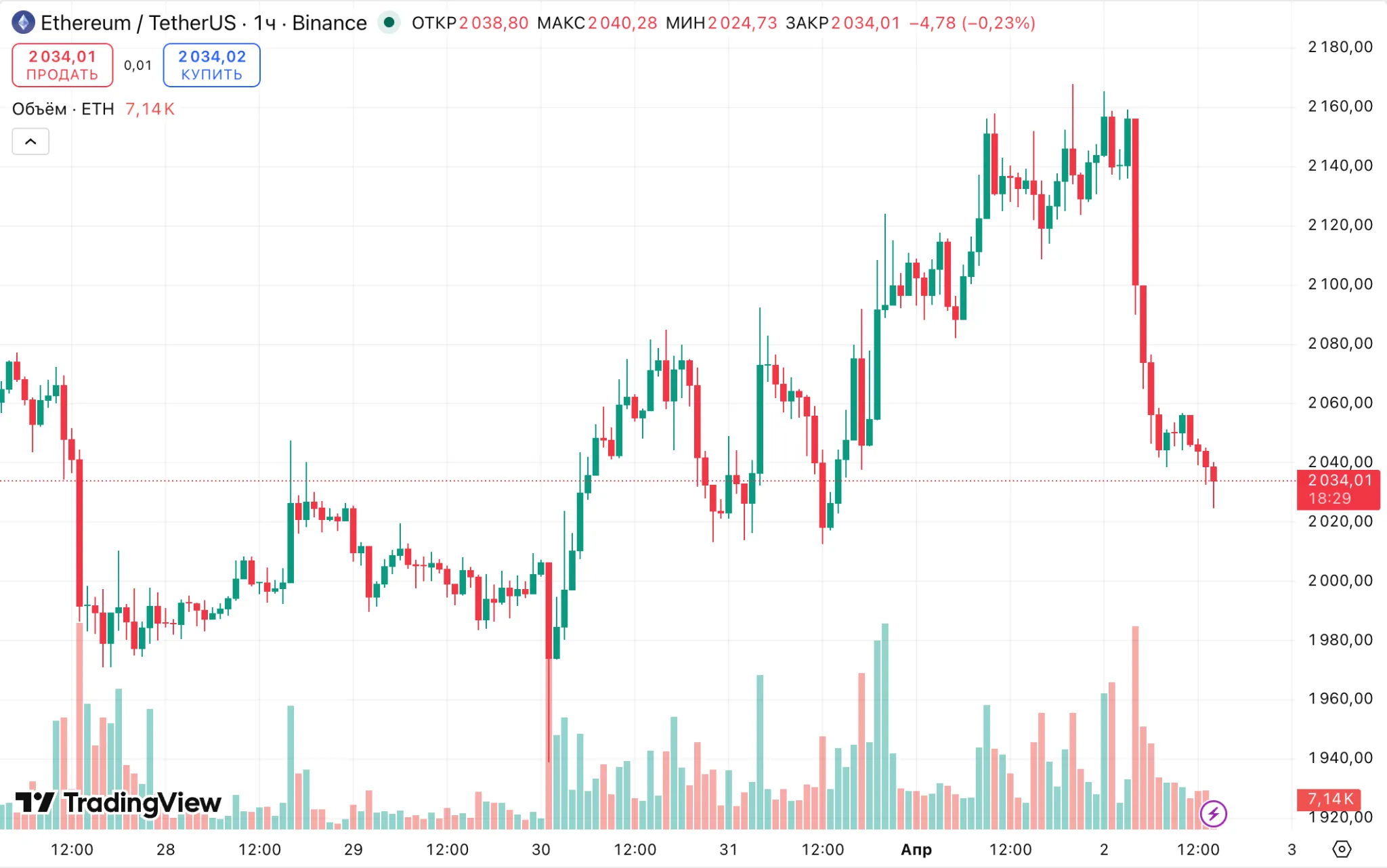
Darkfost noted that financial markets have entered a period of extreme uncertainty and volatility, making price action increasingly erratic and unpredictable.
Exchange Activity Drops to Historical Reset Levels
Amid the selling pressure, exchange activity has contracted to levels that in previous cycles marked structural market resets. CryptoQuant researcher Ignacio Moreno de Vicente observed that the Fund Flow Ratio has compressed to approximately 0.065.
«Exchange Activity Is Back at Reset Levels — Or Losing Relevance? If it breaks materially below prior support, then this time the contraction would look less like a healthy reset and more like a deeper deterioration in market engagement.» — CryptoQuant.com (@cryptoquant_com), original post
This zone has historically served as a market "reset level" during broader bull cycles — in 2017, 2018, 2019, 2020, and 2023. Each time the 30-day Fund Flow Ratio fell to comparable levels, Bitcoin either finished correcting or entered a consolidation phase followed by a rally.
Short-Term Bounce Possible but Conditional
CryptoQuant analysts acknowledge the possibility of a near-term rebound but tie it to improving macro conditions. De-escalation in the Middle East conflict could serve as a positive catalyst, potentially triggering a relief rally. For now, however, the market remains in a distribution phase: structural selling pressure persists and U.S. demand for Bitcoin continues to wane.
Frequently Asked Questions
How much Bitcoin have whales sold recently?
Addresses holding between 1,000 and 10,000 BTC reduced their balances by 188,000 BTC over the past year. In contrast, the same cohort accumulated 200,000 BTC during 2024. CryptoQuant says the distribution trend is structural, not short-term.
Why did crypto crash after Trump's speech on Iran?
Trump initially suggested Iran had requested a ceasefire, boosting markets. Hours later, he promised to 'hit Iran hard,' causing the S&P 500 to lose $500 billion in capitalization within minutes. The shock immediately spread to crypto, with over $1 billion in ETH derivatives sold in one hour.
What is the Fund Flow Ratio signaling for Bitcoin?
The Fund Flow Ratio has compressed to approximately 0.065, a level that historically coincided with structural market resets during bull cycles in 2017, 2018, 2019, 2020, and 2023. Each previous time BTC either finished correcting or consolidated before rallying.
How far is Bitcoin from its all-time high?
Bitcoin is trading around $66,400, roughly 45% below its October peak of $126,000. In March, the asset posted a 2.2% gain, breaking a five-month losing streak.
Could Bitcoin bounce in the short term?
CryptoQuant analysts consider a near-term rebound possible but conditional on improving macro conditions. De-escalation of the Middle East conflict could serve as a positive catalyst, but structural selling pressure from whales and weak U.S. demand currently limit upside.
Read also
Bitcoin Hits $70,000 as Iran Ceasefire Talks Boost Risk Appetite
Bitcoin surged 4% to test the $70,000 level on April 6 amid reports of ceasefire negotiations between the US, Israel, and Iran. The derivatives market, however, sends mixed signals.
Bitcoin Down 2.5% Weekly: Jane Street Accusations & 7 Ethereum Forks
Bitcoin lost ~2.5% over the week amid macro shocks and geopolitical tensions. Jane Street faced market manipulation allegations while Ethereum unveiled an ambitious seven hard fork roadmap through 2029.
TON Wallet Introduces Yield Vaults for BTC, ETH, and USDT Directly in Telegram
TON Wallet has launched yield vaults for BTC, ETH, and USDT directly within Telegram, offering up to 18% APY on stablecoins through partnerships with Morpho, TAC, and Re7.
Bitcoin Rebounds to $70,000 as Leverage Drops and ETF Inflows Continue
BTC recovered above $70,000 on March 10, erasing weekend losses. Spot ETFs attracted $568M in weekly inflows while the estimated leverage ratio on Binance fell sharply from 0.198 to 0.152.
Bitcoin Drops Below $67,000 as Ethereum Foundation Unveils Quantum Defense Roadmap
Bitcoin lost 3% over the week amid Middle East tensions and ETF outflows, miner activity hit historic lows, and Ethereum Foundation outlined a four-hardfork plan for quantum resistance by 2029.
AI Audit Uncovers Critical Liveness Bug in Ethereum's Nethermind Client
Octane Security's AI discovered a high-severity vulnerability in the Nethermind execution client that could have halted block production for 38% of Ethereum mainnet validators. The Ethereum Foundation awarded a maximum $50,000 bounty.