
Spot Bitcoin ETFs Draw $458M in Single Day as Institutional Appetite Returns
U.S. spot Bitcoin ETFs recorded $458.19 million in net inflows on March 2, led by BlackRock's IBIT with $263.19 million. However, Wintermute analysts warn that macro risks continue to weigh on the crypto market.
U.S. spot Bitcoin exchange-traded funds recorded $458.19 million in net inflows on March 2, marking a continuation of renewed institutional demand. BlackRock's IBIT dominated the session with $263.19 million, while seven other products — including ETFs from Fidelity and Grayscale — also ended the day in positive territory.
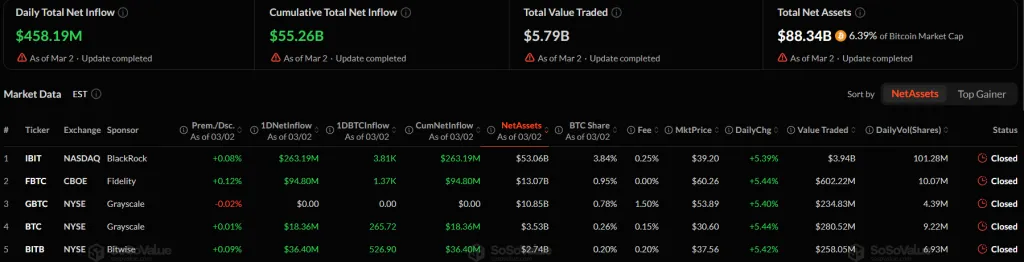
Spot Bitcoin ETF inflows on March 2. Source: SoSoValue
Why This Matters
Throughout January and February, investors withdrew over $1.8 billion from Bitcoin ETFs. The reversal came last week when funds attracted $787 million. The March 2 figures reinforce this turnaround and signal that institutional capital is flowing back into Bitcoin after a two-month drought.
BTC Markets analyst Rachel Lucas highlighted a divergence in market sentiment. Large-scale investors are building positions in anticipation of a global economic recovery, while retail participants remain in a state of "extreme fear." According to Lucas, BlackRock's dominance among the funds points directly to coordinated moves by pension funds and asset managers. Institutional players are using crypto to diversify against macroeconomic instability, buying dips without waiting for perfect market conditions.
Altcoin Funds Join the Rally
The positive momentum extended beyond Bitcoin. Spot Ethereum ETFs attracted $38.69 million on the same day. Solana and XRP funds pulled in $17.4 million and $6.97 million respectively.
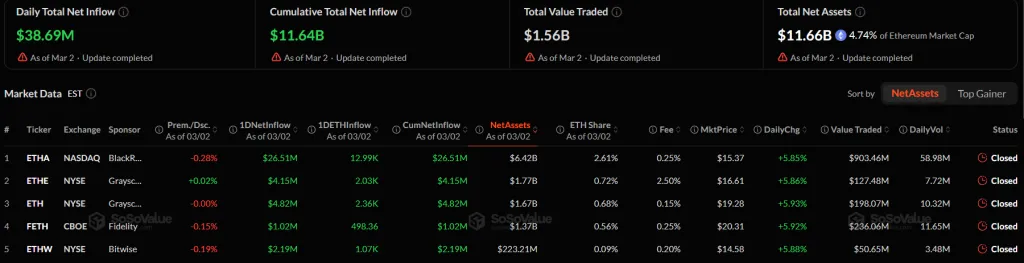
Spot Ethereum ETF inflows. Source: SoSoValue
The crypto market responded with gains. At the time of the original report, Bitcoin was trading at $67,314 (+2% in 24 hours), while Ethereum stood at $1,966 (+1.3%).
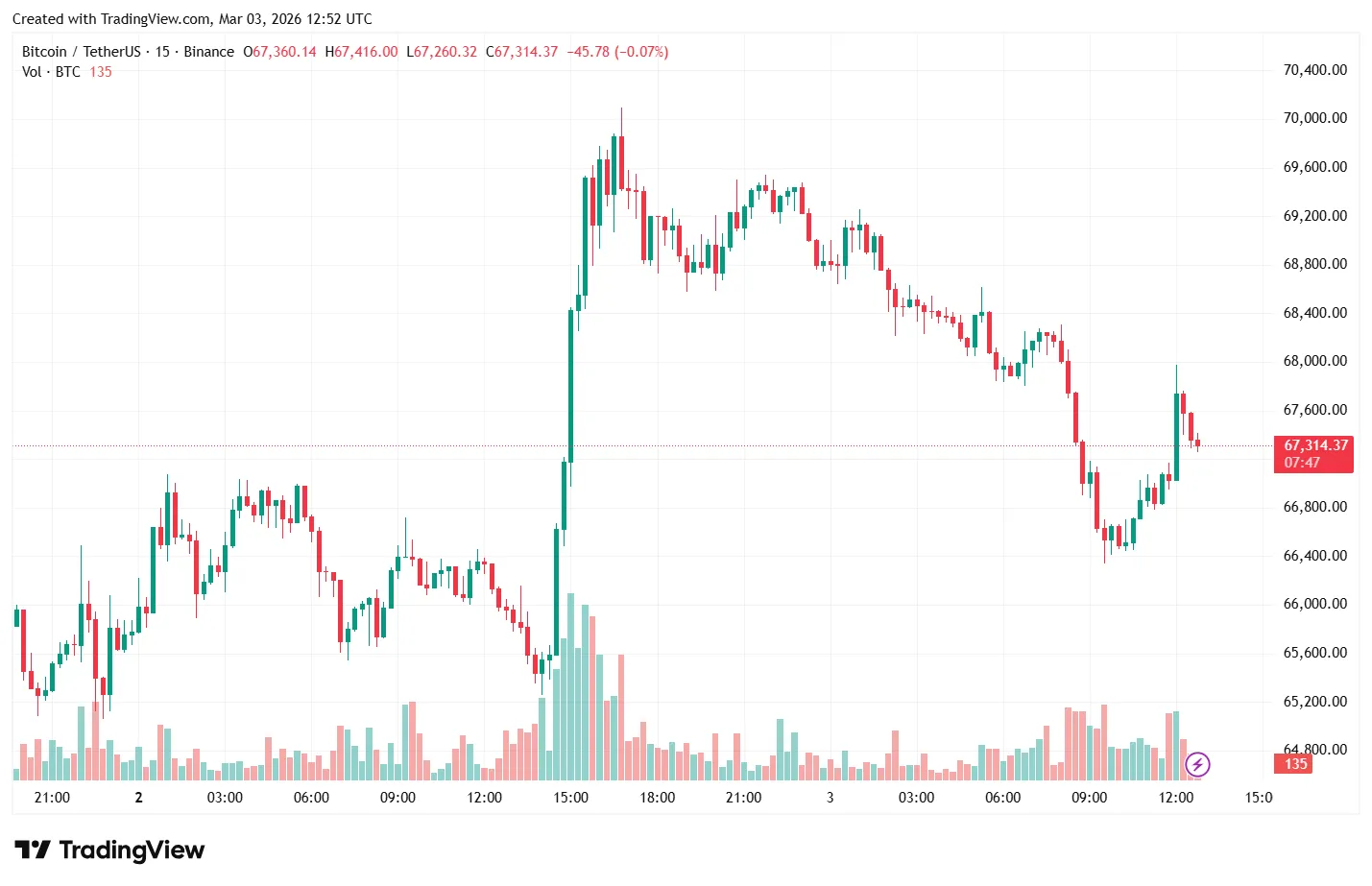
BTC/USDT 15-minute chart on Binance. Source: TradingView
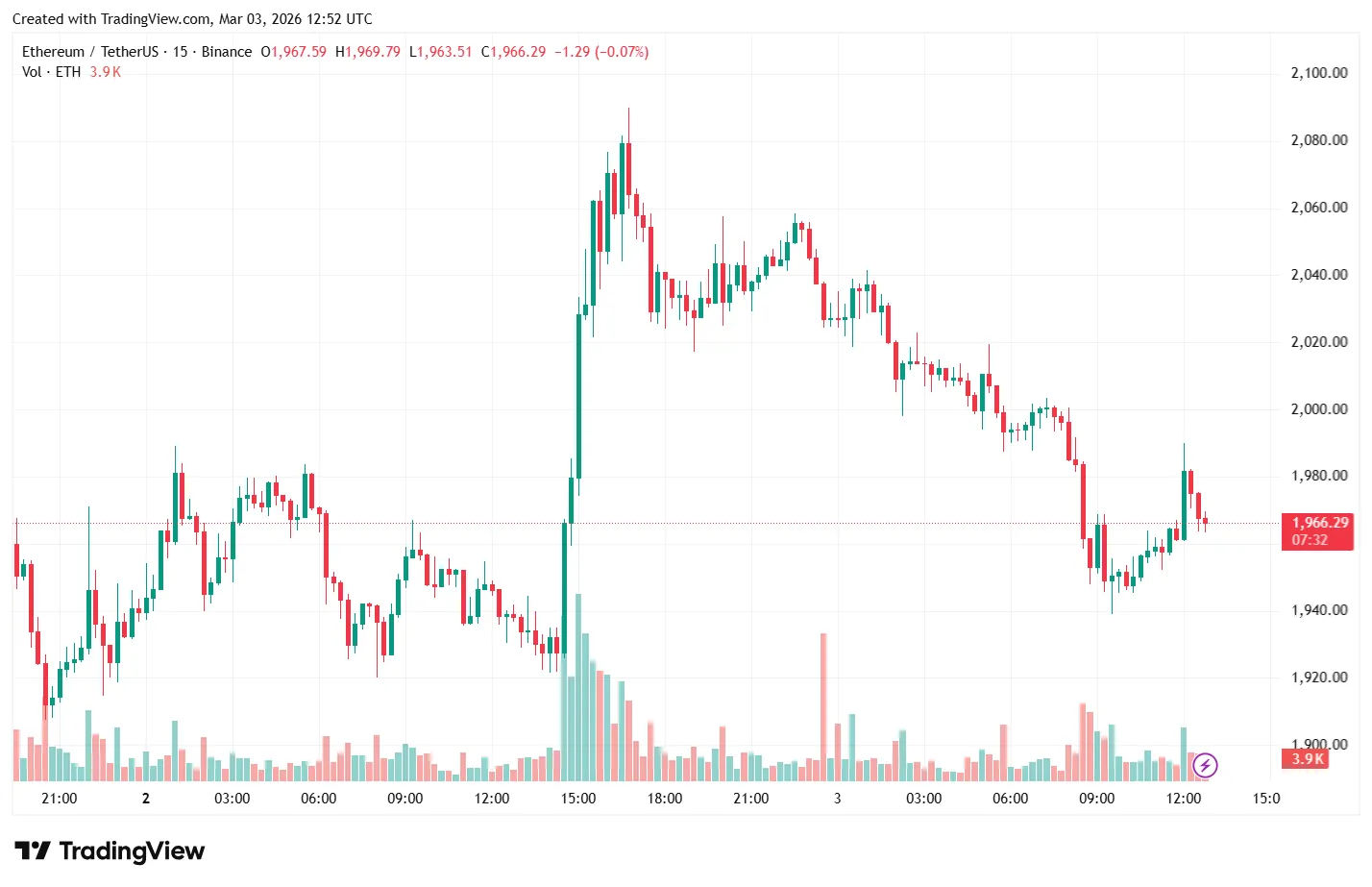
ETH/USDT 15-minute chart on Binance. Source: TradingView
Wintermute Warns of Persistent Fragility
Despite the short-term bounce, analysts at Wintermute cautioned that the crypto market remains vulnerable. Rising energy prices and structural shifts in the global economy are the primary sources of concern.
«Original post» — Wintermute (@wintermute_t), March 3, 2026
Investors continue rotating capital into safe-haven assets and commodities. Oil surged 9%, briefly exceeding $80 per barrel, while gold traded above $5,400. Equity markets opened lower, and the VIX volatility index hit its highest level since the start of 2026.
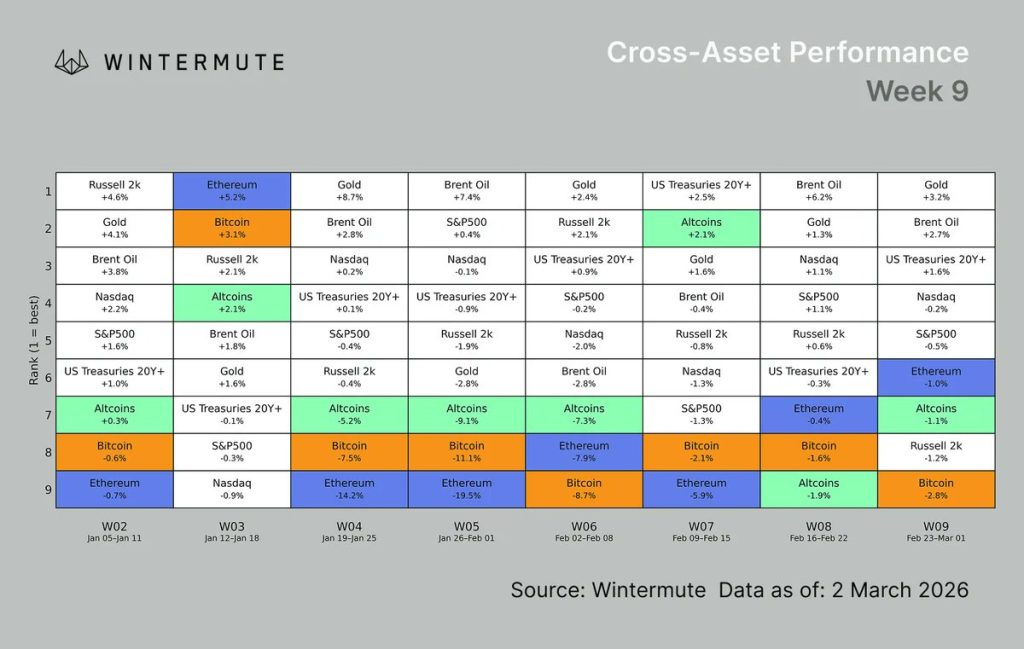
Macro overview by Wintermute
The firm's analysts noted that elevated energy costs set the stage for persistent inflation, which would force the Federal Reserve to delay interest rate cuts. Historically, postponed monetary easing has exerted significant downward pressure on cryptocurrencies.
OTC and Derivatives Markets Signal Caution
Institutional activity on over-the-counter desks remains subdued. Trading volumes have dropped considerably compared to the period when Bitcoin was ranging between $85,000 and $95,000. In the derivatives market, volatility has spiked — the DVOL index climbed from 30–40 to 55, with options pricing in daily Bitcoin price swings of 2.5–3%.
Against this backdrop, a consensus is forming among traders: buying Bitcoin on a pullback to $55,000–59,000 offers the best risk-reward ratio over a 12–18 month horizon.
Wintermute emphasized that global macro factors — not crypto-native catalysts — are driving the market right now. If oil prices continue climbing and the Fed stays on the sidelines, appetite for risk assets will keep shrinking. However, a crisis scenario could accelerate Bitcoin's recognition as "digital gold." Should traditional safe havens become overcrowded, some capital may rotate into Bitcoin. Current trading volumes do not yet support that thesis, but the situation warrants close monitoring.
Frequently Asked Questions
How much did Bitcoin ETFs attract on March 2, 2026?
U.S. spot Bitcoin ETFs recorded net inflows of $458.19 million in a single trading day. BlackRock's IBIT led with $263.19 million, while seven other products also ended positive.
Why are institutions buying Bitcoin ETFs now?
According to BTC Markets analyst Rachel Lucas, large-cap investors are building positions ahead of anticipated global economic recovery. Pension funds and asset managers are using crypto to diversify against macroeconomic instability, buying dips without waiting for ideal conditions.
What risks does Wintermute see for the crypto market?
Wintermute warns that rising energy prices could fuel persistent inflation, forcing the Fed to delay rate cuts. Historically, postponed monetary easing puts significant downward pressure on cryptocurrencies. The VIX hit its 2026 high, and oil briefly surpassed $80 per barrel.
What is the best Bitcoin buy zone according to current market consensus?
Traders are forming a consensus that buying Bitcoin on a dip to the $55,000–59,000 range offers the optimal risk-reward ratio over a 12–18 month timeframe. Current trading volumes, however, do not yet confirm this scenario.
How did Ethereum and altcoin ETFs perform on March 2?
Spot Ethereum ETFs attracted $38.69 million on the same day. Solana and XRP funds saw inflows of $17.4 million and $6.97 million respectively, supporting the broader positive trend.
Read also
Bitcoin Surges Past $71,000 While Spot ETF Holders Face Record Drawdown
BTC climbed above $71,800 on March 4 backed by $1.4 billion in spot ETF inflows over five days. Yet the average cost basis for ETF investors sits around $79,000, leaving them deep in the red.
Weekly Recap: Aave Ecosystem Rescue Mobilizes 100,000 ETH and Quantum Computer Cracks 15-Bit ECC Key
Bitcoin held near $78,000, the DeFi community rallied over 100,000 ETH to help Aave recover from the Kelp hack, and a researcher cracked a 15-bit ECC key on a quantum computer.
Strategy Becomes Most-Shorted US Stock With $6B in Bets
Strategy tops the list of most-shorted large-cap US stocks with $6 billion in short positions, representing 14% of its market cap, as Bitcoin's decline erodes confidence in the company's debt-fueled BTC accumulation model.
Bitcoin Rebounds to $70,000 as Leverage Drops and ETF Inflows Continue
BTC recovered above $70,000 on March 10, erasing weekend losses. Spot ETFs attracted $568M in weekly inflows while the estimated leverage ratio on Binance fell sharply from 0.198 to 0.152.
Wintermute Links Bitcoin Stagnation to Macroeconomic Regime Shift
The market maker explains crypto weakness through structural economic changes: AI sector reassessment and deglobalization. Bitcoin behaves as a high-risk asset alongside tech stocks.
Weekly Recap: 20M BTC Mined, US Treasury Backs Crypto Mixer Privacy Rights
Less than 1 million bitcoins remain to be mined, the US Treasury reversed its stance on crypto mixers to support privacy rights, and Hyperliquid crossed $4 trillion in cumulative trading volume.