Bank of Canada Study: Aave V3 Avoided Bad Debt — But Borrowers Paid the Price
A Bank of Canada study found that Aave V3 recorded zero bad debts over a two-year period, but the protocol's liquidation mechanisms shifted significant financial risks onto borrowers.
Zero Defaults in Over Two Years
The Bank of Canada has published a research paper examining the lending mechanics of DeFi protocol Aave V3. The core finding: between January 27, 2023, and May 6, 2025, the platform recorded zero instances of bad debt. This outcome stems from Aave's overcollateralization model and automated liquidation mechanism — smart contracts close positions before collateral values fall below outstanding loan amounts, effectively shielding lenders from losses.
Why This Matters
A central bank from a G7 nation conducting in-depth analysis of DeFi lending protocols marks a notable shift in institutional and regulatory attention toward decentralized finance. The researchers explicitly acknowledged that intermediary-free lending is technically and operationally viable. At the same time, the study's identification of concentrated risks, cascading liquidations, and regulatory gaps establishes a clear agenda for ongoing discussions about DeFi's future within the broader financial system.
Borrowers Bear the Burden
The flip side of robust lender protection is substantial losses for those who borrow. Bank of Canada analysts found that during sharp market downturns, liquidations execute rapidly and frequently at unfavorable prices. Liquidation fees alone average 5–10% of the closed position's value. When factoring in missed gains from subsequent price recoveries, actual borrower losses reach 10–30%.
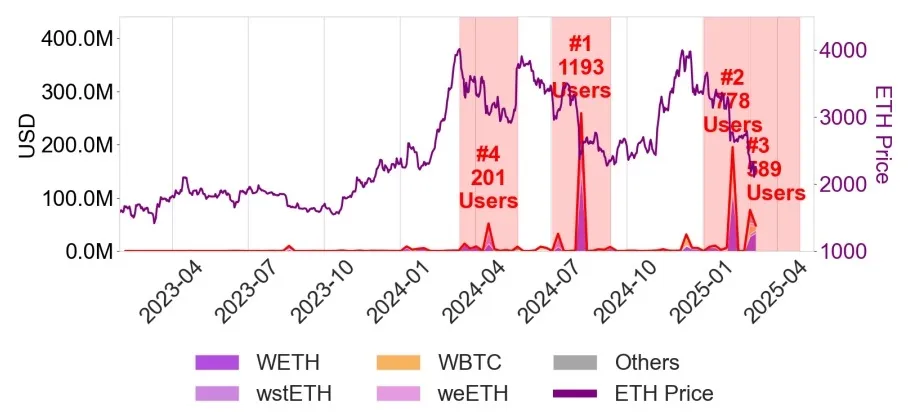
Liquidation events are not evenly distributed — they occur in waves that amplify downward market pressure. Roughly 90% of all liquidated positions involve just four tokens, all of which are "wrapped" versions of Ethereum and Bitcoin. This concentration creates heavy dependence on the price trajectories of the two largest crypto assets.
Recursive Borrowing as a Vulnerability
An additional systemic risk factor identified in the study is recursive borrowing — a strategy where users repeatedly pledge borrowed assets as collateral to amplify their loan exposure. According to the research, this form of leverage accounted for over 20% of total borrowing volume in 2024. The problem: recursive positions are extremely sensitive to price declines, accelerating cascading liquidations and magnifying borrower losses during market shocks.
DeFi Lending: Viable but Limited
Bank of Canada researchers concluded that decentralized lending is technically viable — smart contracts effectively manage liquidity distribution and maintain system stability without traditional intermediaries.
However, the study highlighted several critical limitations:
- Fragmented liquidity pools result in underutilized capital, reducing overall protocol efficiency.
- The overcollateralization requirement makes borrowing expensive and limits DeFi's applicability beyond crypto-native use cases.
- The system does not eliminate risk — it redistributes it, primarily onto borrowers.
- The absence of clear regulatory frameworks and traditional lending safeguards such as capital requirements, leverage limits, and liquidity thresholds remains a fundamental concern.
For context, Aave's development team launched the protocol's fourth version (V4) on the Ethereum mainnet in March 2026.
Frequently Asked Questions
Has Aave V3 ever had bad debt?
According to Bank of Canada research, Aave V3 recorded zero instances of bad debt between January 27, 2023, and May 6, 2025. The protocol's overcollateralization model and automated liquidation mechanisms prevented any loan defaults during this period.
How much do borrowers lose during Aave liquidations?
Bank of Canada analysts found that liquidation fees average 5–10% of the liquidated position's value. When accounting for missed gains from subsequent price recoveries, total borrower losses can reach 10–30%.
What is recursive borrowing in DeFi?
Recursive borrowing is a strategy where users repeatedly use borrowed assets as collateral to increase their total loan exposure. On Aave V3, this form of leverage accounted for over 20% of total borrowing volume in 2024, but it significantly amplifies vulnerability to cascading liquidations.
Which tokens are most frequently liquidated on Aave V3?
Approximately 90% of liquidated positions on Aave V3 involve just four tokens — wrapped versions of Ethereum and Bitcoin. This concentration ties the protocol's stability heavily to the price movements of these two major crypto assets.
Does the Bank of Canada consider DeFi lending viable?
The Bank of Canada acknowledged that lending without traditional intermediaries is technically and operationally viable. However, the researchers identified key limitations including capital underutilization, expensive overcollateralized loans, and the lack of regulatory frameworks.
Read also
Aave Becomes First DeFi Protocol to Surpass $1 Trillion in Cumulative Loans
Lending protocol Aave has reached a historic milestone: its all-time loan volume has exceeded $1 trillion, a first for any DeFi project. The achievement comes amid governance tensions within the DAO.
Weekly Recap: Aave Ecosystem Rescue Mobilizes 100,000 ETH and Quantum Computer Cracks 15-Bit ECC Key
Bitcoin held near $78,000, the DeFi community rallied over 100,000 ETH to help Aave recover from the Kelp hack, and a researcher cracked a 15-bit ECC key on a quantum computer.
Oil Price Surge Triggers $17.18M Liquidation of Hyperliquid Whale
A sharp rally in Brent crude oil futures on Hyperliquid triggered $46.6 million in forced liquidations. The largest single position wipeout cost one trader $17.18 million.
TON Wallet Introduces Yield Vaults for BTC, ETH, and USDT Directly in Telegram
TON Wallet has launched yield vaults for BTC, ETH, and USDT directly within Telegram, offering up to 18% APY on stablecoins through partnerships with Morpho, TAC, and Re7.
Stablecoin Transfer Volume Hits $10.5 Trillion in January — Highest Since April 2022
January stablecoin transaction volume surpassed $10.5 trillion, marking the highest monthly figure since April 2022. USDC led transfers while USDT maintained market cap dominance.
Top 10 Dollar Stablecoins in 2026: From Dominant Players to Exit Candidates
The stablecoin market has surpassed $311 billion in total capitalization. Here's a breakdown of the ten largest USD-pegged stablecoins — from undisputed leaders Tether and Circle to ambitious newcomers.