
Australia Launches Trials of Synchron's Brain Implant for Smartphone Control via Thought
Clinical trials of Synchron's upgraded Stentrode brain-computer interface have begun in Melbourne, enabling ALS patients to control smartphones using only their thoughts.
Synchron Launches Clinical Trials in Melbourne
Clinical testing of an upgraded version of Synchron's Stentrode brain-computer interface (BCI) has begun in Melbourne, Australia. The device is designed to allow patients with amyotrophic lateral sclerosis (ALS) to control smartphones and computers using only their thoughts, as reported by the Herald Sun.
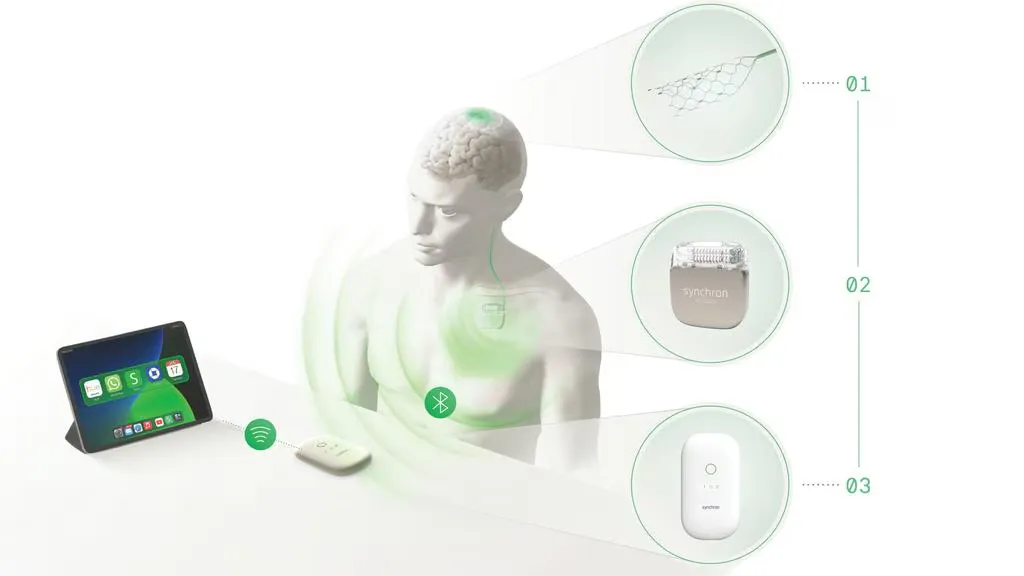
Surgical procedures are scheduled to begin in April, marking what the Herald Sun described as the "world's first" trial of Synchron's newer, more advanced implant.
Why This Matters
Synchron remains the only company globally to have successfully implanted a BCI through blood vessels during clinical trials. This approach is dramatically less invasive than open brain surgery, potentially paving the way for broader adoption of neural interfaces among people with severe motor impairments.
Peter Mitchell, one of the lead researchers, said that in 20–30 years of surgical practice, he has never seen anything comparable. He described converting neural impulses into real-world actions through thought alone as the most futuristic concept in neuroscience.
How the Implant Works: The FOCUS-AU Study
The clinical trial program, dubbed FOCUS-AU, aims to recruit 10 ALS patients. Surgeries will take place at three hospitals: Royal Melbourne Hospital, Royal Prince Alfred Hospital, and Royal Liverpool University Hospital. Future plans include expanding the program to patients with other conditions.
The implant consists of three components:
- Tiny electrodes that capture brain activity;
- A small device placed near the collarbone;
- A thin cable connecting the two.
Synchron CEO Tom Oxley explained that the electrodes "listen to brain activity like an antenna" and are threaded through the neck into the brain via a blood vessel — a procedure similar to placing a stent using a catheter. The electrodes are positioned in a vessel within the motor cortex, the brain region responsible for controlling body movement.
Professor Mitchell, who performed the first such human operation during trials in 2020, noted that the electrodes must be placed "within a few millimeters" of the target location. Surgeons navigate through veins, turning left and right until they reach the correct vessel.
According to Oxley, when a paralyzed patient mentally attempts to move their arm, the system detects and translates that signal into a specific action. Initially this requires conscious effort, but over time the process becomes "more natural." The updated model eliminates the need for an external module near the skin and can recognize up to 16 distinct commands.
Oxley emphasized that the technology won't solve issues like personal hygiene or physical mobility, but digital communication can significantly boost independence for people with paralysis or limited movement.
BCI Competition: Neuralink and China's Growing Push
Elon Musk's Neuralink is one of the leading players in the BCI field. In August 2024, the company's second patient, Alex, learned to play video games and use 3D design software within weeks of his operation. After connecting to a computer, he began controlling the cursor in under five minutes, and within hours had broken the world record for BCI-assisted mouse speed and accuracy, according to Neuralink.
In September 2024, Neuralink revealed plans to test Blindsight, a device designed to restore vision. Musk claimed it would allow sight even for those who had lost both eyes and the optic nerve.
China's state-backed BCI startup NeuCyber Neurotech has acknowledged a roughly three-year gap behind Neuralink. Its flagship product, Beinao-2 — an invasive implant with flexible electrodes fully integrated into the brain — is currently undergoing large-scale animal testing. Rotating CEO Li Yuan stated that Neuralink is the benchmark for Beinao-2, noting the company already has more than 20 patients using its technology.
Neuralink's edge lies in its surgical robot, capable of implanting hundreds of electrodes into the brain within minutes for its N1 chip.
In mid-March, China's regulator approved the country's first commercially available neuroimplant, developed by Shanghai-based Neuracle Technology. Beijing has designated BCI as a key strategic industry in its latest five-year plan, alongside quantum computing, artificial intelligence, and nuclear fusion.
Frequently Asked Questions
What is the Synchron Stentrode brain implant?
Stentrode is a brain-computer interface (BCI) developed by Synchron that is implanted through blood vessels rather than open brain surgery. It captures motor cortex activity and translates thought-based commands into actions on phones or computers. Synchron is the only company to have successfully implanted a BCI via blood vessels in clinical trials.
How does mind-controlled smartphone technology work?
Tiny electrodes placed in a blood vessel within the motor cortex detect brain activity when a patient mentally attempts movement. The system translates these neural signals into specific device actions such as moving a cursor. The updated Synchron model can recognize up to 16 distinct commands and becomes more natural to use over time.
What is the difference between Synchron and Neuralink brain implants?
Synchron implants its BCI through blood vessels using a catheter-like procedure, making it less invasive than Neuralink's approach. Neuralink uses a surgical robot to insert hundreds of electrodes directly into brain tissue. Neuralink has over 20 patients using its technology, while Synchron's new FOCUS-AU trial aims to recruit 10 ALS patients.
When do Synchron brain implant surgeries start in Australia?
Surgical operations are scheduled to begin in April as part of the FOCUS-AU study. The procedures will be performed at Royal Melbourne Hospital, Royal Prince Alfred Hospital, and Royal Liverpool University Hospital. Initially, 10 ALS patients will participate, with plans to expand to other conditions.
How far behind is China in brain-computer interface development?
NeuCyber Neurotech, China's leading state-backed BCI startup, has acknowledged being approximately three years behind Neuralink. Its Beinao-2 implant is still undergoing animal testing while Neuralink already has over 20 human patients. However, China approved its first commercial neuroimplant from Neuracle Technology in mid-March 2026.
Read also
China Approaches Brain-Computer Interface Breakthrough: Key Takeaways From ZGC Forum 2026
At Beijing's ZGC Forum, developers showcased cutting-edge brain-computer interface products including Beinao-1 and Beinao-2 systems. Experts predict mass BCI adoption in China within 3–5 years.
Science Corporation Prepares Human Trials for Biohybrid Brain-Computer Chip
Science Corporation, founded by former Neuralink president Max Hodak, has recruited a Yale neurosurgeon to prepare first-in-human trials of a biohybrid brain-computer interface that merges lab-grown neurons with electronics.
Chinese Scientists Develop Neuro-Helmet for Mind-Controlled Robot Dog
Researchers at Xi'an Jiaotong University have built a non-invasive brain-computer interface that lets users control a robot dog with their thoughts, achieving over 95% command recognition accuracy.
Brain Implant Lets Paralyzed Man Type 80% Faster Than Average
A brain-computer interface decoding imagined finger movements enabled a paralyzed ALS patient to type at 110 characters per minute — 80% faster than the average healthy person.
Samsung Chip Division Profit Surges 48x Amid AI Infrastructure Boom
Samsung's semiconductor unit posted record operating profit in Q1, surging 48-fold and far exceeding analyst estimates as AI infrastructure spending drives unprecedented demand for memory chips.
Alphabet Posts $94.7B Q1 Revenue Beating Estimates Amid AI-Driven Growth
Google's parent company Alphabet reported Q1 2026 revenue of $94.7 billion, surpassing Wall Street forecasts, with its cloud division and AI integration fueling a strong beat across all metrics.