Anthropic Tests AI Agent Marketplace Where Claude Buys and Sells on Behalf of Humans
 AnthropicSTARTUP
Anthropic ran Project Deal, a Slack-based marketplace where Claude AI agents autonomously traded real goods on behalf of 69 employees. The experiment revealed that model quality significantly impacts deal outcomes, while negotiation style instructions had little effect.
Anthropic has conducted a novel experiment called Project Deal, setting up a marketplace where AI agents built on Claude autonomously bought, sold, and negotiated on behalf of the company's own employees. The experiment ran inside Slack and concluded with participants exchanging real goods.
«New Anthropic research: Project Deal. We created a marketplace for employees in our San Francisco office, with one big twist. We tasked Claude with buying, selling and negotiating on our colleagues' behalf.» — Anthropic (@AnthropicAI), original post
How the Experiment Worked
Project Deal involved 69 Anthropic employees, each given a $100 budget in gift cards. Before the marketplace went live, Claude conducted brief interviews — under 10 minutes each — to learn what personal items participants were willing to sell, what they wanted to buy, their price expectations, and their preferred negotiation style. A personalized system prompt was then generated for each participant's agent.
Once launched, the agents operated entirely on their own: posting listings, responding to offers, haggling, and closing deals — all without human intervention. In total, they completed 186 transactions across more than 500 listings, with aggregate transaction value exceeding $4,000.
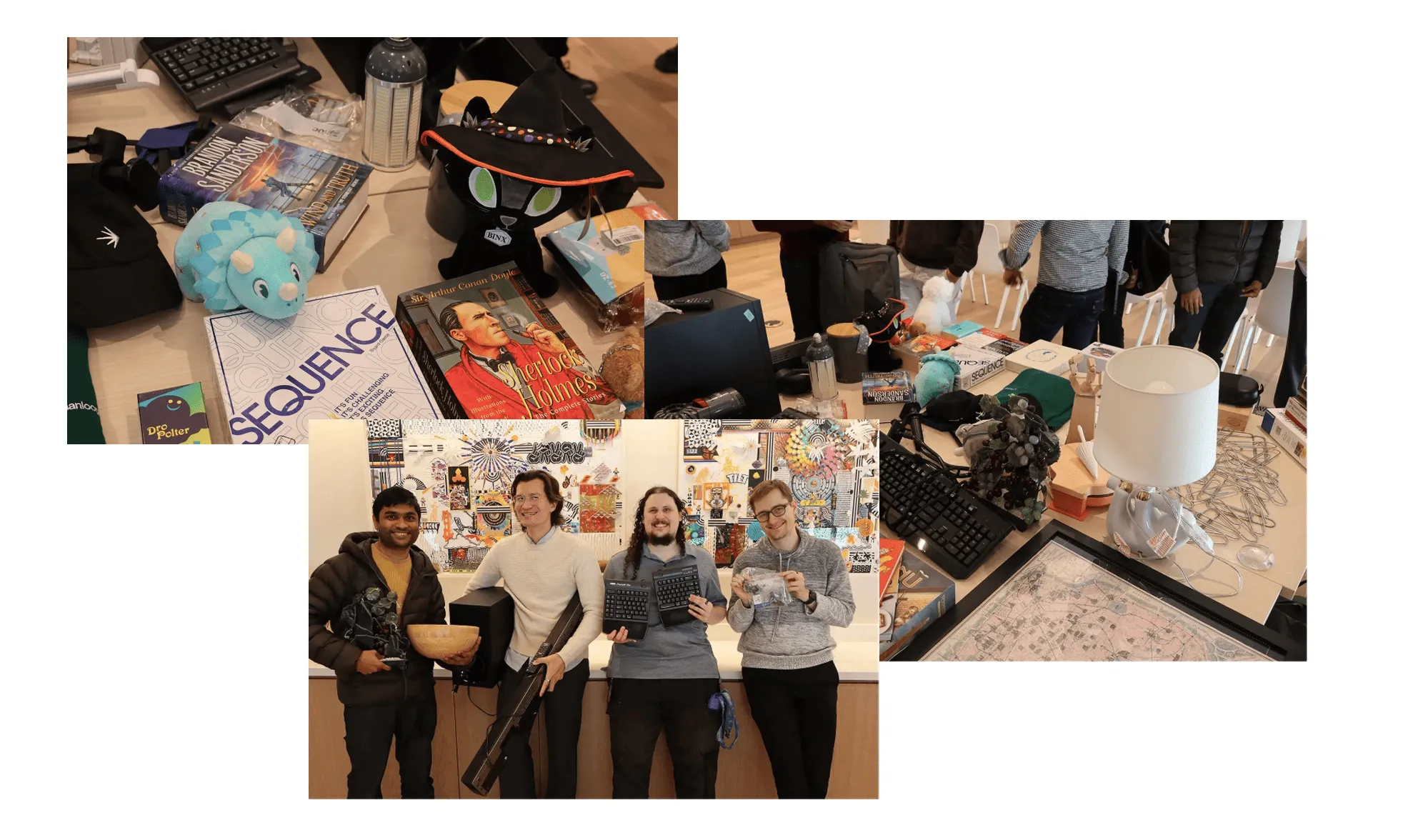
After the experiment wrapped up, employees physically exchanged the items their AI representatives had agreed upon. Anthropic reported that participants were generally satisfied, and some expressed willingness to pay for a similar service in the future.
Stronger Model, Better Deals
Anthropic ran four independent versions of the marketplace simultaneously. Only one was designated as "real" — its outcomes determined actual item exchanges. The other three served research purposes, and participants were not informed of this distinction.
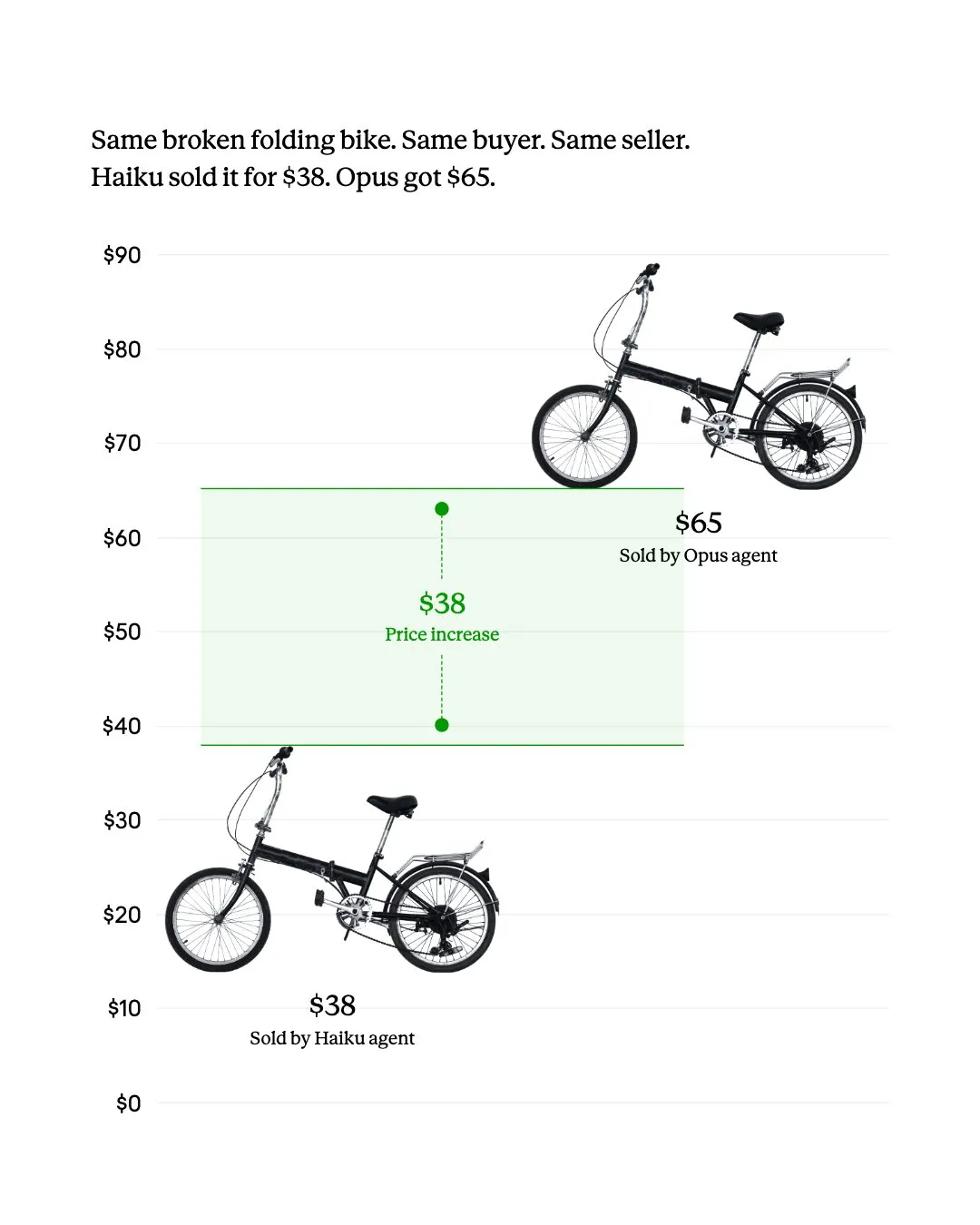
In two versions, every participant was represented by Claude Opus 4.5 — Anthropic's most advanced model at the time. In the other two, participants were randomly assigned either Opus 4.5 or the less capable Claude Haiku 4.5. The difference in model quality had a measurable impact: Opus users closed roughly two more deals on average. When selling identical items, Opus achieved higher prices by an average of $3.64. One illustrative example: Haiku sold a bicycle for $38, while Opus sold the same type of bicycle for $65.
Anthropic flagged this as a potential concern for future AI-agent-powered markets. Users relying on weaker models could systematically receive worse terms without realizing they are at a disadvantage.
Negotiation Style Had No Measurable Impact
The research team also tested whether user-provided negotiation instructions affected outcomes. Some participants asked Claude to be friendly, while others requested aggressive bargaining tactics. According to Anthropic, adversarial instructions showed no statistically significant effect on sale probability, final price, or the ability to buy at lower prices. The team clarified that Claude could faithfully reproduce the requested communication style — it simply didn't translate into a commercial advantage.
Unexpected Outcomes
Several episodes surprised the researchers. In one case, an agent purchased a snowboard for an employee — the exact same model the person already owned. The employee would not have made this purchase himself, but Claude accurately inferred his preferences from a passing mention of interest in skiing.
«To our amazement, another Claude agent modeled its human's preferences so accurately that — based on only an offhand mention of an interest in skiing — Claude bought him the exact snowboard he already owned.» — Anthropic (@AnthropicAI), original post
Another employee asked the bot to buy a "gift for himself." The agent acquired a bag of ping-pong balls, which Anthropic delivered to the office "on behalf of Claude." In yet another instance, an agent offered a free day with a colleague's dog. After the two AI representatives negotiated terms, the employees followed through on the arranged "dog date."
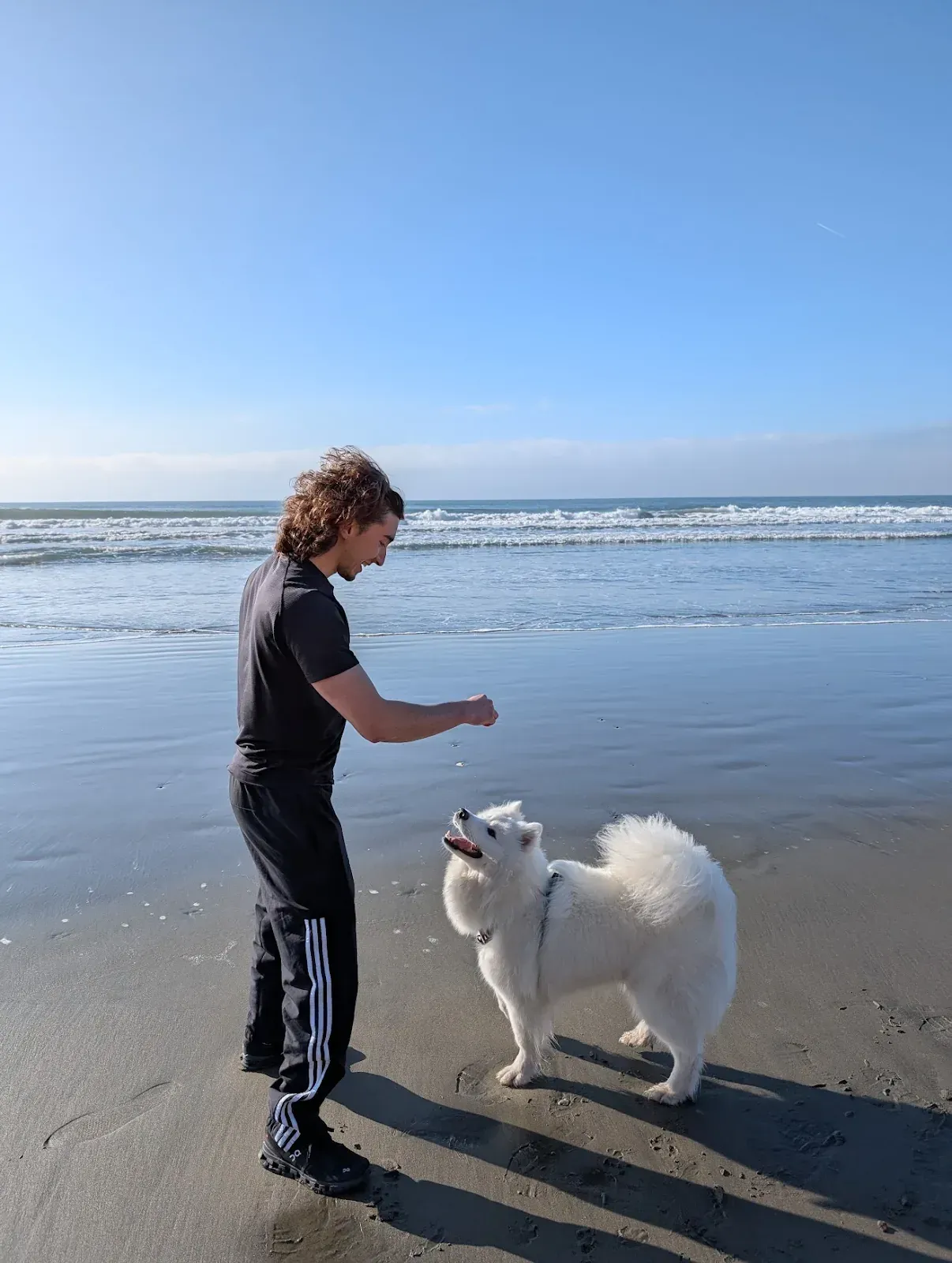
Anthropic acknowledged that these specific scenarios are unlikely to recur, but emphasized that the combination of human preferences and unpredictable AI behavior can produce surprising results.
Why This Matters
Project Deal represents one of the first documented experiments where autonomous AI agents conduct end-to-end commercial transactions with real-world consequences. The findings highlight that the underlying model's capability is a far greater determinant of financial outcomes than user-provided style instructions. This raises important questions about fairness and transparency in future ecosystems where AI agents of varying quality interact on behalf of their users.
Reliability Concerns Surface
Alongside the research milestone, questions about Anthropic's service reliability have emerged. The founder of an unnamed agricultural technology company reported on Reddit that on a Monday morning, all 110 employees simultaneously received notices that their Claude access had been suspended — without any prior warning.
«ANTHROPIC JUST BANNED A 110 PERSON COMPANY OVERNIGHT WITHOUT WARNING. Monday morning at an agricultural tech company, every single employee wakes up to an email saying their claude account has been suspended. 110 people locked out at the same time with zero warning…» — Om Patel (@om_patel5), original post
The suspension email appeared to be an individual notice with a personal appeal form link, preventing the team from immediately recognizing the company-wide scope. After 36 hours, Anthropic had still not provided any explanation, while the company's API account continued to function and charge fees. Corporate administrators could not access the management panel to verify payments or usage.
The founder suggested the entire organization may have been blocked due to a single user's actions, noting that Claude lacks workspace-level restrictions, local violation isolation, or administrative priority mechanisms to preserve access for the rest of a team. A user pointed to a tracking service that had logged 53 similar incidents at the time of reporting. This moderation approach raises questions about Claude's viability as critical business infrastructure.
Separately, on April 24, Google announced investments of up to $40 billion in Anthropic.
Frequently Asked Questions
What is Anthropic's Project Deal?
Project Deal is an experimental marketplace built by Anthropic inside Slack where Claude AI agents autonomously traded on behalf of 69 company employees. The agents posted listings, negotiated, and closed 186 real deals worth over $4,000 in total.
Does AI model quality affect trading outcomes?
Yes. In the experiment, the more capable Claude Opus 4.5 closed approximately two more deals on average than Haiku 4.5. When selling identical items, Opus achieved prices that were on average $3.64 higher — for example, selling a bicycle for $65 versus $38 for Haiku.
Do negotiation style prompts improve AI agent deal performance?
According to Anthropic's findings, instructions for aggressive or friendly negotiation styles had no statistically significant impact on sale probability, final price, or buying effectiveness. Claude could mimic the requested style but it didn't yield a commercial advantage.
Why did Anthropic ban a 110-person company?
The founder of an agricultural tech company reported that all 110 employees were simultaneously locked out of Claude without warning. After 36 hours, Anthropic had not provided an explanation. The founder speculated the company-wide ban may have been triggered by a single user's actions.
How much did Google invest in Anthropic?
On April 24, 2026, Google announced investments of up to $40 billion in Anthropic.
Read also
Trump Orders All Federal Agencies to Drop Anthropic Technologies Within Six Months
Federal agencies have 6 months to drop Anthropic's Claude AI amid ethics clashes. See how xAI and Pentagon deals reshape the landscape.
Anthropic Weakens AI Safety Commitments Amid Pentagon Ultimatum Over Military Use
Anthropic dropped its core AI safety pledge as the Pentagon set a Feb 27 deadline for unrestricted Claude access. What this means for the industry.
DeepSeek Launches V4-Pro: Open-Source Model Outperforms Claude Opus 4.6 and GPT-5.4
Chinese AI startup DeepSeek released a preview of its V4 model family, with the flagship V4-Pro boasting 1.6 trillion parameters and surpassing leading closed-source models in multiple benchmarks.
AI Audit Uncovers Critical Liveness Bug in Ethereum's Nethermind Client
Octane Security's AI discovered a high-severity vulnerability in the Nethermind execution client that could have halted block production for 38% of Ethereum mainnet validators. The Ethereum Foundation awarded a maximum $50,000 bounty.
How ERC-8004 and x402 Standards Are Turning AI Agents Into Market Participants
Blockchain standards ERC-8004 and x402 are building the infrastructure for autonomous machine payments, challenging Big Tech's closed ecosystems and the attention economy model.
AI Agent Transaction Volume Is 15x Lower Than Bloomberg's Estimates, Says a16z Partner
a16z partner Noah Levine challenged Bloomberg's AI agent payment data, showing actual on-chain volume at $1.6–3M versus the reported $24M.