Aave V4 to Boost Stablecoin Yields by 25% Through Idle Liquidity Reinvestment
Aave's upcoming V4 upgrade introduces a reinvestment module that automatically deploys idle liquidity into DAO-approved strategies. The feature could raise average stablecoin yields from 4% to 4.9%.
Aave V4's Reinvestment Module
The Aave team has unveiled a reinvestment module set to become a core component of its V4 upgrade. The mechanism will automatically channel idle protocol funds into low-risk yield strategies approved by the DAO governance system. According to the development team's estimates, this could raise the average stablecoin yield from 4% to 4.9% — a roughly 25% improvement.
"We've published a blog post about Aave V4's Reinvestment Module. It covers how V4 deploys idle protocol liquidity into DAO-approved yield strategies, what that means for yield, and more." — Aave (@aave), original post
Why It Matters
Of approximately $20 billion in stablecoin deposits on Aave, around $6 billion sits effectively dormant. These reserves exist to guarantee instant liquidity for withdrawals but generate minimal returns for depositors. The reinvestment module addresses this inefficiency without imposing restrictions — user funds remain fully liquid with no lockups or additional constraints.
For the largest lending protocol in DeFi, putting $6 billion of idle capital to productive use could become a significant competitive edge, particularly when it comes to attracting institutional participants.
How the Mechanism Works
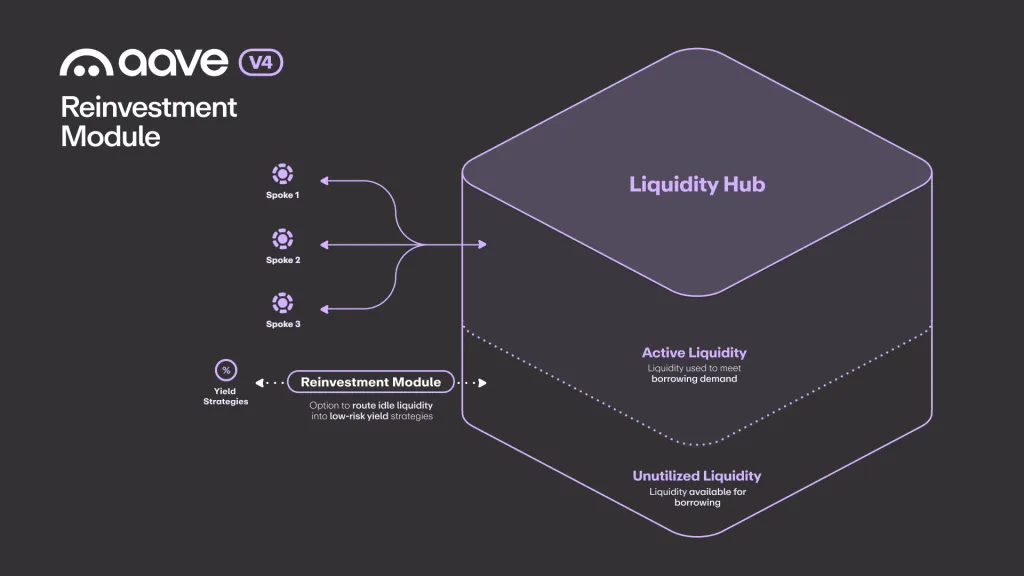
V4 introduces a new architectural model where a central hub aggregates all deposited assets and distributes them across multiple credit markets, each with its own risk parameters. The reinvestment module monitors excess reserves and deploys them into community-approved strategies — short-term treasury instruments, money markets, or delta-neutral positions.
When borrowing demand picks up, capital is automatically withdrawn from external strategies and made available for lending again. Configuration depends on the specific asset and its risk profile: stablecoins, Ethereum, and other tokens each have individualized strategies, limits, and conditions.
The developers noted that the module makes Aave more attractive to institutional clients and protocol integrators by improving both yield and flexibility. New strategy types can be added through governance without requiring a protocol upgrade.
According to the team's calculations, if idle liquidity were deployed into instruments yielding at SOFR levels, the average stablecoin rate would rise from 4% to 4.9%.
Launch Timeline and Internal Shifts
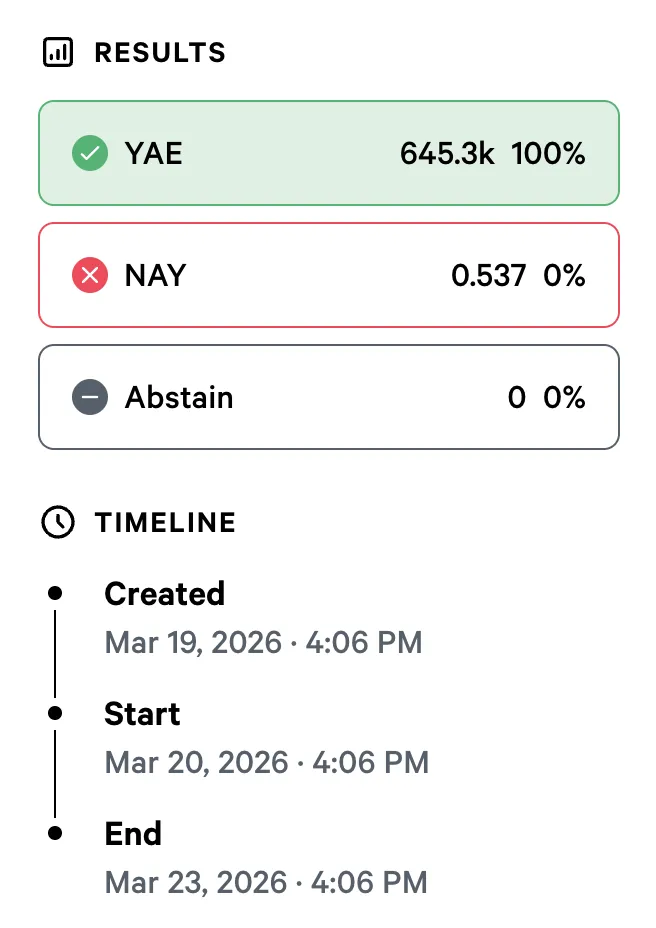
Aave positions V4 as a more flexible base layer for on-chain capital management. On March 23, the community voted unanimously to begin discussions on deploying the upgrade to the Ethereum mainnet. A full launch is expected before the end of 2026.
Alongside V4 preparations, the protocol's ecosystem is experiencing personnel changes. Several long-standing contributors, including BGD Labs and Aave Chan Initiative, are planning to leave the project. These departures coincide with governance disputes that have been ongoing since late 2025.
In February 2026, cumulative borrowing volume on Aave surpassed a record $1 trillion, underscoring growing demand for the protocol's lending services and the significance of its upcoming architectural improvements.
Frequently Asked Questions
How does Aave V4 reinvestment module increase stablecoin yields?
The module automatically deploys idle liquidity — approximately $6 billion out of $20 billion in stablecoin deposits — into low-risk, DAO-approved strategies such as short-term treasuries, money markets, and delta-neutral positions. Developers estimate this will raise average stablecoin yields from 4% to 4.9%.
When will Aave V4 launch?
On March 23, 2026, the Aave community unanimously voted to begin discussions on deploying V4 to Ethereum mainnet. A full launch is expected before the end of 2026.
Are funds locked in Aave V4?
No, depositor funds remain fully liquid with no lockups or additional restrictions. The reinvestment module works in the background, automatically withdrawing capital from external strategies when borrowing demand increases.
Why are BGD Labs and Aave Chan Initiative leaving Aave?
Several long-standing contributors including BGD Labs and Aave Chan Initiative are planning to depart from the project. These exits coincide with governance disputes that have been ongoing since late 2025.
What is Aave total borrowing volume in 2026?
In February 2026, cumulative borrowing volume on Aave surpassed a record $1 trillion, highlighting strong and growing demand for the protocol's lending services.
Read also
TON Wallet Introduces Yield Vaults for BTC, ETH, and USDT Directly in Telegram
TON Wallet has launched yield vaults for BTC, ETH, and USDT directly within Telegram, offering up to 18% APY on stablecoins through partnerships with Morpho, TAC, and Re7.
Weekly Recap: Aave Ecosystem Rescue Mobilizes 100,000 ETH and Quantum Computer Cracks 15-Bit ECC Key
Bitcoin held near $78,000, the DeFi community rallied over 100,000 ETH to help Aave recover from the Kelp hack, and a researcher cracked a 15-bit ECC key on a quantum computer.
Stablecoin Transfer Volume Hits $10.5 Trillion in January — Highest Since April 2022
January stablecoin transaction volume surpassed $10.5 trillion, marking the highest monthly figure since April 2022. USDC led transfers while USDT maintained market cap dominance.
Bitcoin Down 2.5% Weekly: Jane Street Accusations & 7 Ethereum Forks
Bitcoin lost ~2.5% over the week amid macro shocks and geopolitical tensions. Jane Street faced market manipulation allegations while Ethereum unveiled an ambitious seven hard fork roadmap through 2029.
AI Audit Uncovers Critical Liveness Bug in Ethereum's Nethermind Client
Octane Security's AI discovered a high-severity vulnerability in the Nethermind execution client that could have halted block production for 38% of Ethereum mainnet validators. The Ethereum Foundation awarded a maximum $50,000 bounty.
Bitcoin Hits $70,000 as Iran Ceasefire Talks Boost Risk Appetite
Bitcoin surged 4% to test the $70,000 level on April 6 amid reports of ceasefire negotiations between the US, Israel, and Iran. The derivatives market, however, sends mixed signals.