
Thai Crypto Billionaire Flees to UAE, Fake FBI Tokens Emerge: Weekly Cybersecurity Roundup
The head of Thai crypto platform 1000X has fled to the UAE amid $42M fraud allegations, while scammers distributed fake TRC-20 tokens posing as the FBI — key cybersecurity incidents of the week.
1000X Founder Wanted for $42M Crypto Fraud
Thai law enforcement is hunting for billionaire and crypto industry pioneer Worawat Narknawdee. According to Thai PBS, the investigation was launched after users of the 1000X crypto platform filed complaints with police. Total damages are estimated at approximately 1.39 billion baht (roughly $42 million).

Back in March 2023, the SEC filed a complaint with the Cybercrime Investigation Bureau, accusing Narknawdee of operating 1000X without a license. Before entering the crypto space, he was the lead vocalist of rock band DoubleDeep, whose members were actively involved in investing. Narknawdee later founded the Traderist community, offering free crypto education to the public. Reports indicate he accumulated around 11,000 BTC through investments since 2012, and his company ACET was considered one of the fastest-growing in the industry.
However, data from the Department of Business Development painted a different picture. According to Creden Data, Narknawdee owns two companies: Bitnance Company (losses of approximately 30 million baht) and Great Begins Company (debt of around 5.8 million baht). Police say the billionaire has fled to the UAE, where he holds real estate, a hotel business, and other assets.
Why This Matters
The 1000X case underscores persistent risks associated with unlicensed crypto platforms. Even a high-profile public persona and media presence offer no guarantee of legitimacy. This week's incidents also highlight the growing sophistication of crypto scammers — from phishing through compromised official retail email systems to fabricating tokens that impersonate government agencies.
Crypto Pyramid Co-Founder Arrested in Kyiv
Ukrainian Cyber Police announced the arrest of a co-founder of a fraudulent scheme disguised as crypto investments. According to investigators, since 2022 a group of scammers had operated a network of financial pyramids across Ukraine. They offered citizens the chance to invest in a proprietary token, promising steady returns that were actually funded entirely by incoming deposits from new participants. Payouts followed a pyramid or binary commission structure.
The founder and his wife promoted the project through Instagram, enlisting bloggers for additional reach. Total damages amounted to approximately $1 million. Law enforcement conducted searches in the Khmelnytskyi, Odesa, Chernihiv, and Poltava regions, seizing computer equipment, notes, and a vehicle. One suspect has been formally charged with fraud, carrying a penalty of up to eight years in prison.
FBI Seizes Iranian Hacker Group Handala's Websites
The FBI has seized two websites belonging to the Iran-linked hacktivist group Handala, following a devastating cyberattack on medical technology giant Stryker. BleepingComputer reported the takedown, noting that while no official FBI statement was issued, the domains' DNS servers were redirected to those typically used by the agency during seizures.
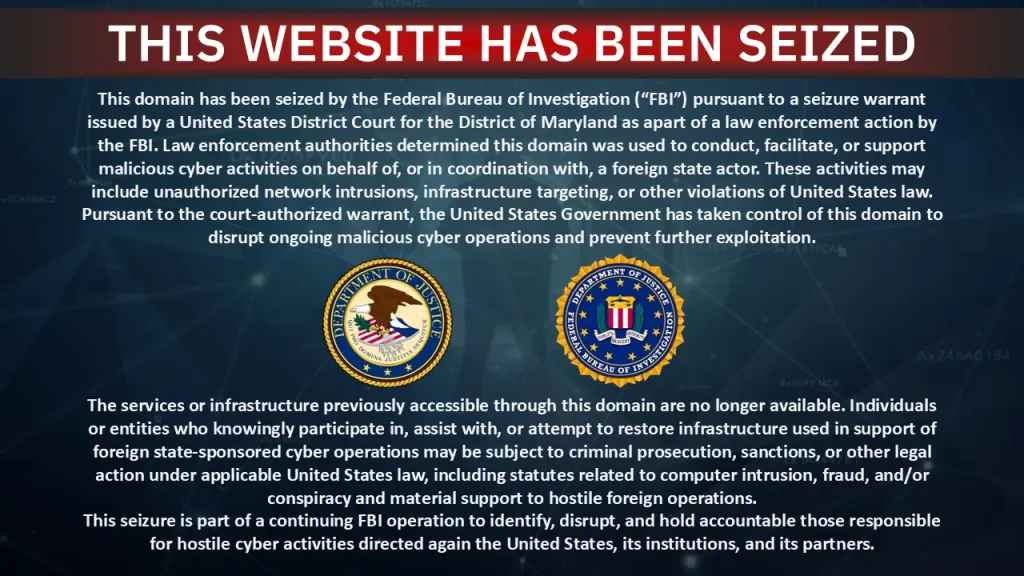
Handala (also known as Handala Hack Team, Hatef, or Hamsa) has been active since December 2023 and is believed to be associated with Iran's Ministry of Intelligence and Security. The group has participated in attacks on Israeli organizations using data-wiping malware targeting Windows and Linux devices.
The website seizures followed Handala's massive March 11, 2026 cyberattack on Stryker. The hackers compromised a Windows domain administrator account and factory-reset approximately 80,000 devices, including employees' personal computers and mobile phones. The attackers claimed to have exfiltrated 50 terabytes of data before the wipe. In response, CISA urged American organizations to follow Microsoft's updated security hardening guidelines.
Nordstrom Customers Targeted by Crypto Scam
Customers of upscale U.S. department store chain Nordstrom received fraudulent messages promising to double their crypto wallet balances. BleepingComputer reported that the emails urged recipients to send cryptocurrency to a specified Bitcoin address, imposing a two-hour deadline to create urgency.
Notably, the messages originated from Nordstrom's official marketing email source, suggesting a security breach within the company's systems. Some recipients noted the email arrived at an address that had never been publicly shared or appeared in known data leaks. By March 18, scammers had collected over $5,600 in cryptocurrency. Blockchain explorer data showed the wallet held just 0.00001386 BTC as of March 20.
Fake TRC-20 Tokens Sent Under FBI's Name
On March 19, the FBI issued a warning about a phishing campaign in which scammers distributed fraudulent TRC-20 tokens labeled as "FBI tokens" to crypto wallets.
"FBI New York encourages users of the Tron blockchain network to exercise caution if they encounter a token purported to be from the FBI. If you receive a token from an account with the details below, do not provide any identifying information to any website associated with such…" — FBI New York (@NewYorkFBI), original post
After receiving the tokens, victims were sent threatening messages claiming they were suspected of money laundering and that their assets would be frozen. To "prevent the freeze," targets were directed to a third-party website to complete an AML procedure and disclose personal information. The total number of victims is still being determined.
Other Notable Incidents This Week
- Average crypto hack losses have reached $25 million.
- Hype around OpenClaw triggered a wave of phishing attacks on crypto wallets.
- The Lazarus Group is suspected of attacking crypto gift card service Bitrefill.
- Venus Protocol lost $2 million due to manipulation involving the THE token.
Frequently Asked Questions
Who is Worawat Narknawdee and what is he accused of?
Worawat Narknawdee is a Thai crypto billionaire and founder of the 1000X platform. He is accused of fraud totaling approximately $42 million (1.39 billion baht). According to Thai police, he has fled to the UAE where he owns real estate and a hotel business.
What are the fake FBI TRC-20 tokens?
Scammers distributed fraudulent TRC-20 tokens labeled as 'FBI tokens' to Tron blockchain users. They then sent threatening messages claiming the wallet owner was suspected of money laundering and directed them to a phishing website. The FBI issued a public warning about this scheme on March 19, 2026.
How were Nordstrom customers targeted in the crypto scam?
Fraudsters used Nordstrom's official marketing email system to send messages promising to double recipients' crypto holdings. This suggests the retailer's email infrastructure was compromised. By March 18, victims had sent over $5,600 in cryptocurrency to the scammers.
What was the Handala cyberattack on Stryker?
On March 11, 2026, the Iran-linked hacktivist group Handala attacked medical technology company Stryker by compromising a Windows domain administrator account. They factory-reset approximately 80,000 devices and claimed to have stolen 50 terabytes of data. The FBI subsequently seized two of the group's websites.
How much did the Ukrainian crypto pyramid scheme steal?
A network of crypto pyramid schemes operating in Ukraine since 2022 caused approximately $1 million in damages. The co-founder was arrested in Kyiv and faces up to eight years in prison for fraud charges.
Read also
GPU Memory Attacks, $21B in Cybercrime Losses, and Chrome's Chip-Level Protection: Cybersecurity Roundup
The FBI reported record $21 billion in cybercrime losses for 2025, Google introduced hardware-bound session protection in Chrome, and researchers demonstrated three new attack methods targeting Nvidia GPU memory.
Infostealer Targets 700+ Crypto Wallets, Hackers Use Solana as Dead Drop, and UK Sanctions Xinbi
Weekly cybersecurity roundup: Torg Grabber infostealer targets 728 browser-based crypto wallets, GlassWorm campaign hides C2 addresses in Solana blockchain, and the UK imposes sanctions on crypto marketplace Xinbi linked to scam compounds.
Ransomware Crypto Payments Reached $820M in 2025 Despite 8% Drop From Prior Year
Ransomware attacks jumped 50% in 2025, but crypto payments dropped to $820M. Why are fewer victims paying despite 368% higher demands?
AI Audit Uncovers Critical Liveness Bug in Ethereum's Nethermind Client
Octane Security's AI discovered a high-severity vulnerability in the Nethermind execution client that could have halted block production for 38% of Ethereum mainnet validators. The Ethereum Foundation awarded a maximum $50,000 bounty.
Fake Ledger Live App in Apple's App Store Used to Steal $9.5M in Crypto
A fraudulent Ledger Live app that passed Apple's App Store review was used to siphon over $9.5M in cryptocurrency from more than 50 victims across multiple blockchain networks.
April 2026 Sets All-Time Record for Number of Crypto Hacks
April 2026 saw a record-breaking 24 crypto hacks resulting in approximately $651 million in total losses. Kelp and Drift Protocol suffered the largest exploits.