
GPU Memory Attacks, $21B in Cybercrime Losses, and Chrome's Chip-Level Protection: Cybersecurity Roundup
 AnthropicSTARTUP
The FBI reported record $21 billion in cybercrime losses for 2025, Google introduced hardware-bound session protection in Chrome, and researchers demonstrated three new attack methods targeting Nvidia GPU memory.
This week brought a string of major cybersecurity developments: record losses documented in the FBI's annual report, new GPU attack techniques targeting Nvidia hardware, Google's hardware-bound session protection for Chrome, and a crypto-drainer operation busted in Ukraine.
FBI: Cybercrime Losses Hit $21 Billion in 2025
U.S. victims lost approximately $21 billion to cybercrime last year, according to the FBI's 2025 annual report. The figure represents a 26% increase over 2024.
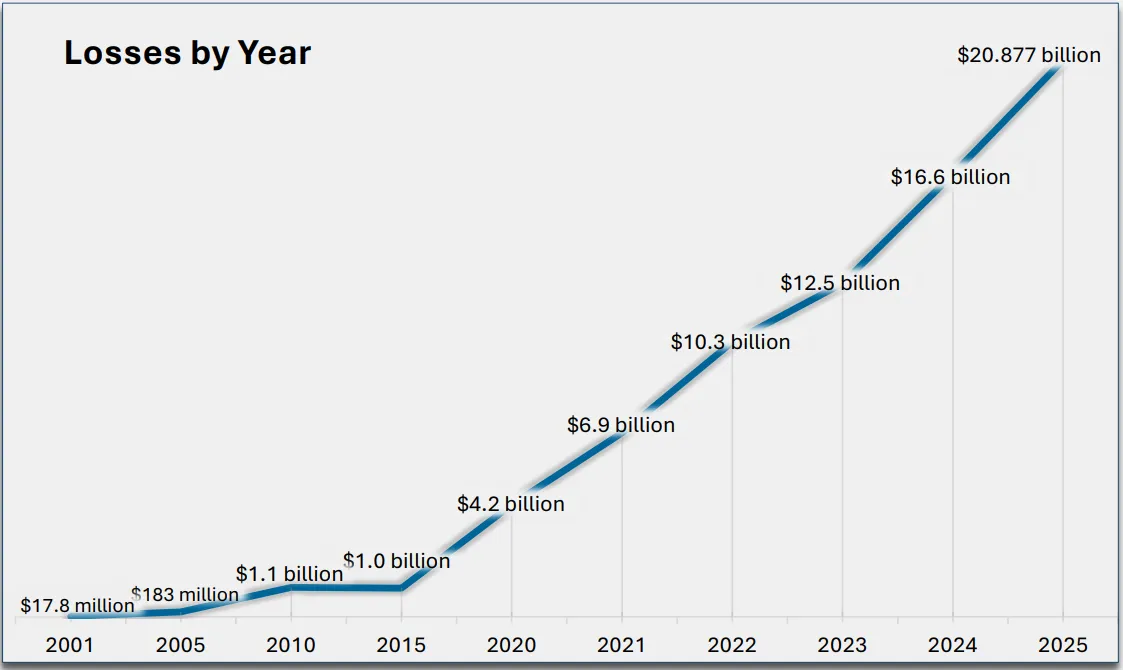
The most frequently reported complaint categories were:
- Phishing — 191,000 cases;
- Extortion — 89,000 cases;
- Investment schemes — 72,000 cases.
Investment fraud accounted for 49% of all recorded incidents, totaling $8.6 billion in losses. However, cryptocurrency-related crimes caused the greatest damage overall: losses exceeded $11 billion across 181,565 cases.
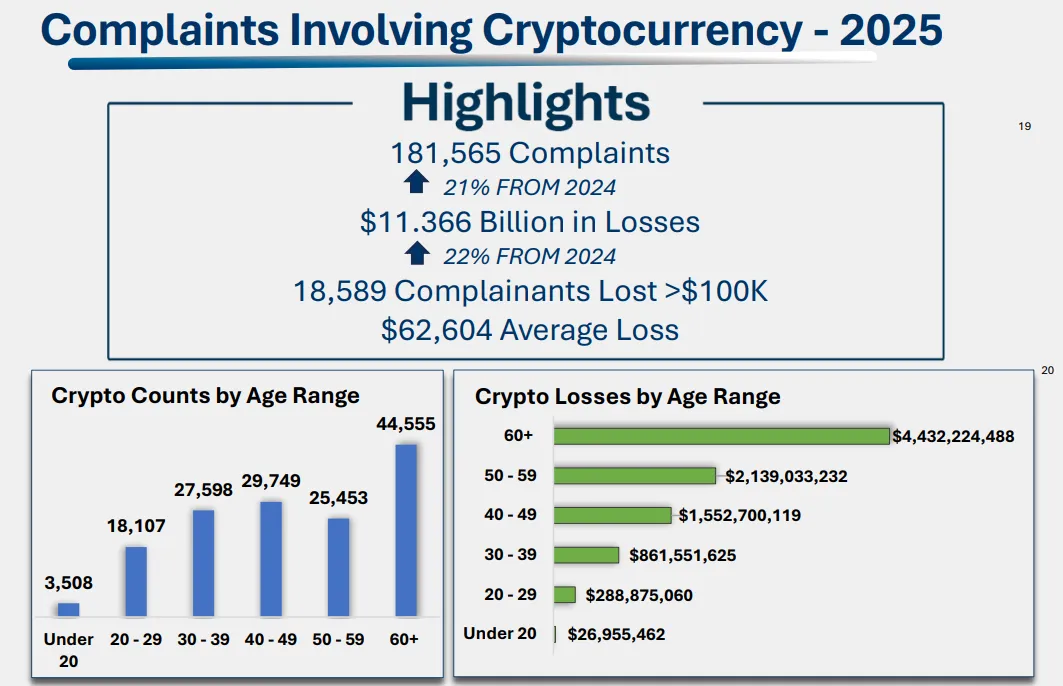
Key findings from the report:
- Cyber fraud appeared in 453,000 complaints, causing $17.7 billion in damages;
- Americans over 60 suffered the most, losing $7.7 billion (up 37% year-over-year);
- For the first time, AI-powered fraud (voice cloning, deepfake videos, fake profiles and documents) was included: 22,300 complaints and $893 million in losses.
Why This Matters
A 25% year-over-year surge in cybercrime losses and the FBI's first-ever inclusion of AI-powered scams point to rapidly escalating threats. For the crypto industry, the $11 billion figure — more than half of total damages — underscores the sector's ongoing vulnerability. Meanwhile, the parallel developments in Chrome's hardware protection and newly discovered GPU attack vectors illustrate the intensifying arms race between defenders and attackers.
Chrome 146: Hardware-Bound Cookie Protection
Google has launched Device Bound Session Credentials (DBSC) in Chrome 146 for Windows. The technology aims to neutralize infostealers — malware that hijacks session cookies to gain unauthorized access to user accounts.
Stealers like GlassWorm and LummaC2 have become adept at extracting session tokens from browser memory or local files. DBSC addresses this by cryptographically binding sessions to a device's hardware security module:
- On Windows — the Trusted Platform Module (TPM);
- On macOS — Secure Enclave.
The mechanism works as follows: the security chip generates a unique key pair, with the private key locked inside the hardware and impossible to export. To obtain short-lived session cookies, the browser must prove to the server that it possesses the corresponding private key. Even if an attacker intercepts cookies, the server will reject the session without hardware key verification. macOS support is expected in a future Chrome update.
Ukrainian Police Dismantle Crypto-Drainer Operation
Ukraine's Cyber Police dismantled a criminal group that stole crypto assets under the guise of "trading assistance." The fraudsters recruited victims through Telegram channels and directed them to fake trading platforms embedded with crypto-drainers.
Once a user connected their wallet to the fraudulent site, the attackers gained full access to their funds without additional confirmation. In one case, the perpetrators seized approximately 95,000 USDT; in another, over 1,000 USDT. Stolen assets were shuffled between wallets, swapped into other tokens, and cashed out.
Law enforcement conducted 20 simultaneous raids, seizing computer equipment, mobile phones, cash, and records documenting the illegal activity. Four suspects, including a co-organizer, face charges of large-scale fraud and money laundering, carrying up to 12 years in prison with asset confiscation.
Three New Rowhammer Attacks Target Nvidia GPU Memory
Three independent research teams have unveiled new Rowhammer-style attacks targeting GDDR6 video memory in Nvidia GPUs. Rowhammer exploits involve repeatedly accessing specific memory cells to alter electrical charges in adjacent ones, causing "bit flips" that can grant attackers privileged system access.
The new attack variants:
- GDDRHammer — effective against RTX 6000 (Ampere architecture). Novel hammering patterns achieved an average of 129 bit flips per memory bank — 64× more than last year's GPUHammer. The attack enables access to the CPU;
- GeForge — manipulates the page directory of memory. Researchers recorded 1,171 bit flips on RTX 3060 and 202 on RTX 6000. It is described as the first GPU-Rowhammer capable of escalating privileges to root;
- GPUBreach — forces a kernel-privileged driver to perform an out-of-bounds write. The demonstration was conducted on the RTX A6000, a model widely used for AI training.
A Toronto-based team disclosed the findings to engineers at Nvidia, Google, AWS, and Microsoft back in November 2025. Google paid the researchers $600 through its bug bounty program, while Nvidia indicated it may update its previous security bulletin related to GPUHammer.
Critical Flowise AI Platform Vulnerability Under Active Exploitation
Hackers have begun actively exploiting a maximum-severity vulnerability in Flowise, an open-source tool for building LLM-based applications. VulnCheck cybersecurity expert Caitlin Condon reported the findings.
The flaw allows execution of JavaScript code without any security checks. It resides in Flowise's CustomMCP node, which handles connections to external servers. The vulnerability was publicly disclosed in September 2025 with warnings that successful exploitation enables command execution and file system access.
At the time of detection, malicious activity was limited and originated from a single Starlink IP address. Between 12,000 and 15,000 custom Flowise instances are accessible online, though the percentage of vulnerable deployments remains unknown. Condon recommended updating to version 3.1.1 (or at least 3.0.6) and disconnecting instances from the internet where external access isn't required.
SMS Phishing Campaign Uses QR Codes Disguised as Court Notices
A new phishing campaign in the U.S. involves fraudulent SMS messages posing as traffic violation notices from state courts, according to BleepingComputer.
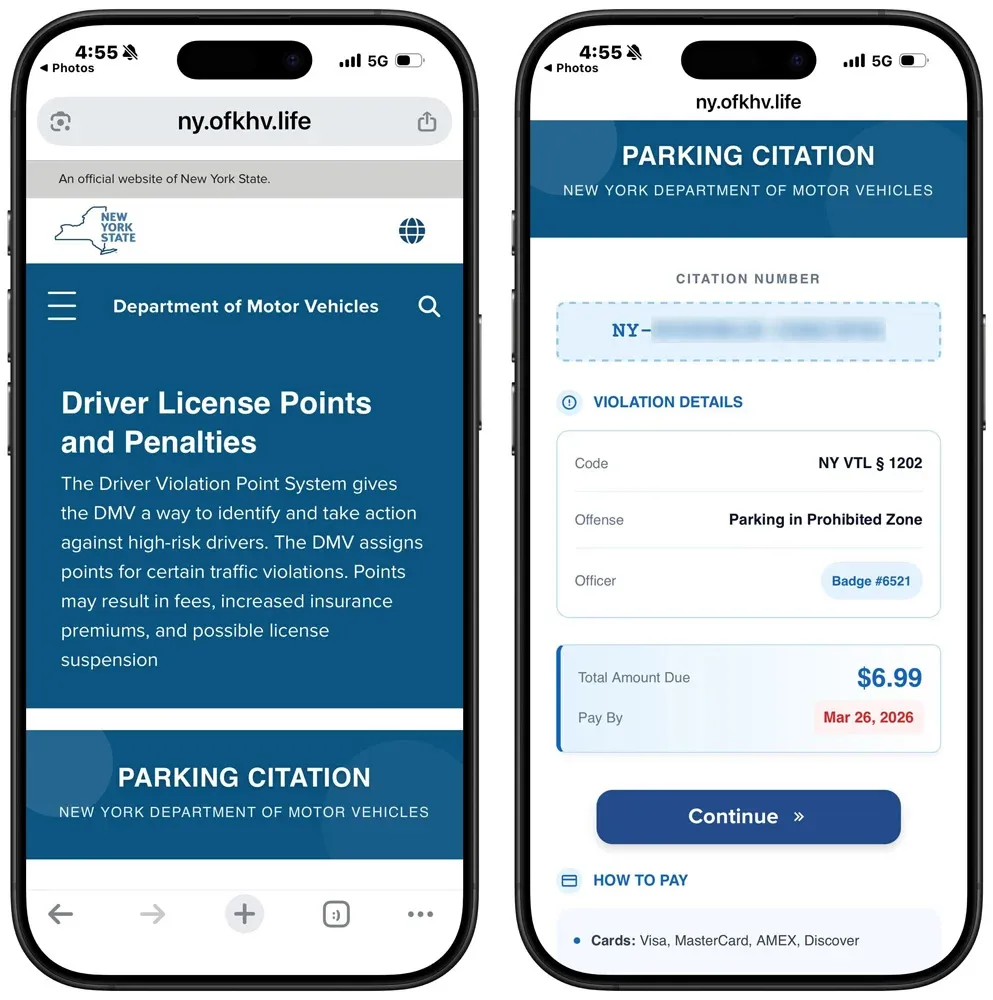
Unlike previous campaigns that used standard links, this version includes an image of an alleged court notice with a QR code. Recipients were pressured into immediately paying a $6.99 fine for parking or toll road violations, or face a court appearance. One message claimed to originate from the "New York City Criminal Court."
Scanning the QR code led to an intermediary page with a CAPTCHA — designed to evade automated security systems. Users were then redirected to a fake portal mimicking a Department of Motor Vehicles website, where they were prompted to enter personal information and credit card details for data theft and identity fraud.
Frequently Asked Questions
How much did cybercrime cost Americans in 2025?
According to the FBI's 2025 annual report, U.S. victims lost approximately $21 billion to cybercrime, a 26% increase over 2024. Cryptocurrency-related crimes caused the greatest damage, with losses exceeding $11 billion across 181,565 reported cases.
What is Chrome DBSC and how does it prevent cookie theft?
Device Bound Session Credentials (DBSC) is a technology in Chrome 146 that cryptographically ties session cookies to hardware security modules like TPM on Windows or Secure Enclave on macOS. Even if an attacker steals cookies, the server will reject the session without proof of the private key stored in the device's chip.
What are the new Nvidia GPU memory attacks?
Three research teams demonstrated Rowhammer-style attacks on GDDR6 video memory: GDDRHammer (targeting RTX 6000), GeForge (the first GPU-Rowhammer achieving root privilege escalation), and GPUBreach (out-of-bounds write via kernel driver). Tests were performed on RTX 3060, RTX 6000, and RTX A6000 cards.
What is the Flowise vulnerability being exploited by hackers?
A critical vulnerability in Flowise's CustomMCP node allows execution of JavaScript code without security checks. The flaw was publicly disclosed in September 2025 and enables command execution and file system access. Between 12,000 and 15,000 Flowise instances are accessible online.
How does the new QR code phishing scam in the US work?
Scammers send SMS messages posing as court notices about traffic violations with a QR code. Scanning the code leads through a CAPTCHA page to a fake DMV website where victims are asked to pay a $6.99 fine and enter personal and credit card information, which is then stolen.
Read also
Infostealer Targets 700+ Crypto Wallets, Hackers Use Solana as Dead Drop, and UK Sanctions Xinbi
Weekly cybersecurity roundup: Torg Grabber infostealer targets 728 browser-based crypto wallets, GlassWorm campaign hides C2 addresses in Solana blockchain, and the UK imposes sanctions on crypto marketplace Xinbi linked to scam compounds.
PayPal Data Leak, OnlyFake Guilty Plea & AI Password Flaws
This week's key cybersecurity events: a PayPal bug exposed customer data, the OnlyFake fake documents platform creator pleaded guilty, and AI-generated passwords proved predictable.
AI Audit Uncovers Critical Liveness Bug in Ethereum's Nethermind Client
Octane Security's AI discovered a high-severity vulnerability in the Nethermind execution client that could have halted block production for 38% of Ethereum mainnet validators. The Ethereum Foundation awarded a maximum $50,000 bounty.
Fake Ledger Live App in Apple's App Store Used to Steal $9.5M in Crypto
A fraudulent Ledger Live app that passed Apple's App Store review was used to siphon over $9.5M in cryptocurrency from more than 50 victims across multiple blockchain networks.
April 2026 Sets All-Time Record for Number of Crypto Hacks
April 2026 saw a record-breaking 24 crypto hacks resulting in approximately $651 million in total losses. Kelp and Drift Protocol suffered the largest exploits.
Drift Protocol on Solana Hacked for $280M in Sophisticated Durable Nonce Attack
Solana-based DeFi platform Drift Protocol lost at least $280 million in a hack on April 1. The DRIFT token dropped 37% while Circle faces criticism for failing to freeze stolen USDC.