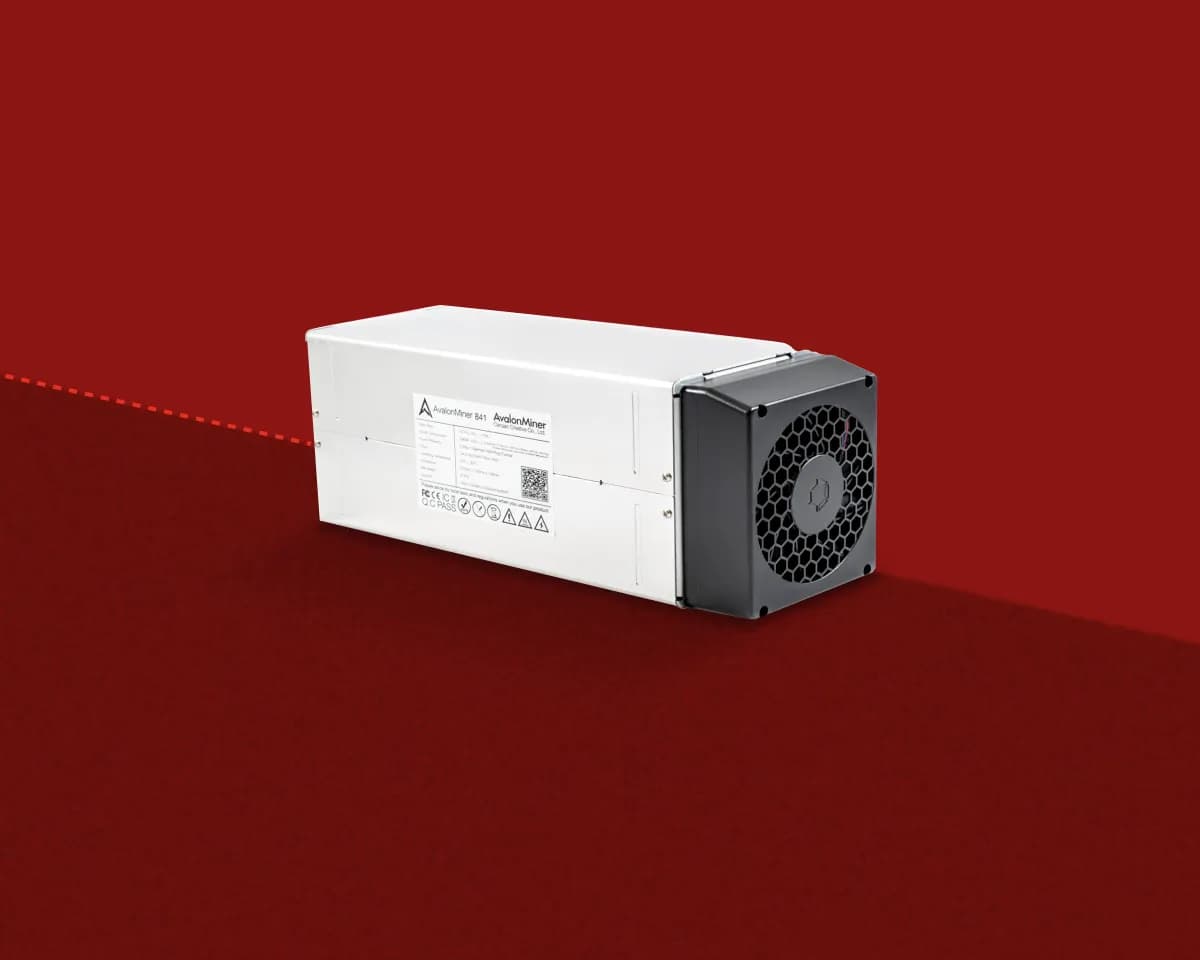
Tether Unveils Modular Bitcoin Mining Architecture in Partnership with Canaan and ACME Swisstech
Tether has partnered with Canaan and ACME Swisstech to develop a modular bitcoin mining infrastructure that allows operators to assemble and upgrade systems from individual components.
A New Approach to Mining Hardware Assembly
Tether has teamed up with ASIC manufacturer Canaan and engineering firm ACME Swisstech to build a modular bitcoin mining infrastructure. Rather than relying on monolithic, off-the-shelf mining devices, operators will be able to assemble systems from discrete components tailored to their specific requirements.
The architecture is built around Canaan's Avalon hash boards, which Tether's engineering team integrated into a proprietary management platform and custom cooling system.
Why This Matters
Conventional mining hardware operates as sealed, fixed units. When a single component fails or becomes outdated, the entire device typically needs replacement. Tether CEO Paolo Ardoino pointed out that traditional miners remain "closed" and rigid blocks, making maintenance and scaling unnecessarily difficult.
The modular concept addresses this limitation by giving operators direct control over their computing power regardless of fleet size. For large-scale industrial mining operations, this could translate into significantly lower capital and operational expenditures.
Core Benefits of the Modular Design
The developers highlight several practical advantages of the new architecture:
- Optimized energy consumption and heat dissipation — each module can be configured independently;
- Targeted component upgrades — individual parts can be replaced without dismantling the entire unit;
- Flexible scaling — capacity can be expanded or reduced based on operating conditions.
The system is also designed for immersion cooling. According to Tether, submerging equipment in specialized liquid reduces costs and boosts efficiency at large industrial facilities.
Part of a Broader Infrastructure Strategy
The modular architecture is not Tether's first foray into building its own mining ecosystem. The company previously released Mining OS, a dedicated operating system, along with a software development kit (SDK) for managing mining hardware.
Beyond mining, Tether continues to expand its product portfolio. In April, the company announced the launch of tether.wallet, a non-custodial wallet supporting the USDT, USAT, and XAUT stablecoins as well as bitcoin. Tether also introduced an SDK for running AI models on various devices.
Taken together, these initiatives signal Tether's ambition to evolve beyond its role as a stablecoin issuer and establish itself as a full-stack infrastructure provider in the crypto industry — spanning hardware, software, and financial tools.
Frequently Asked Questions
What is Tether's modular mining architecture?
It is a new approach to bitcoin mining hardware where systems are assembled from individual components rather than using monolithic devices. The architecture is built around Canaan's Avalon hash boards integrated into Tether's proprietary management and cooling platform.
Who are the partners behind the modular mining solution?
Tether developed the modular infrastructure in partnership with Canaan, which provides the Avalon hash boards, and ACME Swisstech, an engineering firm. Tether's own team handled the integration of management and cooling systems.
Does Tether's modular mining system support immersion cooling?
Yes, the system is specifically adapted for immersion cooling. Tether states that this approach reduces costs and improves efficiency at large-scale industrial mining facilities.
What other mining products has Tether released?
Prior to the modular architecture, Tether launched Mining OS, a dedicated operating system for mining hardware, and an SDK for managing mining equipment. These tools form part of Tether's broader infrastructure strategy.
Can individual components be upgraded separately?
Yes, the modular design allows operators to replace or upgrade specific parts without dismantling the entire unit. This reduces downtime and lowers the cost of hardware refreshes compared to traditional monolithic miners.
Read also
Bitdeer Overtakes MARA as Largest Public Bitcoin Miner by Hashrate
Bitdeer grew its self-mining hashrate to 69.5 EH/s — a 504% year-over-year increase — surpassing MARA and CleanSpark to become the top public Bitcoin miner by deployed capacity.
Stablecoin Transfer Volume Hits $10.5 Trillion in January — Highest Since April 2022
January stablecoin transaction volume surpassed $10.5 trillion, marking the highest monthly figure since April 2022. USDC led transfers while USDT maintained market cap dominance.
Bitcoin Drops Below $67,000 as Ethereum Foundation Unveils Quantum Defense Roadmap
Bitcoin lost 3% over the week amid Middle East tensions and ETF outflows, miner activity hit historic lows, and Ethereum Foundation outlined a four-hardfork plan for quantum resistance by 2029.
Weekly Recap: 20M BTC Mined, US Treasury Backs Crypto Mixer Privacy Rights
Less than 1 million bitcoins remain to be mined, the US Treasury reversed its stance on crypto mixers to support privacy rights, and Hyperliquid crossed $4 trillion in cumulative trading volume.
TRON Energy Rental: How to Cut USDT Transfer Fees by Up to 60%
USDT issuance on TRON surpassed $85 billion in February 2026, but transfer fees remain steep at $1.83–$3.83 per transaction. Energy rental services like TronZap offer a way to cut costs by 50–60%.
Top 10 Dollar Stablecoins in 2026: From Dominant Players to Exit Candidates
The stablecoin market has surpassed $311 billion in total capitalization. Here's a breakdown of the ten largest USD-pegged stablecoins — from undisputed leaders Tether and Circle to ambitious newcomers.