
Bitcoin Mining Difficulty Drops 2.43% as Miner Revenue Slumps and Hashrate Stays Below 1 ZH/s
Bitcoin mining difficulty fell 2.43% to 135.59 T on April 17, while hashrate remains below 1 ZH/s. Miners face mounting pressure as revenue plunges and transaction fees approach historic lows.
Difficulty Recalculation Brings Relief — Down to 135.59 T
On April 17, 2026, Bitcoin's latest difficulty adjustment resulted in a 2.43% decline, bringing the metric down to 135.59 T. The reduction reflects a period of reduced computational power on the network leading up to the recalculation.
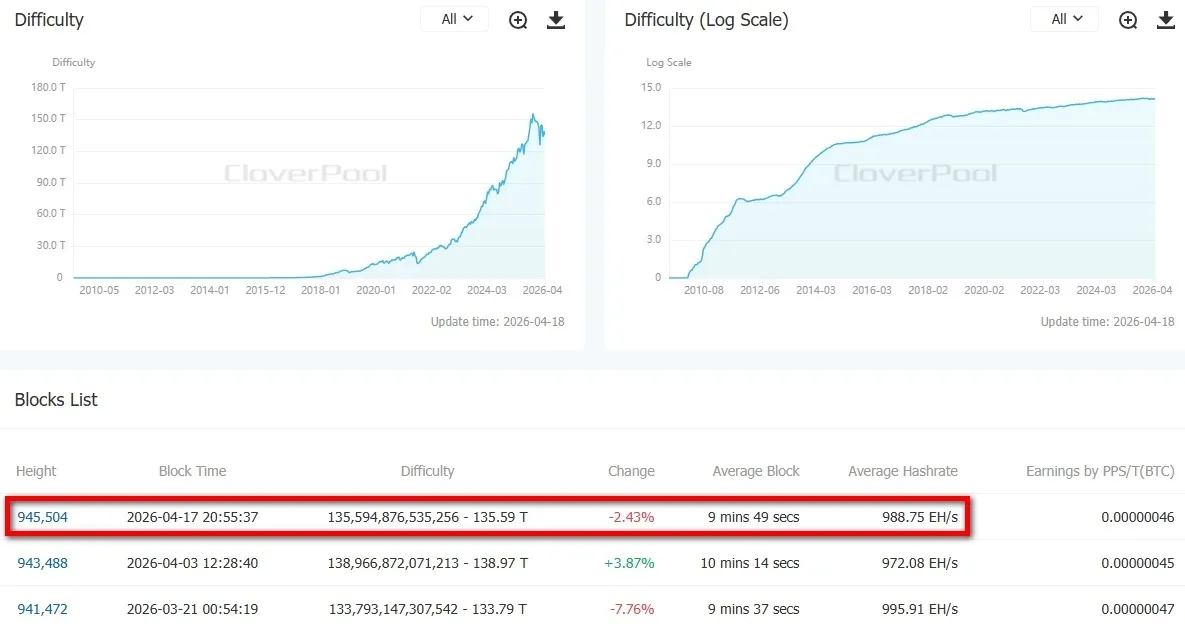
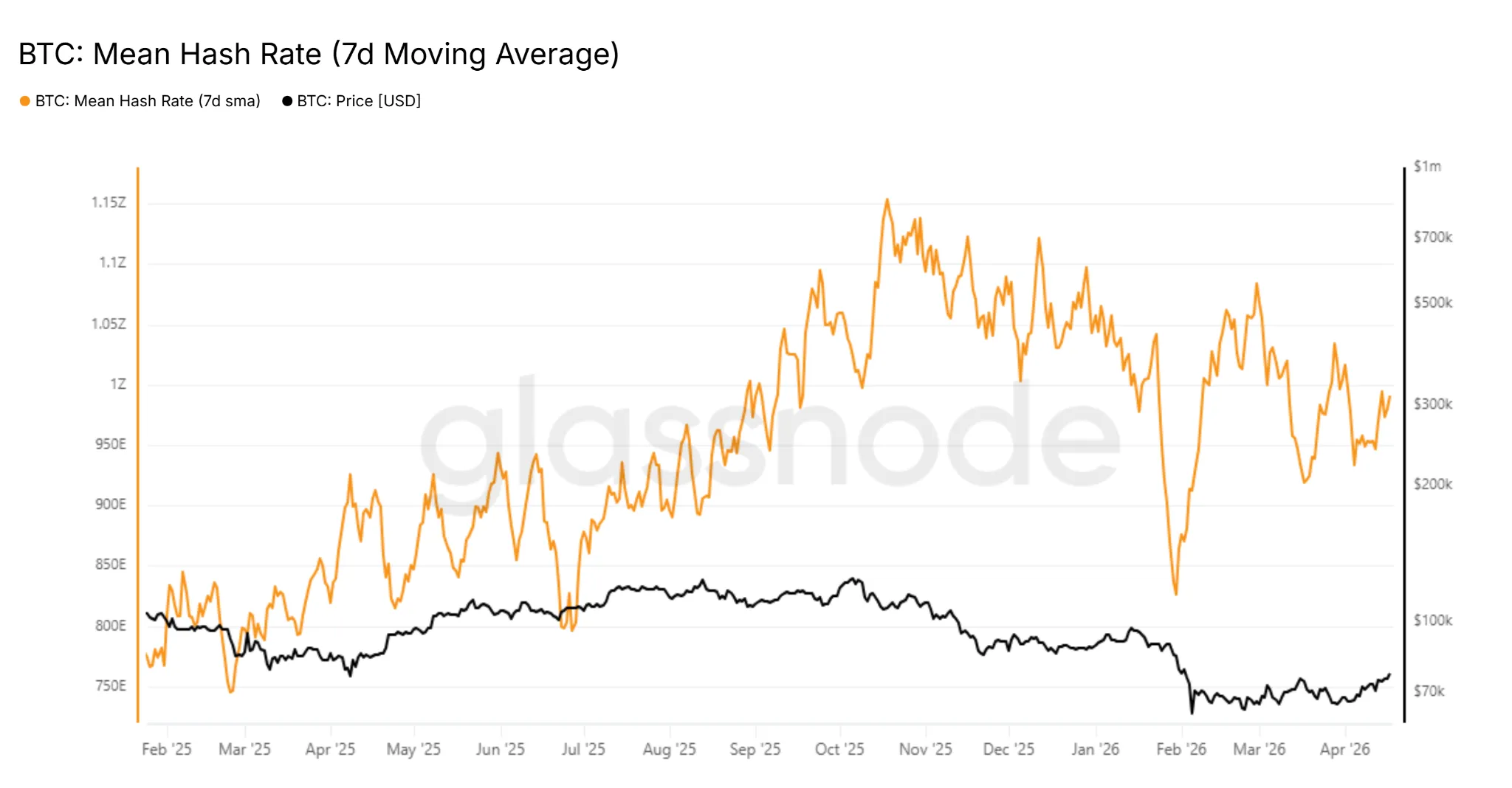
At the time of writing, the average hashrate stands at 988.7 EH/s, with the average block interval dropping below 10 minutes. According to Glassnode data, the 7-day moving average of network computational power recovered from approximately 978 EH/s to roughly 992 EH/s since early April. However, the hashrate has consistently remained below the symbolic 1 ZH/s threshold since March.
Why This Matters
A downward difficulty adjustment signals that mining machines were taken offline during the previous epoch, typically due to profitability concerns. Combined with declining total industry revenue and stagnant BTC prices, the current environment is squeezing miners — particularly those operating with higher energy costs or older-generation hardware. The broader trend raises questions about the long-term sustainability of current mining economics.
Hashprice Sees a Modest Bounce
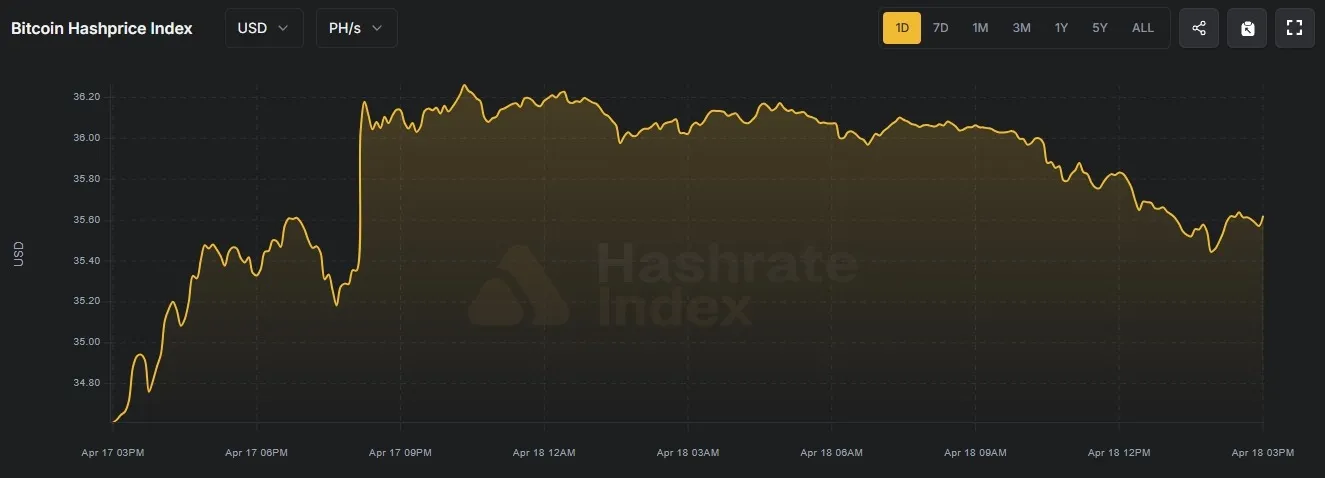
According to Hashrate Index, the combination of lower difficulty and Bitcoin's price recovery toward $78,000 pushed the hashprice from roughly $35 per PH/s per day to above $36. A subsequent dip in BTC's price then corrected the profitability metric back to somewhere between those two figures.
Industry Alarm Level at 'Six or Seven Out of Ten'
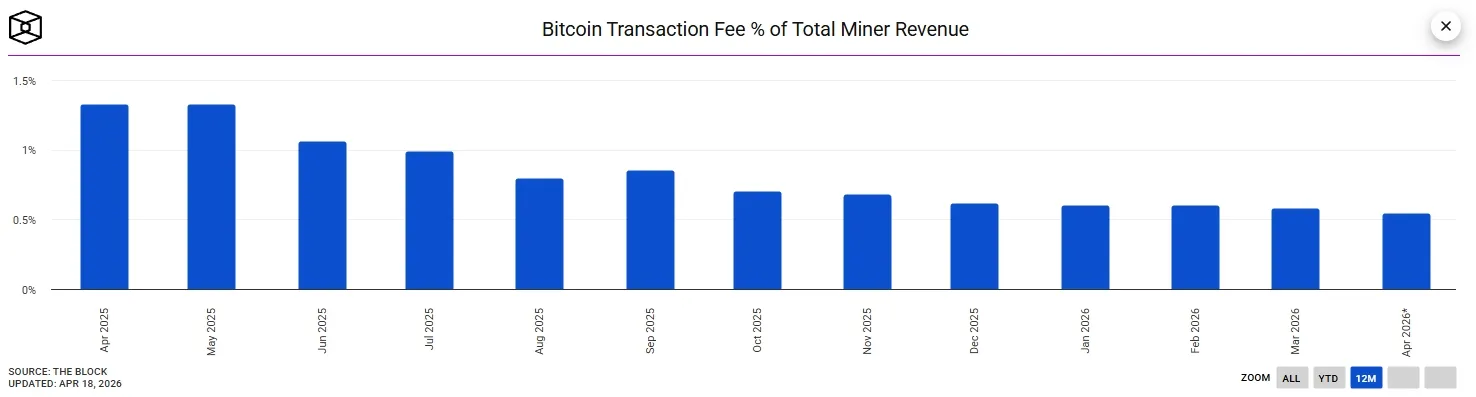
Weak on-chain activity and Bitcoin's price stagnation are preventing miners from reaching breakeven, as reported by DL News. Data from The Block shows that the share of transaction fees in miner revenue dropped below 1% last year and has recently approached just 0.5%.
Total miner revenue plummeted from $1.62 billion in October 2025 to $948 million in March 2026. Luxor CEO Nick Hansen described the situation as unfavorable, noting there are no positive catalysts supporting further investment in new mining operations. He also identified miner diversification into AI as a significant threat to the industry.
Hansen assessed the current alarm level for the mining sector at "six or seven" on a ten-point scale.
Public Miners Dumping Bitcoin at Record Pace
Adding to the pressure, publicly traded mining companies sold 32,000 BTC during Q1 2026 alone — exceeding total sales for the entire year of 2025. This record liquidation underscores the growing financial strain on industry participants who are forced to sell mined coins to cover operational expenses.
Frequently Asked Questions
What is the current Bitcoin mining difficulty in April 2026?
Following the April 17, 2026 recalculation, Bitcoin mining difficulty dropped 2.43% to 135.59 T. The average network hashrate currently sits at 988.7 EH/s, remaining below the 1 ZH/s mark.
Why is Bitcoin hashrate below 1 ZH/s?
Since March 2026, Bitcoin's hashrate has consistently stayed below 1 ZH/s. This is attributed to declining mining profitability amid stagnant BTC prices and falling overall industry revenue.
How much are Bitcoin miners earning in 2026?
Total miner revenue fell from $1.62 billion in October 2025 to $948 million in March 2026. Transaction fees now account for approximately 0.5% of miner income, while the hashprice fluctuates around $35–36 per PH/s per day.
How many BTC did public miners sell in Q1 2026?
Public mining companies sold 32,000 BTC during Q1 2026, surpassing total sales for the entire year of 2025. This record sell-off highlights the severe financial strain on the mining sector.
Is Bitcoin mining still profitable in 2026?
Profitability is under significant pressure. Luxor CEO Nick Hansen rated the industry alarm level at 'six or seven' out of ten, citing no positive catalysts for new mining investments and the growing threat of miner diversification into AI.
Read also
Bitcoin Drops Below $67,000 as Ethereum Foundation Unveils Quantum Defense Roadmap
Bitcoin lost 3% over the week amid Middle East tensions and ETF outflows, miner activity hit historic lows, and Ethereum Foundation outlined a four-hardfork plan for quantum resistance by 2029.
Weekly Recap: 20M BTC Mined, US Treasury Backs Crypto Mixer Privacy Rights
Less than 1 million bitcoins remain to be mined, the US Treasury reversed its stance on crypto mixers to support privacy rights, and Hyperliquid crossed $4 trillion in cumulative trading volume.
Bitcoin Down 2.5% Weekly: Jane Street Accusations & 7 Ethereum Forks
Bitcoin lost ~2.5% over the week amid macro shocks and geopolitical tensions. Jane Street faced market manipulation allegations while Ethereum unveiled an ambitious seven hard fork roadmap through 2029.
TON Wallet Introduces Yield Vaults for BTC, ETH, and USDT Directly in Telegram
TON Wallet has launched yield vaults for BTC, ETH, and USDT directly within Telegram, offering up to 18% APY on stablecoins through partnerships with Morpho, TAC, and Re7.
Weekly Recap: Aave Ecosystem Rescue Mobilizes 100,000 ETH and Quantum Computer Cracks 15-Bit ECC Key
Bitcoin held near $78,000, the DeFi community rallied over 100,000 ETH to help Aave recover from the Kelp hack, and a researcher cracked a 15-bit ECC key on a quantum computer.
Strategy Becomes Most-Shorted US Stock With $6B in Bets
Strategy tops the list of most-shorted large-cap US stocks with $6 billion in short positions, representing 14% of its market cap, as Bitcoin's decline erodes confidence in the company's debt-fueled BTC accumulation model.