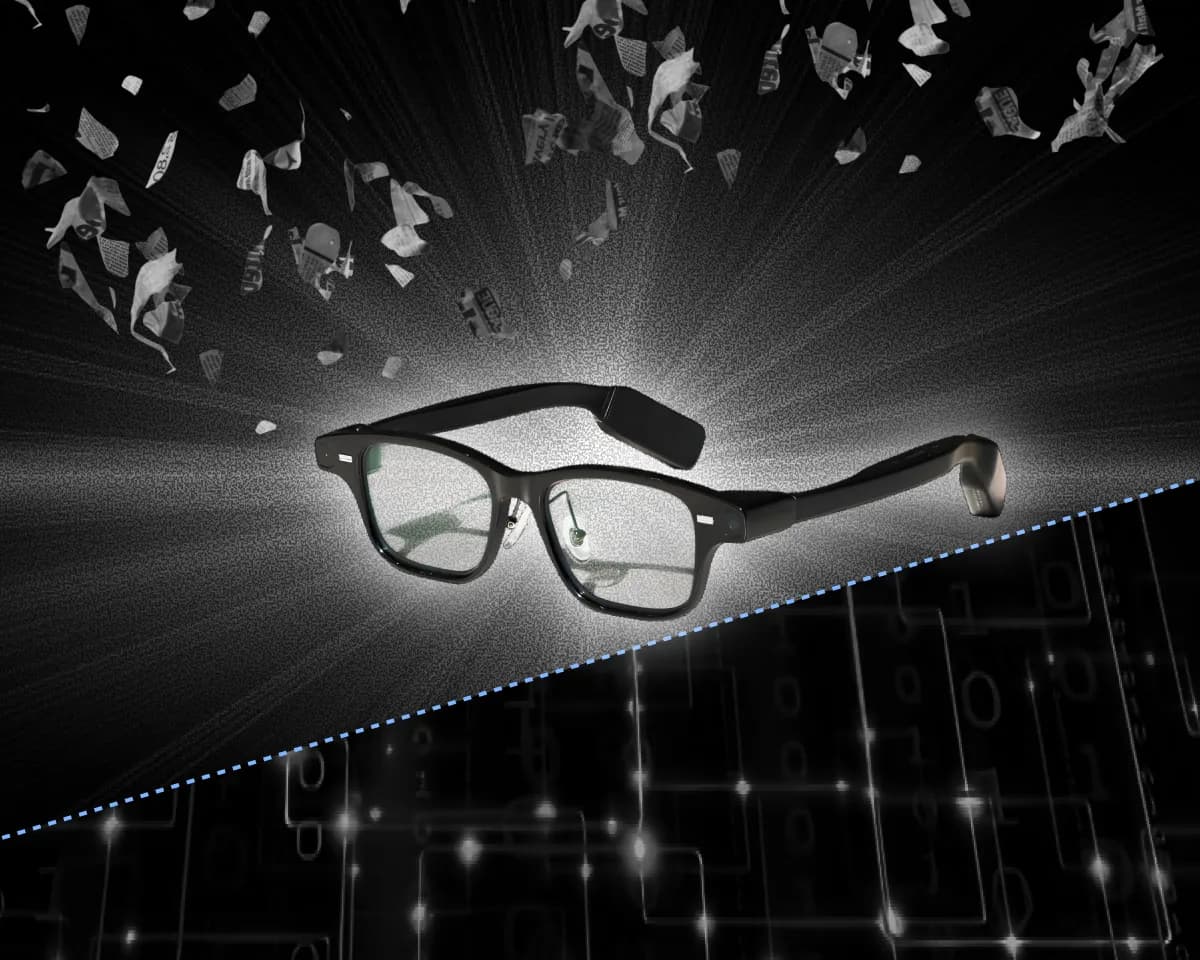
Nearby Glasses: New Android App Detects Smart Glasses via Bluetooth Scanning
Developer Yves Jeanrenaud has released Nearby Glasses, an open-source Android app that scans for Bluetooth signals from smart glasses made by Meta and Snap, alerting users to potential recording devices nearby.
A Privacy Tool Against Wearable Surveillance
A new open-source Android application called Nearby Glasses has been released, designed to detect smart glasses in the user's vicinity. The app works by scanning for unique Bluetooth identifiers emitted by nearby devices and sends a notification whenever a matching signal is found.
Currently, Nearby Glasses can identify products from Meta (Oakley) and Snap. Users also have the option to manually add custom Bluetooth keys to expand the list of detectable devices.
Why This Matters
Smart glasses equipped with cameras have sparked growing privacy concerns due to their potential for covert recording and facial recognition. While some models include a small LED indicator that lights up during recording, this feature can be disabled — making surveillance virtually undetectable. As major tech companies from Meta to Alibaba continue rolling out new smart glasses models, the question of privacy in public spaces is becoming increasingly pressing.
Tools like Nearby Glasses represent an emerging category of consumer-level countermeasures against wearable surveillance technology, giving ordinary people a way to be aware of potential recording devices in their surroundings.
The Developer's Stance
Yves Jeanrenaud, the creator of Nearby Glasses, described smart glasses on the project's GitHub page as "an unbearable invasion of privacy, a disregard for the will of others, and a terrible technological invention."
According to Jeanrenaud, fourth-generation smart glasses have already been used for instant facial recognition, and this capability is reportedly set to be available in the fifth generation as well. He believes this puts a large number of people at risk.
In an interview with 404 Media, the developer explained that reports of covert surveillance using smart glasses motivated him to build the app. Specifically, such devices had been used during immigration raids in the United States and for filming and blackmailing sex workers.
"Obviously, surveillance technologies are not only used for selfish purposes by government thugs but also contribute to misogynistic behavior and rape culture" — Yves Jeanrenaud, creator of Nearby Glasses.
Limitations and Cautions
Jeanrenaud was transparent about the app's shortcomings, acknowledging that Nearby Glasses may incorrectly flag other devices made by the same manufacturers as smart glasses. He also urged users not to harass anyone based on suspicions of wearing a concealed recording device.
Context: The Smart Glasses Market Keeps Expanding
In September 2025, Meta CEO Mark Zuckerberg unveiled the Meta Ray-Ban Display — the company's first smart glasses with a built-in screen. Two months later, in November, Chinese tech giant Alibaba launched its own AI-powered smart glasses under the Qwen brand. As more major corporations enter the smart glasses space, detection tools like Nearby Glasses are poised to become increasingly relevant.
Frequently Asked Questions
What is the Nearby Glasses app?
Nearby Glasses is a free, open-source Android application that scans for Bluetooth signals from smart glasses and alerts users when such devices are detected nearby. It currently supports Meta (Oakley) and Snap products.
How does Nearby Glasses detect smart glasses?
The app monitors unique Bluetooth identifiers emitted by smart glasses. When a matching signal is found, the user receives a notification. Users can also add custom Bluetooth keys to expand the detection range.
Is Nearby Glasses always accurate?
No. Developer Yves Jeanrenaud has warned that the app may produce false positives, potentially misidentifying other devices from smart glasses manufacturers. He urged users not to confront anyone based solely on app alerts.
Why would someone want to detect smart glasses nearby?
Smart glasses with built-in cameras can be used for covert recording and facial recognition. The recording indicator LED on some models can be disabled, making surveillance nearly invisible and posing significant privacy risks.
Who created the Nearby Glasses app?
The app was developed by Yves Jeanrenaud, who described smart glasses as an invasion of privacy. He told 404 Media that reports of covert surveillance using smart glasses — including during immigration raids and for blackmailing sex workers — motivated the project.
Read also
BeatBanker Android Trojan with Monero Miner, $333M Crypto ATM Fraud, and TPMS Vehicle Tracking: Weekly Cybersecurity Roundup
Key cybersecurity events of the week: new BeatBanker Android trojan with built-in Monero miner, record $333M losses from crypto ATM fraud in the US, and researchers demonstrate vehicle tracking via tire pressure sensors.
Meta Deploys Keystroke-Tracking Software on Employee Computers to Train AI Agents
Meta is installing software on US employees' computers that records mouse movements, clicks, and keystrokes. The collected data feeds into the company's AI agent training pipeline.
Meta Plans Stablecoin Launch with Stripe Partnership in 2026
Tech giant Meta is preparing to enter the stablecoin market by end of 2026, partnering with external payment providers to navigate regulatory challenges.
US Treasury Officially Recognizes Crypto Mixers as Legitimate Privacy Tools
The US Treasury Department has submitted a report to Congress that, for the first time at the federal level, acknowledges the legitimacy of crypto mixers as financial privacy instruments. The document also examines the interplay between mixers, stablecoins, and cross-chain bridges.
OpenAI Launches Cloud-Based AI Agents for Team Collaboration in ChatGPT
OpenAI introduced "workspace agents" in ChatGPT — cloud-based AI assistants that work autonomously and can be shared across teams. The company also released a free Privacy Filter tool to protect sensitive data.
Meta Launches USDC Payments for Content Creators as Visa Expands Stablecoin Infrastructure
Meta has begun paying content creators in USDC via Polygon and Solana wallets. Meanwhile, Visa added five new blockchain networks to its pilot stablecoin project.