BrainCo Demonstrates Mind-Controlled Bionic Hand Playing Piano at HSBC Summit
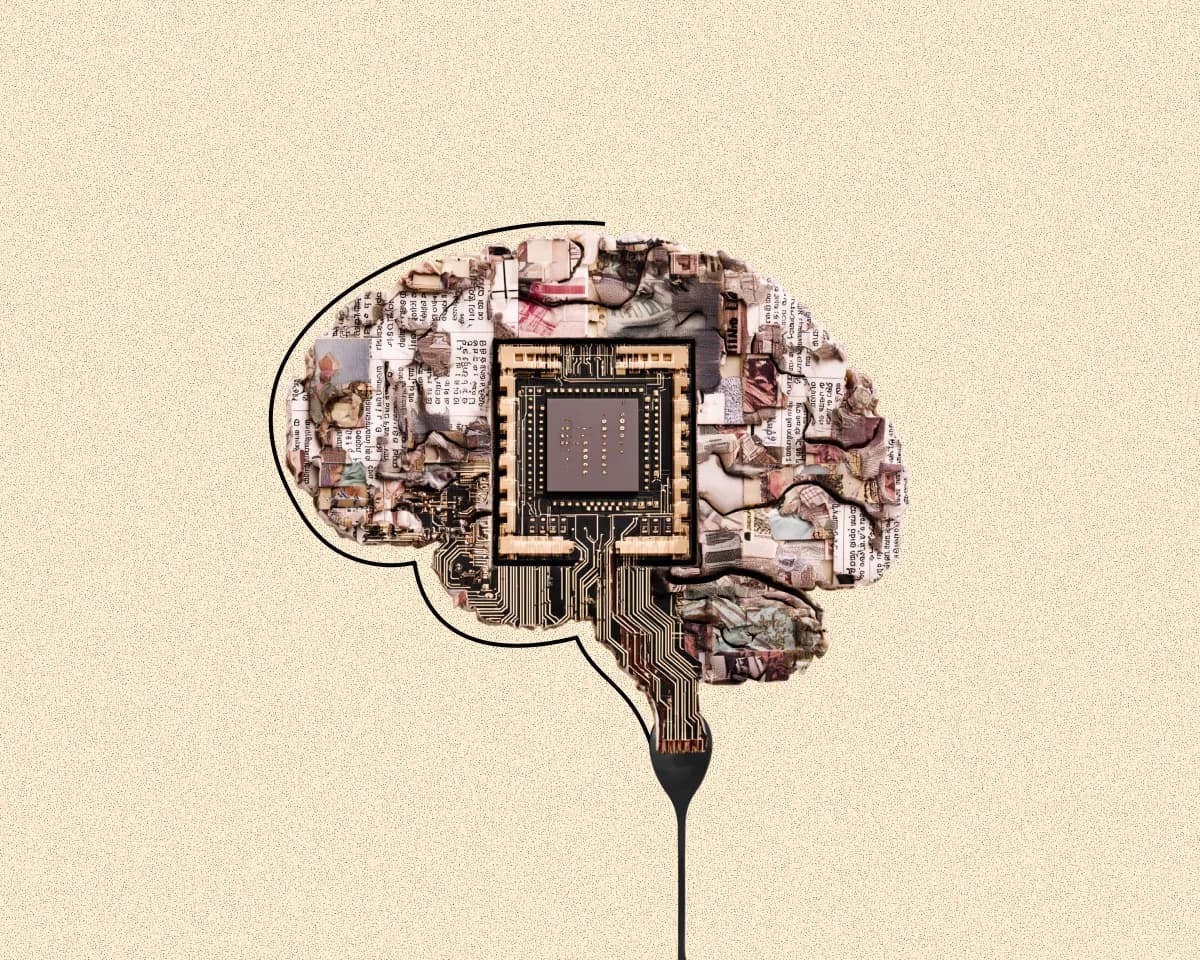
BrainCo showcased a non-invasive brain-computer interface at the HSBC summit, enabling a bionic hand to play piano using only thought-based neural signals.
BrainCo captivated audiences at the HSBC summit with a striking demonstration: a bionic hand controlled entirely by brain signals played a short piece on the piano. The presenter moved each finger of the prosthetic using nothing but mental commands, showcasing what the company claims is the world's first prosthesis with independent finger control.
How BrainCo's Non-Invasive BCI Works
The brain-computer interface (BCI) developed by BrainCo relies on a non-invasive approach. Sensors placed on the skin's surface read neural signals beneath it, which are then converted into commands for the device. Nix He, partner and senior vice president at BrainCo, explained that the sensors detect neural impulses through the skin, causing muscles to contract and move the hand accordingly.
During the live presentation, a man wearing a bionic arm demonstrated the device's responsiveness to nerve impulses, controlling individual fingers through thought alone. The demonstration culminated with the participant playing a brief musical piece on a piano — a vivid proof of the technology's precision.
Why This Matters
BrainCo's technology offers a fundamentally different path from invasive BCI methods. Neuralink, the most prominent player in the space, implants ultra-thin threads with electrodes directly into brain tissue to read neural activity. While this invasive approach delivers higher accuracy, signal quality degrades over time.
According to Nix He, BrainCo's non-invasive method is safer, more readily accepted by patients, and carries lower risks and costs. She acknowledged that serious brain conditions like Parkinson's disease or blindness may require surgical intervention, but emphasized that alternative approaches — like the one BrainCo offers — also exist.
Applications Beyond Prosthetics
The technology extends well beyond controlling bionic limbs. BrainCo's BCI can help patients manage symptoms of certain medical conditions. He also noted that the company's technology can be applied to improve focus and enhance sleep quality.
BrainCo was founded in the United States by Harvard University graduate Han Bicheng. Nix He holds a Master of Laws degree from Harvard Law School. Last year, the company established its Asia-Pacific headquarters and a research base at Cyberport in Hong Kong.
The Broader BCI Landscape
The brain-computer interface industry is experiencing rapid growth. In March 2025, China's regulator approved the country's first neural implant for commercial use, signaling increasing momentum for BCI technologies in Asia. BrainCo's expansion into Hong Kong aligns with this trend as the region positions itself as a hub for neurotechnology development.
The competition between invasive and non-invasive BCI approaches will likely shape the industry's trajectory. Invasive methods offer superior signal precision, while non-invasive solutions provide greater accessibility and safety for a broader user base.
Frequently Asked Questions
What is BrainCo's brain-computer interface?
BrainCo's BCI is a non-invasive system that reads neural signals through sensors placed on the skin's surface. These signals are converted into commands to control devices such as bionic prosthetic hands.
How is BrainCo different from Neuralink?
BrainCo uses a non-invasive approach with skin-surface sensors, while Neuralink implants electrodes directly into brain tissue. The invasive method offers higher accuracy but involves surgery and signal degradation over time.
Can BrainCo's bionic hand move each finger independently?
Yes, BrainCo claims it is the world's first prosthesis that allows independent control of each finger. This was demonstrated at the HSBC summit when a presenter played a piano piece using the bionic hand.
What are the non-prosthetic applications of BrainCo's technology?
Beyond prosthetics, BrainCo's technology can be used to improve focus, enhance sleep quality, and help patients manage symptoms of certain medical conditions.
Where is BrainCo headquartered?
BrainCo was founded in the United States by Harvard graduate Han Bicheng. Last year, the company opened its Asia-Pacific headquarters and a research facility at Cyberport in Hong Kong.
Read also
AI Audit Uncovers Critical Liveness Bug in Ethereum's Nethermind Client
Octane Security's AI discovered a high-severity vulnerability in the Nethermind execution client that could have halted block production for 38% of Ethereum mainnet validators. The Ethereum Foundation awarded a maximum $50,000 bounty.
OpenAI Secures Record $110 Billion Round at $730 Billion Valuation
OpenAI closed the largest startup funding round in history at $110 billion, backed by Amazon, SoftBank, and Nvidia, with a $730 billion valuation.
Trump Orders All Federal Agencies to Drop Anthropic Technologies Within Six Months
Federal agencies have 6 months to drop Anthropic's Claude AI amid ethics clashes. See how xAI and Pentagon deals reshape the landscape.
Alphabet Posts $94.7B Q1 Revenue Beating Estimates Amid AI-Driven Growth
Google's parent company Alphabet reported Q1 2026 revenue of $94.7 billion, surpassing Wall Street forecasts, with its cloud division and AI integration fueling a strong beat across all metrics.
DeepSeek Launches V4-Pro: Open-Source Model Outperforms Claude Opus 4.6 and GPT-5.4
Chinese AI startup DeepSeek released a preview of its V4 model family, with the flagship V4-Pro boasting 1.6 trillion parameters and surpassing leading closed-source models in multiple benchmarks.
Oracle Lays Off Thousands as AI Infrastructure Spending Reshapes Tech Workforce
Oracle has begun mass layoffs affecting thousands of employees worldwide as the company redirects resources toward AI infrastructure. Meanwhile, Block CEO Jack Dorsey envisions AI replacing middle management entirely.