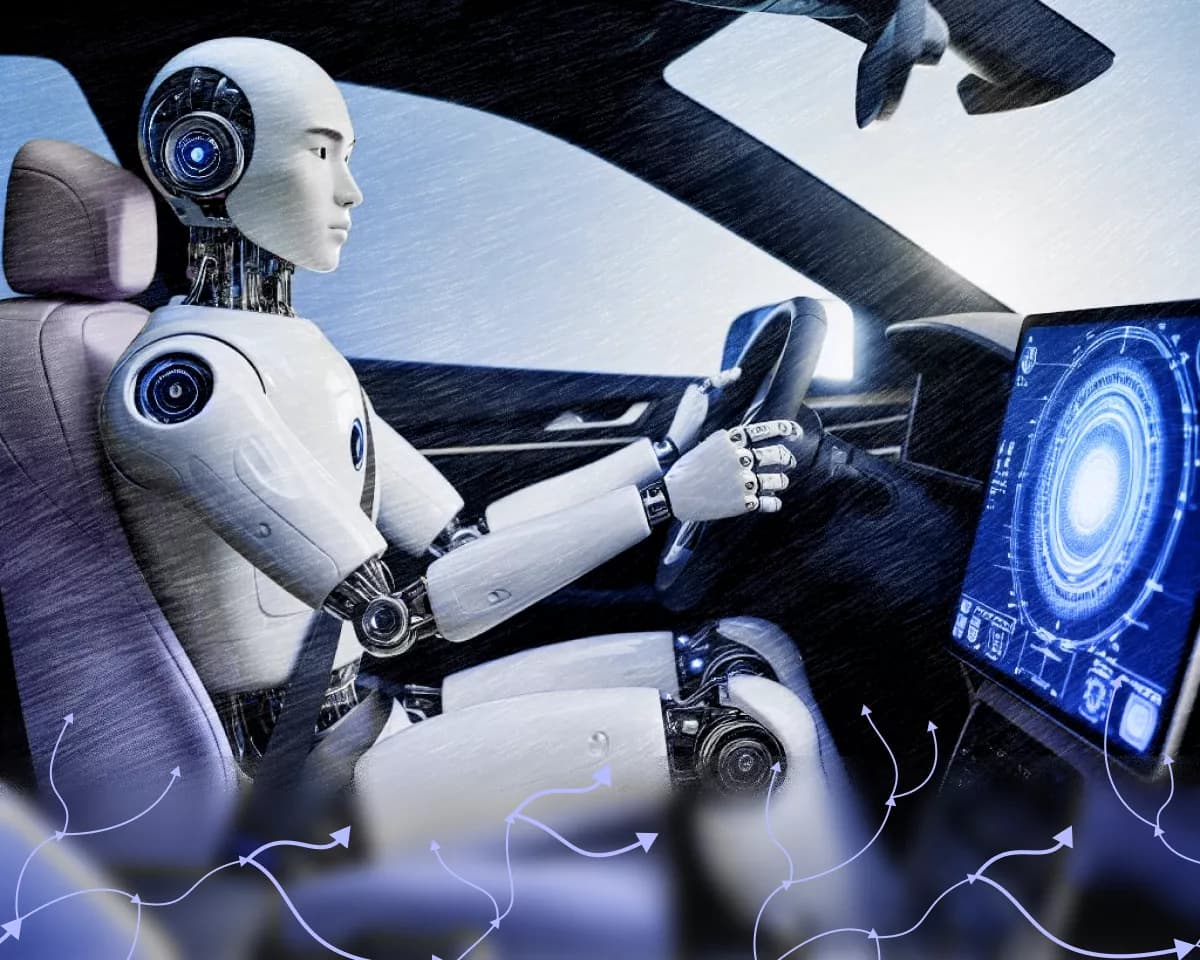
Apollo Go Robotaxi Malfunction Causes Highway Crashes in Wuhan, Traps Passengers
Dozens of Baidu's Apollo Go robotaxis suddenly stopped in the middle of traffic in Wuhan, causing collisions and trapping passengers inside vehicles for over an hour.
Baidu's Self-Driving Taxis Freeze on Wuhan Roads
On April 1, dozens of Apollo Go autonomous taxis operated by Baidu came to an abrupt halt in the middle of active traffic across the Chinese city of Wuhan. The sudden stoppage triggered multiple collisions and left passengers locked inside the vehicles — some for more than an hour.
Journalist Zeyi Yang reported the incident on social media:
"Dozens of robotaxis by Baidu stopped on the road in Wuhan, causing crashes on highways and trapping passengers in the cars — some for more than an hour. One passenger told me it took her 30 minutes to even connect to a customer representative." — Zeyi Yang (@ZeyiYang), original post
Why This Matters
The Wuhan incident represents one of the largest simultaneous failures of a commercial robotaxi fleet. Wuhan is Apollo Go's biggest operational hub, with more than 1,000 autonomous vehicles deployed across the city. A mass stoppage of self-driving cars in live traffic raises fundamental questions about the reliability of autonomous systems and the adequacy of emergency protocols.
The event casts a shadow over the broader autonomous vehicle industry during a period of aggressive expansion. Baidu has been investing heavily in Apollo Go, mirroring the strategy of Alphabet, which owns Waymo. Both companies have emerged as leaders in the rapidly growing sector.
Authorities Confirm System Failure
Local traffic police confirmed the incident, stating that multiple vehicles came to a stop directly on roadways. Preliminary findings point to a system malfunction as the root cause. An investigation is being conducted jointly by authorities and Apollo Go personnel.
Passengers were eventually able to safely exit the vehicles. However, one passenger reported waiting approximately 30 minutes before reaching a customer service representative — an unacceptably long response time during a roadside emergency.
Apollo Go's Market Position
Apollo Go currently offers commercial rides in several major Chinese cities, including all of Wuhan and suburban areas around Beijing. In total, the service operates or conducts testing across 26 cities worldwide. During Q4 2025, the platform completed 3.4 million rides.
Internationally, Apollo Go has partnerships with Uber and Lyft. Domestically, however, it faces fierce competition from Chinese autonomous vehicle developers such as WeRide and Pony.ai. In the United States, Tesla under Elon Musk has become a major player in the self-driving taxi market.
Such incidents are not entirely unprecedented in the industry. In December, Waymo vehicles became stuck on city streets due to a power outage. Yet the scale of the Wuhan malfunction — affecting dozens of vehicles simultaneously — stands out and could influence regulatory approaches to autonomous transportation in China going forward.
Frequently Asked Questions
What happened to Apollo Go robotaxis in Wuhan?
On April 1, 2026, dozens of Baidu's Apollo Go autonomous taxis suddenly stopped in the middle of traffic across Wuhan. The incident caused highway crashes and trapped passengers inside vehicles, some for more than an hour.
How many Apollo Go robotaxis operate in Wuhan?
Wuhan is Apollo Go's largest deployment site with over 1,000 autonomous vehicles operating in the city. Across the globe, the service operates or tests vehicles in 26 cities.
What caused the Apollo Go robotaxi malfunction?
Local traffic police stated that preliminary findings indicate a system malfunction was responsible. A joint investigation by authorities and Apollo Go staff is ongoing.
How many rides does Apollo Go complete?
Apollo Go completed 3.4 million rides during Q4 2025. The service offers commercial rides in multiple major Chinese cities and partners with Uber and Lyft in Western markets.
Who are Apollo Go's main competitors in the robotaxi market?
In China, Apollo Go competes with autonomous vehicle developers WeRide and Pony.ai. Globally, Waymo (owned by Alphabet) and Elon Musk's Tesla are major players in the self-driving taxi space.
Read also
AI Audit Uncovers Critical Liveness Bug in Ethereum's Nethermind Client
Octane Security's AI discovered a high-severity vulnerability in the Nethermind execution client that could have halted block production for 38% of Ethereum mainnet validators. The Ethereum Foundation awarded a maximum $50,000 bounty.
OpenAI Secures Record $110 Billion Round at $730 Billion Valuation
OpenAI closed the largest startup funding round in history at $110 billion, backed by Amazon, SoftBank, and Nvidia, with a $730 billion valuation.
Trump Orders All Federal Agencies to Drop Anthropic Technologies Within Six Months
Federal agencies have 6 months to drop Anthropic's Claude AI amid ethics clashes. See how xAI and Pentagon deals reshape the landscape.
Alphabet Posts $94.7B Q1 Revenue Beating Estimates Amid AI-Driven Growth
Google's parent company Alphabet reported Q1 2026 revenue of $94.7 billion, surpassing Wall Street forecasts, with its cloud division and AI integration fueling a strong beat across all metrics.
DeepSeek Launches V4-Pro: Open-Source Model Outperforms Claude Opus 4.6 and GPT-5.4
Chinese AI startup DeepSeek released a preview of its V4 model family, with the flagship V4-Pro boasting 1.6 trillion parameters and surpassing leading closed-source models in multiple benchmarks.
Oracle Lays Off Thousands as AI Infrastructure Spending Reshapes Tech Workforce
Oracle has begun mass layoffs affecting thousands of employees worldwide as the company redirects resources toward AI infrastructure. Meanwhile, Block CEO Jack Dorsey envisions AI replacing middle management entirely.